Artwork
Three studies of a piglet (right) and study of a gate in a wall (left)
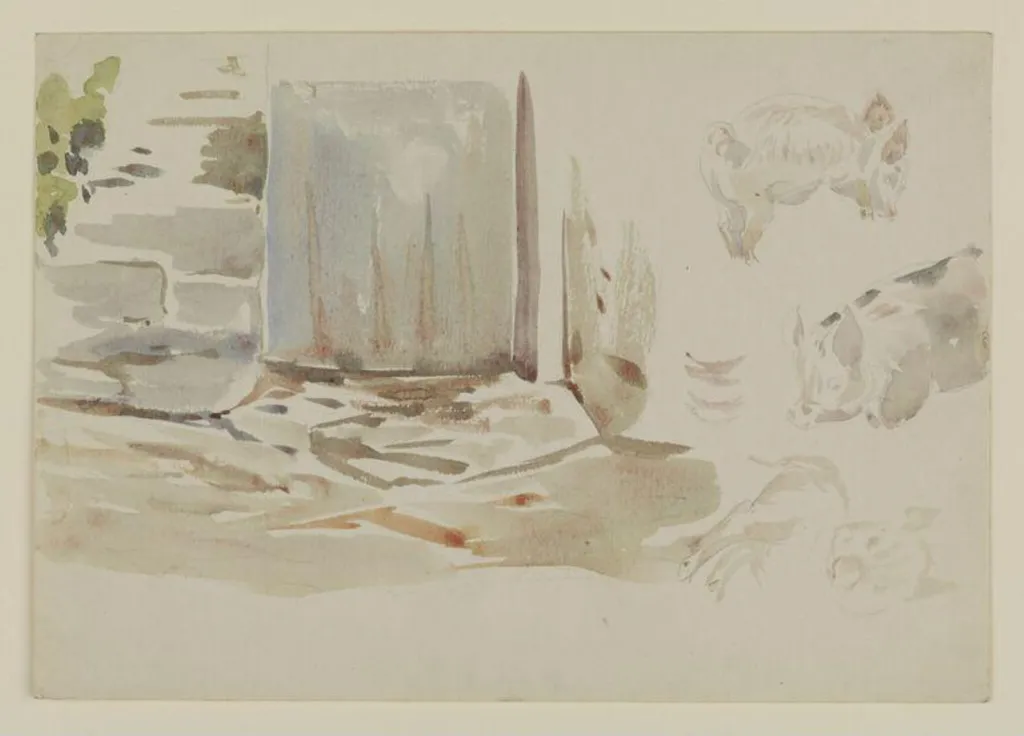
Three studies of a piglet (right) and study of a gate in a wall (left) is a watercolor work on paper by the Post-Impressionist artist Beatrix Potter. It dates from 1909 and is held in the collection of the Victoria and Albert Museum. This watercolour sheet, dated between 1905 and 1913, combines observational sketches of farm life.
About this work
It shows three piglet studies on the right and a gate in a wall on the left.
Beatrix Potter drew this sheet around 1905–1913 in watercolour. It shows three piglet studies on the right and a gate in a wall on the left. She kept an eye on farm life after buying Hill Top in 1905.
Potter studied animals from real life. The gate and piglets share the page like quick notes. She used the farm as a setting for her children’s books.
Look up her most famous book next: Beatrix Potter.
Overview
This watercolour sheet, dated between 1905 and 1913, combines observational sketches of farm life. Three piglets are rendered in soft washes on the right, while a simple gate set into a stone wall occupies the left. The composition reflects Potter’s habit of recording details from her surroundings with quiet precision, treating the page as a field notebook rather than a finished illustration.
Subject & Meaning
The piglets and gate represent elements of rural life Potter encountered after acquiring Hill Top Farm. These are not idealized scenes but direct observations—piglets in varied postures, the gate as a functional structure. Together, they suggest the quiet rhythm of farm existence, grounding her later book illustrations in authentic, lived experience rather than fantasy.
Technique & Style
Potter employed watercolour with restrained brushwork, layering translucent washes to suggest form without heavy outline. The piglets’ bodies are defined by subtle shifts in tone, while the gate is rendered with minimal detail, emphasizing structure over ornament. The spontaneity of the sketches reveals a focus on immediate perception, typical of her preparatory studies for published works.
History & Provenance
Created after Potter’s purchase of Hill Top Farm in 1905, the sheet belongs to a body of work produced during her years living in the Lake District. These studies were not made for public display but as reference material for her books. The sheet remained in her possession until her death, later entering institutional collections through her estate.
Context
During this period, Potter was deeply engaged in both writing and illustrating children’s stories rooted in the landscape and animals of the Lake District. Her scientific interest in natural history informed her artistic process, leading her to sketch animals and architecture with accuracy. The gate, a common feature of Lakeland farms, appears in several of her published tales as a boundary between domestic and wild spaces.
Legacy
These studies exemplify how Potter’s artistic discipline supported her literary success. Her commitment to direct observation elevated the realism of her illustrations, distinguishing them from contemporaneous children’s book art. The sheet remains a testament to her dual role as naturalist and storyteller, bridging scientific record and narrative imagination.
Artist & collection
Artist
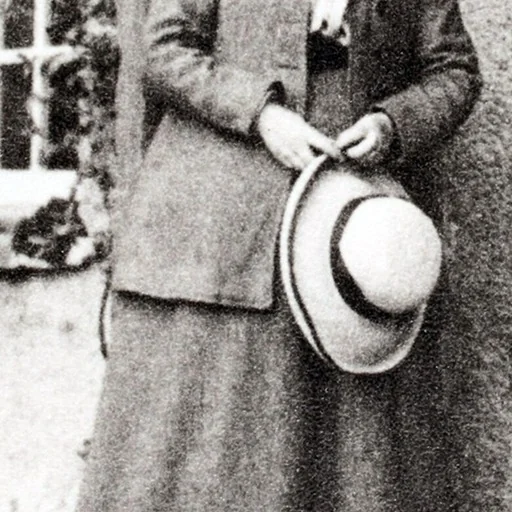
Helen Beatrix Heelis (née Potter; 28 July 1866 – 22 December 1943), usually known as Beatrix Potter ( BEE-ə-triks), was an English writer, illustrator, natural scientist, and conservationist.

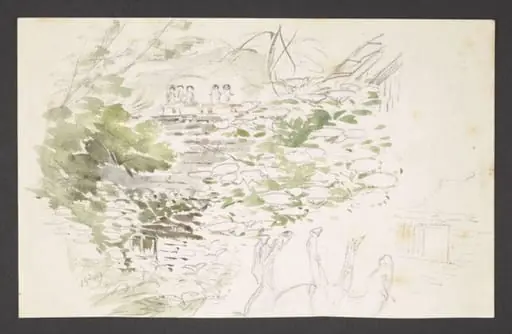 Study of a view through trees to the roof of a house and a rough sketch of a horse
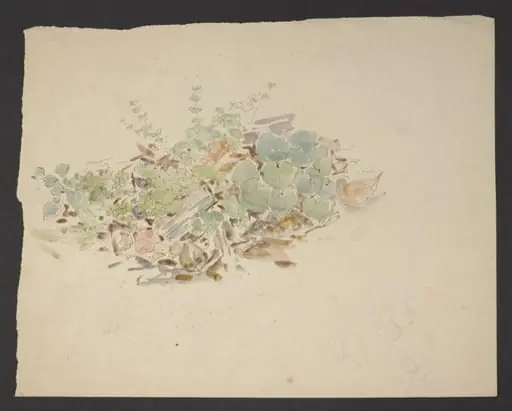 Study of a patch of ground with plants including clover
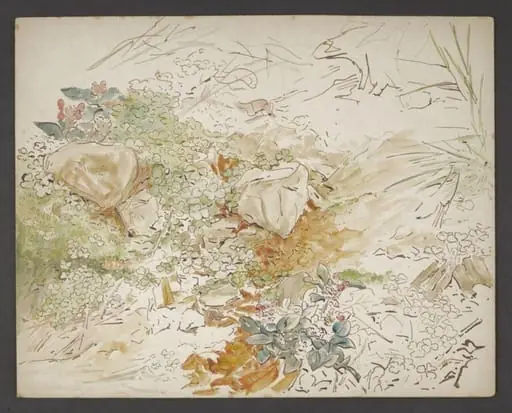 Study of a patch of ground with plants and rocks
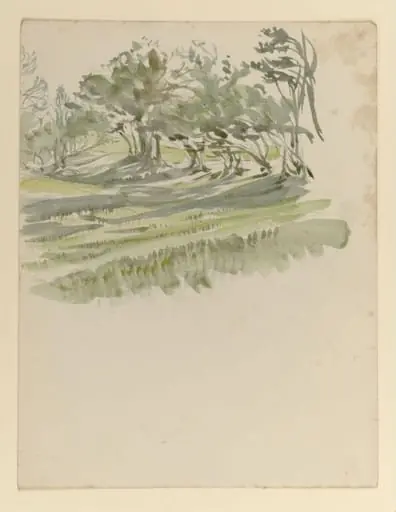 A meadow flanked by a line of trees
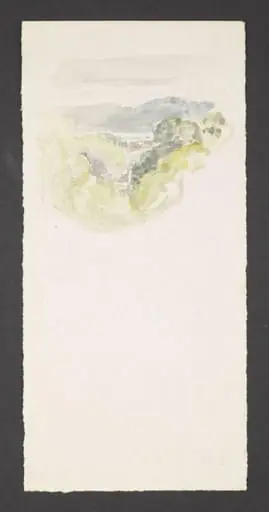 A view, through trees, of a lake and mountains
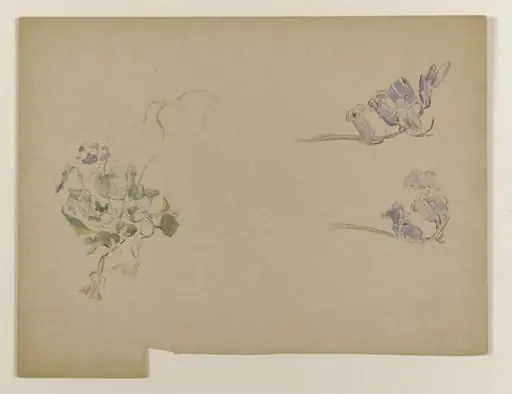 Violets and bluebells
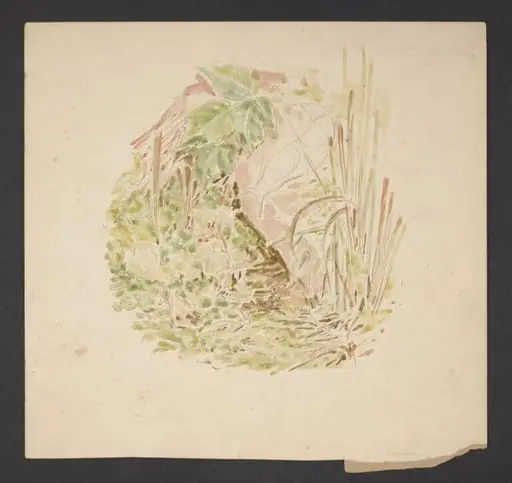 Study of undergrowth with grasses, clover and a snail