Artwork
Violets and bluebells
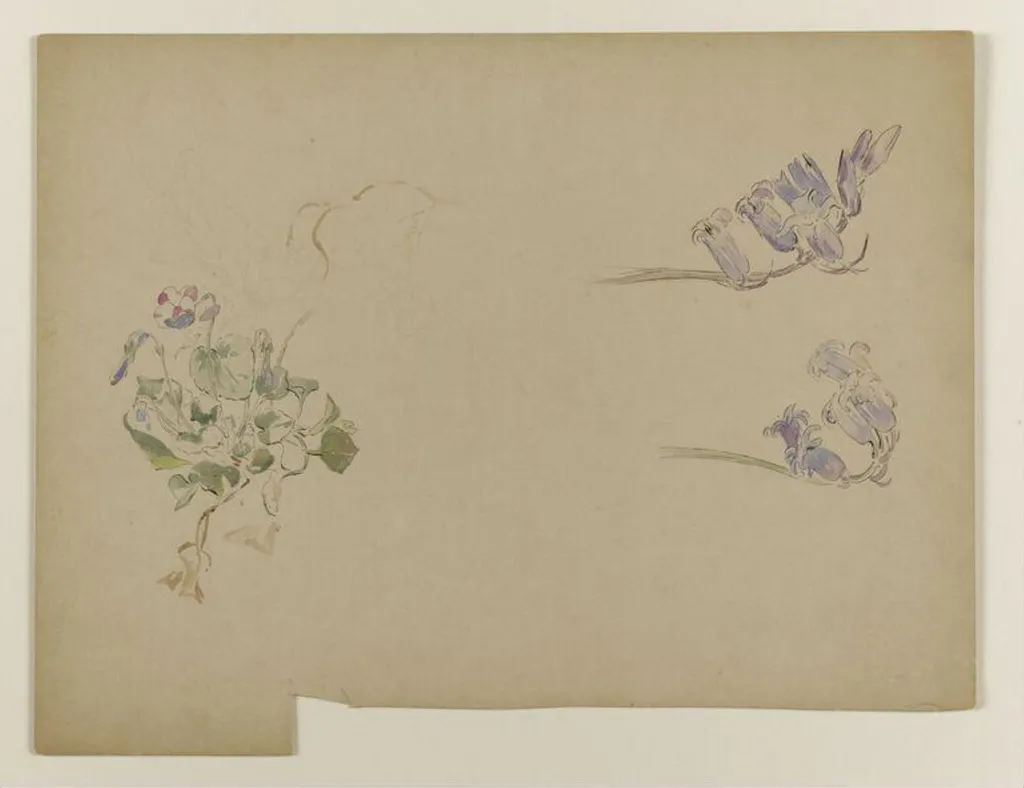
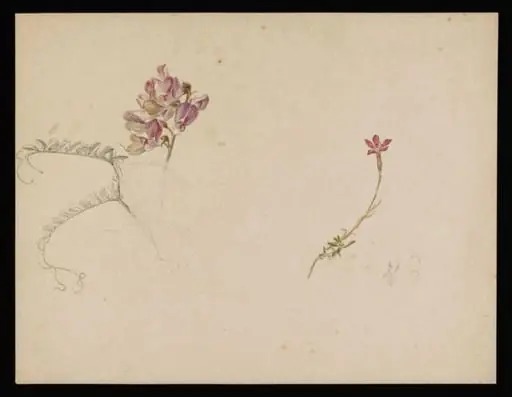
Violets and bluebells is a watercolor work on paper by Beatrix Potter. It dates from 1850 and is held in the collection of the Victoria and Albert Museum.
About this work
Overview
Unlike her later illustrated tales, this piece is unadorned by narrative, focusing solely on the plants as subjects of scientific and aesthetic interest.
Beatrix Potter created this watercolour study of violets and bluebells during her formative years as a naturalist. Executed with precision and quiet observation, the work reflects her deep engagement with botanical detail. Unlike her later illustrated tales, this piece is unadorned by narrative, focusing solely on the plants as subjects of scientific and aesthetic interest. It belongs to a broader body of work produced during her childhood and early adulthood.
Subject & Meaning
The painting depicts two common woodland flowers—violets and bluebells—arranged simply in a vase. Potter’s choice of subject reveals her fascination with native flora and her desire to document them accurately. These studies were not merely decorative; they served as records of species she encountered in the countryside during family holidays. The inclusion of botanical notes alongside her sketches underscores her intent to understand, not just depict, the natural world.
Technique & Style
Potter employed watercolour with restrained brushwork, emphasizing clarity over flourish. Her technique prioritized fidelity to form and colour, capturing the delicate structure of petals and the subtle gradations of hue in each flower. The composition is minimal, avoiding background detail to direct attention to the plants themselves. This disciplined approach mirrors the observational methods of scientific illustration, shaped by her study of museum specimens and use of magnifying tools.
History & Provenance
Created during Potter’s youth, this watercolour is part of a personal archive of natural history studies she maintained over decades. She preserved these works alongside her insect, shell, and fungal collections, using them as references for both scientific inquiry and artistic development. The piece remained in her possession until her death and later entered the Victoria and Albert Museum’s collection, where it is held among her lesser-known but significant scientific drawings.
Context
In late 19th-century England, amateur naturalism was a common pursuit among educated women, and Potter participated actively in this tradition. Her access to the Natural History Museum’s collections and her use of microscopes placed her among a small group of women engaging seriously with biological science. Her flower studies were contemporaneous with her early experiments in animal illustration, laying the groundwork for the lifelike detail that would later define her children’s books.
Legacy
Though best known for her fictional tales, Potter’s botanical studies reveal the foundation of her illustrative realism. The precision evident in *Violets and Bluebells* directly informed the authenticity of plant life in her published stories, lending credibility to her imagined worlds. These works, once private, now stand as evidence of her dual identity as both artist and naturalist, bridging scientific observation with visual storytelling.
Artist & collection
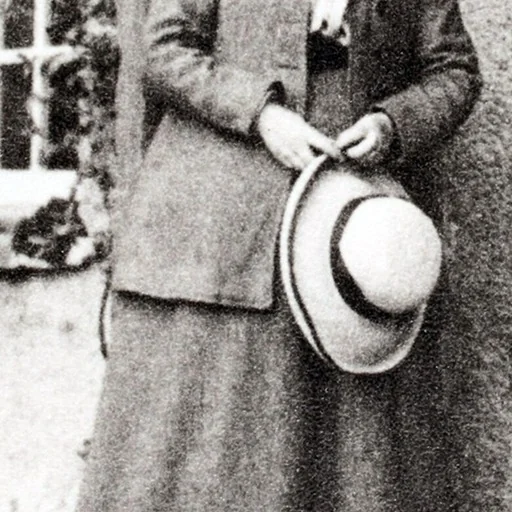
Artist
Helen Beatrix Heelis (née Potter; 28 July 1866 – 22 December 1943), usually known as Beatrix Potter ( BEE-ə-triks), was an English writer, illustrator, natural scientist, and conservationist.