Artwork
Scene from <i>Le Dieu Bleu</i>
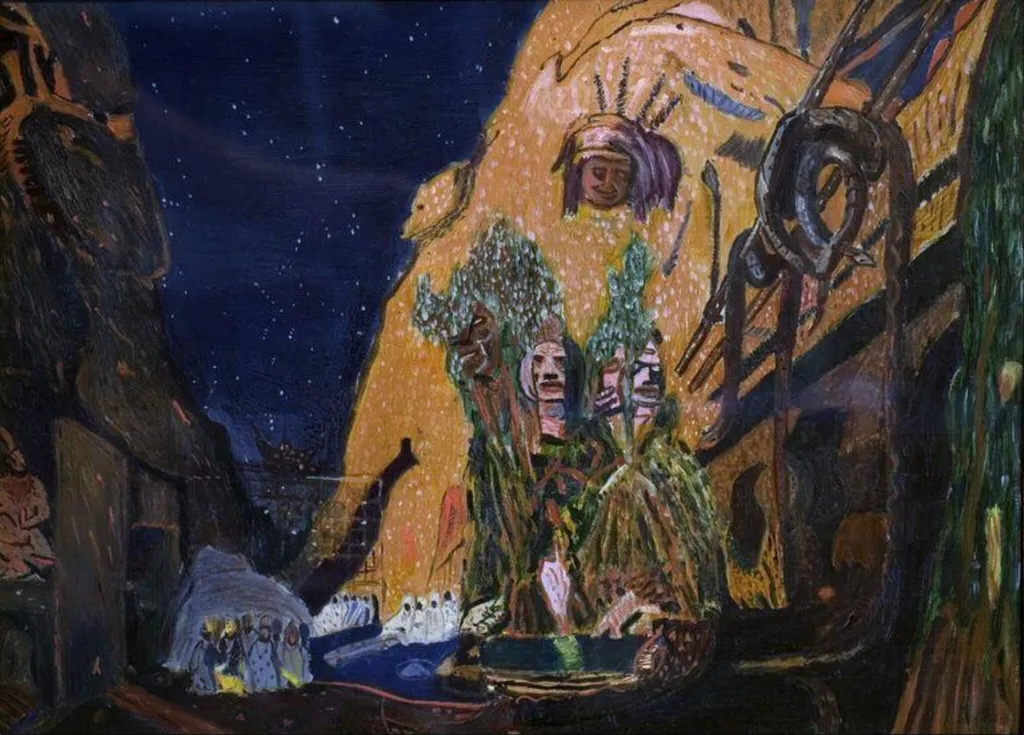
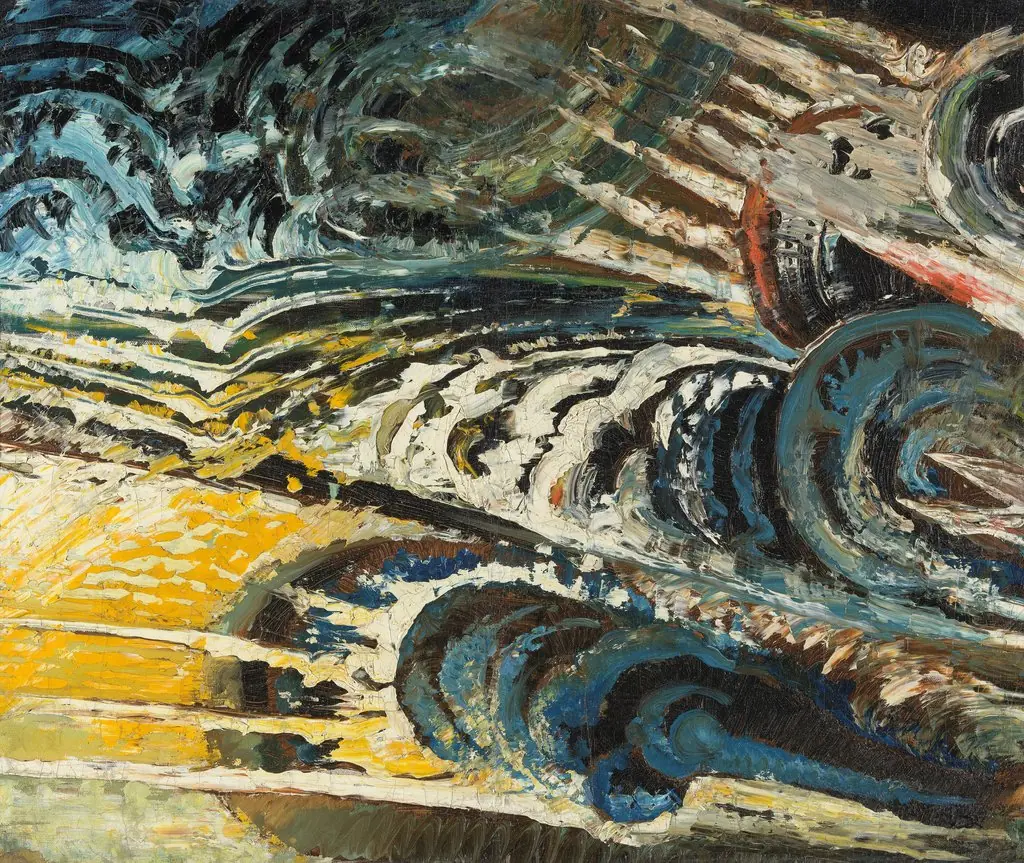
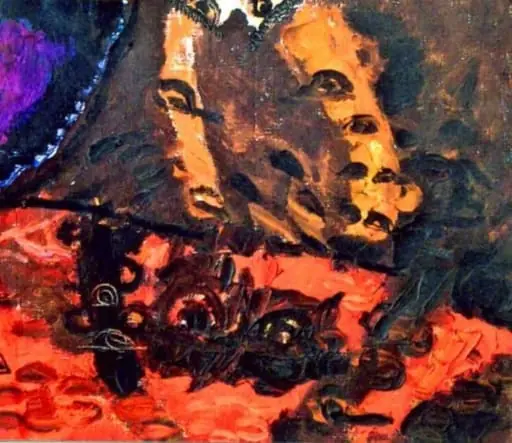
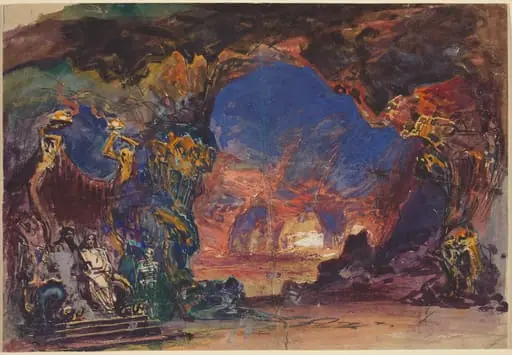
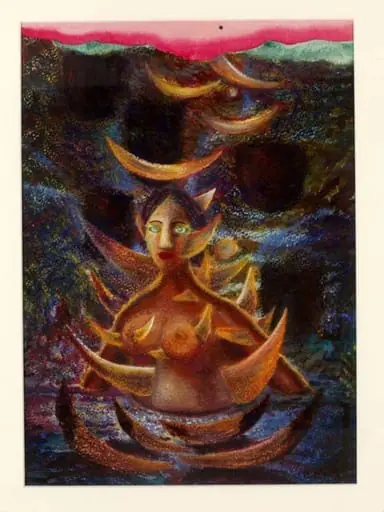
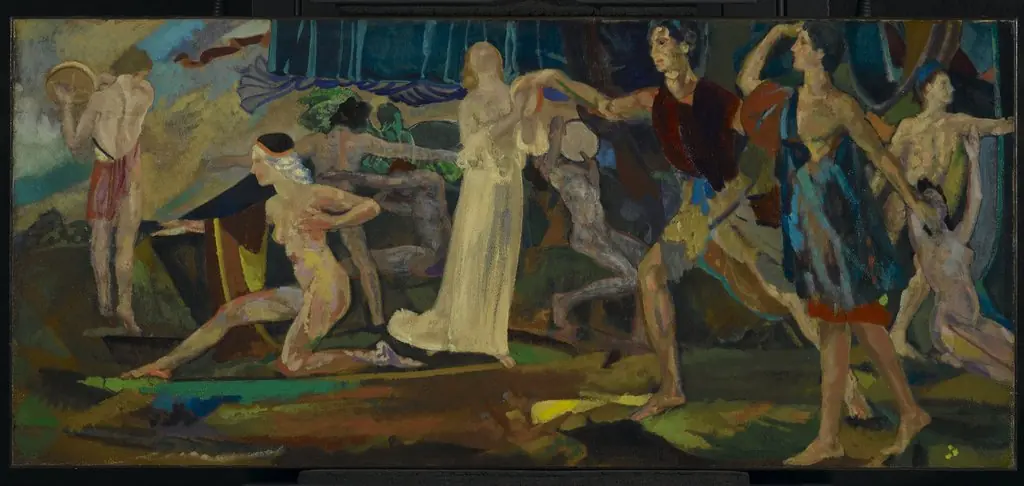
Scene from <i>Le Dieu Bleu</i> is a paint painting by the Art Nouveau artist Cyril William Beaumont. It dates from 1913 and is held in the collection of the Victoria and Albert Museum.
About this work
This painting copies stage designs for a 1912 ballet. Bright blues and golds swirl around a dancer in mid-air. The scene looks like a stage set, not a real place.
Cyril Beaumont copied designs by Léon Bakst. He tried to paint what he saw in Bakst’s prints, adding his own feelings. Beaumont wasn’t a painter by trade—he ran a bookshop.
See the real set design next at the Victoria and Albert Museum.
Overview
Created not by a professional artist but by a bookseller and dance enthusiast, the work reflects Beaumont’s personal response to Bakst’s original visuals.
This painting by Cyril Beaumont reproduces the stage design for the 1912 ballet Le Dieu Bleu, choreographed by Mikhail Fokine and designed by Léon Bakst. Created not by a professional artist but by a bookseller and dance enthusiast, the work reflects Beaumont’s personal response to Bakst’s original visuals. It captures the ballet’s theatrical atmosphere through stylized forms and vivid color, rather than naturalistic representation.
Subject & Meaning
The scene depicts a dancer suspended mid-motion against a dramatic backdrop of towering carved heads and a towering orange cliff, drawn from Bakst’s original vision. The composition emphasizes theatricality over realism, evoking the ballet’s mythic tone. Beaumont’s interpretation conveys his emotional impression of the performance, not a literal record of the stage, making the work a personal meditation on spectacle and movement.
Technique & Style
Beaumont employed bold, flat areas of blue and gold, echoing Bakst’s decorative palette, but with looser, more spontaneous brushwork. The forms are simplified, lacking detailed modeling, and the perspective is flattened to mimic stage design. The result is a hybrid: part reproduction, part impressionistic response, revealing the artist’s amateur status and his desire to translate visual experience into paint.
History & Provenance
Painted in the early 1910s, the work emerged from Beaumont’s brief engagement with visual art, inspired by Bakst’s designs and the creative environment of Adrian Allinson’s studio. Though he sold his first painting — a depiction of Scheherazade — he received little recognition as a painter. His primary legacy lies in his later work as a dance historian and bookseller, not as an artist.
Context
Le Dieu Bleu, premiered by Diaghilev’s Ballets Russes in 1912, was celebrated for its exoticist aesthetics and Bakst’s innovative use of color and form. Beaumont’s painting reflects the wider cultural fascination with these productions in London, where the ballet debuted in 1913. His attempt to recreate the designs speaks to how deeply the visual language of the Ballets Russes influenced non-artists during this period.
Legacy
Beaumont’s painting stands as a modest but revealing artifact of amateur engagement with avant-garde performance. Though he never pursued art professionally, the work illustrates how theatrical design permeated broader cultural consciousness. His later contributions to dance scholarship overshadow this early effort, yet the painting remains a quiet testament to the power of Bakst’s imagery to inspire beyond the stage.
Artist & collection
Artist
Cyril Beaumont kept a tiny bookshop in London’s Soho that doubled as a backstage pass to the ballet—dancers and designers dropped by between matinees to gossip over ink and stage lights.