Artwork
The Hunter
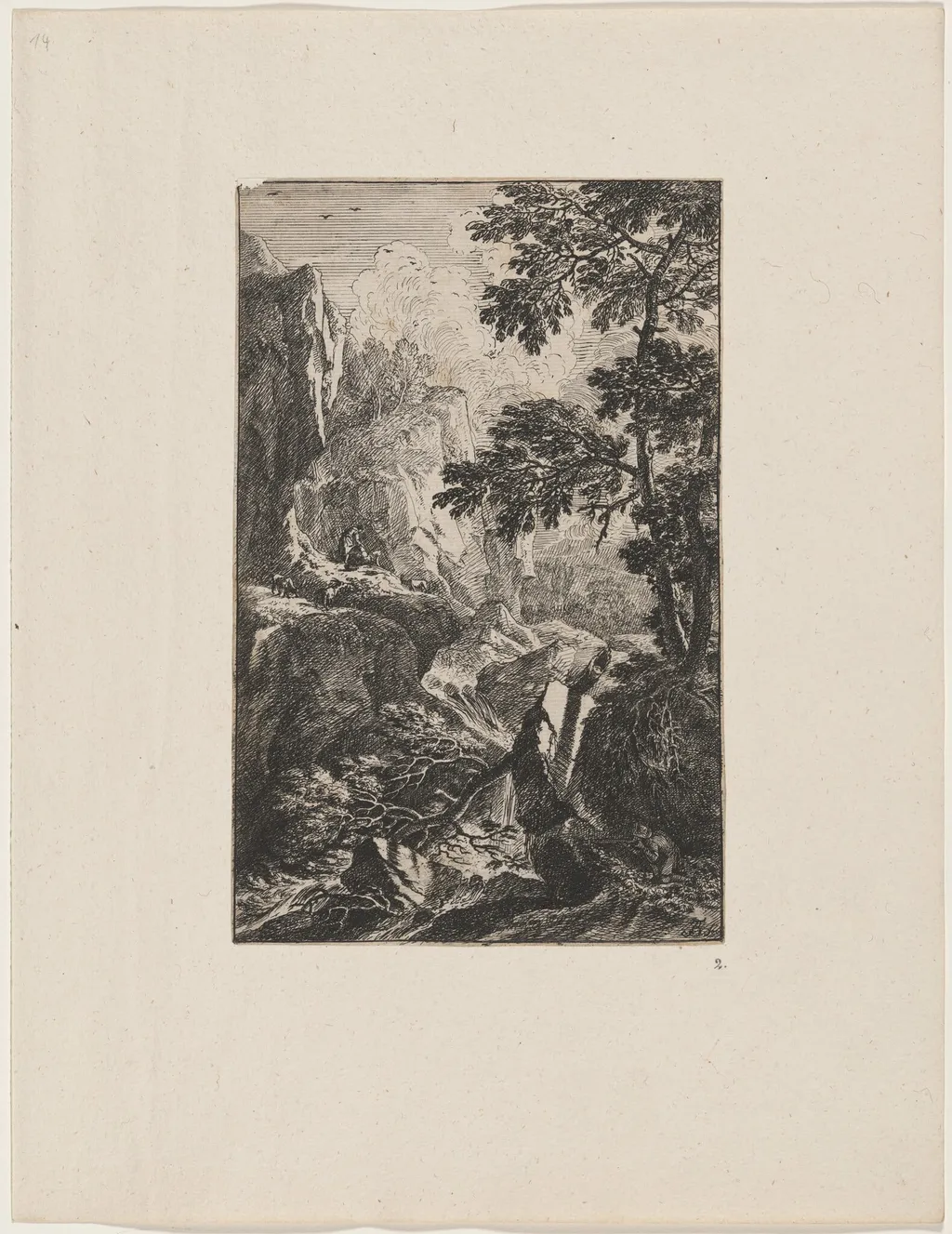
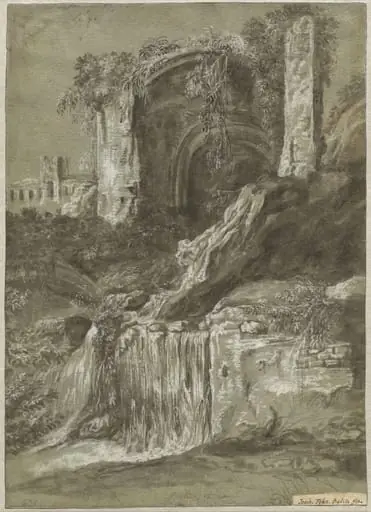
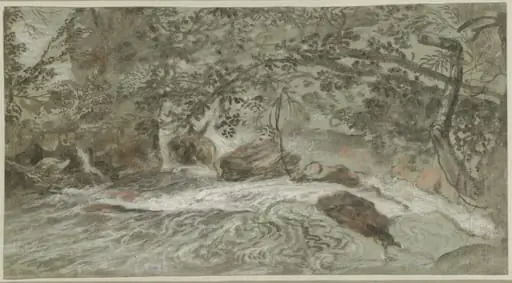
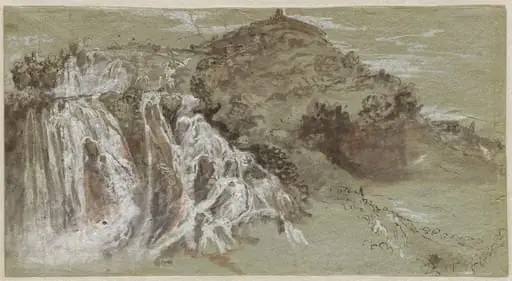
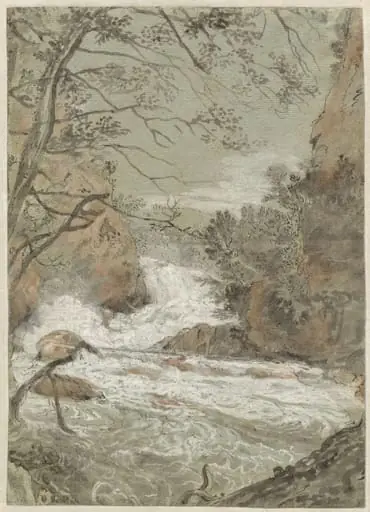
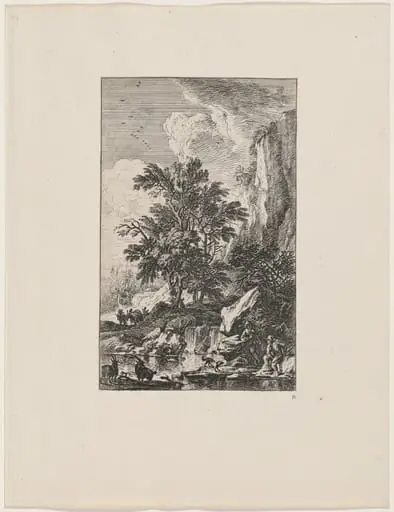
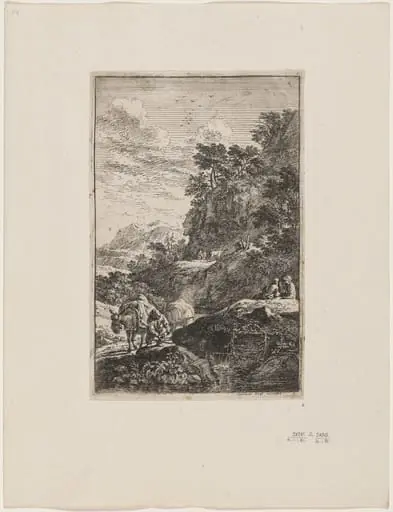
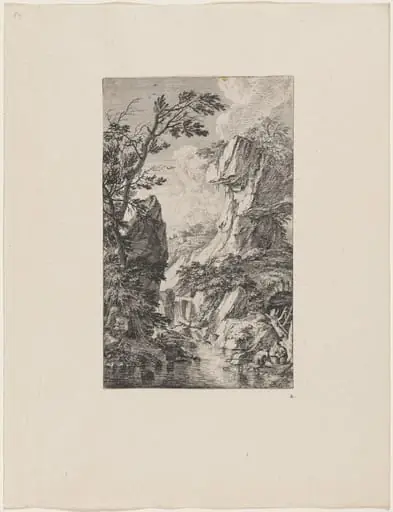
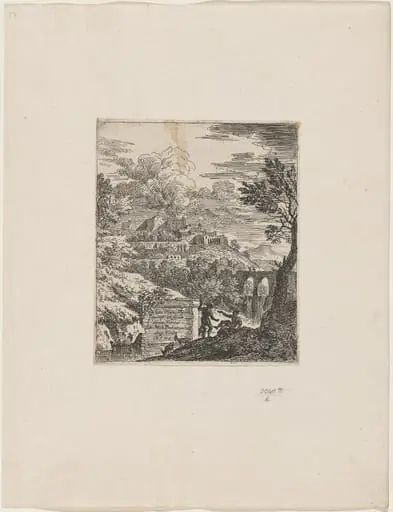
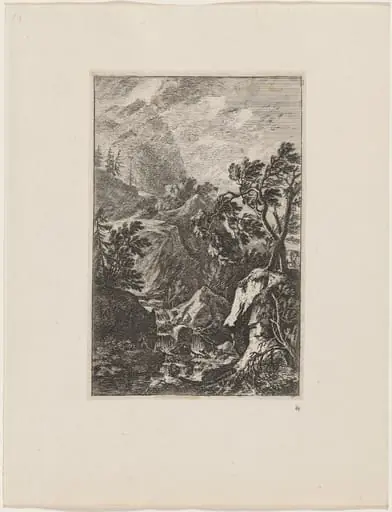
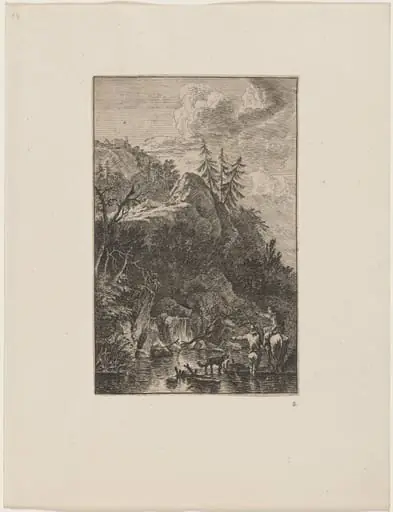
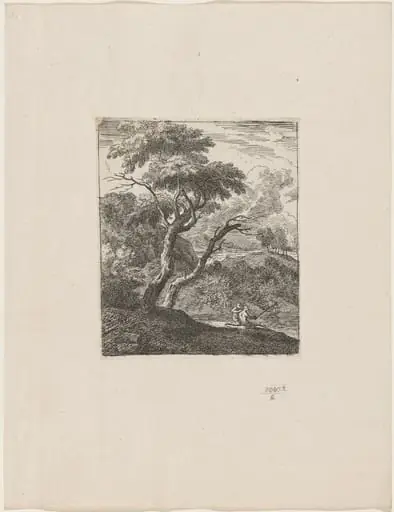
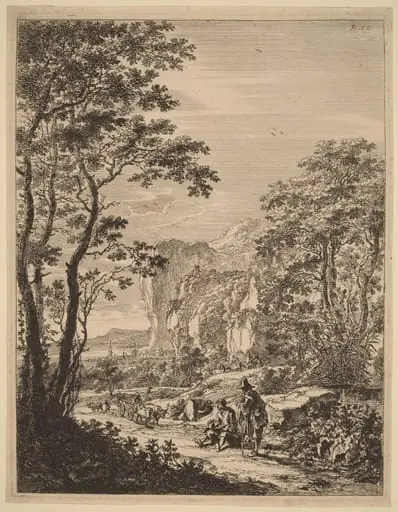
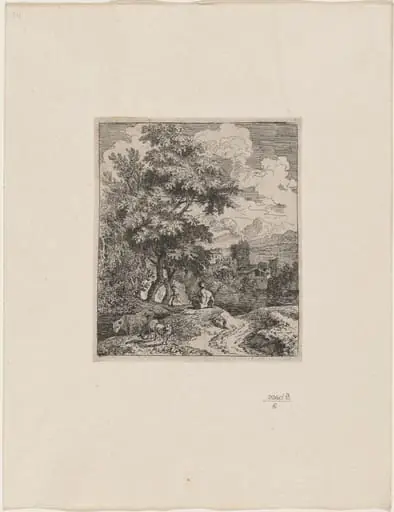
The Hunter is an ink print by the Baroque artist Joachim Franz Beich. It dates from 1712 and is held in the collection of the National Gallery of Art.
About this work
Overview
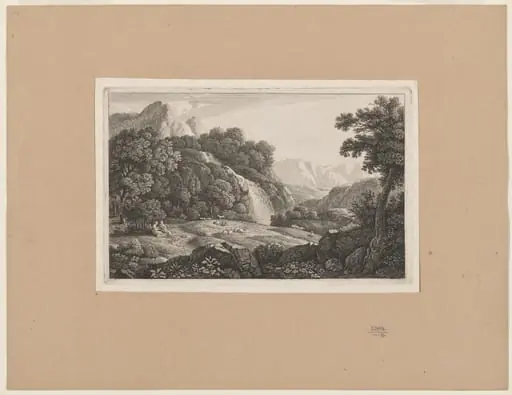
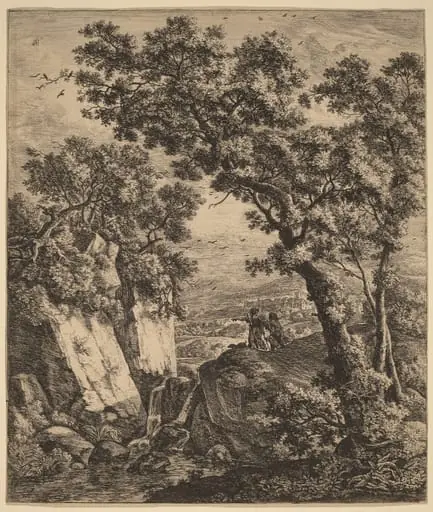
The Hunter is a set of six etchings by Joachim Franz Beich, produced around 1712 on laid paper. Each plate presents a variation of a solitary hunter in a wooded landscape, emphasizing solitude and quiet engagement with nature. The series functions as a cohesive visual narrative rather than isolated images, unified by recurring motifs and tonal harmony across the plates.
Subject & Meaning
The central figure is a hunter, clad in period attire and accompanied by a dog, standing still amid dense forest and rocky terrain.
The central figure is a hunter, clad in period attire and accompanied by a dog, standing still amid dense forest and rocky terrain. His posture suggests pause rather than action, inviting reflection rather than depicting a moment of pursuit. The stillness, combined with the natural surroundings, conveys a contemplative relationship between human presence and the wilderness, avoiding dramatic or heroic overtones.
Technique & Style
Beich employed fine, controlled etching lines to render texture in bark, rock, and foliage, while varying ink density to suggest atmospheric depth. Light is subtly modeled through hatching and cross-hatching, creating soft contrasts that guide the eye through layered space. The use of laid paper enhances the tactile quality of the prints, reinforcing the intimate, handcrafted nature of the series.
History & Provenance
The set was likely produced in the early eighteenth century for a private or scholarly audience interested in landscape and hunting themes. No definitive record of its original commission survives, but its technical precision suggests it was made for collectors familiar with Northern European print traditions. The complete set remains rare, with only a few institutional holdings documented.
Context
Beich worked during the late Baroque period, a time when landscape prints gained popularity among educated elites seeking refined depictions of nature. While not overtly religious or mythological, The Hunter aligns with contemporary interests in naturalism and quiet introspection, reflecting broader cultural shifts toward valuing solitude and the sublime in the natural world.
Legacy
The Hunter remains a modest but significant example of early eighteenth-century German printmaking. Though Beich is not widely known today, this series contributes to the understanding of how landscape themes were explored in print form before the rise of Romanticism. Its restrained aesthetic and technical care have influenced later collectors and scholars studying the evolution of nature imagery in print.
Artist & collection