Artwork
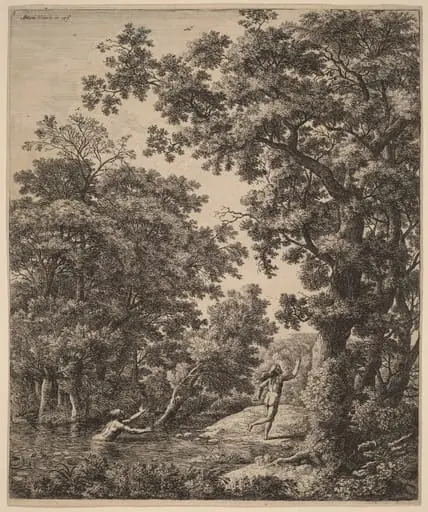
Landscape with Tobias and the Angel
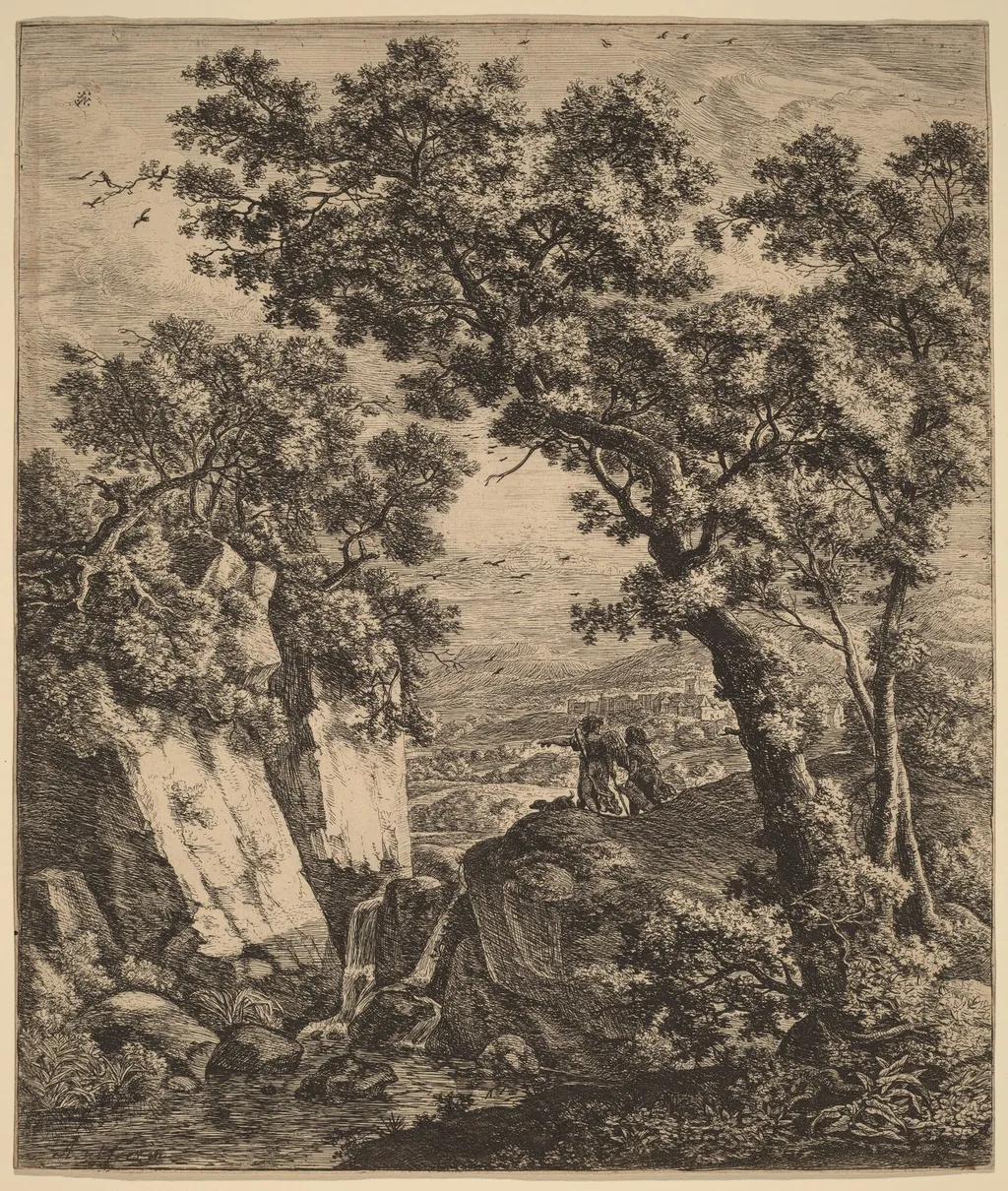
Landscape with Tobias and the Angel is an ink print by the Baroque artist Antonie Waterloo. It dates from 1650 and is held in the collection of the National Gallery of Art.
About this work
Overview
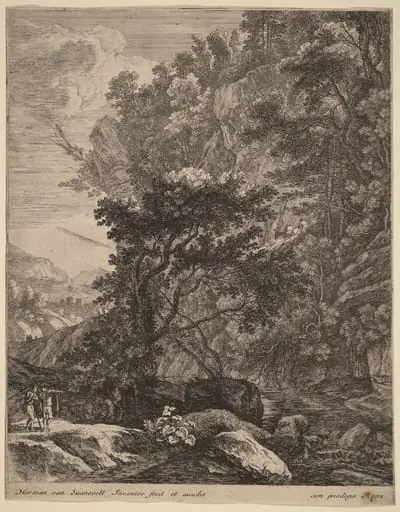
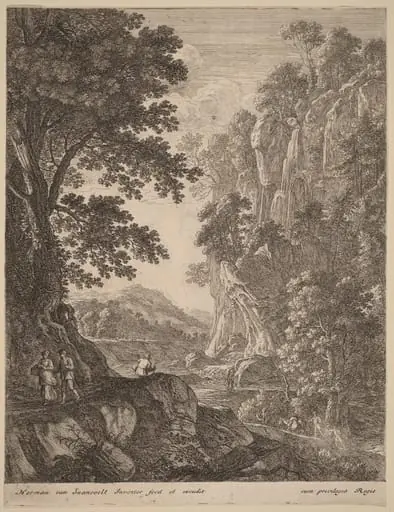
Landscape with Tobias and the Angel is an etching by Anthonie Waterloo, dated to 1650. The print depicts a dense, rugged landscape with two figures on a path, set amidst twisted trees, rocky ground, and a stream, with distant buildings partially visible.
Subject & Meaning
The scene likely illustrates a narrative of guidance through challenging terrain, suggested by one figure leading the other. The specific identification with Tobias and the Angel implies a biblical allusion, though the emotional or thematic emphasis lies in the portrayal of navigation through adversity.
Technique & Style
Waterloo employed etching techniques, scratching lines into metal to achieve a highly detailed image. The work showcases meticulous rendering of natural elements, with intricate lines used to convey the texture of leaves, rocks, and the environment's overall density.
History & Provenance
Created in 1650, specific details about the print's history, ownership, or exhibition record before its current location are not provided.
Context
Produced in the mid-17th century, this etching reflects the Dutch Golden Age's interest in landscape and detailed etching techniques. It may also subtly engage with the religious themes common during this period, through its biblical subject matter.
Legacy
The enduring significance of 'Landscape with Tobias and the Angel' lies in its representation of Anthonie Waterloo's etching skill and the Dutch Golden Age's artistic preferences. Its detailed, realistic approach to nature contributes to the broader legacy of 17th-century Dutch printmaking.
Artist & collection

 The Mountain
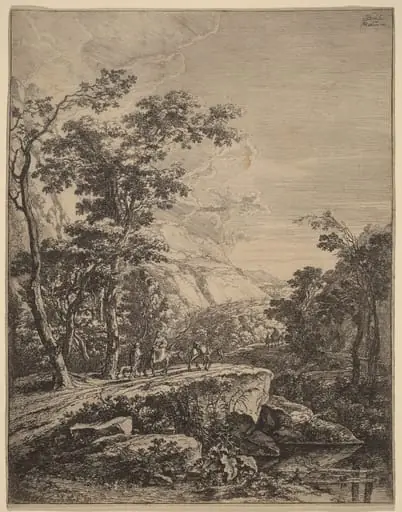 The Woman on the Hinny
 The Large Cascade
 The Woman on the Hinny
 The Large Tree
 The Large Tree
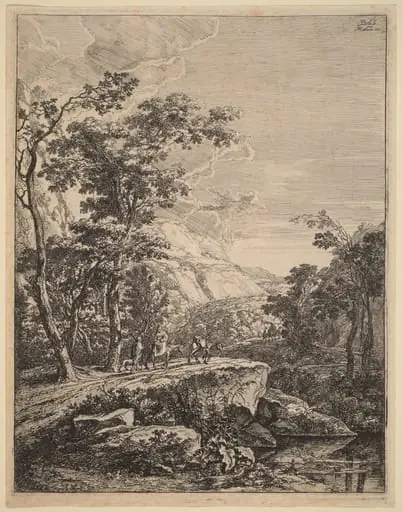 The Woman on the Hinny
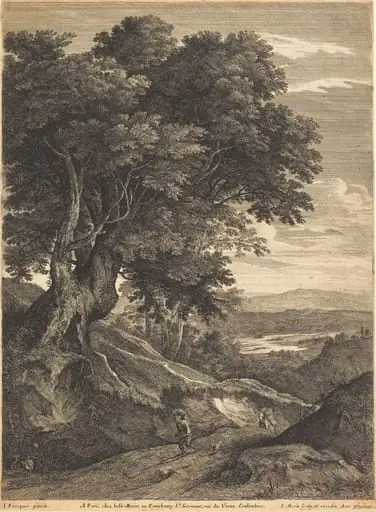 Hilly Landscape with Travelers on Foot
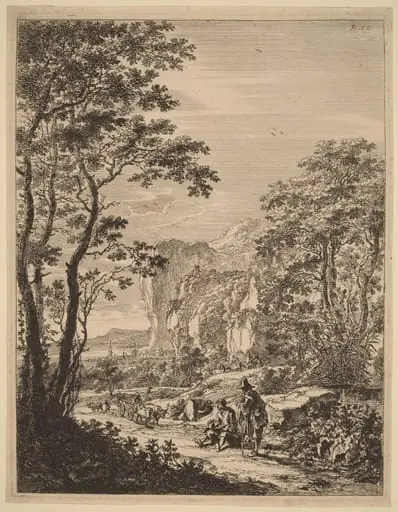 The Ox-Cart: View between Ancona and Sinigaglia
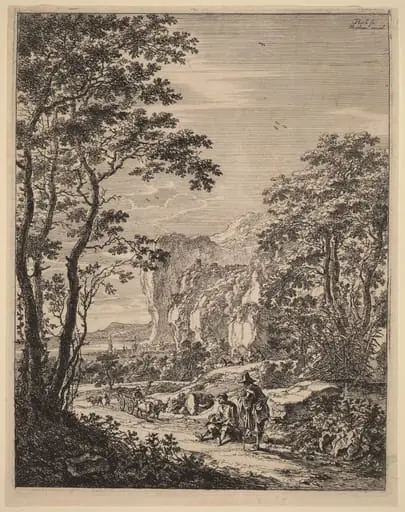 The Ox-Cart: View between Ancona and Sinigaglia
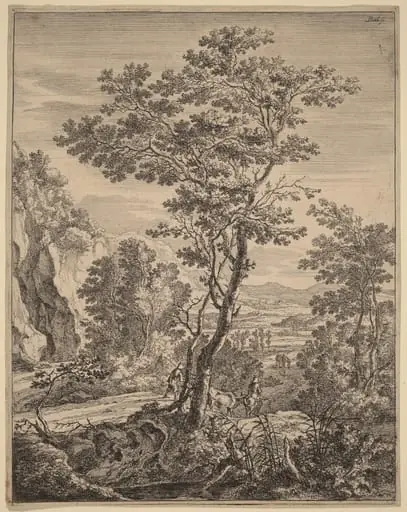 The Large Tree
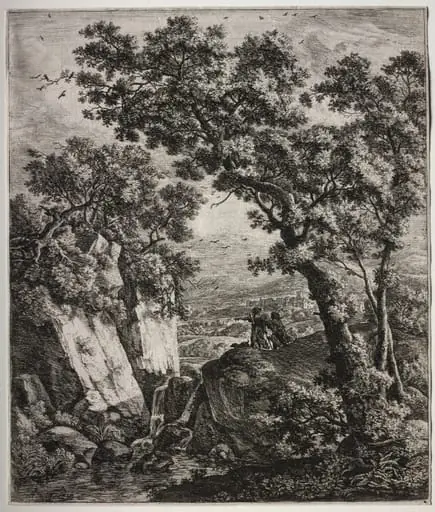 Six large upright landscapes with scenes from the Old Testament: Tobias and the Angel