Artwork
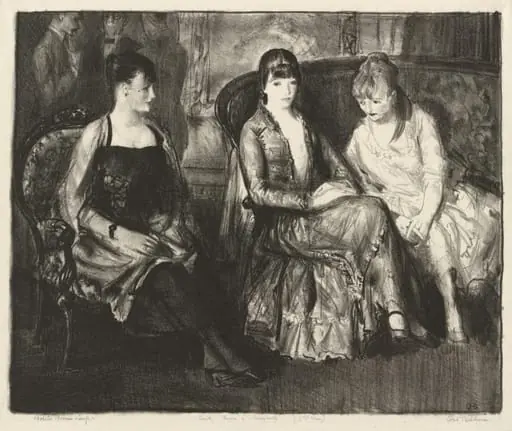
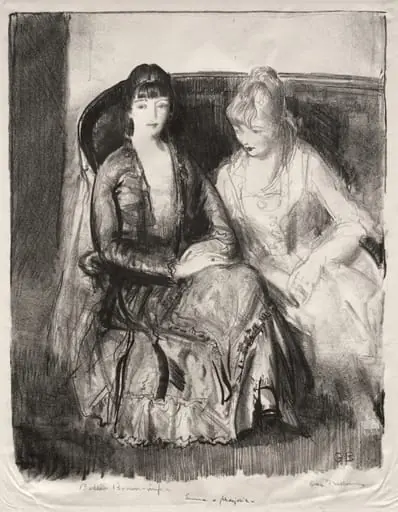
Elsie, Emma and Marjorie, second stone
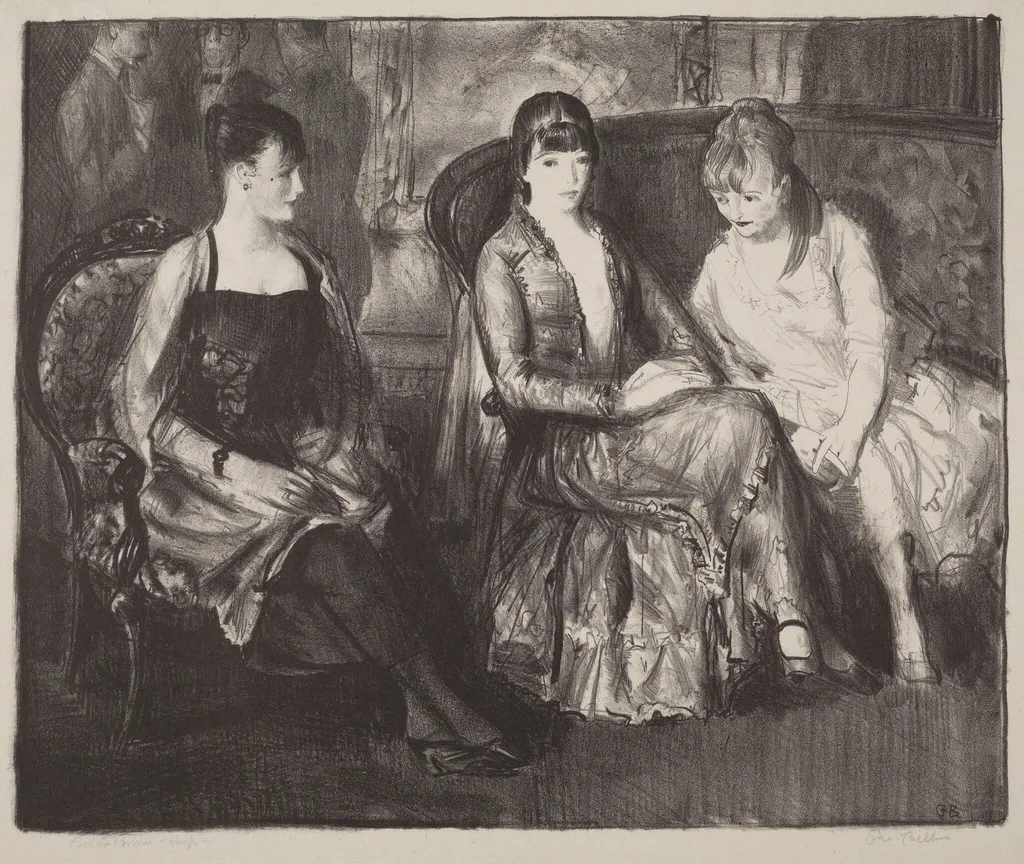
Elsie, Emma and Marjorie, second stone is an ink print by George Bellows. It dates from 1921 and is held in the collection of the National Gallery of Art.
About this work
Overview
George Bellows’ 1921 lithograph titled Elsie, Emma and Marjorie, second stone presents a trio of women rendered in stark monochrome. The work is executed in black lithographic ink, emphasizing line and tonal contrast rather than color, and measures as a single print from Bellows’ series of portrait studies.
Subject & Meaning
The figures—Elsie Speicher, Emma S. Bellows, and Marjorie Organ—are positioned side by side within an unadorned space. By stripping away decorative background, Bellows directs attention to the individual expressions and gestures of each woman, inviting viewers to consider their personal presence rather than a narrative scene.
Technique & Style
Created through lithography, the image was drawn onto a limestone or metal plate with greasy medium, then chemically treated so that ink adheres only to the drawn areas. Bellows employs a restrained line quality and limited tonal gradations, typical of his print work, to achieve a clear, direct representation without ornamental detail.
History & Provenance
The print was produced in 1921, a period when Bellows was expanding beyond his well‑known urban scenes into more intimate portraiture. It is catalogued as the second stone in the series, indicating a subsequent impression taken from the original lithographic stone after the initial edition.
Context
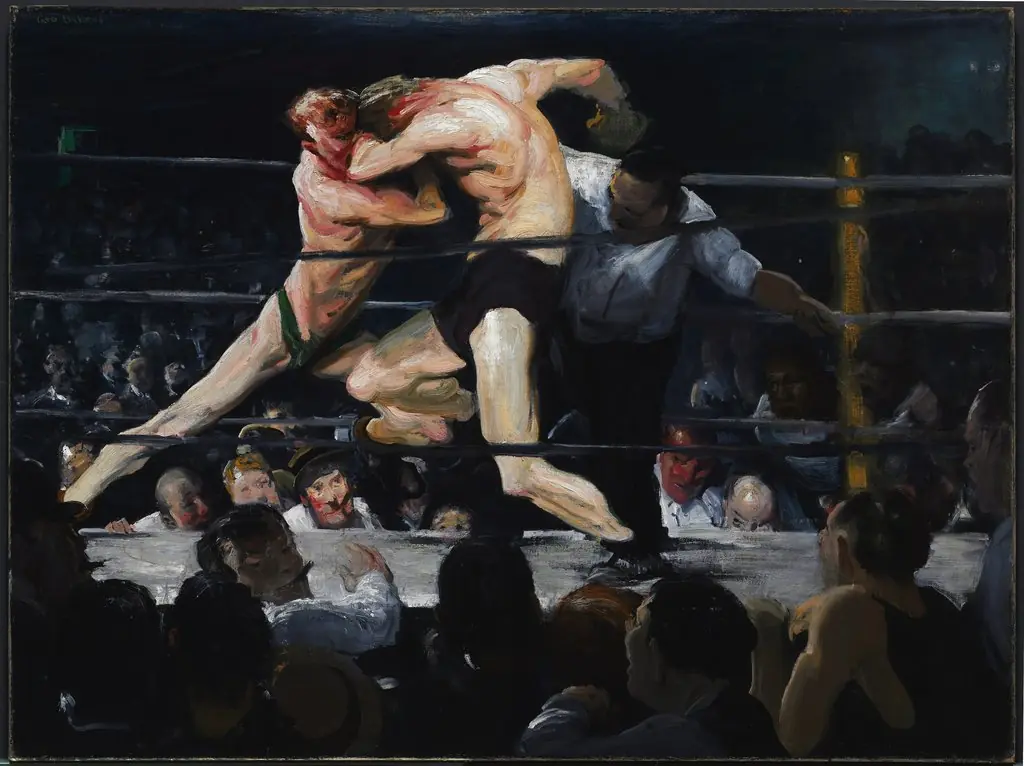
During the early 1920s Bellows was active in the New York art world, engaging with both the Ashcan School’s realism and the emerging modernist tendencies. This lithograph reflects his interest in everyday subjects, here rendered with a quiet, observational tone that contrasts with his more dynamic, action‑filled canvases.
Legacy
While not as frequently reproduced as Bellows’ larger paintings, this lithograph exemplifies his skill in printmaking and his capacity to capture nuanced human expression in a compact format. It remains a reference point for scholars studying Bellows’ lesser‑known portrait series and the broader use of lithography in early twentieth‑century American art.
Artist & collection

Artist
George Wesley Bellows (August 12 or August 19, 1882 – January 8, 1925) was an American realist painter, known for his bold depictions of urban life in New York City.