Artwork
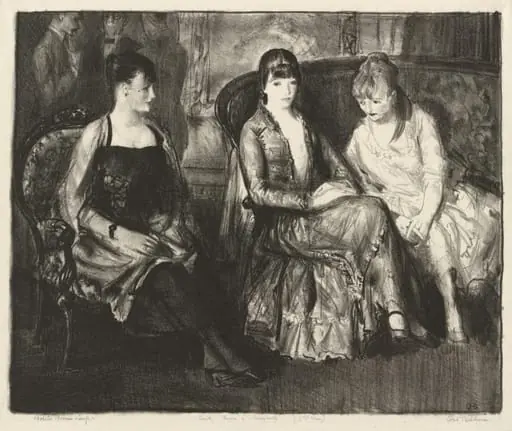
Elsie, Emma and Marjorie, First Stone
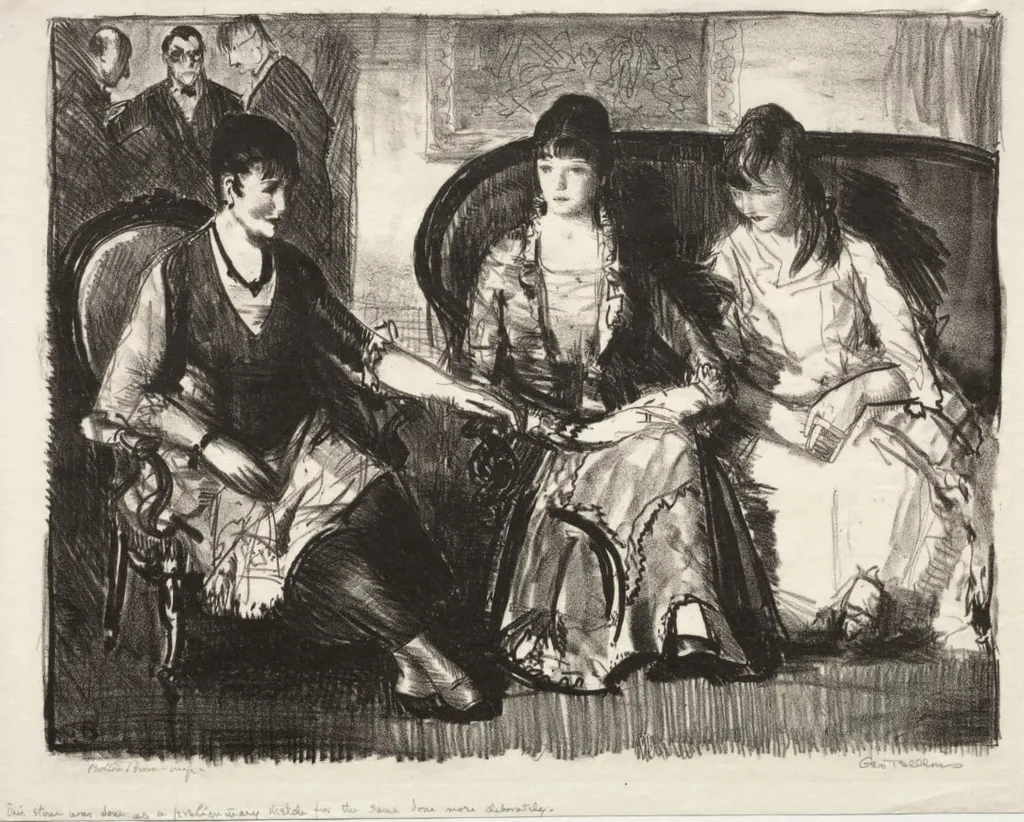
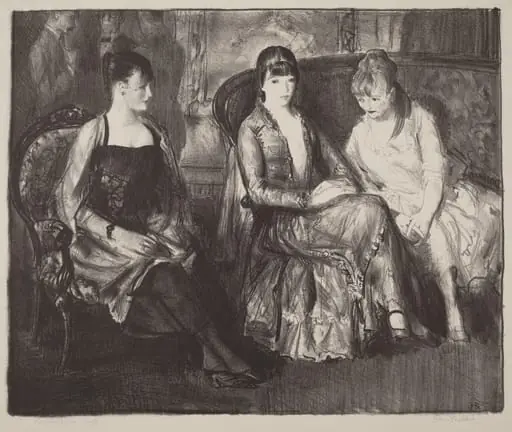
Elsie, Emma and Marjorie, First Stone is a print by George Bellows. It dates from 1921 and is held in the collection of the Cleveland Museum of Art.
About this work
Overview
Created in 1921, *Elsie, Emma and Marjorie, First Stone* is a print by George Bellows, an American artist known for his unvarnished depictions of everyday life.
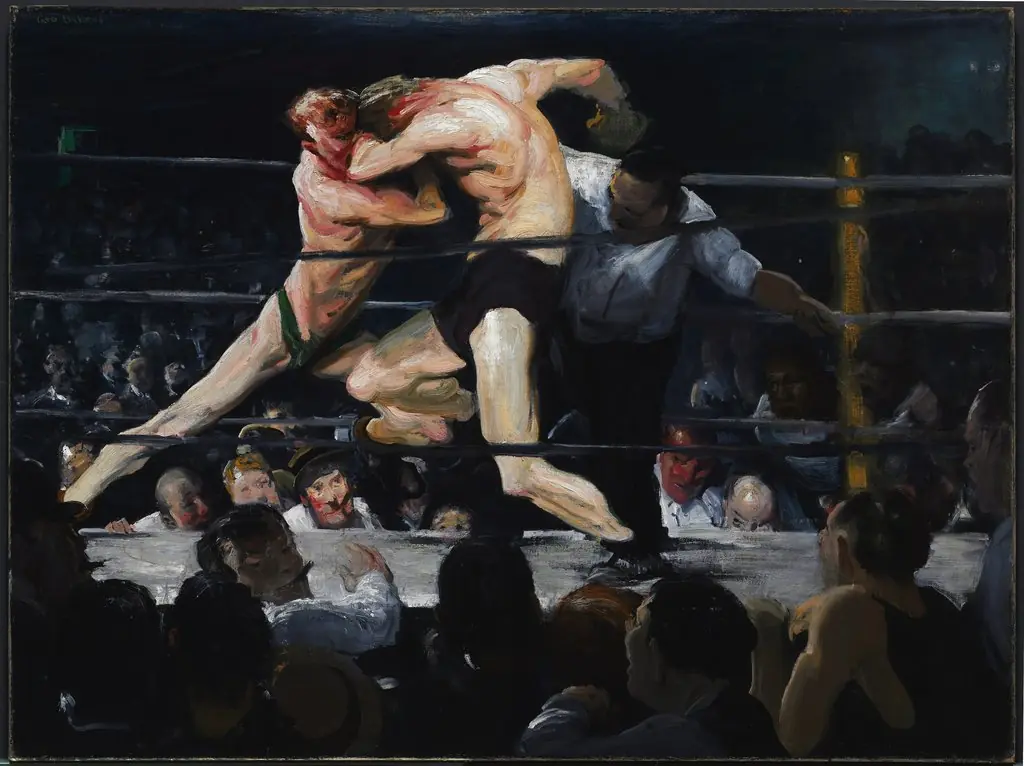
Created in 1921, *Elsie, Emma and Marjorie, First Stone* is a print by George Bellows, an American artist known for his unvarnished depictions of everyday life. Unlike his more famous urban scenes, this work captures a quiet domestic moment. It belongs to a series of intimate portraits Bellows made during this period, focusing on personal interactions rather than public spectacle. The piece is held in the collection of The Cleveland Museum of Art.
Subject & Meaning
The print portrays three young girls gathered during a stone-laying ceremony, likely a community or family ritual. Their close proximity and subdued expressions suggest a moment of solemnity or reflection. Bellows avoids theatricality, presenting the girls not as symbols but as individuals in a private, unguarded setting. The scene’s modesty underscores his interest in ordinary human experience, free from idealization or narrative embellishment.
Technique & Style
Bellows employed rapid, expressive lines and dense chiaroscuro to model form and mood. Light pools on the figures’ faces and laps, while the surrounding space dissolves into shadow, drawing focus to their quiet interaction. The roughness of the brushwork and the absence of fine detail lend immediacy, as if the scene were observed in passing. This approach aligns with his broader commitment to direct observation over polished finish.
History & Provenance
The print was produced in 1921 during a phase when Bellows increasingly turned to intimate subjects after years of painting bustling city scenes. It entered The Cleveland Museum of Art’s collection through a later acquisition, likely as part of a broader effort to document American printmaking of the early 20th century. Its provenance reflects institutional recognition of Bellows’s versatility beyond his urban realism.
Context
In the early 1920s, Bellows shifted from large-scale social scenes to quieter domestic studies, influenced by personal life changes and evolving artistic priorities. This work emerged alongside other prints and drawings of family and friends, signaling a move toward introspection. The era’s broader cultural currents—postwar reflection, interest in psychological depth—resonate in the subdued tone and restrained composition.
Legacy
Though less widely known than his boxing or street scenes, *Elsie, Emma and Marjorie, First Stone* exemplifies Bellows’s capacity for emotional nuance in small-scale work. It contributes to a broader understanding of his oeuvre as not merely documentary but deeply attuned to private moments. The print remains a quiet testament to his ability to find gravity in the unremarkable.
Artist & collection
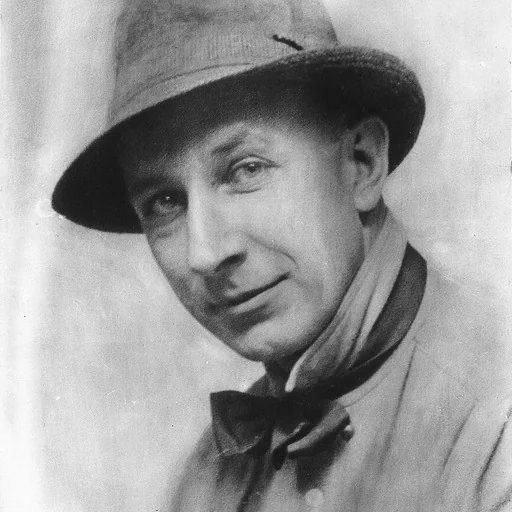
Artist
George Wesley Bellows (August 12 or August 19, 1882 – January 8, 1925) was an American realist painter, known for his bold depictions of urban life in New York City.