Artwork
Prayer Meeting, second stone
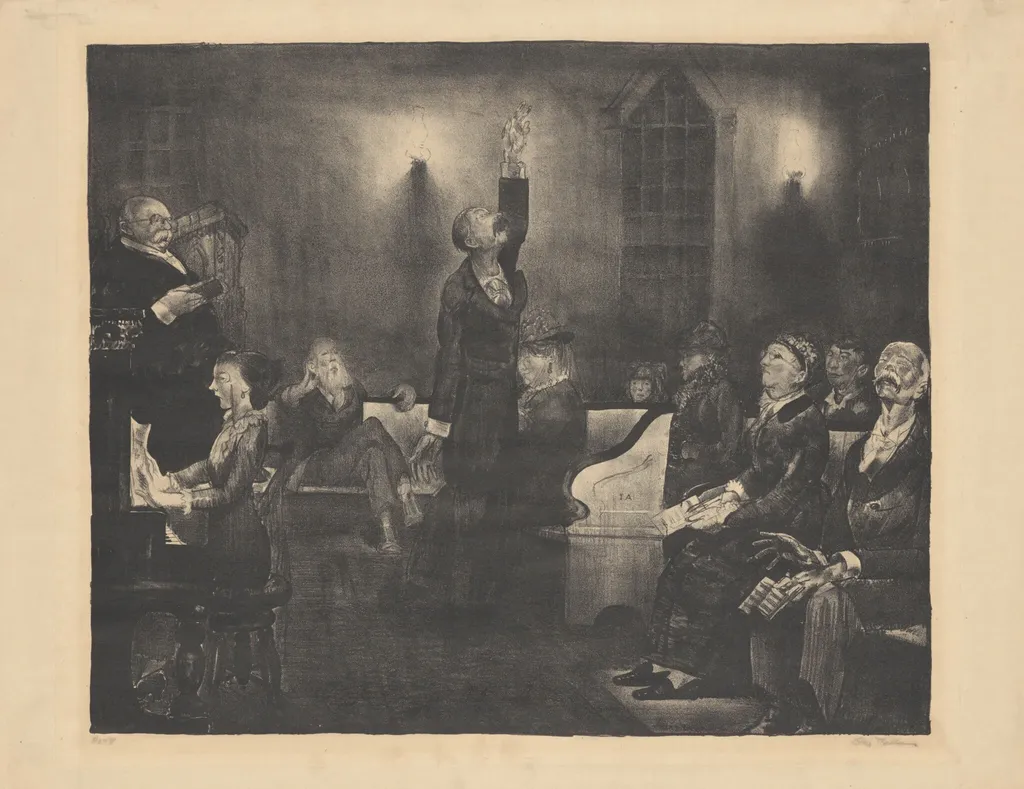
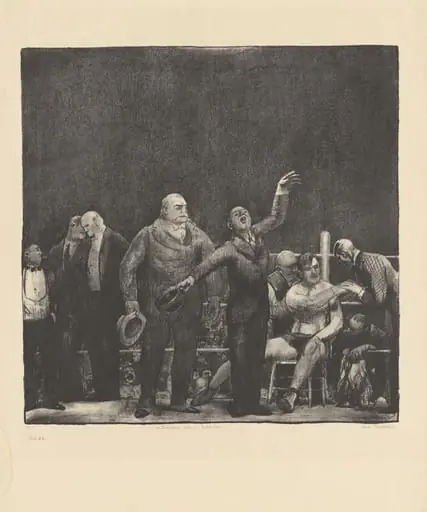
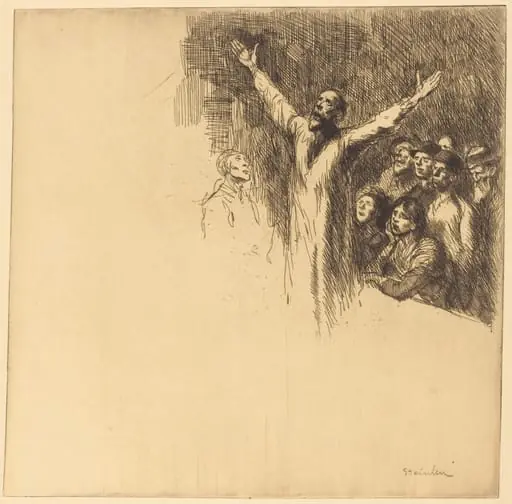
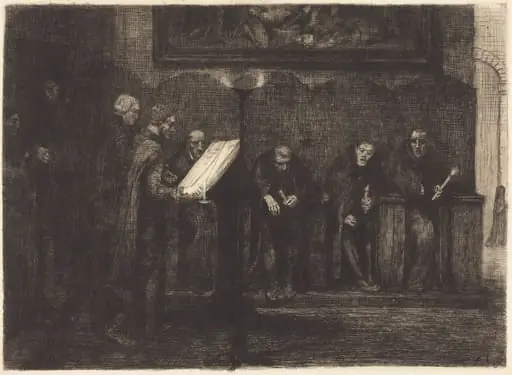
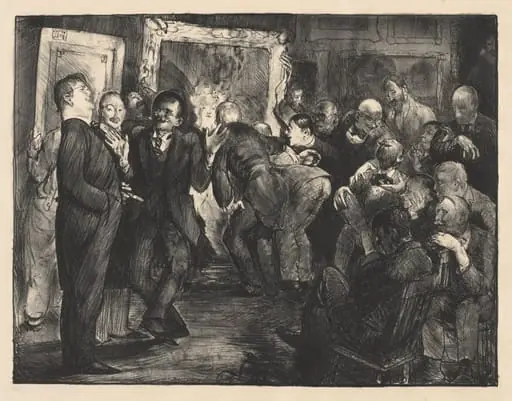
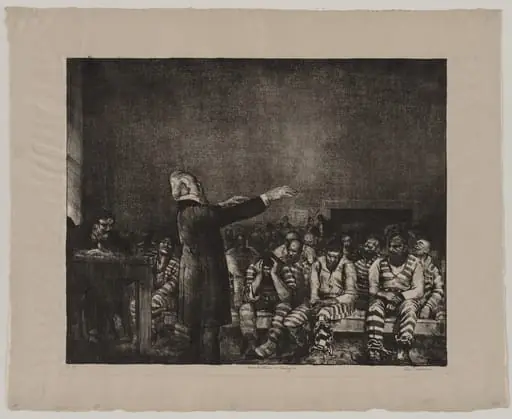
Prayer Meeting, second stone is an ink print by George Bellows. It dates from 1916 and is held in the collection of the National Gallery of Art.
About this work
Overview
The composition is dominated by chiaroscuro contrasts, with a single candle casting the primary light amid deep shadows.
Prayer Meeting, second stone is a 1916 lithograph by George Bellows, rendered in black ink on wove paper. It captures an intimate interior scene of a group gathered in quiet devotion. The composition is dominated by chiaroscuro contrasts, with a single candle casting the primary light amid deep shadows. The print belongs to a series documenting religious gatherings in urban settings, reflecting Bellows’s interest in everyday American life beyond the city’s surface energy.
Subject & Meaning
The scene depicts a modest prayer meeting in a dimly lit room, likely in a tenement or rural chapel. A woman holds a candle aloft, while others sit or stand in contemplative postures—hands clasped, heads bowed. A violinist plays softly in the corner, and a piano, unplayed but present, suggests the communal nature of worship. The faces are rendered with solemnity, emphasizing introspection over spectacle, hinting at spiritual resilience amid hardship.
Technique & Style
Bellows employed lithography to achieve rich tonal variation through ink washes and hatched lines. The black-and-white medium heightens the drama of light and shadow, with soft gradations defining faces and textures. The artist’s hand is evident in the loose, expressive contours and the deliberate absence of fine detail, favoring emotional immediacy over realism. The print’s texture echoes the roughness of the setting, reinforcing its authenticity.
History & Provenance
Created in 1916, this lithograph was one of several Bellows made during a period of intense focus on religious and social rituals in working-class communities. It was printed from the second stone in a limited run, likely intended for distribution through art societies or exhibitions. The work entered public collections in the decades following its creation, preserved as part of Bellows’s broader documentation of American life.
Context
In early 20th-century America, urban poverty and religious revivalism often intersected in immigrant and working-class neighborhoods. Bellows, influenced by social realism and his own observations, turned his attention to these quiet acts of faith. Unlike grand religious paintings, his work avoids idealization, instead portraying devotion as a grounded, communal act shaped by environment and circumstance.
Legacy
Prayer Meeting, second stone remains a quiet but significant example of Bellows’s engagement with spiritual life outside institutional settings. It contributed to a broader shift in American printmaking toward intimate, socially aware subjects. Though less celebrated than his boxing scenes, this work endures for its emotional restraint and its unvarnished portrayal of private devotion in an era of rapid change.
Artist & collection
Artist
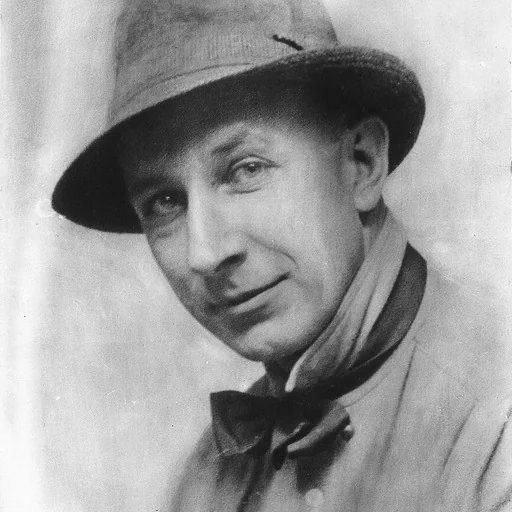
George Wesley Bellows (August 12 or August 19, 1882 – January 8, 1925) was an American realist painter, known for his bold depictions of urban life in New York City.