Artwork
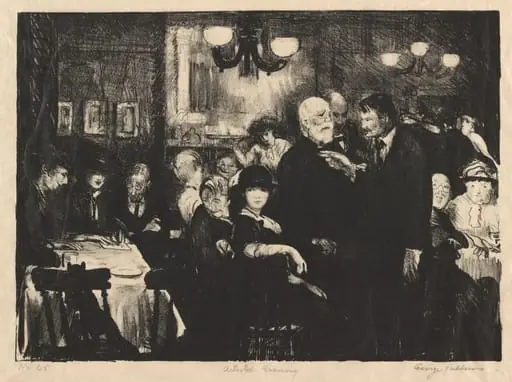
Artists Judging Works of Art
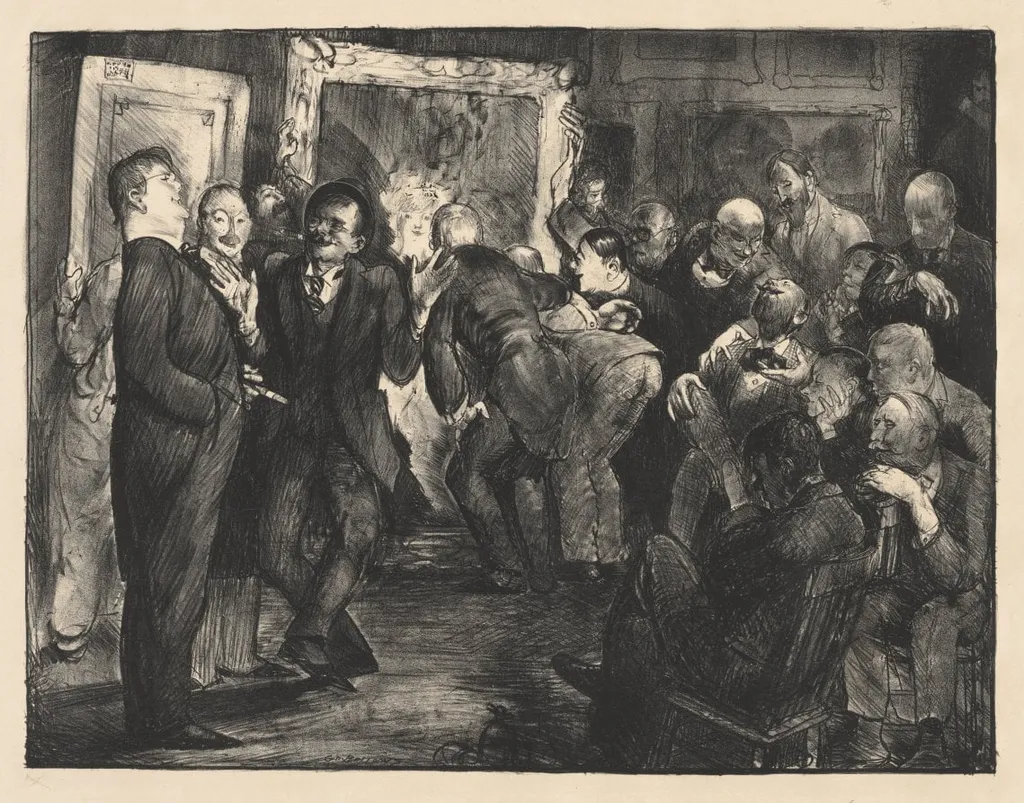
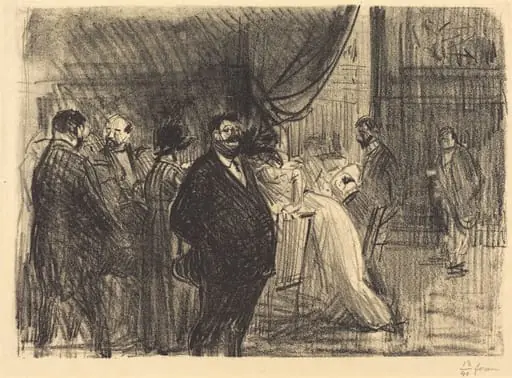
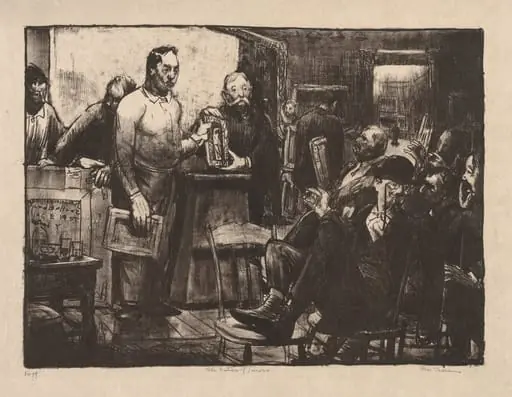
Artists Judging Works of Art is a print by George Bellows. It dates from 1916 and is held in the collection of the Cleveland Museum of Art.
About this work
Overview
George Bellows’ print portrays a gathering of artists seated around a table, examining and critiquing works of art. The composition captures a moment of professional assessment, likely set within the National Arts Club, a known meeting place for members of the Ashcan School.
Subject & Meaning
The work reflects the routine of a young artist serving on an official jury, emphasizing the candid, unvarnished nature of peer evaluation. Bellows’ own comment underscores that the likenesses are rendered truthfully, without alteration to avoid offense.
Technique & Style
Executed as a print, the image employs Bellows’ characteristic bold lines and stark contrasts, typical of his Ashcan-influenced approach. The figures are delineated with a loose yet precise hand, allowing individual features to emerge within the collective scene.
History & Provenance
Created after Bellows’ involvement with the 1912 New York Armory Show planning committee, the print may recall that experience. It includes a self‑portrait in the upper right corner and a depiction of fellow artist Robert Henri seated at lower right, anchoring the work within Bellows’ personal artistic network.
Context
The National Arts Club served as a hub for progressive artists in early‑20th‑century New York, fostering the exchange of ideas central to the Ashcan movement. This setting situates the print within broader debates about modernism and the role of juried exhibitions.
Artist & collection
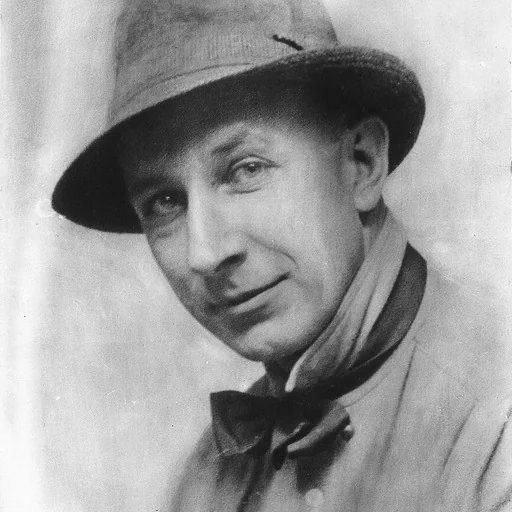
Artist
George Wesley Bellows (August 12 or August 19, 1882 – January 8, 1925) was an American realist painter, known for his bold depictions of urban life in New York City.