Artwork
The White Hope
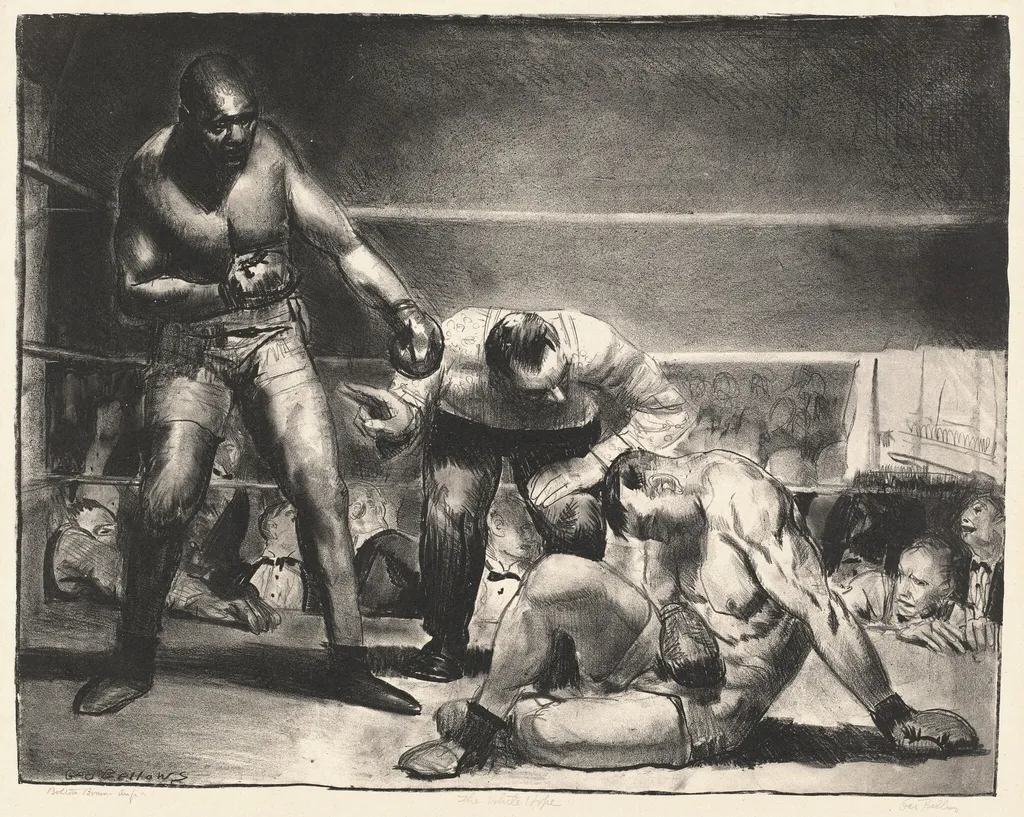
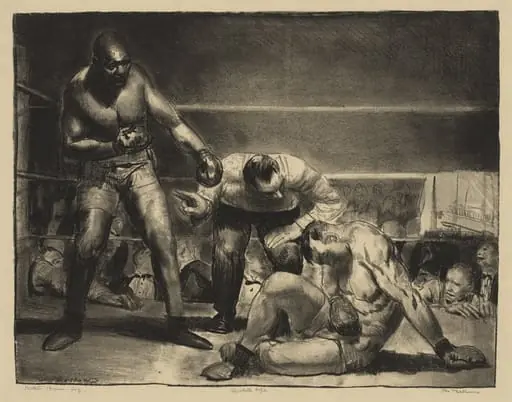
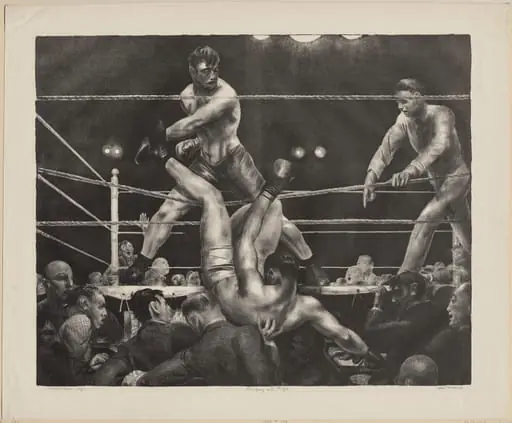
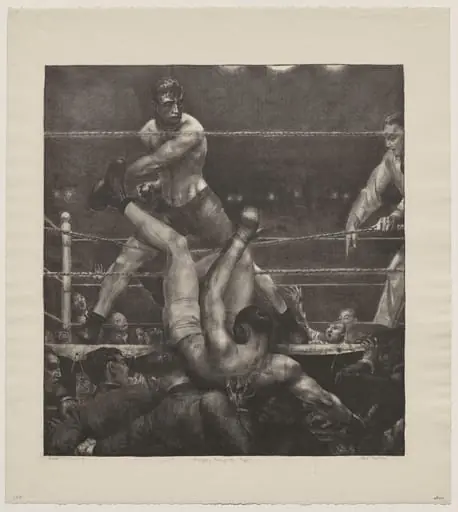
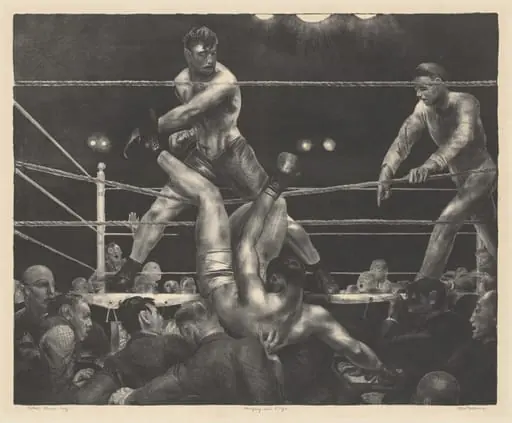
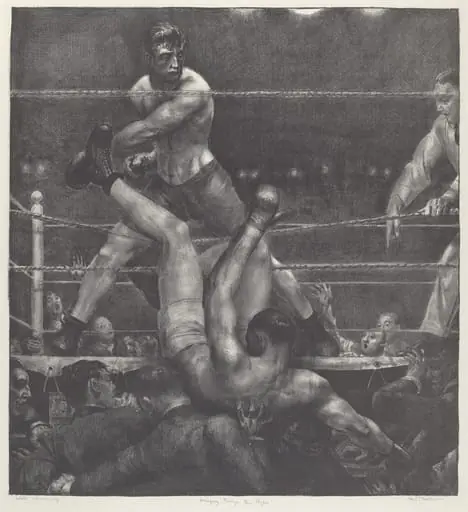
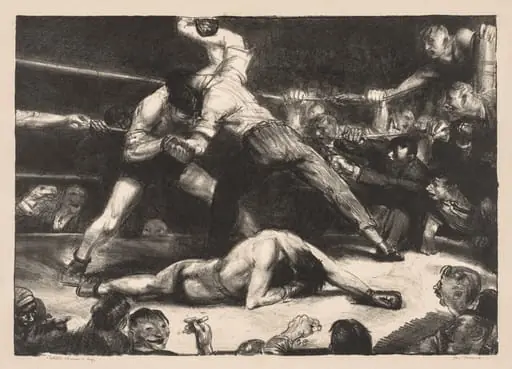
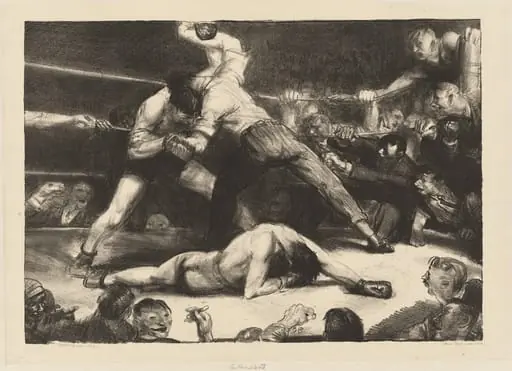
The White Hope is an ink print by George Bellows. It dates from 1921 and is held in the collection of the National Gallery of Art.
About this work
Overview
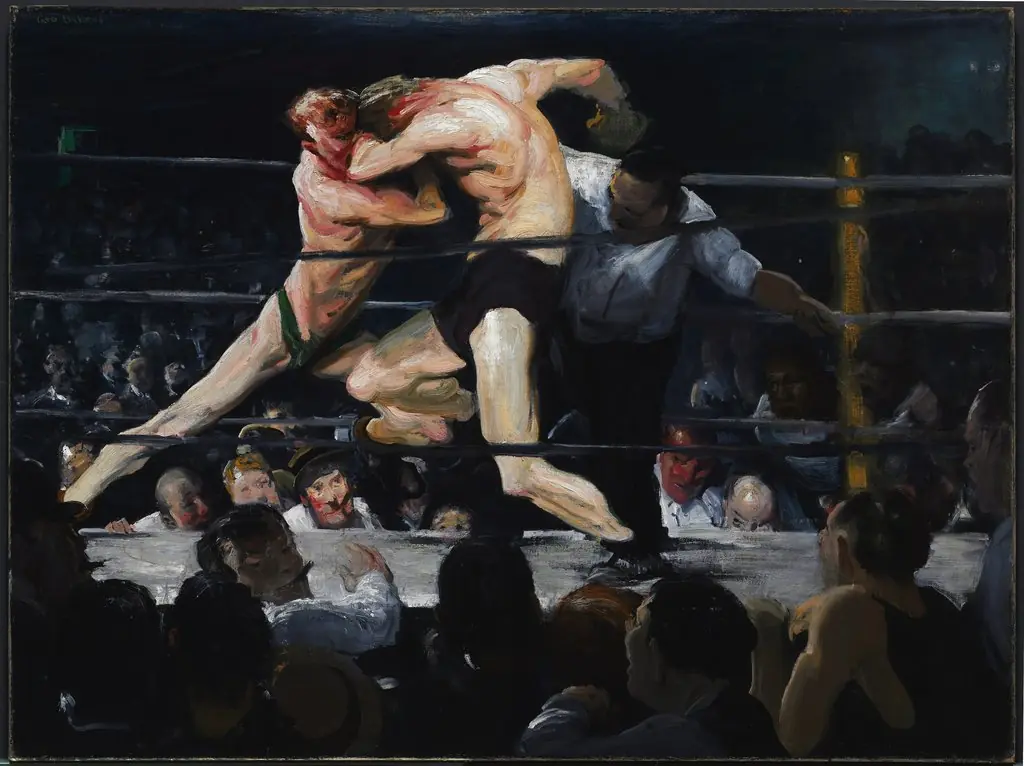
The White Hope is a 1921 black lithograph by George Bellows, depicting a single boxer in the moments before a punch. Rendered in stark monochrome, the print emphasizes contrast and movement, capturing the athlete’s poised tension against a blurred backdrop of spectators. The medium’s capacity for sharp lines and tonal depth enhances the raw energy of the scene without color or embellishment.
Subject & Meaning
The figure is a solitary boxer, clad only in shorts and shoes, frozen mid-motion with both fists drawn tight. His focused expression and rigid posture suggest anticipation rather than action, transforming the moment into a psychological study. The surrounding crowd, indistinct yet palpable, functions as a silent witness, underscoring the isolation and pressure inherent in competitive sport.
Technique & Style
The technique allows for both precision in the figure and atmospheric ambiguity in the background, reinforcing the tension between individual and collective.
Bellows employed lithography to achieve bold, high-contrast imagery with fine textural detail. The black ink renders the boxer’s musculature and the crowd’s fragmented forms with energetic line work, while areas of dense shadow amplify drama. The technique allows for both precision in the figure and atmospheric ambiguity in the background, reinforcing the tension between individual and collective.
History & Provenance
Created in 1921, The White Hope emerged during Bellows’ sustained interest in urban life and athletic spectacle. It was produced as part of a series of prints responding to the popularity of boxing in early 20th-century America. The work entered public collections shortly after its creation, reflecting its resonance within contemporary artistic circles focused on realism and social observation.
Context
In the early 1920s, boxing was both a popular spectacle and a subject of moral debate. Bellows, influenced by the Ashcan School, turned to the ring as a site of raw human endurance. The White Hope reflects this cultural moment, portraying the athlete not as a hero but as a figure caught in the mechanics of public spectacle, stripped of romanticism.
Legacy
The print remains a significant example of American lithography from the interwar period. Its restrained palette and psychological intensity influenced later artists exploring the body under pressure. While not widely reproduced, it endures in institutional collections as a quiet but forceful meditation on performance, visibility, and solitude.
Own this work as a print
Artist & collection
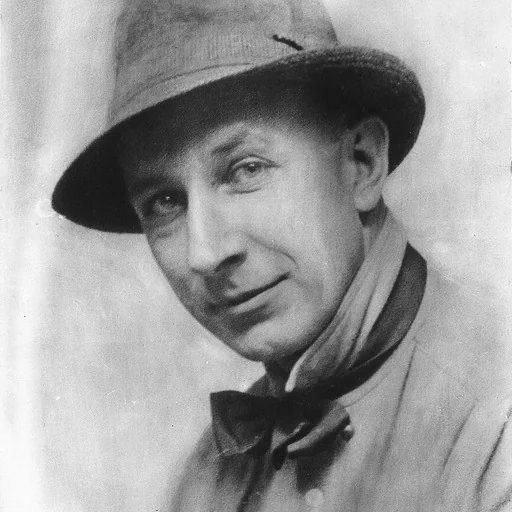
Artist
George Wesley Bellows (August 12 or August 19, 1882 – January 8, 1925) was an American realist painter, known for his bold depictions of urban life in New York City.