Artwork
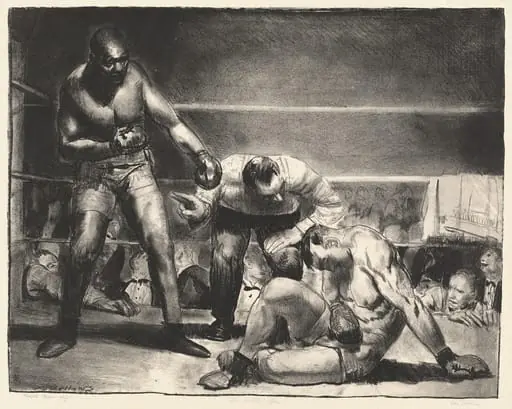
The White Hope
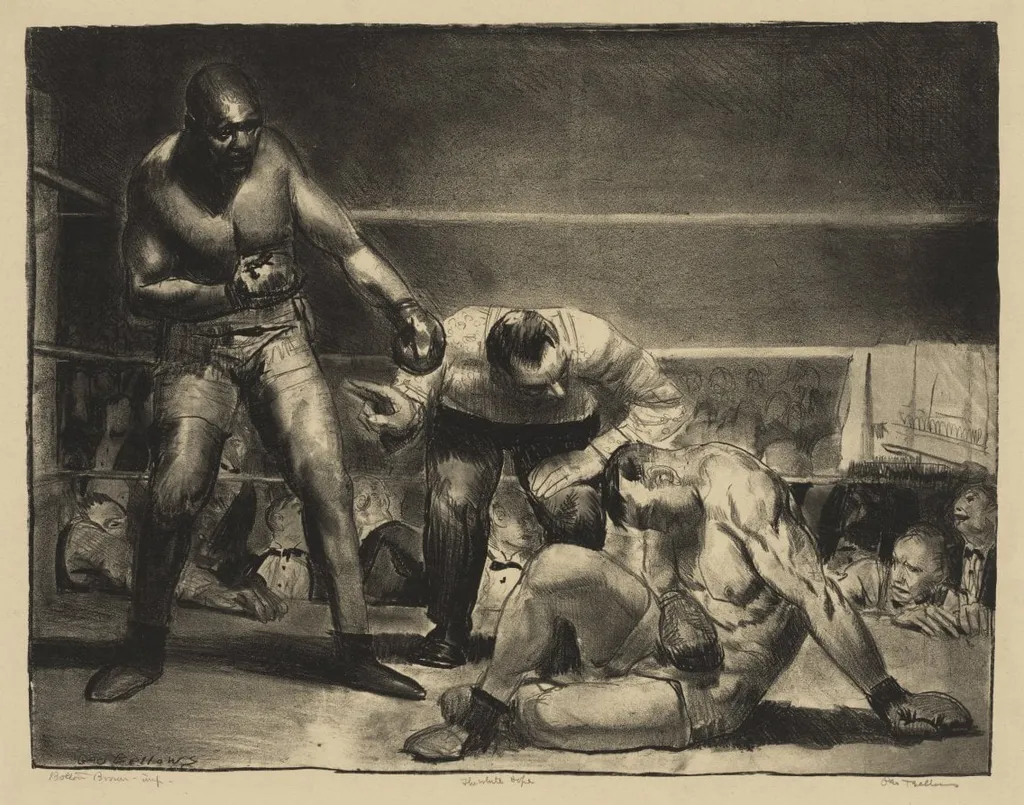
The White Hope is a print by George Bellows. It dates from 1921 and is held in the collection of the Cleveland Museum of Art.
About this work
The darker fighter has his arm extended while the lighter one flinches back.
This print shows two boxers in a ring, one throwing a punch. The darker fighter has his arm extended while the lighter one flinches back. Their faces look tense and focused.
The fight marks a dark moment in American history. In 1910, Jack Johnson beat James J. Jeffries in a match promoters called the "fight of the century." Riots broke out across the country after the win.
Check out more by George Bellows at The Cleveland Museum of Art.
Overview
George Bellows created this print in response to the racially charged atmosphere surrounding Jack Johnson’s 1910 victory over James J. Jeffries. Though not a literal depiction of the fight, the image captures the tension and physicality of the ring, reflecting broader societal anxieties about race and power in early 20th-century America. Bellows avoids overt narrative, instead using stark contrast and dynamic composition to convey unease.
Subject & Meaning
The print portrays two boxers in mid-action: one with a raised, extended arm, the other recoiling. The darker figure’s assertive posture and the lighter’s defensive reaction subtly invert the era’s myth of white dominance. While the scene may reference Johnson’s win over Jeffries, its power lies in its ambiguity—inviting viewers to confront the racial assumptions embedded in the term 'Great White Hope' without literalizing the event.
Technique & Style
Bellows employed bold, angular lines and high-contrast tonal shifts typical of his lithographic work. The figures are rendered with muscular tension, their forms compressed within the tight space of the ring. Background details are minimal, focusing attention on the physical confrontation. The rough texture of the print amplifies the rawness of the moment, reinforcing the emotional weight of the scene without sentimentality.
History & Provenance
Created shortly after the 1910 fight, the print emerged amid nationwide racial unrest triggered by Johnson’s victory. Though no definitive record ties this specific image to a single publication or exhibition at the time, it aligns with Bellows’s interest in contemporary social themes. The work entered museum collections decades later, recognized for its incisive commentary on race and spectacle in American culture.
Context
Johnson’s triumph over Jeffries was framed by promoters and media as a battle for racial supremacy. The resulting riots, which left dozens dead and hundreds injured, revealed deep-seated fears among white Americans. Bellows’s image does not illustrate the event directly but reflects the cultural undercurrents: the collapse of the 'Great White Hope' myth and the violent resistance to Black achievement in public life.
Legacy
The print endures as a quiet but potent critique of racial ideology in sports and society. Unlike overtly propagandistic imagery of the time, Bellows’s work resists simplification, offering no heroes or villains—only two men in conflict, their identities charged with meaning beyond the ring. It remains a significant example of early 20th-century American art engaging critically with race, violence, and national identity.
Artist & collection
Artist
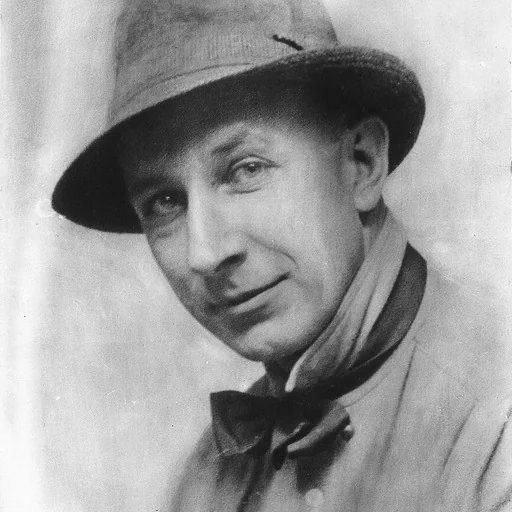
George Wesley Bellows (August 12 or August 19, 1882 – January 8, 1925) was an American realist painter, known for his bold depictions of urban life in New York City.