Artwork
Cymon and Iphigenia
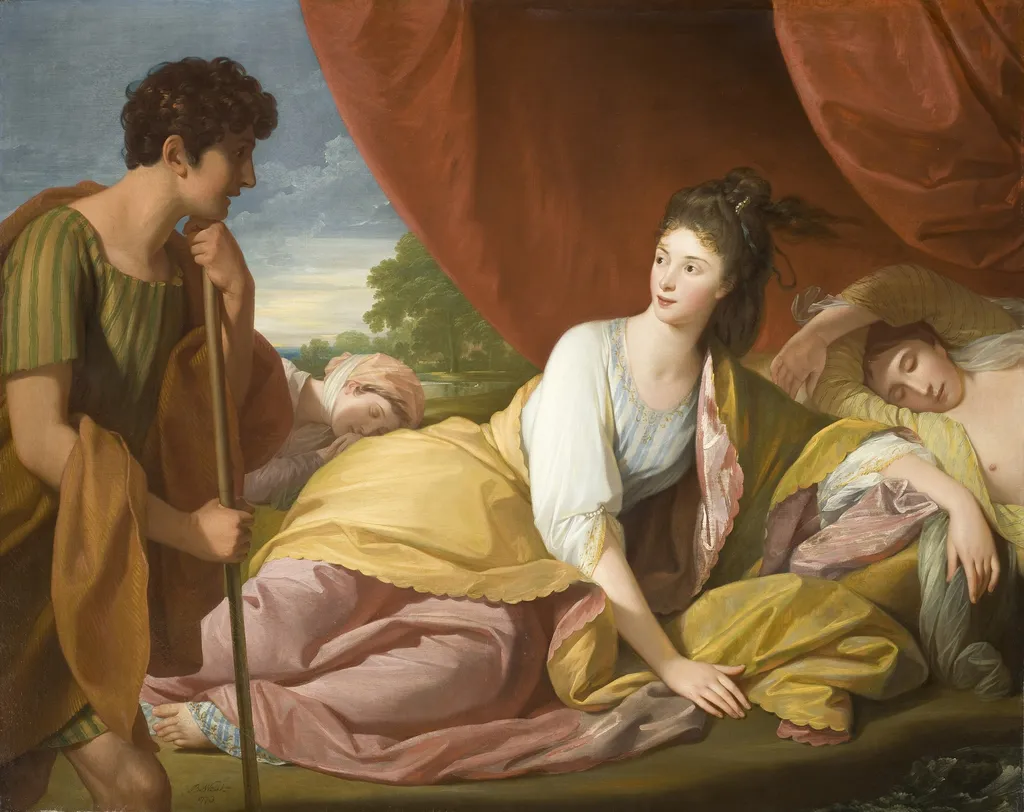
Cymon and Iphigenia is an oil painting by the Neoclassicist artist Benjamin West. It dates from 1773 and is held in the collection of the Los Angeles County Museum of Art.
About this work
Overview
The work is one of several history paintings he produced during his tenure as a leading figure in the British art world.
Benjamin West, an American artist based in London, painted Cymon and Iphigenia in 1773 using oil on canvas. The work is one of several history paintings he produced during his tenure as a leading figure in the British art world. It reflects the 18th-century preference for classical narratives and idealized human forms, aligning with the aesthetic principles of Neoclassicism that dominated academic art at the time.
Subject & Meaning
The scene illustrates a moment from the ancient tale of Cymon, a young man transformed by love after encountering Iphigenia. Here, he observes her in repose, surrounded by sleeping attendants, as she remains unaware of his presence. The narrative emphasizes moral awakening through quiet contemplation rather than dramatic action, underscoring Enlightenment ideals of emotional restraint and the civilizing power of beauty.
Technique & Style
West employed chiaroscuro to model the figures with subtle gradations of light and shadow, enhancing their three-dimensionality. The composition is balanced and orderly, with the central pair framed by the reclining figures and the distant landscape. Palette choices—soft whites, muted greens, and pale blues—contribute to a tranquil mood, while the smooth brushwork and precise contours reflect the academic training and Neoclassical discipline of the period.
History & Provenance
Completed in 1773, the painting entered the collection of the Los Angeles County Museum of Art, where it remains today. Though not among West’s most widely exhibited works, it was produced during his peak influence as a founding member of the Royal Academy and official painter to King George III. Its survival and preservation reflect its status as a representative example of British Neoclassical practice.
Context
In the 1770s, British artists increasingly turned to classical mythology to convey moral and emotional narratives, distancing themselves from Baroque drama. West, as a transatlantic figure bridging American and British traditions, helped institutionalize this trend. Cymon and Iphigenia fits within a broader cultural project to elevate art as a vehicle for refined sentiment and intellectual virtue, aligned with the values of the Royal Academy.
Legacy
Though less celebrated than West’s larger historical scenes, this painting exemplifies his ability to convey quiet human moments within classical frameworks. It influenced later artists seeking to merge narrative depth with compositional clarity. Its presence in a major American museum underscores the transatlantic circulation of British academic art and its enduring role in shaping 19th-century taste.
Own this work as a print
Artist & collection

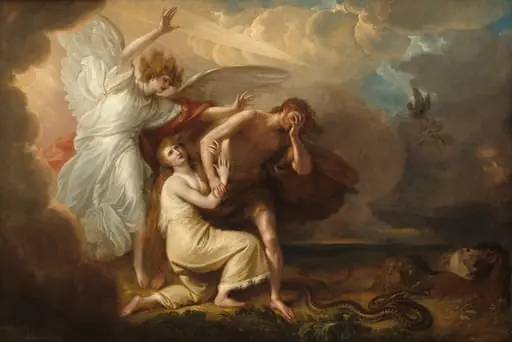 The Expulsion of Adam and Eve from Paradise
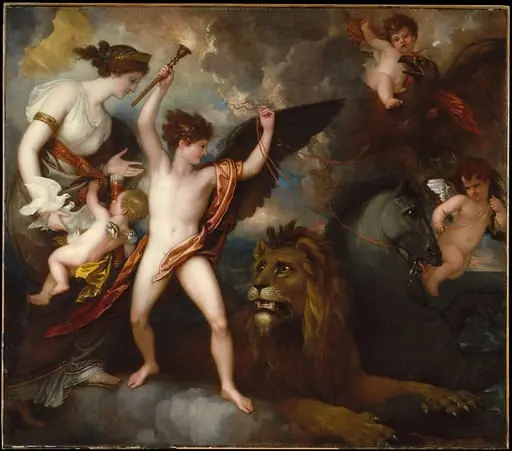 Omnia Vincit Amor, or The Power of Love in the Three Elements
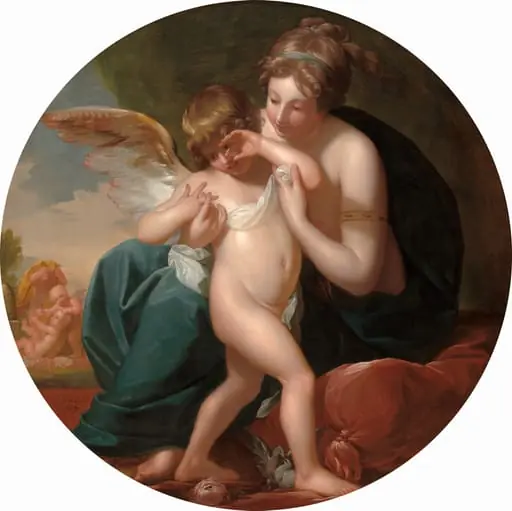 Cupid, Stung by a Bee, Is Cherished by his Mother
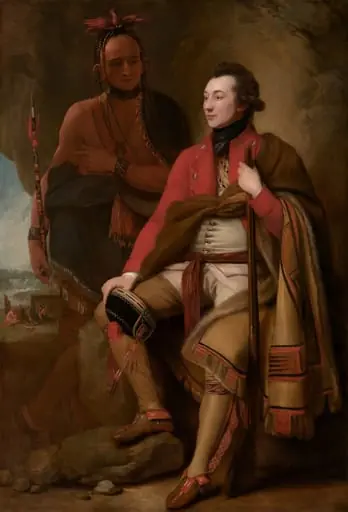 Colonel Guy Johnson and Karonghyontye (Captain David Hill)
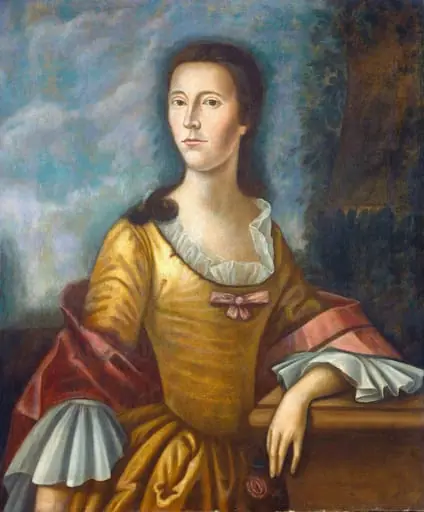 Mary Bethel Boude (Mrs. Samuel Boude)
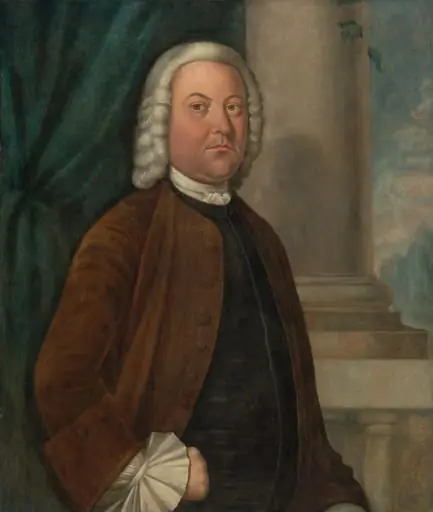 Dr. Samuel Boude
 Moses Shown the Promised Land
 Hagar and Ishmael