Artwork
The Death of Wolfe
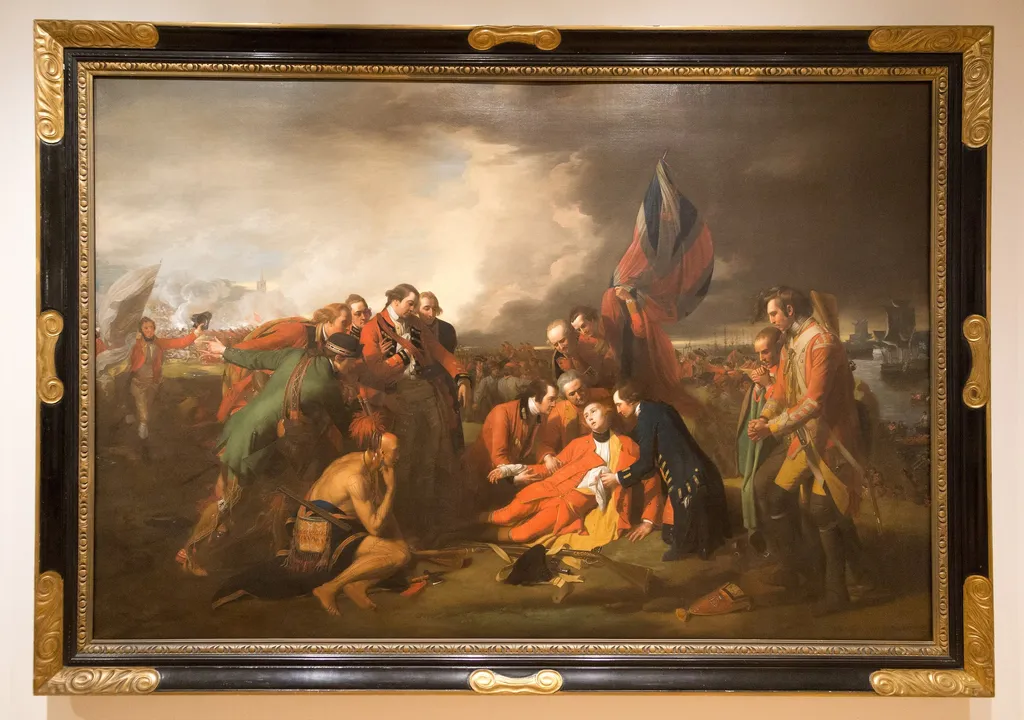
The Death of Wolfe is an oil painting by the Neoclassicist artist Benjamin West. It dates from 1788 and is held in the collection of the Art Gallery of Ontario.
About this work
Overview
The work resides in the Art Gallery of Ontario, where it remains a key example of 18th-century British historical art.
Benjamin West, an American artist who established his career in London, completed this oil painting in 1788. It portrays the fatal moment of British General James Wolfe during the 1759 Battle of Quebec. Though West was self-taught, he rose to lead the Royal Academy and served as royal historical painter. The work resides in the Art Gallery of Ontario, where it remains a key example of 18th-century British historical art.
Subject & Meaning
The painting captures the dying General Wolfe surrounded by officers and soldiers, moments after he was mortally wounded. His pale face and bandaged arm signal his imminent death, while a soldier holds the British flag above him. The scene emphasizes sacrifice and duty, presenting Wolfe as a stoic hero. Rather than idealizing the moment in classical terms, West chose contemporary dress, grounding the event in historical reality.
Technique & Style
West employed oil paint to render fine details in fabric, skin tone, and smoke, creating a sense of immediacy. The composition is carefully arranged to draw the eye to Wolfe’s still form, with figures arranged in a semi-circle around him. Lighting is subdued, enhancing the solemnity. Though influenced by classical composition, the use of modern uniforms broke from tradition, signaling a shift toward historical accuracy in narrative painting.
History & Provenance
Commissioned after West’s earlier version of the scene gained attention, this 1788 painting was part of a series of historical works he produced for British patrons. It entered the Art Gallery of Ontario’s collection in the 20th century, having passed through private hands since its completion. Its preservation reflects its significance as a documented representation of a pivotal moment in British imperial history.
Context
Painted nearly three decades after the Battle of Quebec, the work emerged during a period when Britain was consolidating its imperial identity. West’s decision to depict contemporary uniforms rather than classical robes challenged academic norms. The painting responded to public interest in recent military victories and contributed to a growing trend of honoring modern heroes in art.
Legacy
West’s approach influenced later historical painters by prioritizing factual accuracy over mythic idealism. Though not universally acclaimed at the time, the painting helped redefine how contemporary events could be treated in fine art. Its presence in a major Canadian institution underscores its role in bridging British imperial narratives with North American cultural memory.
Artist & collection

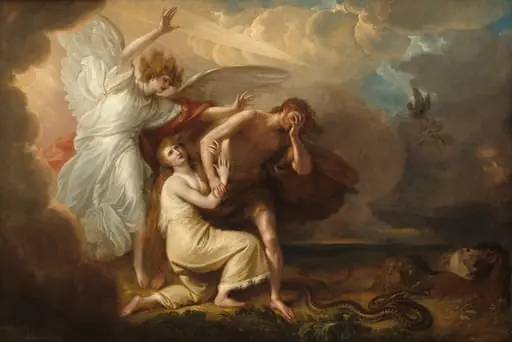 The Expulsion of Adam and Eve from Paradise
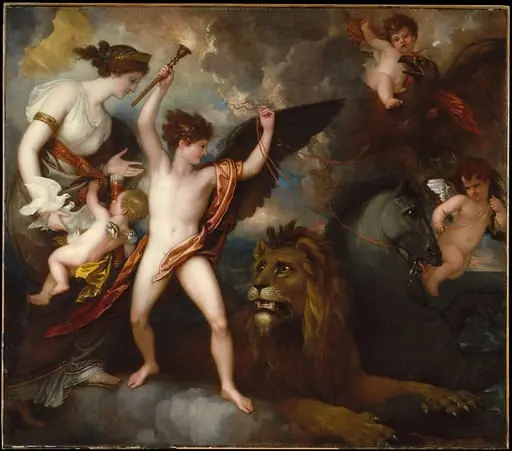 Omnia Vincit Amor, or The Power of Love in the Three Elements
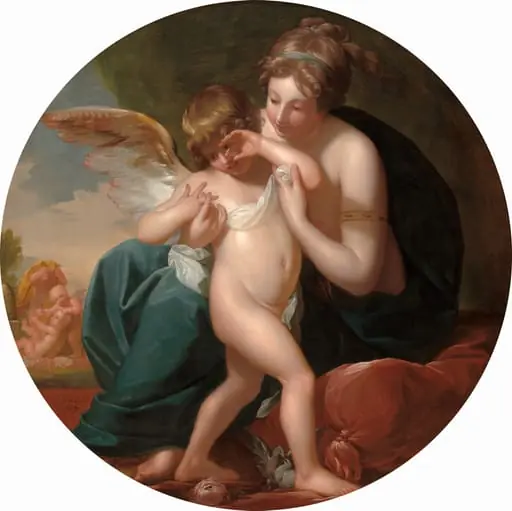 Cupid, Stung by a Bee, Is Cherished by his Mother
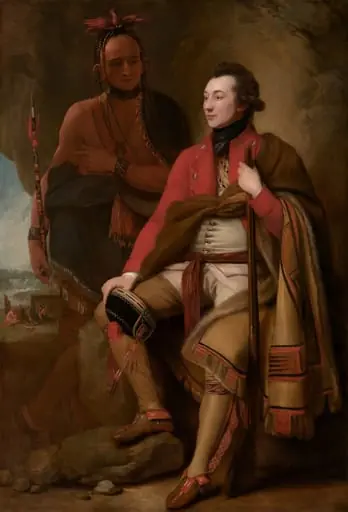 Colonel Guy Johnson and Karonghyontye (Captain David Hill)
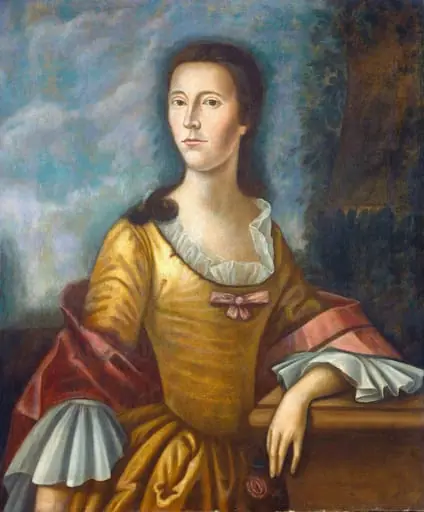 Mary Bethel Boude (Mrs. Samuel Boude)
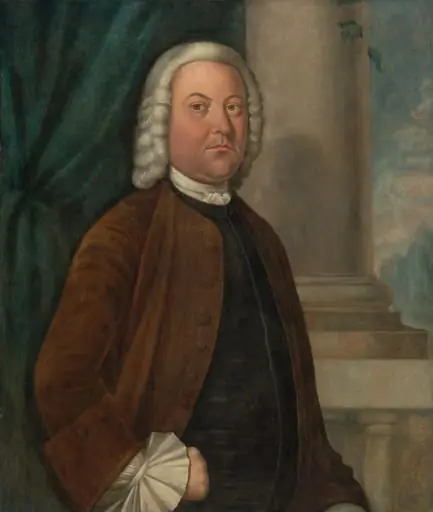 Dr. Samuel Boude
 Moses Shown the Promised Land
 Hagar and Ishmael
 The Sortie Made by the Garrison of Gibraltar
 The Death of General Warren at the Battle of Bunker's Hill, 17 June, 1775
 Reiterszene
 Reiterszene
 Feldschlacht
 Slaget ved Sehested
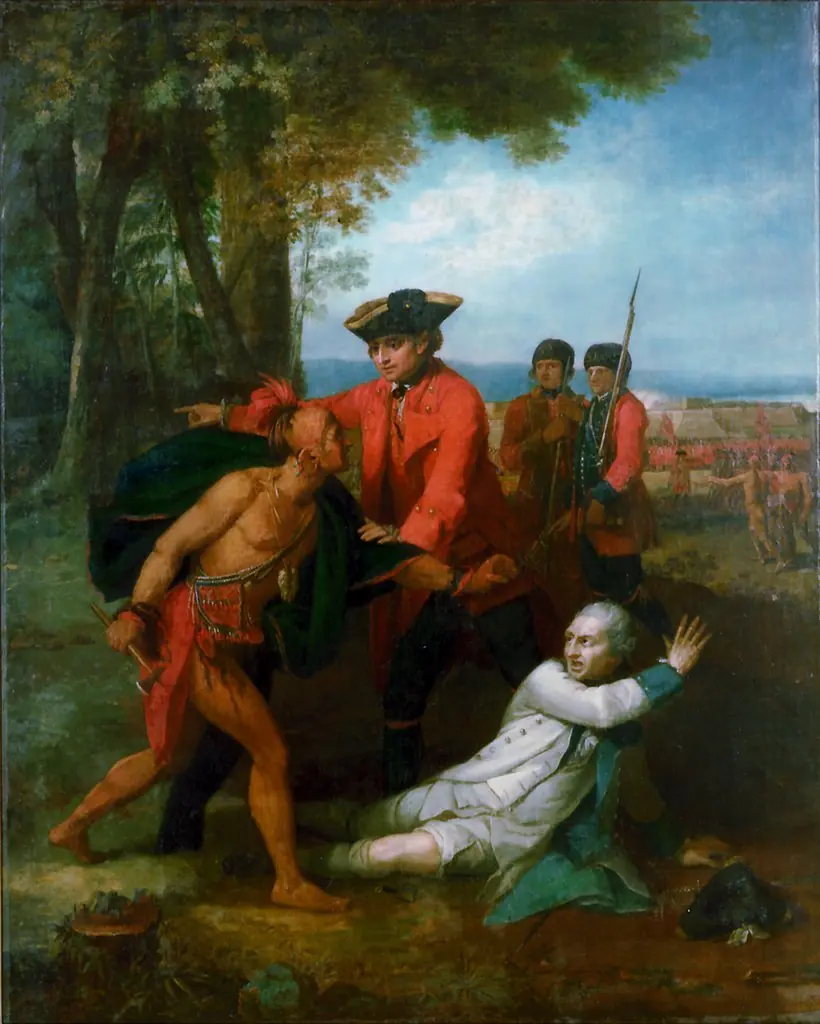 General Johnson Saving a Wounded French Officer from the Tomahawk of a North American Indian
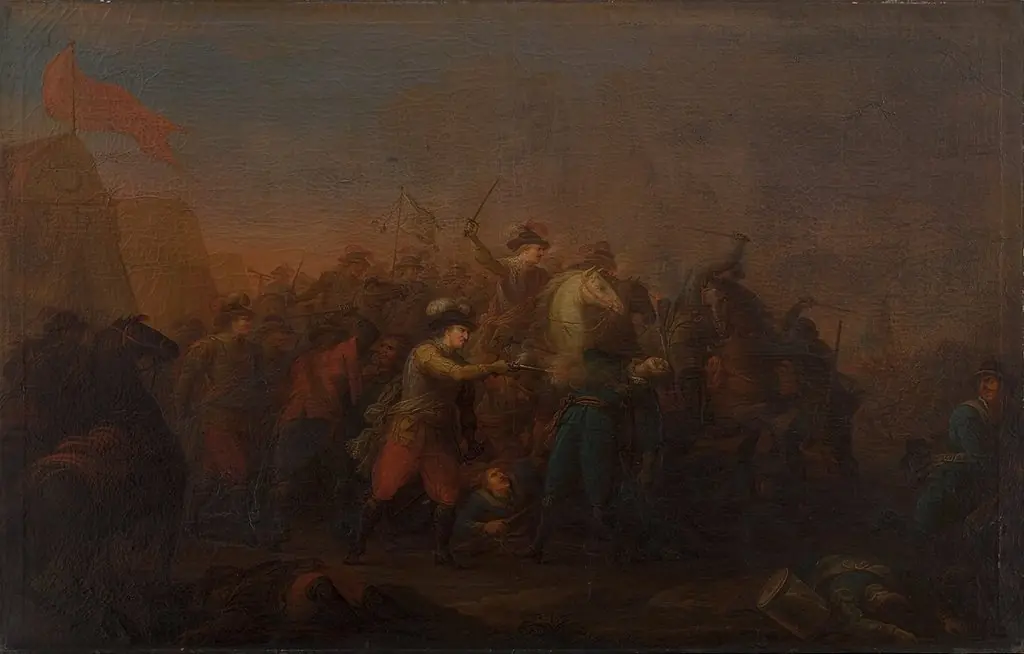 Batalje mellem danske og svenske under Kalmarkrigen 1611-1613
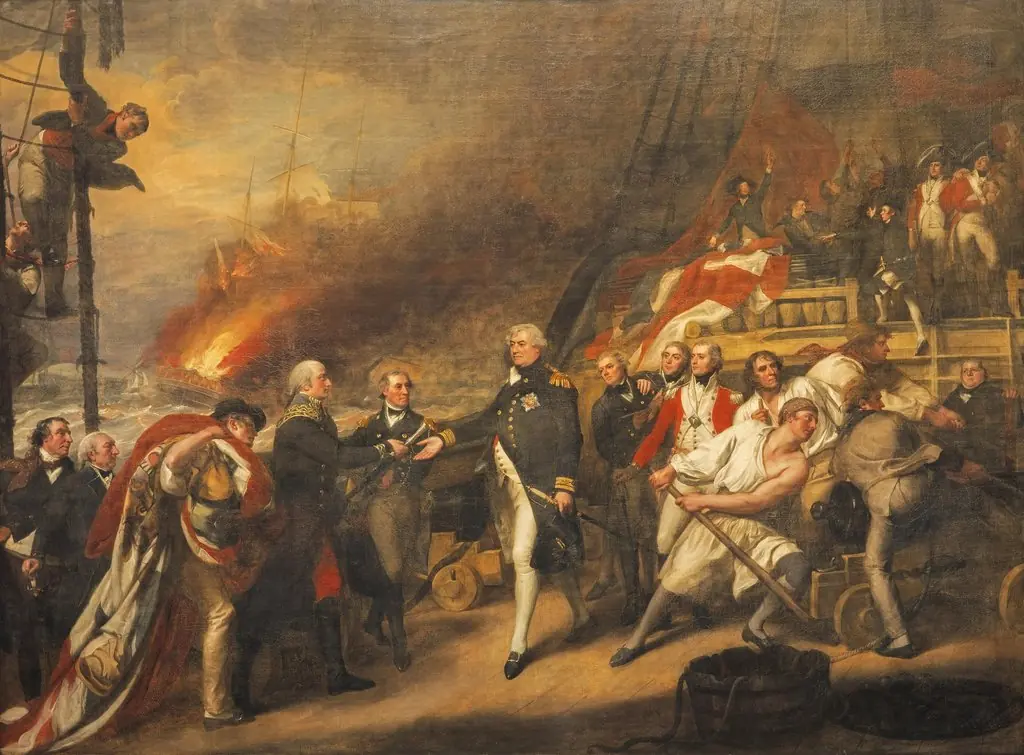 The Surrender of the Dutch Admiral de Winter to Admiral Duncan at the Battle of Camperdown (The Victory of Lord Duncan)
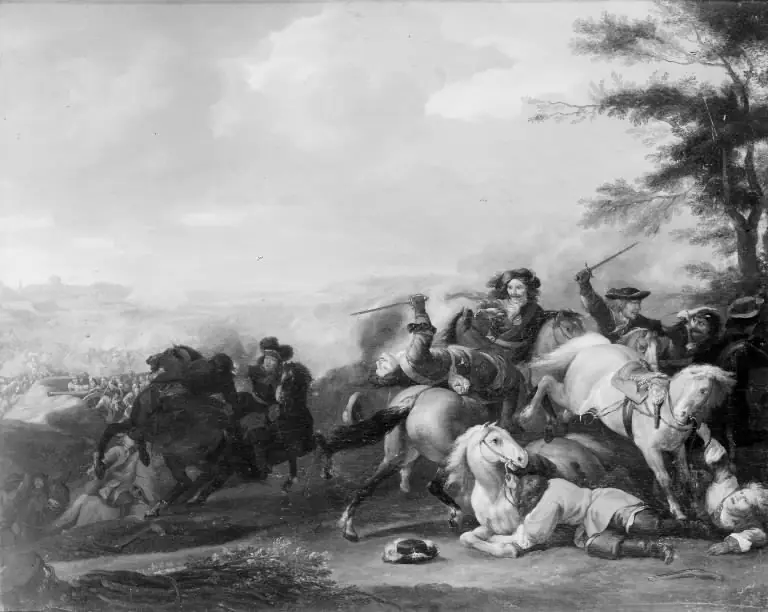 Battle Scenery