Artwork
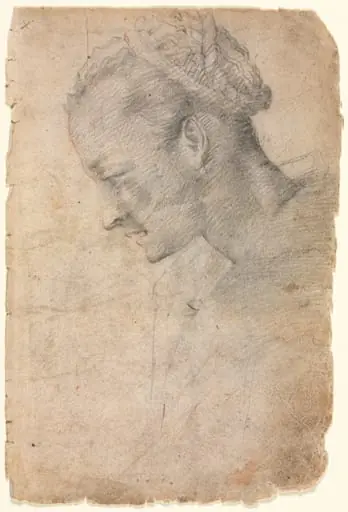
Bust of a Woman (recto)
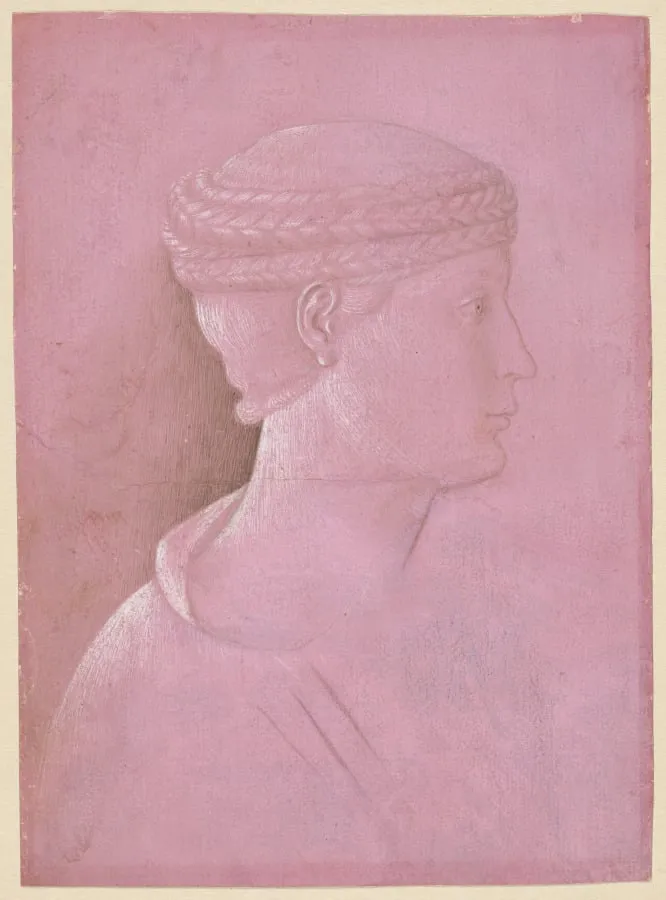
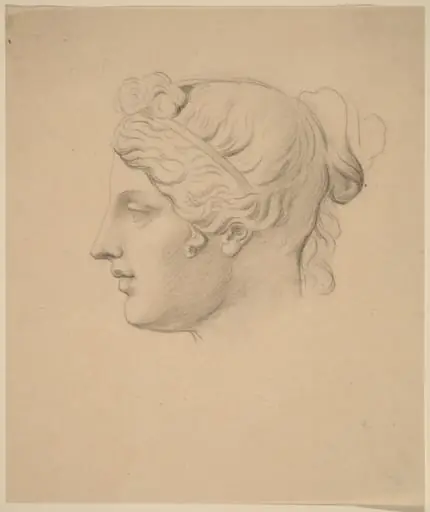
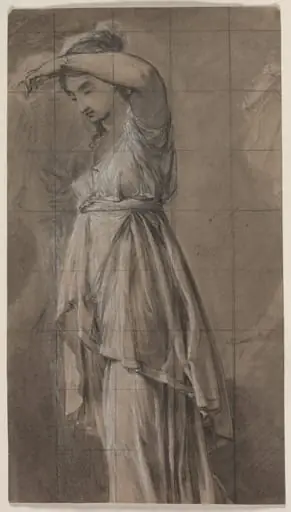
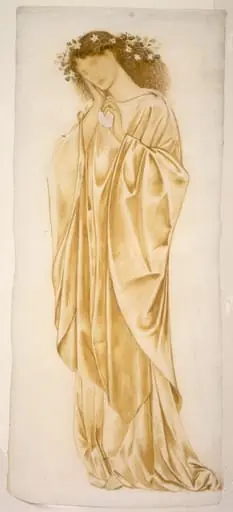
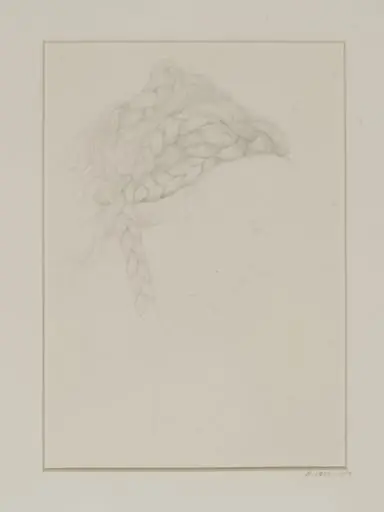
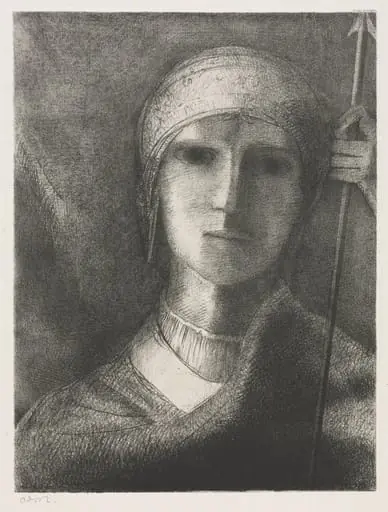
Bust of a Woman (recto) is a drawing by the Renaissance artist Benozzo Gozzoli. It dates from 1458 and is held in the collection of the Cleveland Museum of Art.
About this work
Overview
Created around 1458 by the Florentine artist Benozzo Gozzoli, this drawing captures a woman’s profile in quiet intimacy. Executed in a restrained palette with soft graphite or metalpoint, it reflects Gozzoli’s mastery of portraiture outside his large-scale frescoes. The composition focuses solely on the head and neck, eliminating background distraction to emphasize form and presence.
Subject & Meaning
The modest headband and smooth neckline imply a middle-class or noble woman of the period, not a mythological or religious figure.
The subject is an unidentified woman, depicted with serene dignity. Her head is turned slightly, gaze directed away, suggesting contemplation rather than engagement. The modest headband and smooth neckline imply a middle-class or noble woman of the period, not a mythological or religious figure. The portrait’s intimacy points to a personal study, possibly a preparatory sketch or a standalone tribute.
Technique & Style
Gozzoli employed delicate, fluid lines to model the contours of the face and hair, using subtle gradations to suggest volume without heavy shading. The flat pink wash behind the figure enhances the sense of depth through contrast, not detail. His handling of edges—soft yet precise—echoes early sfumato techniques, aligning with Florentine innovations in naturalistic representation.
History & Provenance
The drawing is attributed to Gozzoli based on stylistic parallels with his known works and documentary evidence from mid-15th-century Florence. It likely originated in his workshop, where such studies were common for training and composition planning. Its survival is rare, as most preparatory drawings from this period were discarded or reused.
Context
In 1450s Florence, artists increasingly turned to direct observation of individuals, moving beyond idealized types. Gozzoli, influenced by Fra Angelico and the humanist climate, integrated Gothic elegance with emerging Renaissance naturalism. This drawing exemplifies that transition—delicate yet grounded, decorative yet psychologically present.
Legacy
Though less celebrated than his frescoes, this drawing reveals Gozzoli’s sensitivity to individual likeness and his command of line as a tool for expression. It stands as a quiet testament to the value of preparatory studies in Renaissance practice, offering insight into how artists refined their understanding of form beyond public commissions.
Artist & collection
Artist
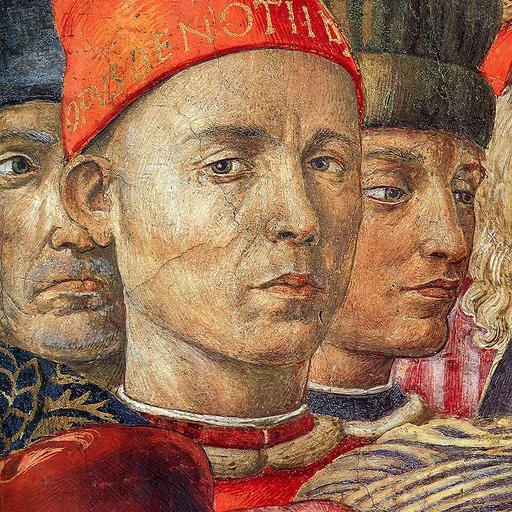
Benozzo Gozzoli (pronounced ; born Benozzo di Lese; c. 1421 – 4 October 1497) was an Italian Renaissance painter from Florence. A pupil of Fra Angelico, Gozzoli is best known for a series of murals in the Magi Chapel of…

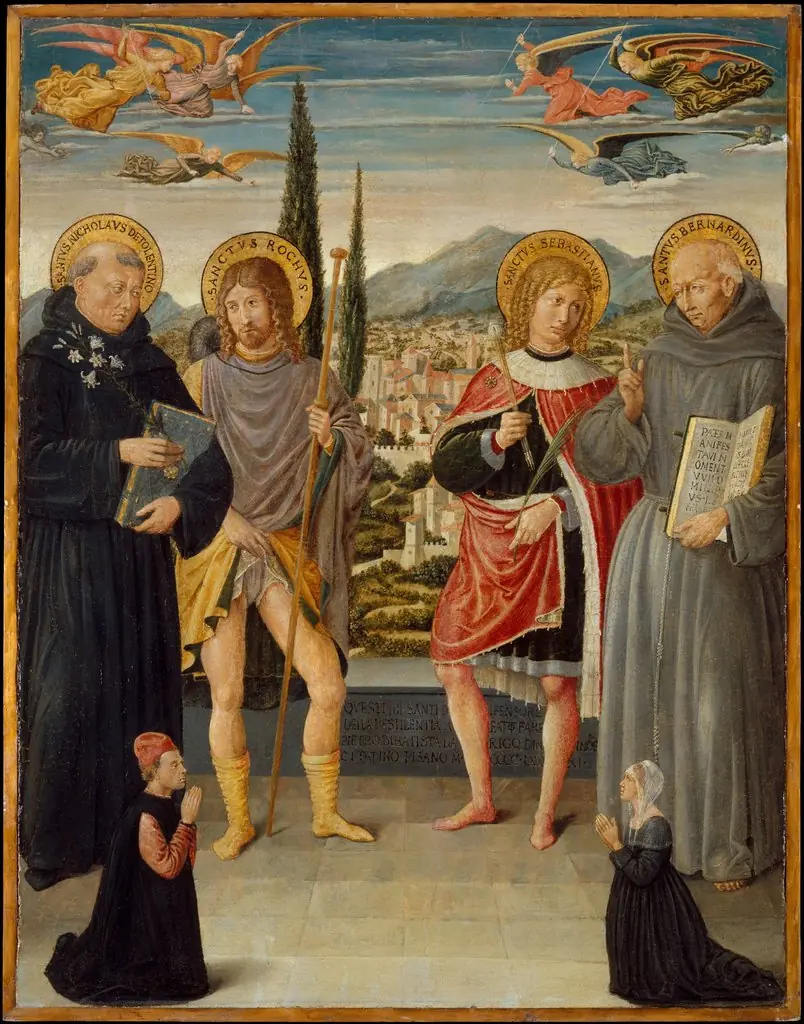 Saints Nicholas of Tolentino, Roch, Sebastian, and Bernardino of Siena, with Kneeling Donors
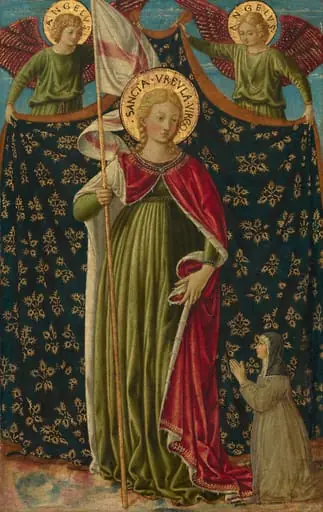 Saint Ursula with Two Angels and Donor
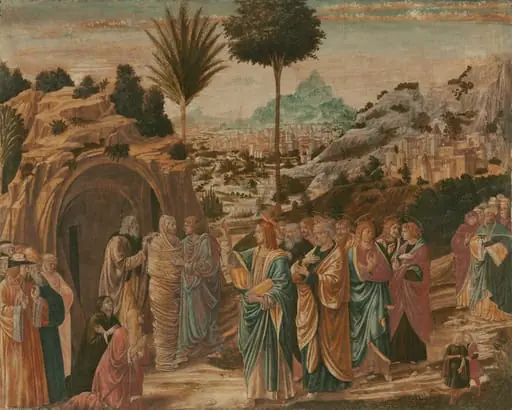 The Raising of Lazarus
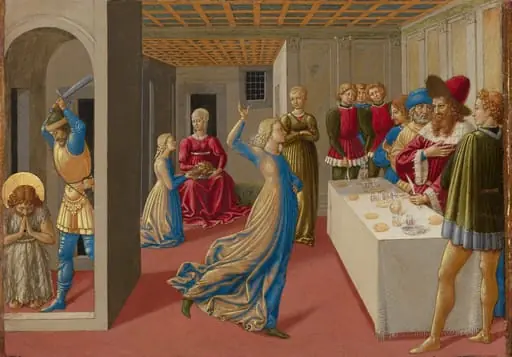 The Feast of Herod and the Beheading of Saint John the Baptist
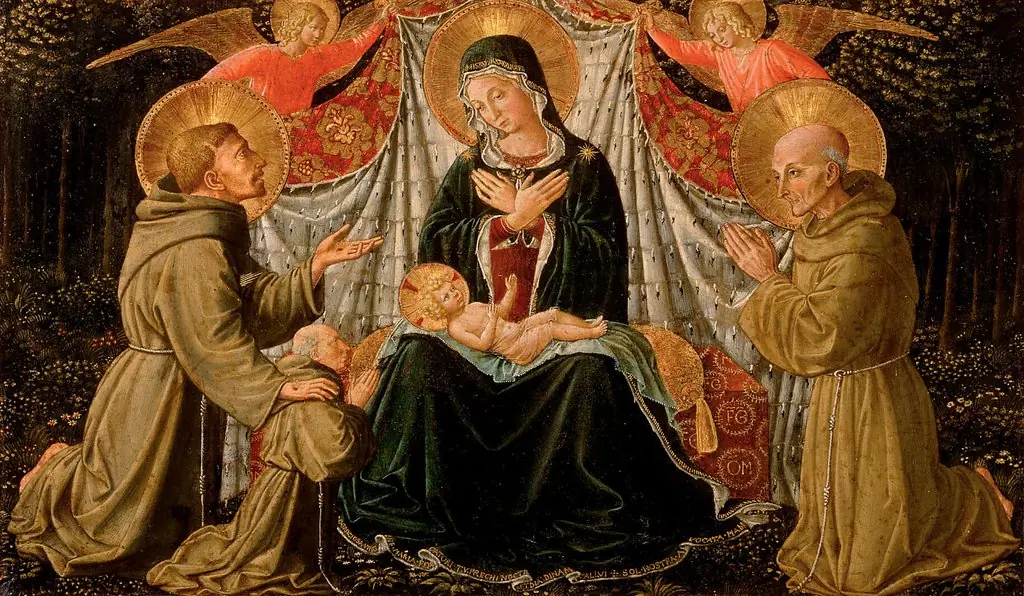 Madonna and Child with St Francis and the donor Father Jacopo da Montefalco (left) and St Bernard of Siena (right)
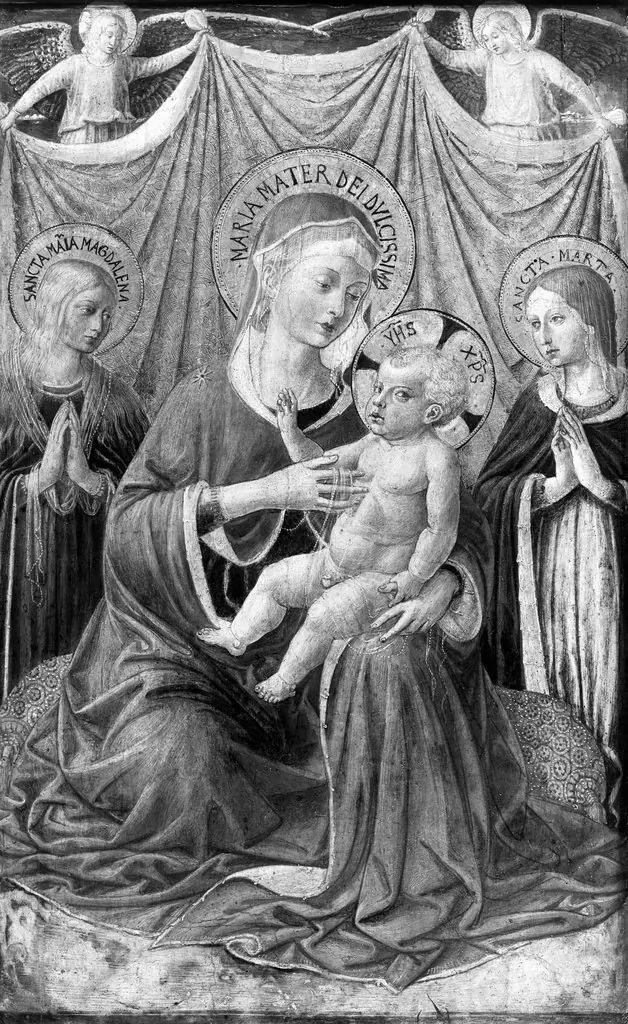 Mary with the child and saints
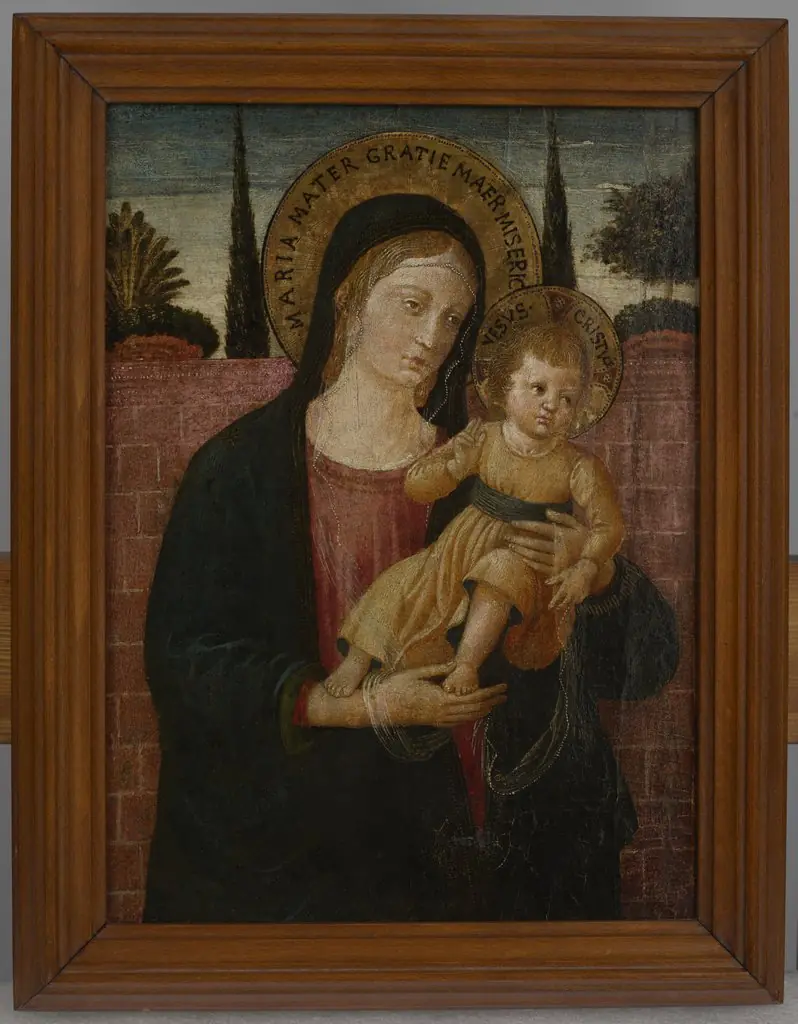 Madonna with Child
 Madonna and Child (Obverse) and Tobias with Archangel Raphael (Reverse)