Artwork
Siltamaisema Saksasta
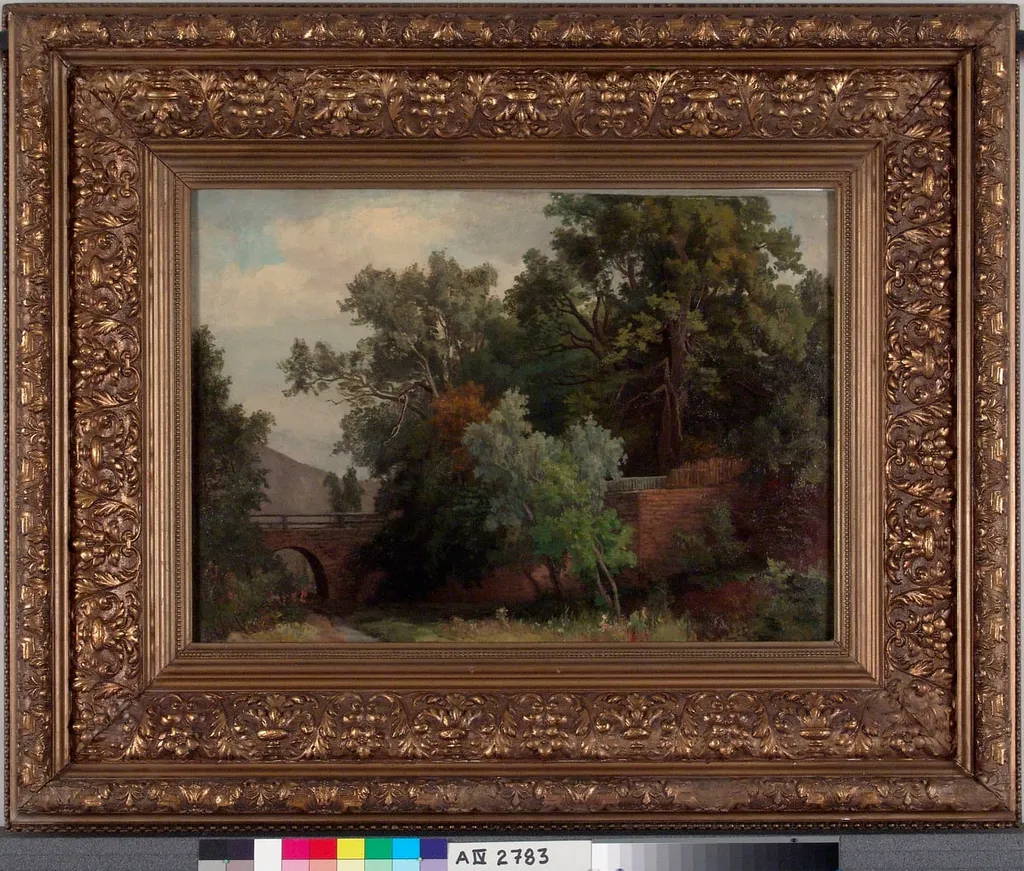
Siltamaisema Saksasta is an unspecified painting by Victoria Åberg. It is held in the collection of the Finnish National Gallery.
About this work
Overview
This landscape painting by Victoria Åberg presents a quiet, rural scene in Germany, centered on a modest bridge flanked by dense vegetation. The composition guides the eye through layered hills and a softly rendered sky, emphasizing stillness and spatial depth. Subtle shifts in tone and light unify the elements, evoking a mood of calm observation rather than dramatic spectacle.
Subject & Meaning
The bridge serves as a quiet threshold, connecting two sides of the landscape without narrative urgency. The lone tree on the right anchors the composition, its foliage filtering light in a naturalistic pattern. There is no human presence, suggesting an emphasis on nature’s quiet continuity rather than human activity or symbolism.
Technique & Style
Åberg employs delicate brushwork to render foliage and atmospheric perspective, using muted greens and soft grays to suggest depth. Light is modeled through layered washes, creating dappled shadows beneath the trees. The brushstrokes remain restrained, favoring subtle transitions over bold definition, aligning with late 19th-century Nordic landscape traditions.
History & Provenance
The work, titled Siltamaisema Saksasta (‘Bridge Landscape from Germany’), dates from Åberg’s time spent in Germany, likely during the 1880s or 1890s. It reflects her practice of sketching and painting abroad, a common path for Scandinavian artists seeking broader artistic exposure. Its current location and ownership history remain undocumented in public records.
Context
Her focus on tranquil, unidealized landscapes aligned with broader trends in Scandinavian art that valued quiet observation over romantic grandeur.
Åberg painted during a period when Nordic artists increasingly traveled to Central Europe for training and inspiration. Her focus on tranquil, unidealized landscapes aligned with broader trends in Scandinavian art that valued quiet observation over romantic grandeur. This work stands as a personal response to German countryside scenery, distinct from more dramatic Alpine subjects favored by contemporaries.
Legacy
Victoria Åberg’s landscapes, including this one, contribute to a lesser-known but significant strand of Finnish women artists who worked professionally in the late 19th century. While not widely exhibited today, her work exemplifies the quiet, disciplined approach to landscape painting practiced by many female artists of her generation, often overlooked in mainstream art histories.
Artist & collection
Artist
Victoria Åberg wasn’t just painting landscapes—she was hiking to them first. The 19th-century Finnish artist lugged her paints through forests and up castle ruins, sketching *Siltamaisema Saksasta* right where the river…

 Jagershalte in een bos
 The Deer Park North of Copenhagen
 Porvoon laitamilta
 De Dampoort in Brugge
 Souvenir of the Forest of Fontainebleau
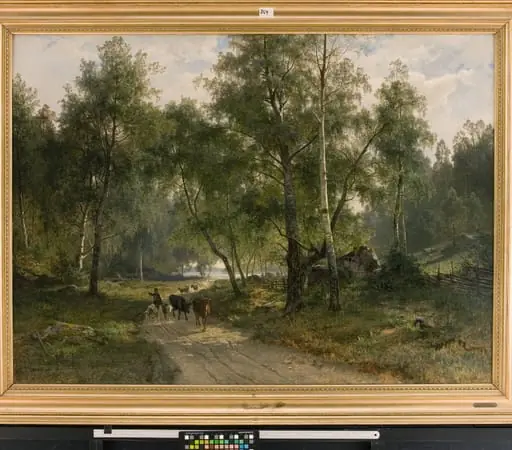 Beneath the Birches. Motif from Mälaren
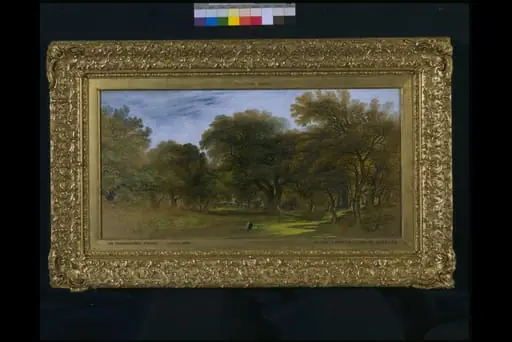 Richmond Park
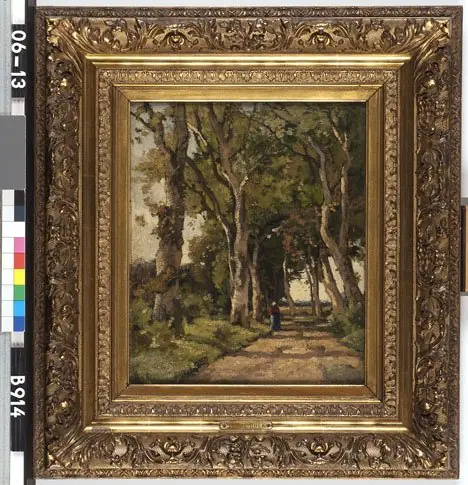 Country Lane
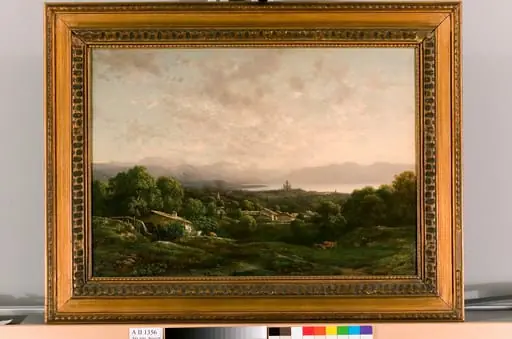 Maisema
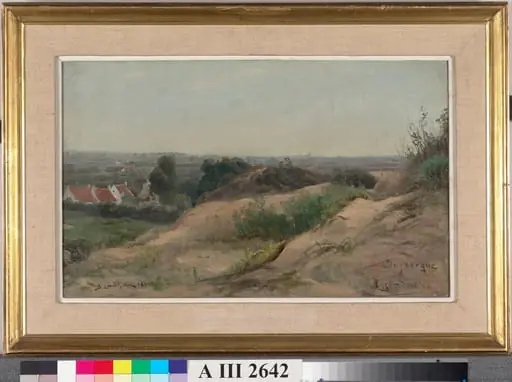 Hiekkasärkkiä
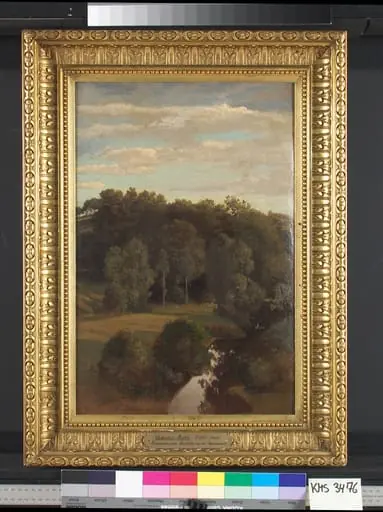 Wooded Hills behind a Meadow with a Peat Bog
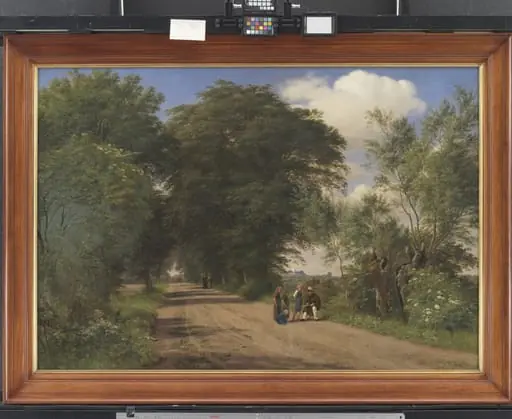 A Country Road near Vognserup Manor, Zealand. The Painter J.Th. Lundbye Sketching by the Roadside