Artwork
Portrait of Samuel Butler
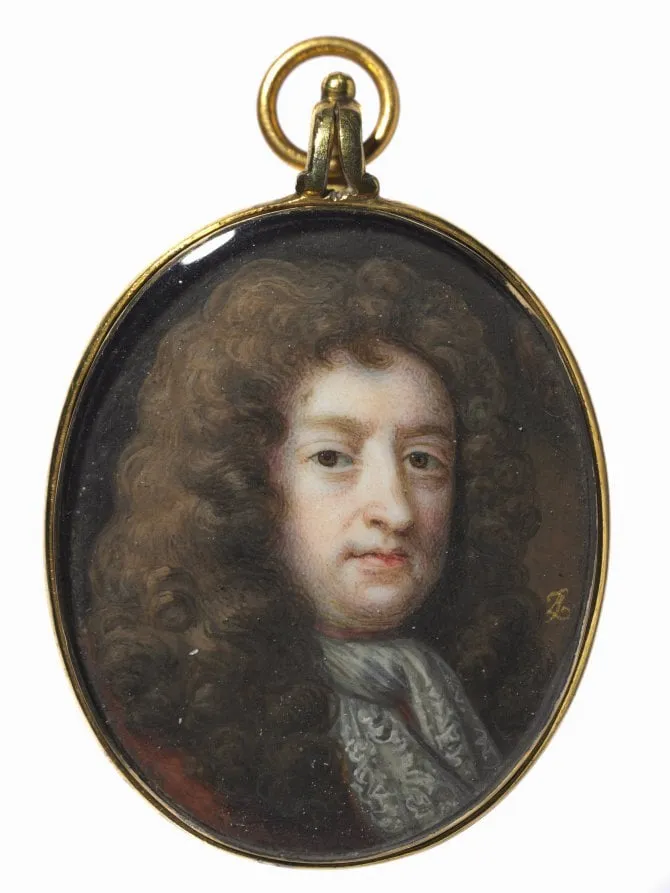
Portrait of Samuel Butler is an unspecified portrait miniature by the Barbizon school artist Bernard Lens III. It dates from 1718 and is held in the collection of the Cleveland Museum of Art.
About this work
Overview
Influenced by Italian precedents like Rosalba Carriera, he refined the technique to achieve delicate tonal transitions on the smooth, luminous surface of ivory.
Bernard Lens III was a leading British miniaturist who helped shift the medium from vellum to ivory in the early eighteenth century. Influenced by Italian precedents like Rosalba Carriera, he refined the technique to achieve delicate tonal transitions on the smooth, luminous surface of ivory. His work gained recognition among the British elite, and he served as painter to Kings George I and George II, while also instructing members of the royal family in drawing.
Subject & Meaning
The portrait depicts Samuel Butler, an English writer and satirist known for Hudibras, though he died before the painting was completed. Rendered in profile with a slight turn to the left, Butler’s calm, direct gaze conveys quiet authority. His attire—white lace cravat, curled wig, and dark coat—reflects the refined dress of a gentleman in the late Stuart era, emphasizing social status and intellectual gravitas rather than personal emotion.
Technique & Style
Lens painted on ivory, a material that allowed for subtle blending and a luminous effect akin to watercolor. The smooth surface enhanced the soft modeling of the face, particularly in the rendering of skin tones and the delicate folds of the lace cravat. His brushwork is precise yet fluid, capturing texture without heavy detail, and the plain background isolates the figure, focusing attention on the nuanced expression and refined costume.
History & Provenance
The portrait was likely commissioned during Lens’s time in London or Bath, where he cultivated patrons among the aristocracy and literary circles. Though Butler died in 1680, the portrait was painted decades later, possibly as a posthumous commemoration. Lens’s association with royal patrons and his documented travels to country estates suggest the work may have been intended for private display within a collector’s circle.
Context
In the early 1700s, miniature portraiture evolved from a decorative art into a respected medium for personal and dynastic representation. Lens’s adoption of ivory aligned with broader European trends, while his clientele—royalty, writers, and nobility—reflected the cultural prestige of the form. The lingering fashion of the curled wig and lace cravat in this portrait signals a deliberate reference to earlier decades, perhaps to evoke tradition or scholarly identity.
Legacy
Lens’s transition to ivory as a support became standard in British miniature painting, influencing generations of artists. His technical precision and ability to capture likeness with minimal strokes set a benchmark for the genre. Though his name is less known today than his royal patrons, his contributions helped define the aesthetic of eighteenth-century British portraiture on a small scale.
Artist & collection
Artist
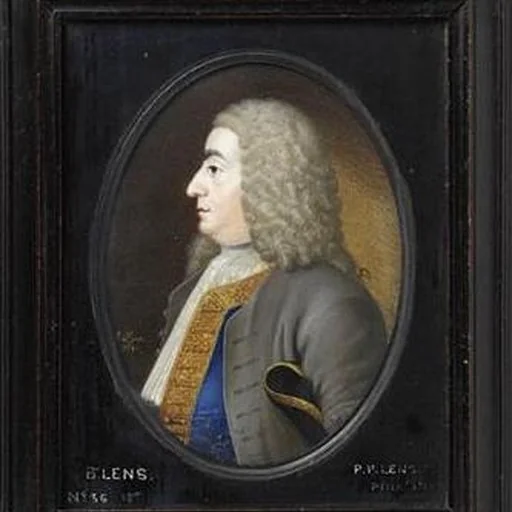
Bernard Lens III (27 May 1682 – 24 December 1740) was an English artist known primarily for his portrait miniatures.

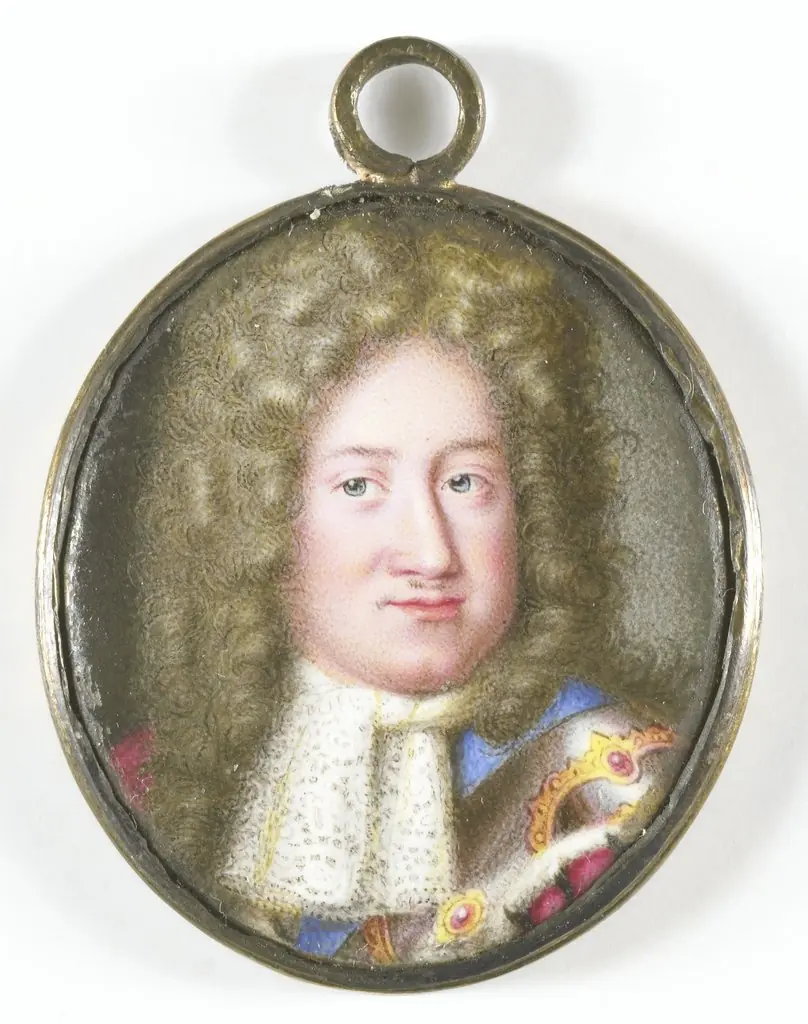 Portrait of Friedrich I van Pruisen (1657-1713)
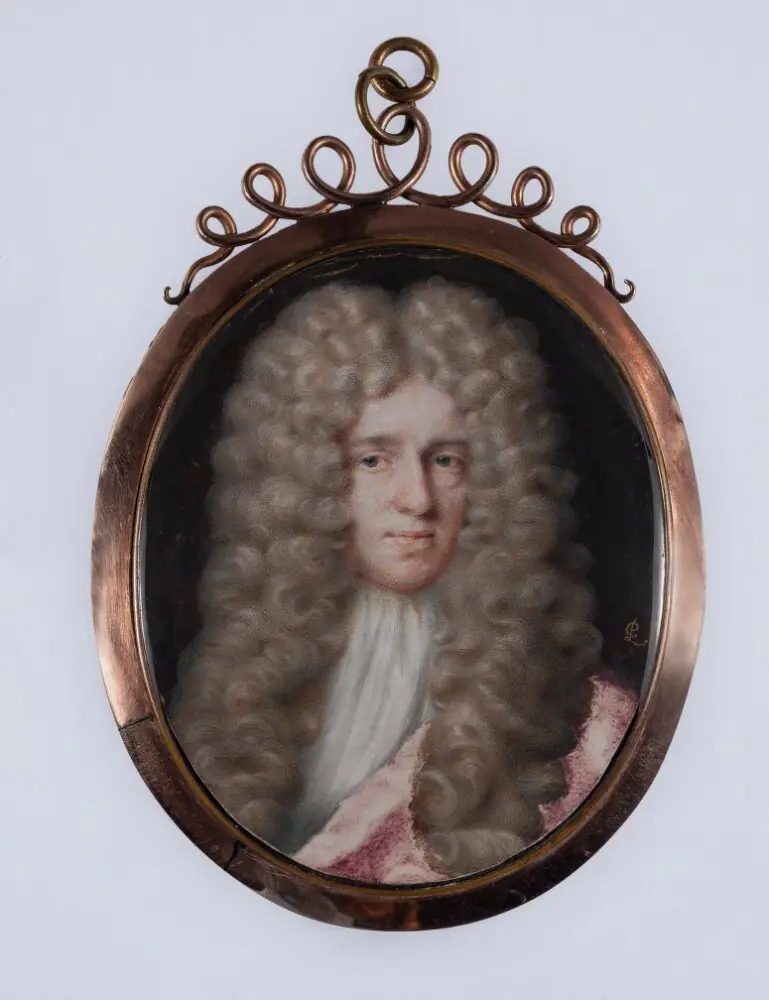 Porträtt av man i allongeperuk med röd mantel
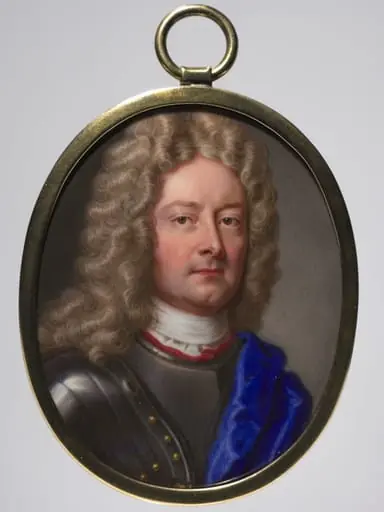 Portrait of John Churchill, 1st Duke of Marlborough
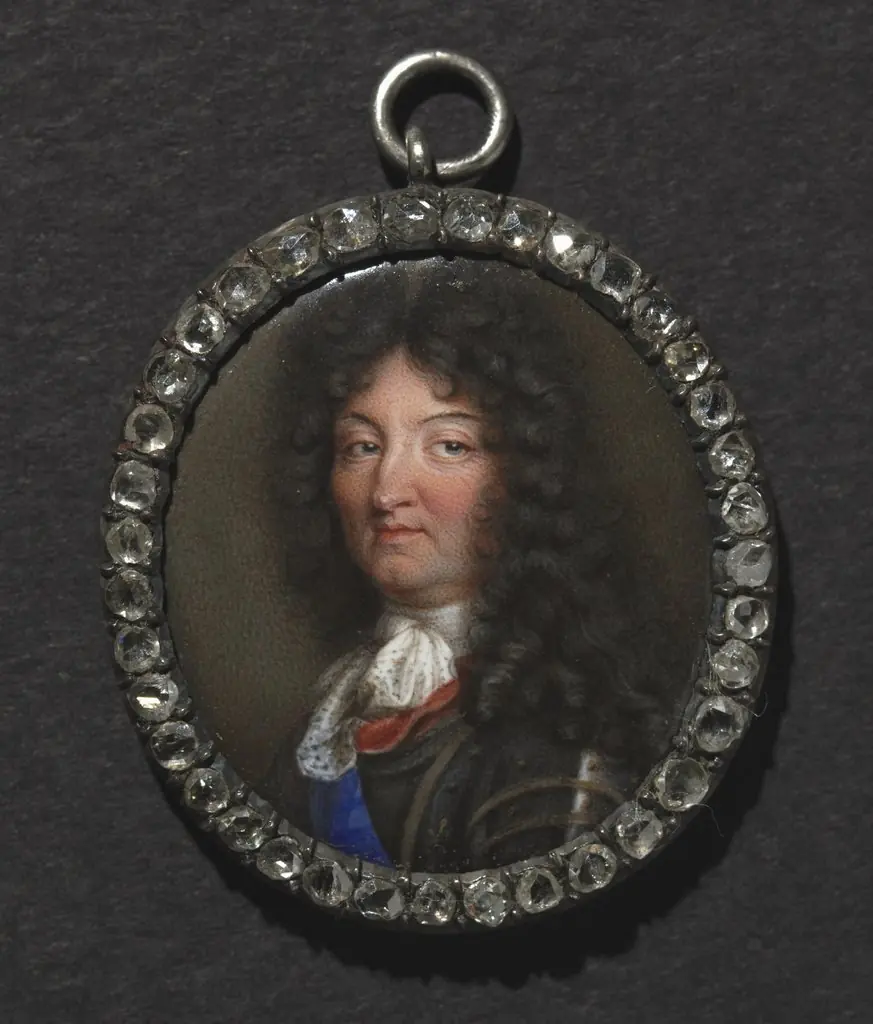 Portrait of King Louis XIV
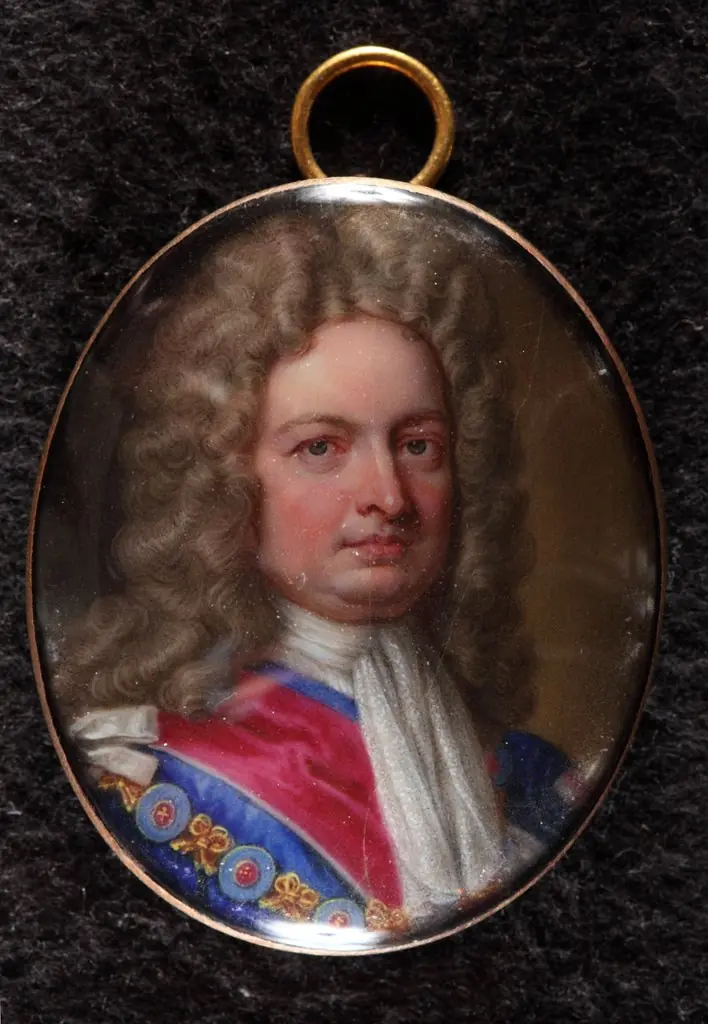 Robert Harley, Earl of Oxford
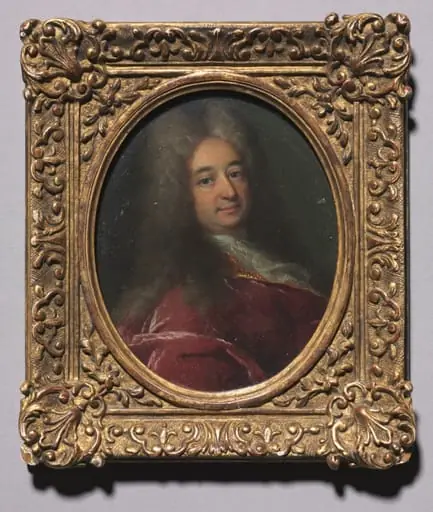 Portrait of Robert Levrac-Tournières
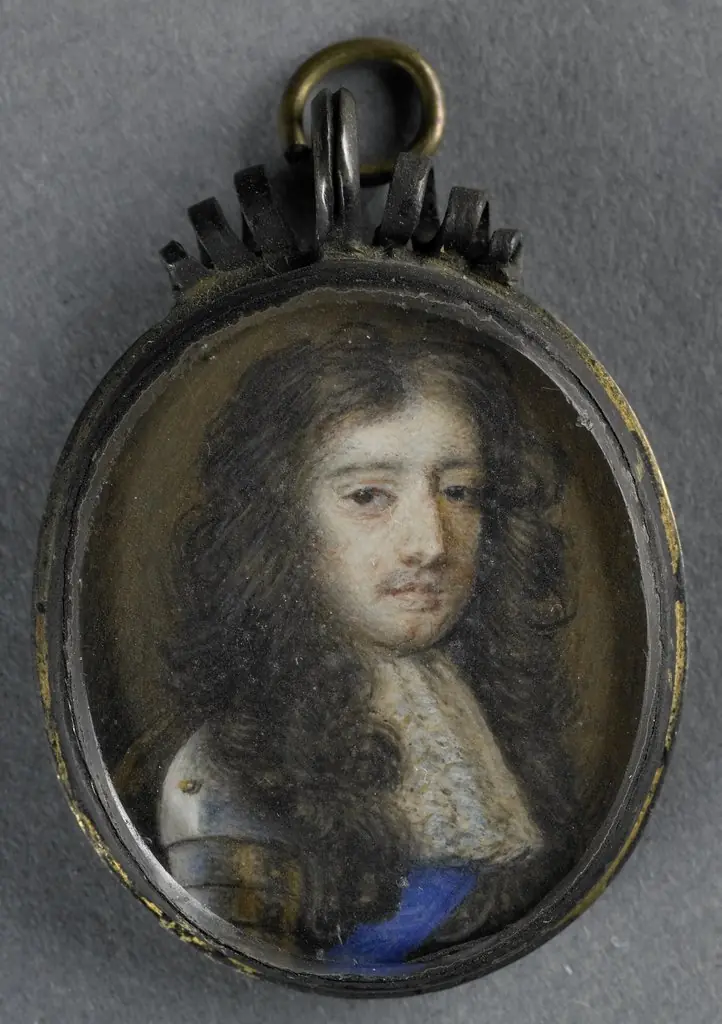 William III
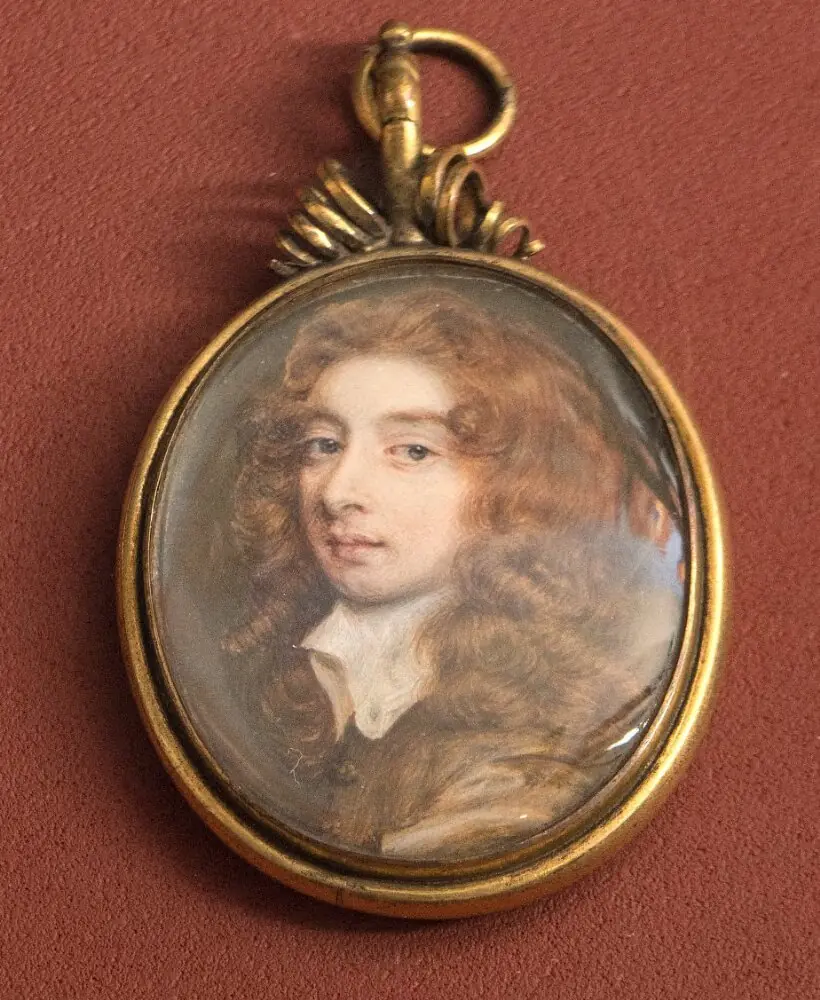 Portrait of Unknown Man, formerly known as Sir William Temple
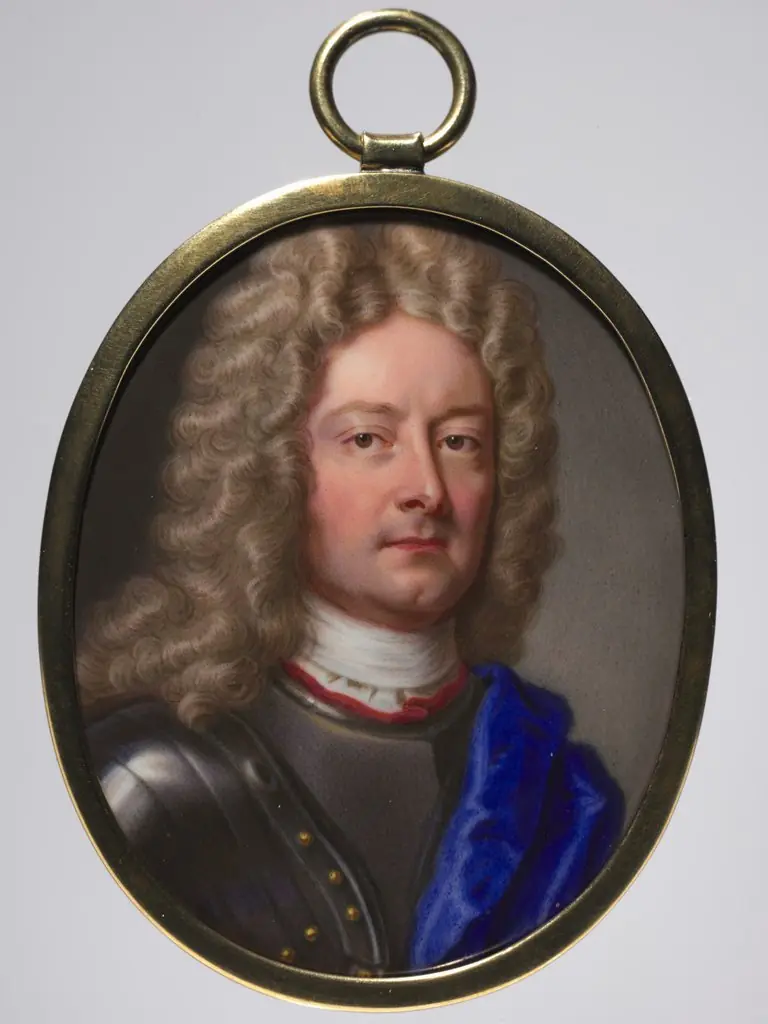 Portrait of John Churchill, 1st Duke of Marlborough