Artwork
The Flight into Egypt
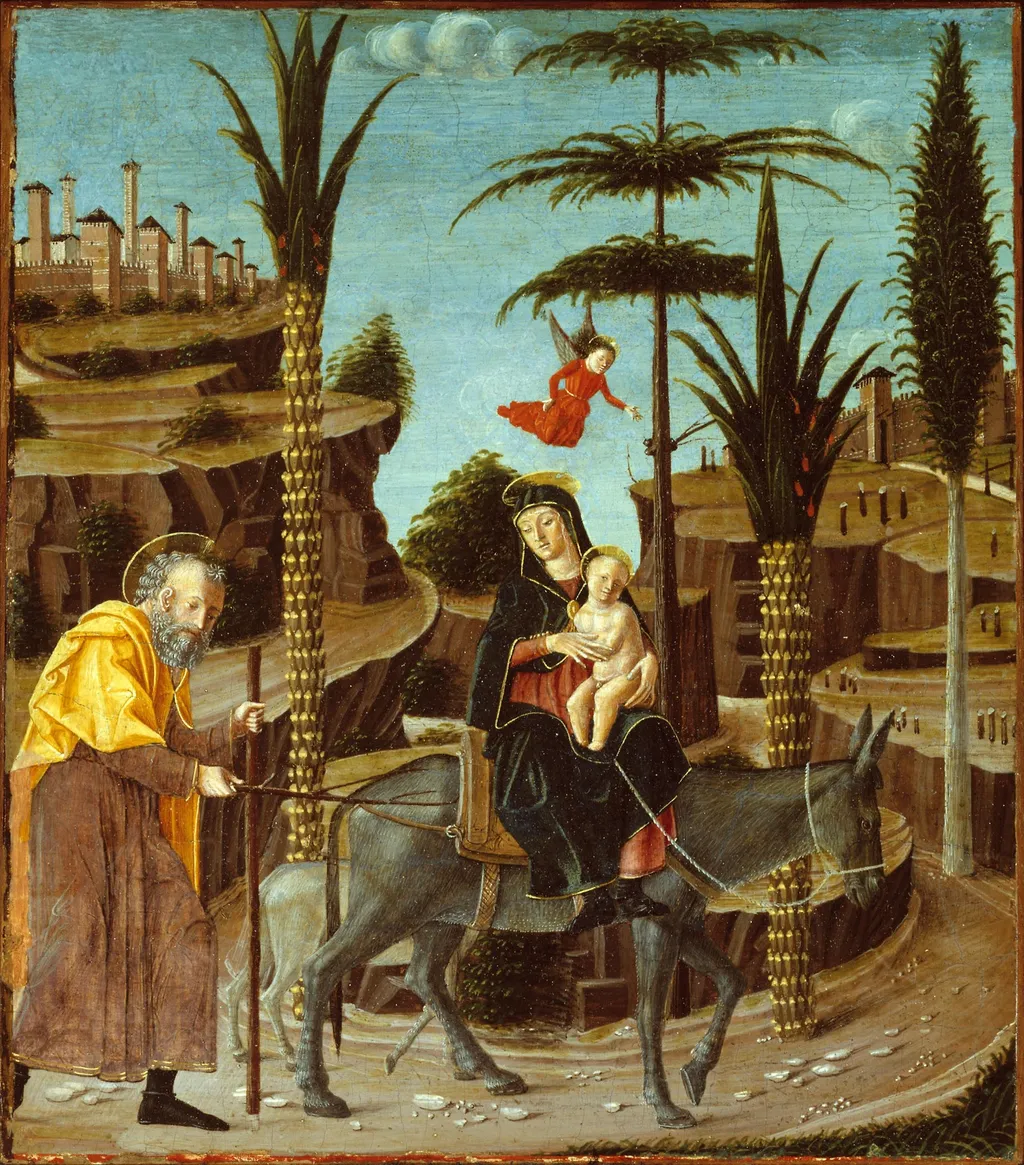
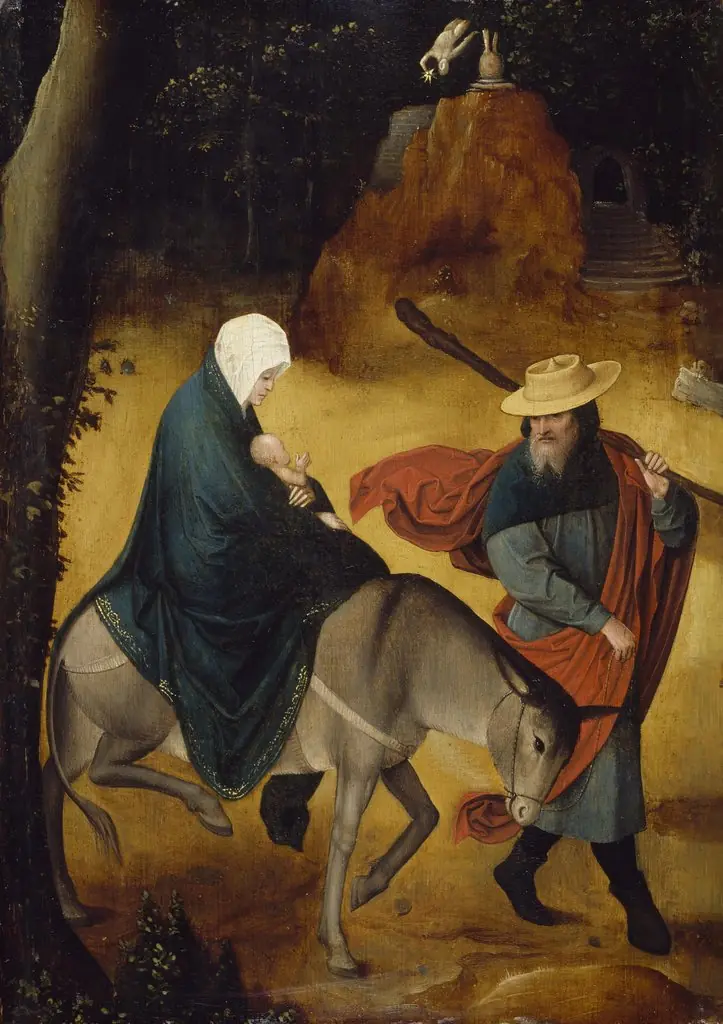
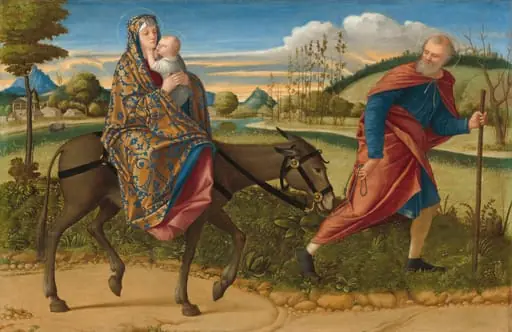
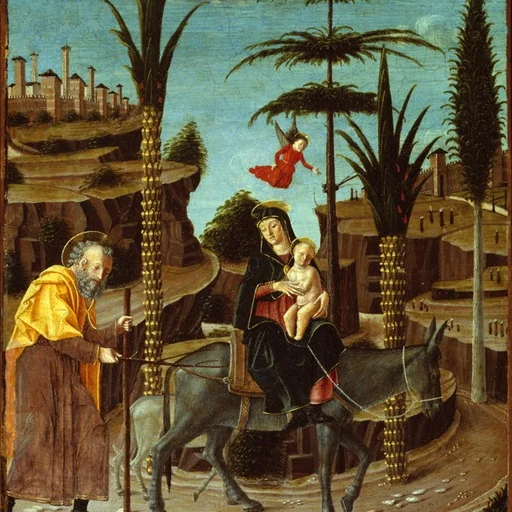
The Flight into Egypt is an unspecified painting by the Northern Renaissance artist Bernardino Butinone. It dates from 1493 and is held in the collection of the Art Institute of Chicago.
About this work
Overview
The composition is intimate yet rich in symbolic detail, reflecting the devotional purpose common in late 15th-century religious art.
Painted in 1493 by Bernardino Butinone, this work belongs to the Northern Renaissance tradition centered in Milan. It illustrates a moment from the Gospel of Matthew in which the Holy Family flees to Egypt to evade King Herod’s violence. The composition is intimate yet rich in symbolic detail, reflecting the devotional purpose common in late 15th-century religious art. Butinone’s style blends local Lombard influences with broader Northern European attention to texture and environment.
Subject & Meaning
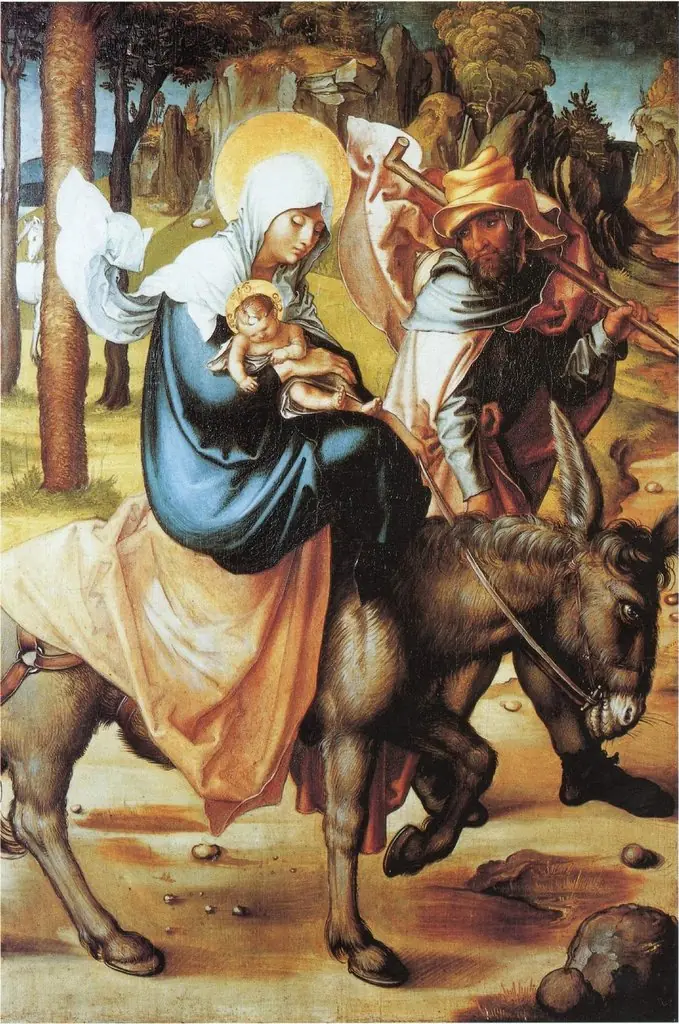
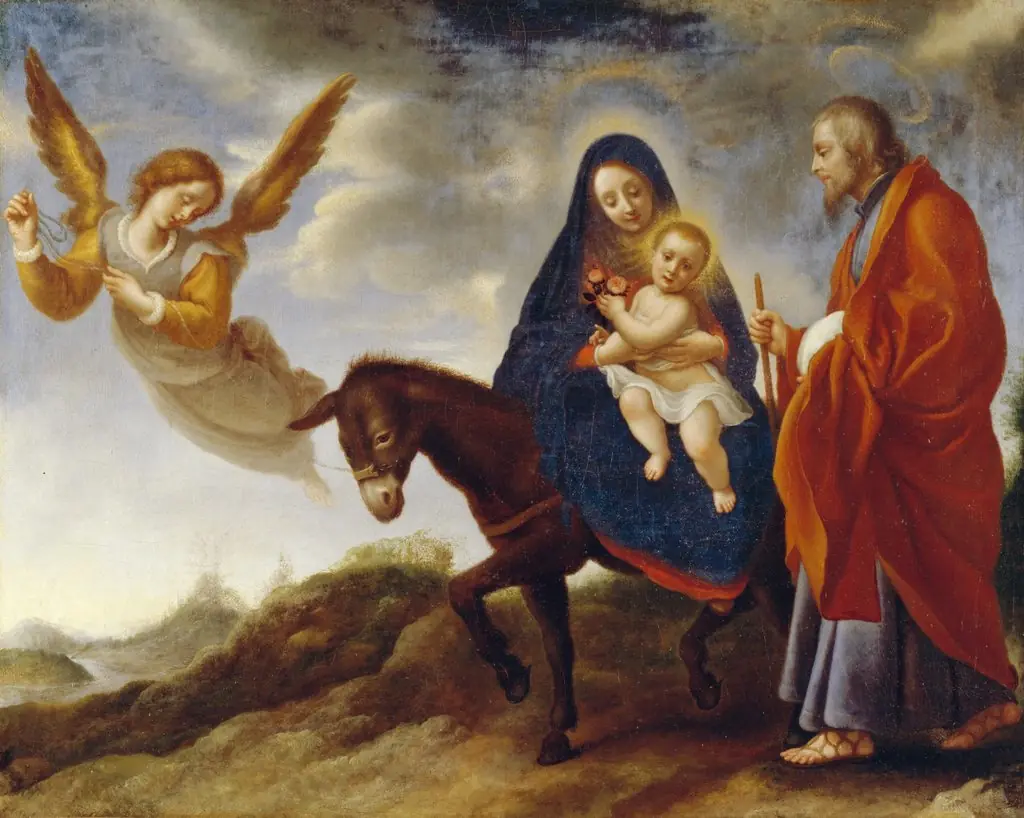
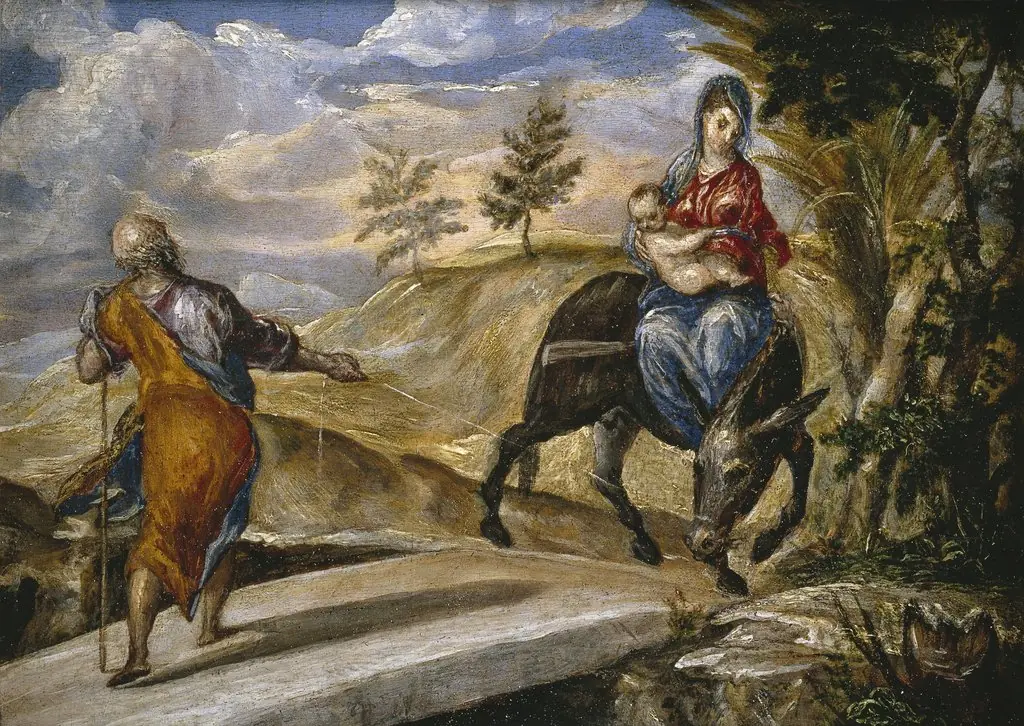
The scene captures the Holy Family’s perilous journey: Mary, seated on a donkey with the infant Jesus, is accompanied by Joseph, who carries a staff adorned with beads. The presence of a red-winged angel overhead signals divine protection, reinforcing the narrative of sacred guidance amid danger. The distant castle suggests the threat they flee, while the calm landscape implies a fragile peace. The imagery serves both as a devotional aid and a meditation on faith under duress.
Technique & Style
Butinone employs fine brushwork to render textures—fabric folds, bark, and feathers—with precision. The dark cloak of Mary contrasts sharply with the pale sky, enhancing her figure’s prominence. The angel’s vivid red wings draw the eye upward, creating a vertical axis of spiritual focus. Subtle chiaroscuro models forms without dramatic lighting, maintaining the quiet tone of the scene. The staff’s intricate beadwork and the stylized palm trees reflect a preference for decorative detail over naturalism.
History & Provenance
Commissioned during Butinone’s active years in Milan, the painting likely originated in a private chapel or devotional setting. Its survival into the modern era suggests it was preserved within ecclesiastical or noble collections. While its early ownership is undocumented, its stylistic alignment with Lombard altarpieces of the period supports its attribution to Butinone’s workshop. No major alterations or restorations are recorded, preserving its original surface and palette.
Context
In late 15th-century northern Italy, religious imagery often emphasized personal piety and narrative clarity. Artists like Butinone responded to demand for portable devotional panels, blending Italian compositional harmony with Northern attention to minute detail. The Flight into Egypt was a popular subject, symbolizing refuge and divine care. Butinone’s version reflects Milan’s position as a crossroads of artistic ideas, where Flemish precision met Italian serenity.
Legacy
Though not widely known outside regional collections, the painting exemplifies the quiet intensity of Lombard religious art in the decades before the High Renaissance. Its careful balance of symbolism and naturalism influenced smaller-scale devotional works in northern Italy. Butinone’s handling of light, gesture, and ornament contributed to a local aesthetic that valued contemplative detail over grandeur, leaving a modest but discernible mark on regional painting traditions.
Artist & collection
Artist
Bernardino Butinone (1435 or 1436 – c. 1507 or 1508) was an Italian painter of the Renaissance, active mainly around Milan.