Artwork
Saint Sebastian
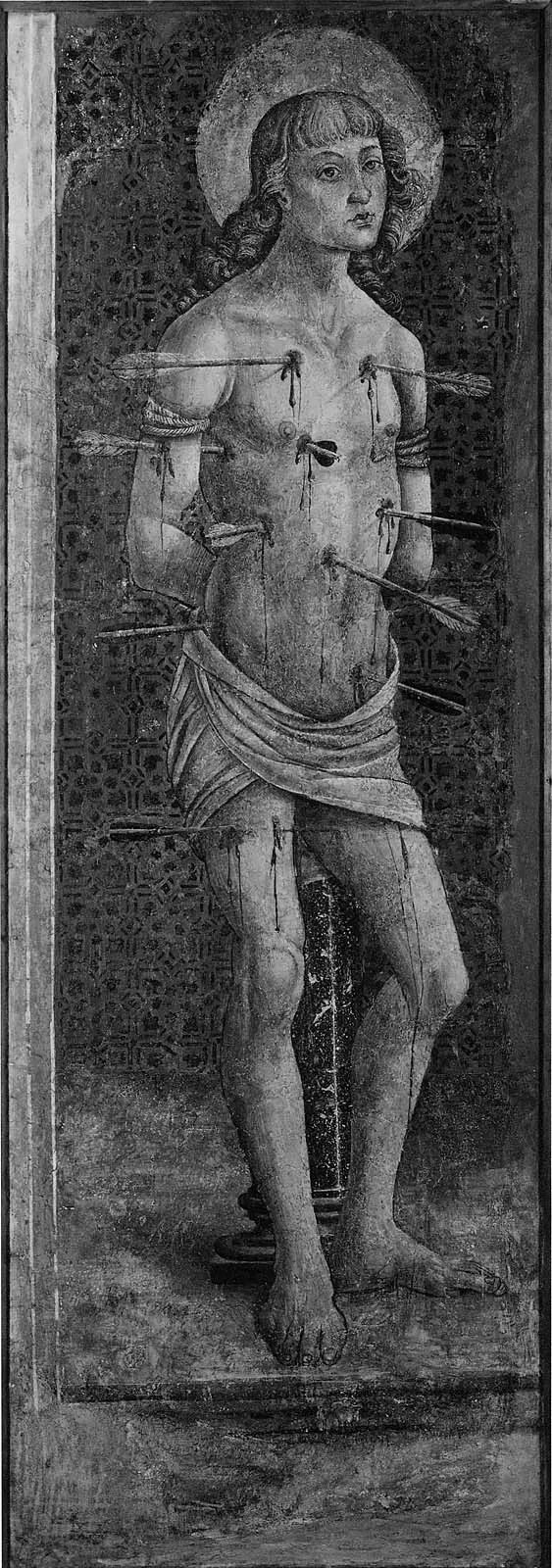
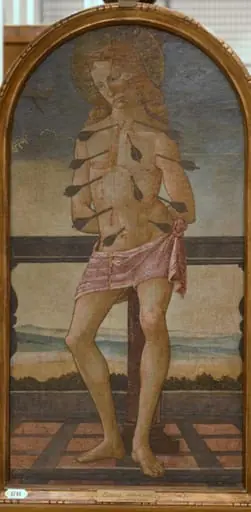
Saint Sebastian is an unspecified painting by the Early Renaissance artist Bernardino di Lorenzo di Cecco. It dates from 1492 and is held in the collection of the Museum of Fine Arts Boston.
About this work
Overview
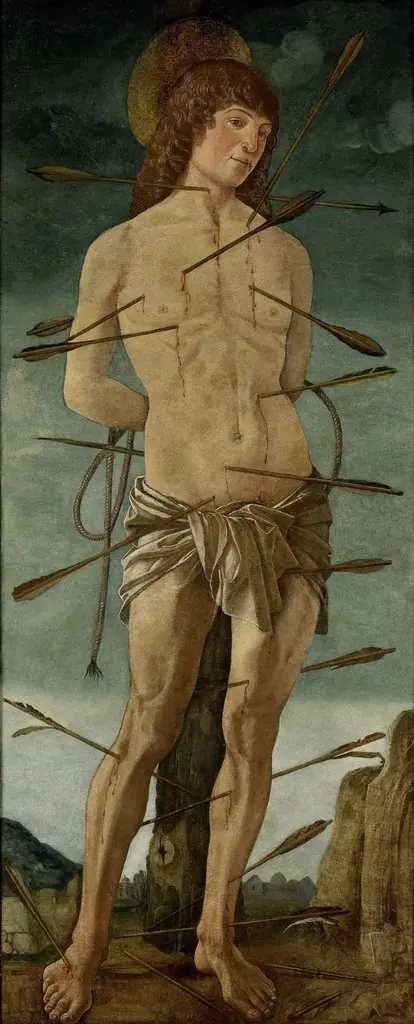
The composition centers on the saint’s upright, restrained posture, framed against a dark, textured background that enhances his presence.
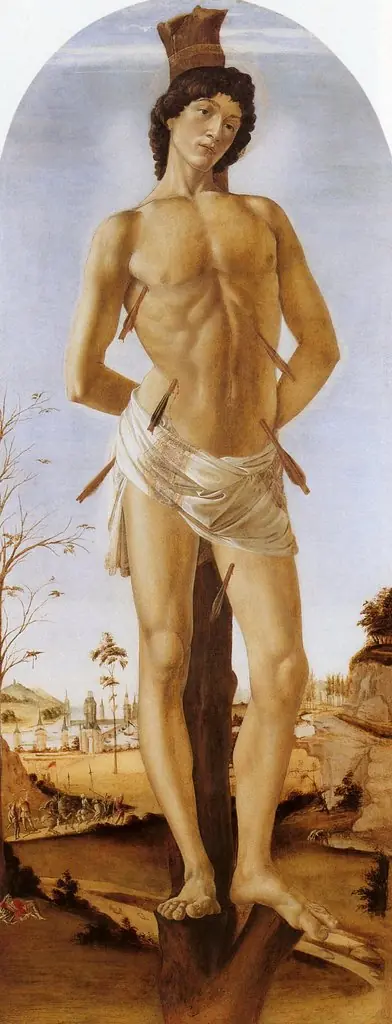
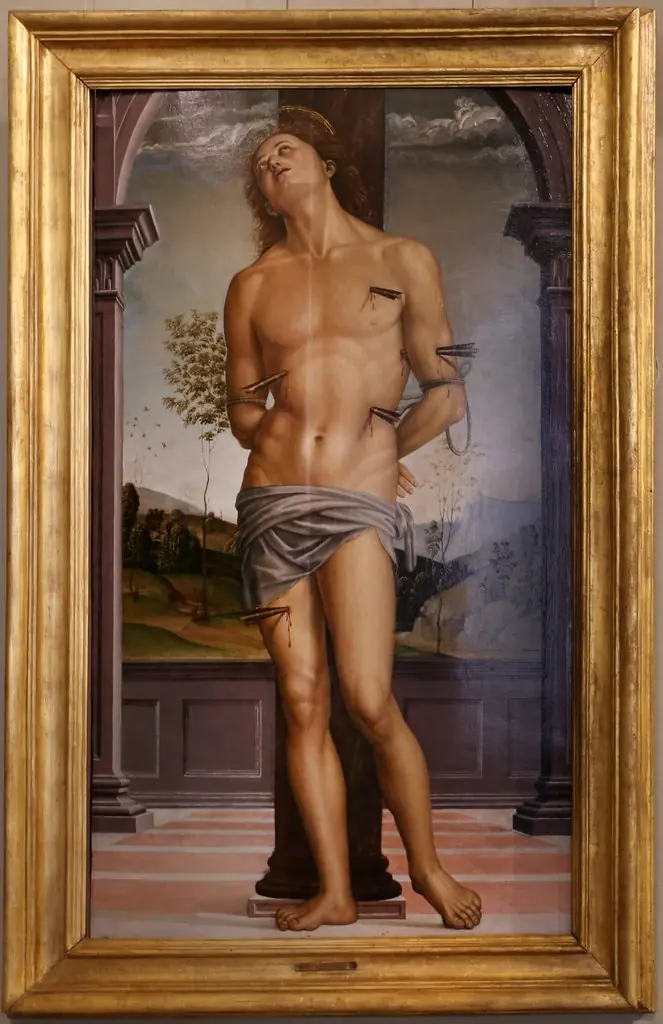
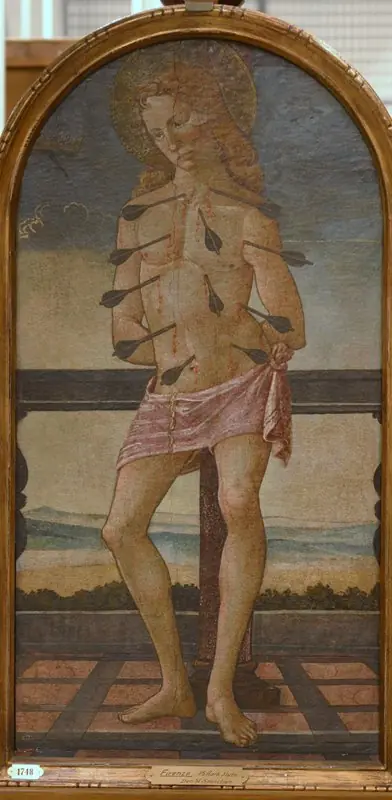
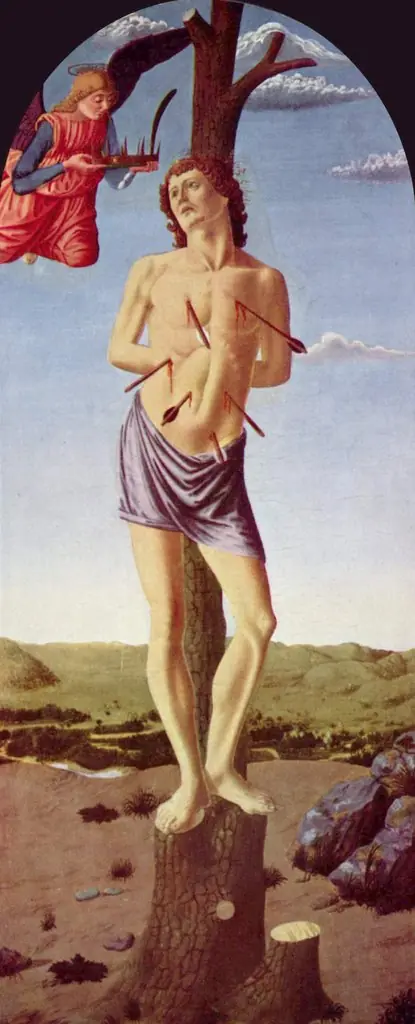
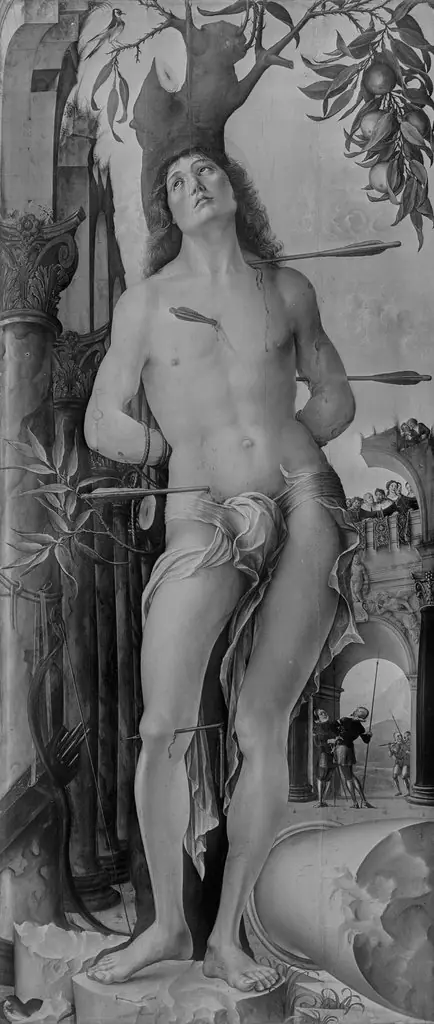
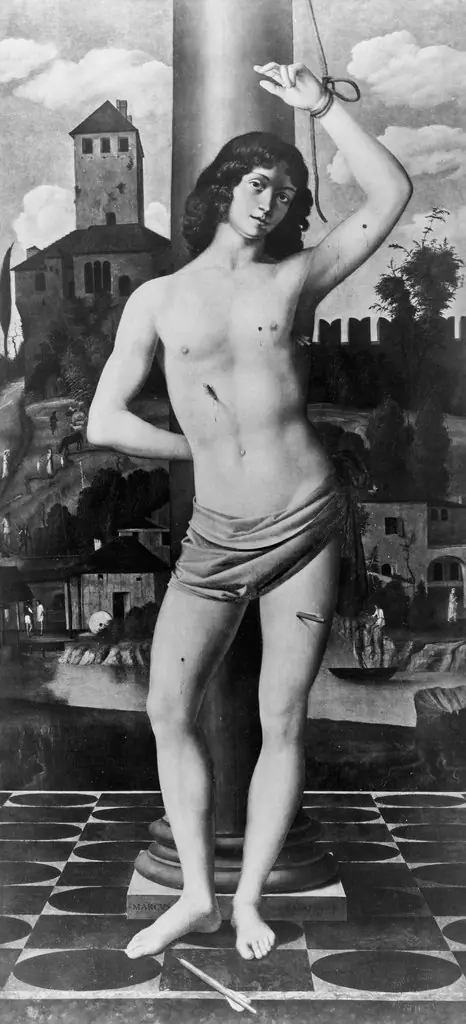
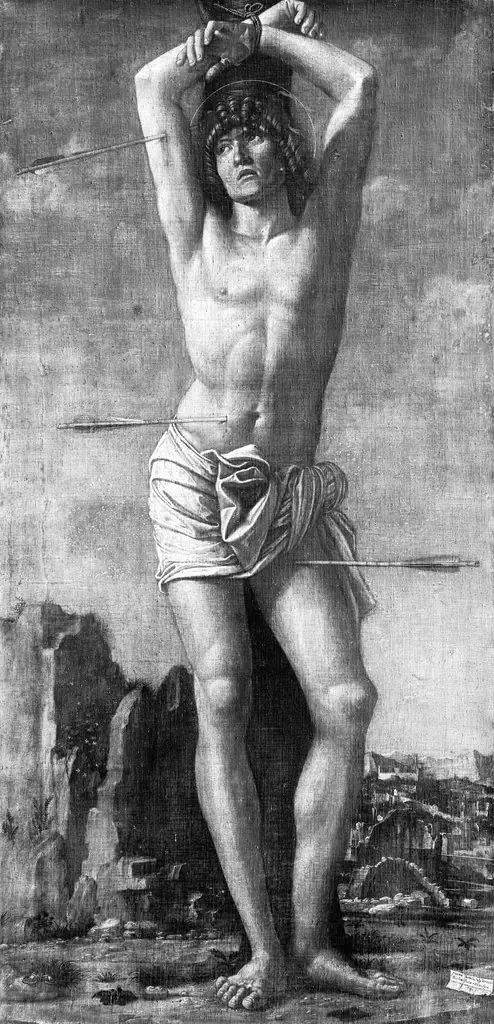
Painted in 1492 by Bernardino di Lorenzo di Cecco, this work depicts Saint Sebastian, a Christian martyr, rendered in oil on panel. It resides in the Museum of Fine Arts, Boston. The composition centers on the saint’s upright, restrained posture, framed against a dark, textured background that enhances his presence. The painting’s emphasis on volume and spatial depth reflects late 15th-century Florentine artistic concerns, particularly the study of the human form under controlled lighting.
Subject & Meaning
Saint Sebastian, traditionally portrayed as a martyr pierced by arrows, is shown here in a moment of serene endurance rather than agony. His halo signifies sanctity, while his calm gaze and upright stance convey spiritual resolve. The arrows, embedded in his torso, reference his execution under Emperor Diocletian’s orders. The absence of overt suffering shifts focus from physical torment to inner faith, aligning with devotional ideals of the period that valued stoic piety.
Technique & Style
The artist employs chiaroscuro to model the figure with striking realism, using sharp contrasts between light and shadow to define musculature and fabric folds. The skin appears luminous against the deep, patterned backdrop, enhancing the illusion of three-dimensionality. The short loincloth is rendered with subtle tonal gradations, while the arrows are placed with deliberate precision. The style shows awareness of Florentine naturalism, though the background’s decorative quality hints at lingering Gothic influences.
History & Provenance
The painting was created in Florence around 1492, likely for private devotion. It entered the Museum of Fine Arts, Boston, in the early 20th century through a private collection. Its attribution to Bernardino di Lorenzo di Cecco, a lesser-known follower of Ghirlandaio, was confirmed through stylistic comparison and archival research. The panel’s condition remains stable, with minimal restoration, preserving the original brushwork and tonal harmony.
Context
In late 15th-century Florence, images of Saint Sebastian were common, especially during plague outbreaks, as he was invoked for protection. Artists increasingly emphasized anatomical accuracy and emotional restraint, reflecting humanist ideals. This painting aligns with broader trends in religious art that sought to merge classical form with spiritual contemplation, moving away from overt drama toward quiet, meditative presence.
Legacy
Though not widely exhibited outside specialized collections, the painting contributes to understanding regional variations in Renaissance devotional art. Its restrained expression and technical precision offer insight into how lesser-known artists adapted Florentine innovations for personal worship. It remains a quiet example of how sacred figures were rendered not as symbols of suffering, but as embodiments of inner strength.
Artist & collection
Artist
Bernardino di Lorenzo di Cecco
Italian Renaissance painter Bernardino di Lorenzo di Cecco worked in the late 1400s.