Artwork
Saint Sebastian
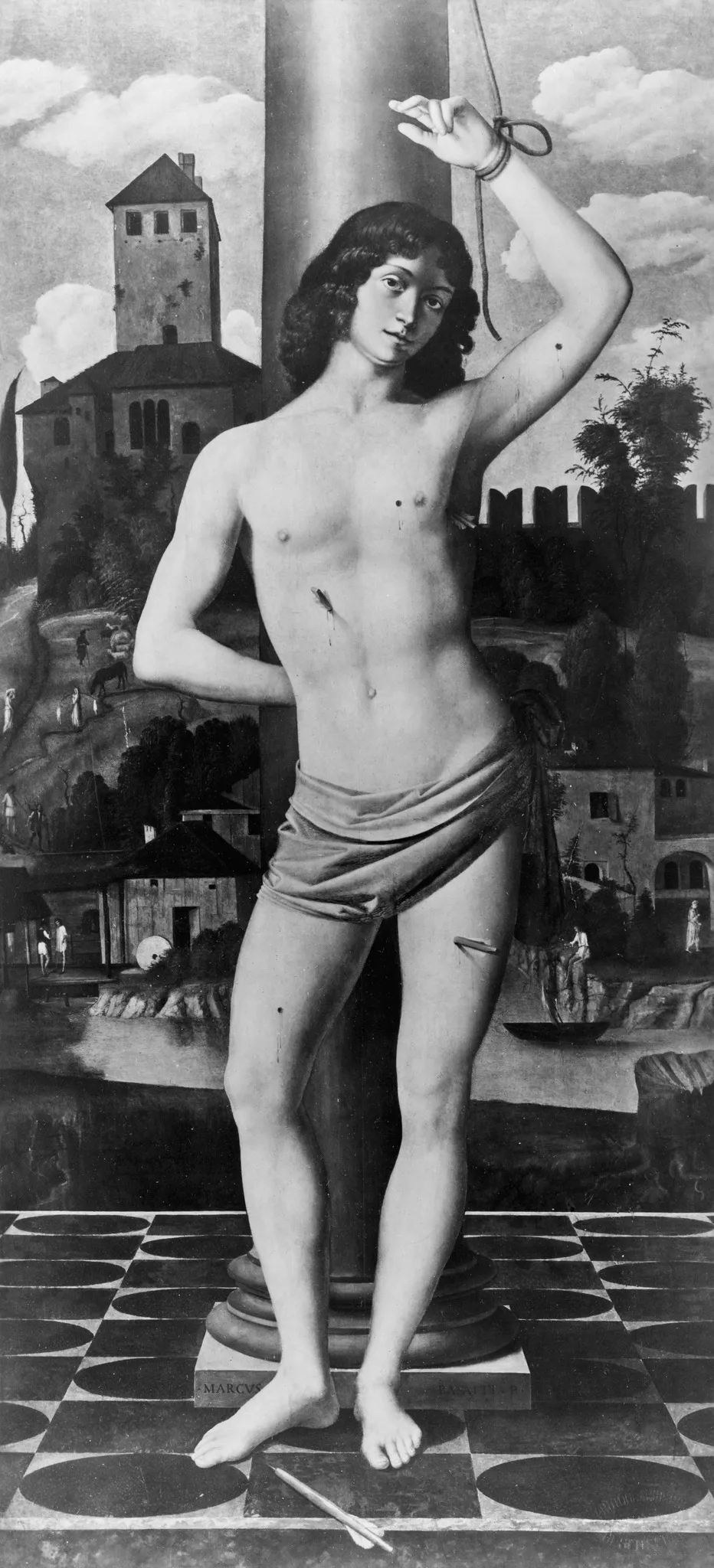
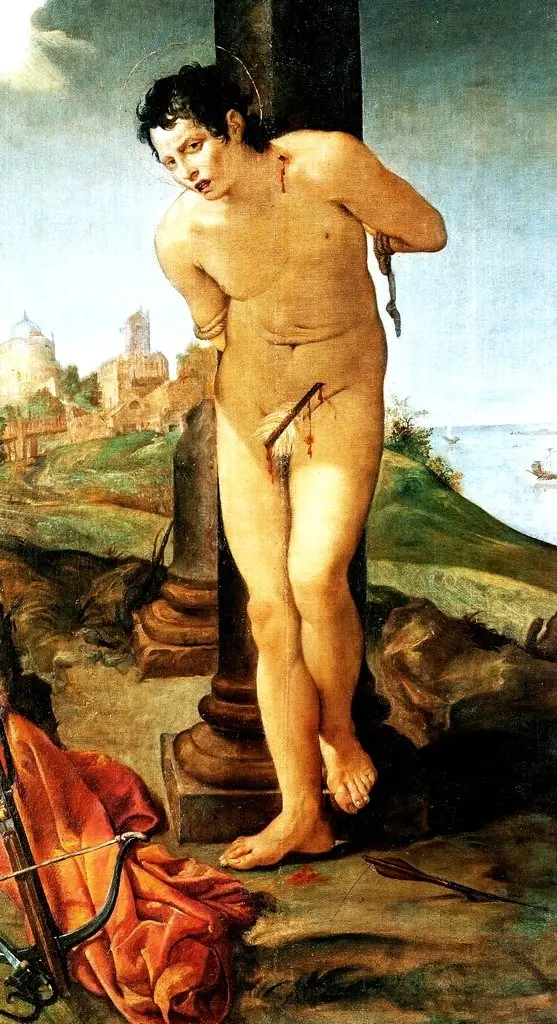
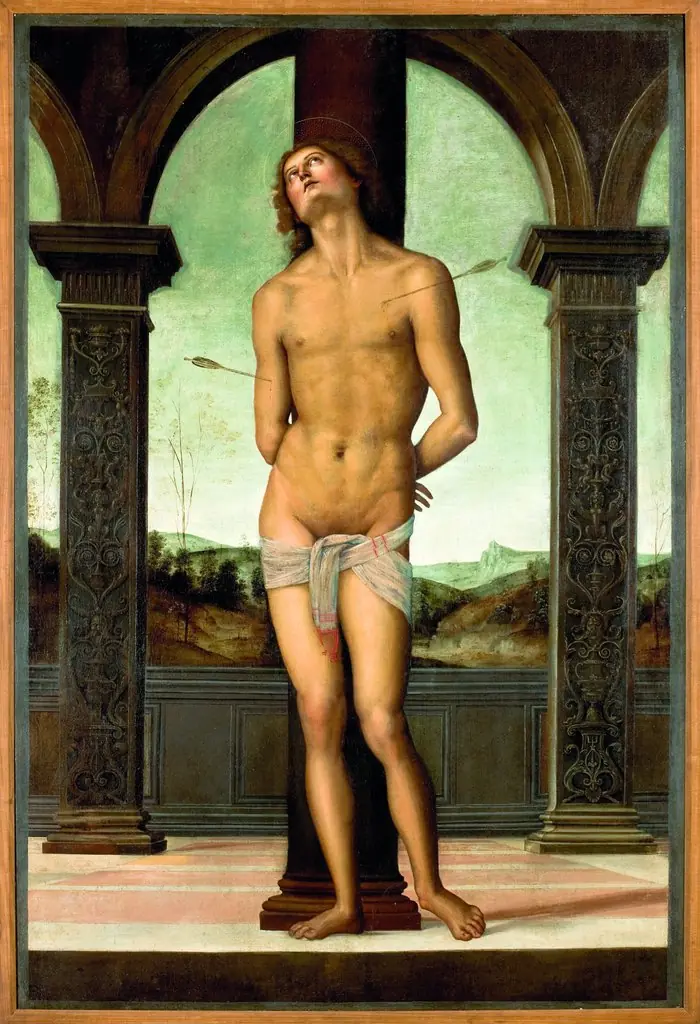
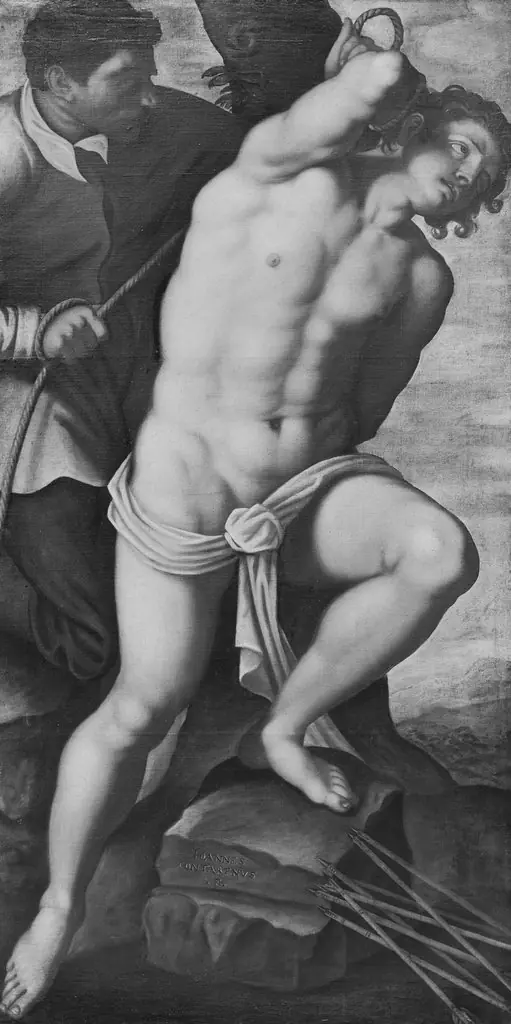
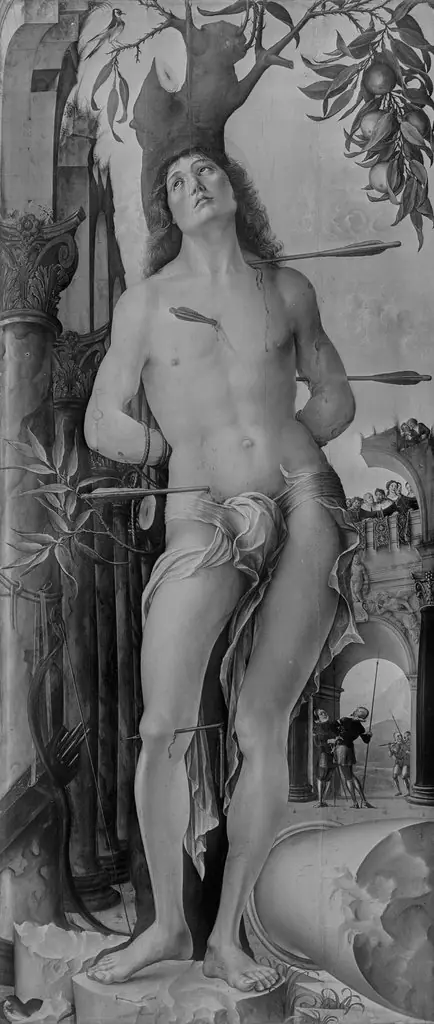
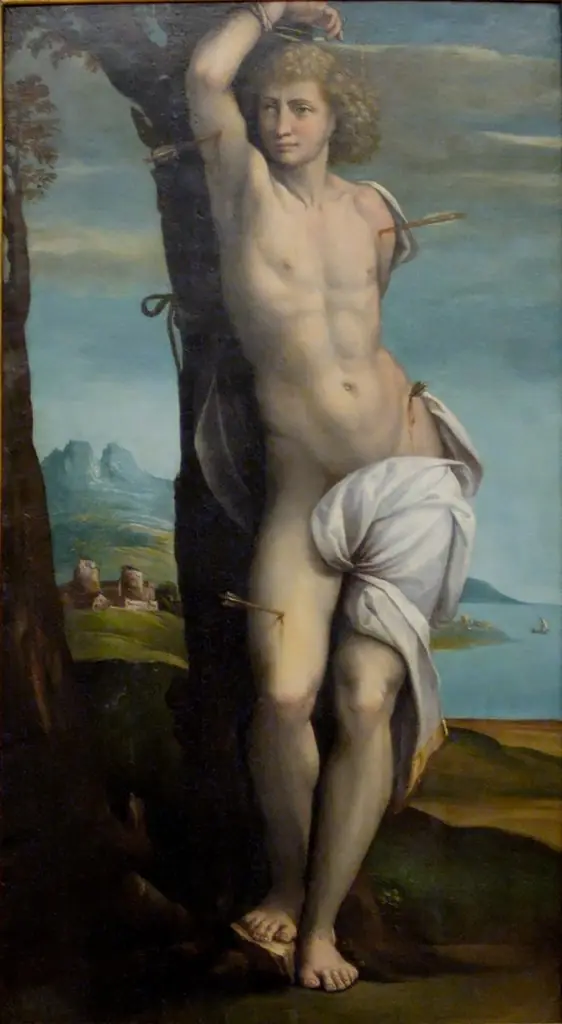
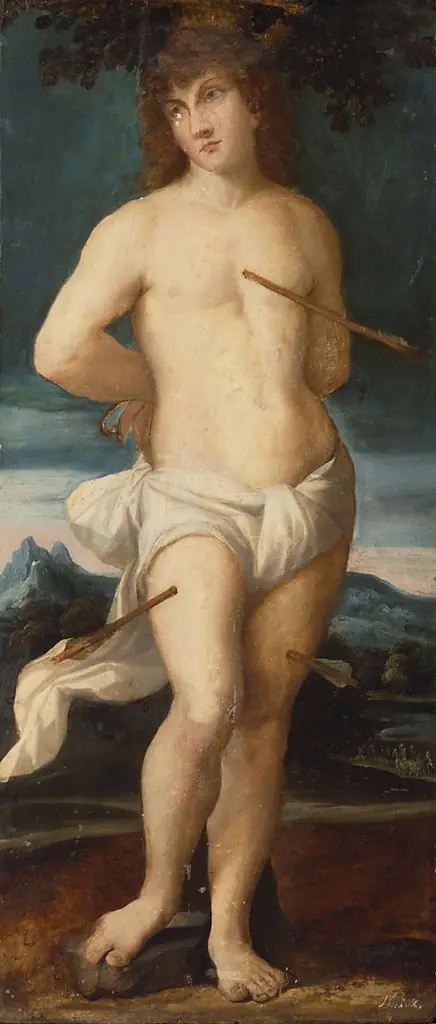
Saint Sebastian is a paint painting by the Mannerist artist Marco Basaiti. It dates from 1520 and is held in the collection of the Gemäldegalerie Berlin.
About this work
Overview
The painting resides today in the Gemäldegalerie, Berlin, as part of its collection of early Italian works.
Painted around 1520 by Marco Basaiti, a Venetian artist active in the early 16th century, this work portrays Saint Sebastian, a recurring subject in Renaissance religious art. Though Basaiti is better known for portraiture, this piece aligns with the transitional stylistic tendencies of the period, blending naturalism with emerging Mannerist sensibilities. The painting resides today in the Gemäldegalerie, Berlin, as part of its collection of early Italian works.
Subject & Meaning
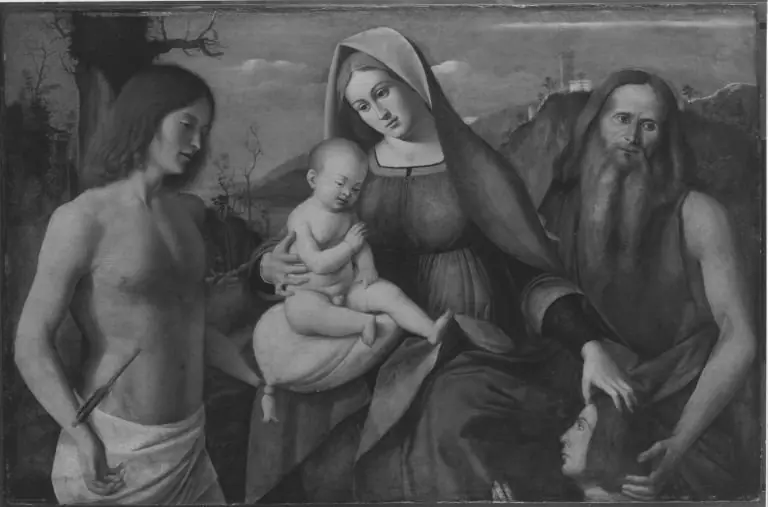
Saint Sebastian, a Christian martyr traditionally depicted bound to a post and pierced by arrows, is shown here in a moment of quiet endurance. Rather than emphasizing his torment, the painting focuses on his composed posture and introspective gaze. The rope in his hand suggests a moment of personal agency, perhaps referencing his eventual rescue or spiritual resilience. The somber tone reinforces themes of sacrifice and quiet faith.
Technique & Style
Basaiti employs chiaroscuro to model the figure with subtle gradations of light and shadow, lending volume to the body and enhancing the tactile quality of the draped fabric. The background landscape, rendered with soft atmospheric perspective, recedes into a hazy horizon of hills and architecture. The dark specks on the skin imply arrow wounds without graphic detail, reflecting a restrained approach to martyrdom common in Venetian devotional art of the time.
History & Provenance
The painting entered the collection of the Gemäldegalerie Berlin in the 19th century, likely through acquisitions from German-speaking collectors who favored Venetian Renaissance works. Its attribution to Basaiti has been consistently supported by stylistic analysis, though its early ownership history remains undocumented. It has been exhibited periodically since its acquisition, contributing to scholarly understanding of lesser-known Venetian painters.
Context
Created during a period when Venice was transitioning from High Renaissance ideals toward more expressive forms, the painting reflects the influence of Bellini and Cima da Conegliano, with whom Basaiti worked. While religious subjects remained popular, artists increasingly emphasized psychological depth over narrative drama. This work exemplifies the quiet, contemplative turn in Venetian devotional imagery before the full emergence of Mannerism.
Legacy
Though Basaiti’s oeuvre is modest compared to his contemporaries, this painting stands as a representative example of provincial Venetian religious art in the early 1500s. Its restrained emotion and careful modeling offer insight into how devotional themes were interpreted outside the most celebrated studios. It continues to inform studies on the regional diversity of Renaissance painting in northern Italy.
Artist & collection

Artist
Marco Basaiti (c. 1470 – 1530) was a Venetian painter of the Renaissance who worked mainly in Venice and was a contemporary of Giovanni Bellini and Cima da Conegliano. He has been referred to by several names including…