Artwork
Ham Mocking Noah
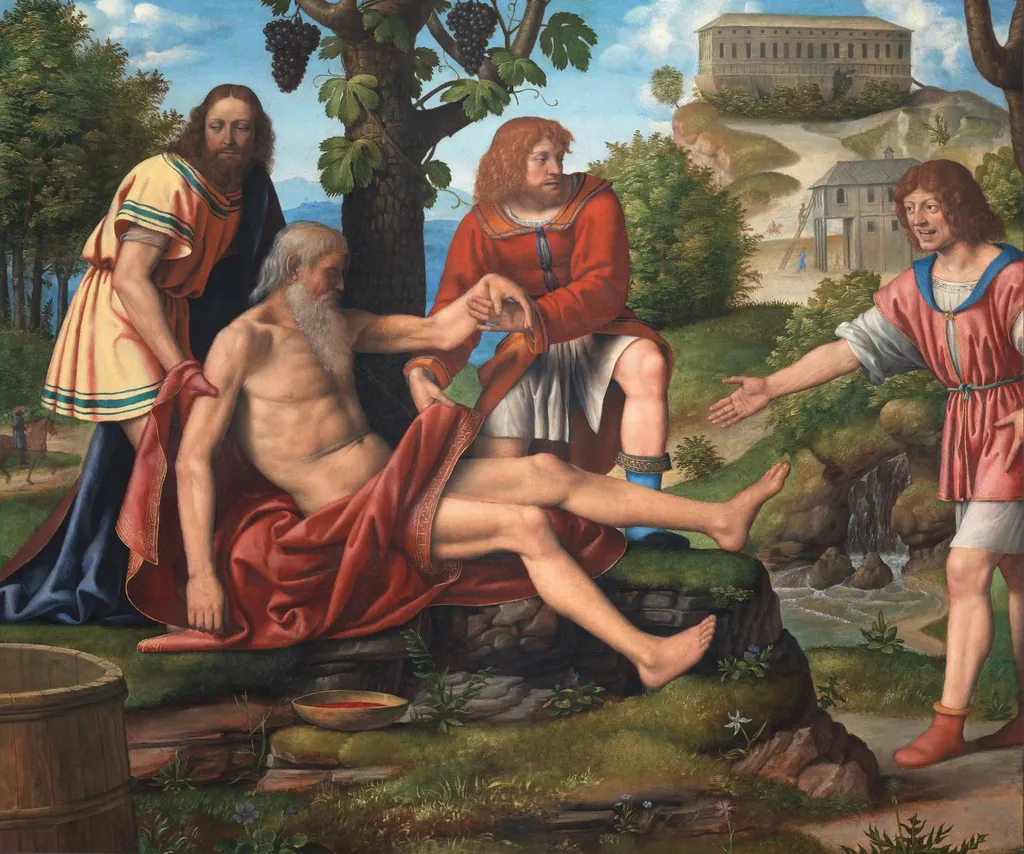
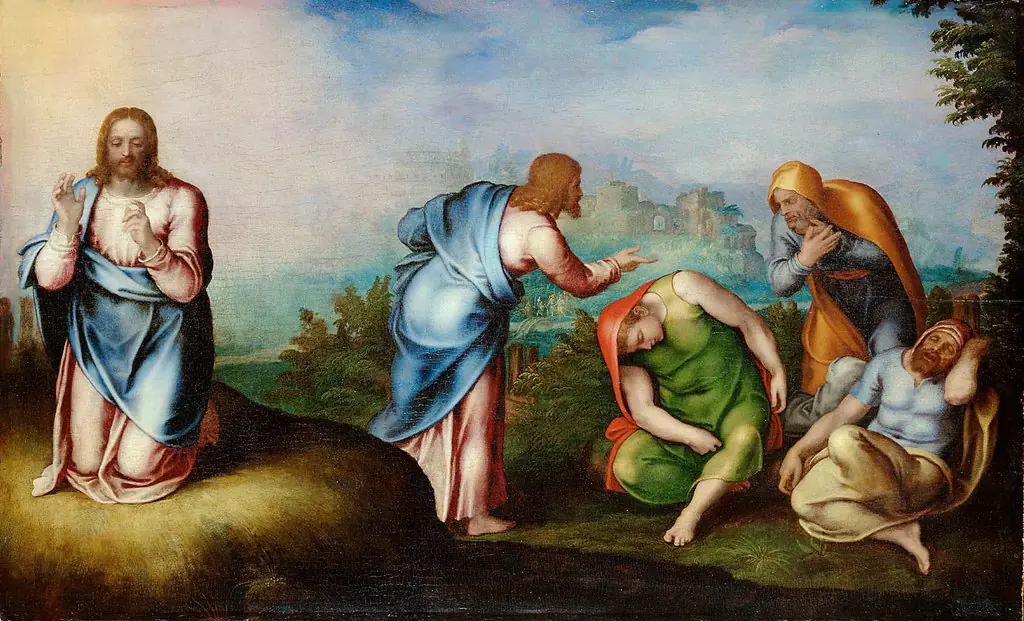
Ham Mocking Noah is an oil painting by the High Renaissance artist Luini Bernardino. It dates from 1510 and is held in the collection of the Pinacoteca di Brera. Painted between 1510 and 1515 by Bernardino Luini, this oil-on-panel work depicts a biblical episode from Genesis.
About this work
Overview
Painted between 1510 and 1515 by Bernardino Luini, this oil-on-panel work depicts a biblical episode from Genesis. It resides today in the Pinacoteca di Brera in Milan, where it has been part of the collection since the 19th century. The composition presents a quiet, contemplative moment amid a natural landscape, rendered with subtle tonal harmonies and careful attention to spatial depth.
Subject & Meaning
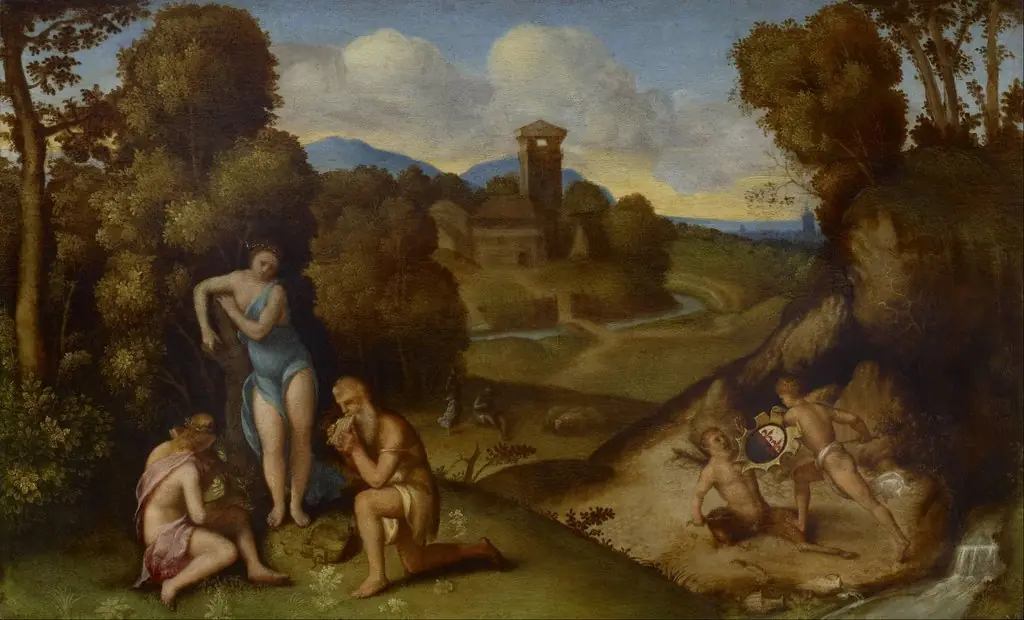
Noah, seated with a draped cloth, appears vulnerable, while the three figures around him react with varied expressions—curiosity, gesture, and silence.
The scene illustrates Ham, one of Noah’s sons, observing his father’s nakedness after the flood, an act later interpreted as disrespectful. Noah, seated with a draped cloth, appears vulnerable, while the three figures around him react with varied expressions—curiosity, gesture, and silence. The narrative draws from Genesis 9:20–27, though Luini emphasizes human interaction over moral judgment, focusing on posture and gesture rather than overt drama.
Technique & Style
Luini employs chiaroscuro to model the figures with soft gradations of light and shadow, lending volume without harsh contrasts. The figures are rendered with gentle contours and smooth transitions, reflecting Leonardo da Vinci’s influence. Earthy background tones frame the vivid reds, blues, and yellows of the garments, creating visual rhythm. The landscape, with its stream and distant architecture, is rendered with atmospheric perspective, enhancing spatial depth.
History & Provenance
The painting entered the Brera Gallery’s collection in the early 1800s following the Napoleonic suppression of religious institutions in Lombardy. Prior to that, it likely remained in private or ecclesiastical hands in northern Italy. Its attribution to Luini has been consistently supported by stylistic analysis, though its early ownership remains undocumented. The panel’s condition is well-preserved, with minimal retouching.
Context
Created during the High Renaissance in Lombardy, the work reflects the region’s artistic dialogue with Florence and Venice. Luini, influenced by Leonardo’s sfumato and compositional grace, adapted these elements into a distinctly northern Italian idiom. Biblical scenes like this were common in private devotional settings, where quiet contemplation was valued over theatricality, aligning with humanist ideals of the period.
Legacy
Though not widely exhibited outside Italy, the painting remains a key example of Luini’s mature style and his role in transmitting Leonardo’s innovations beyond Milan’s core circle. Its restrained emotional tone and refined technique distinguish it from more dramatic contemporaries, offering insight into the quieter, introspective currents of early 16th-century religious painting in northern Italy.
Own this work as a print
Artist & collection

Artist
Bernardino Luini (c. 1480/82 – June 1532) was a north Italian painter from Leonardo's circle during the High Renaissance. Both Luini and Giovanni Antonio Boltraffio were said to have worked with Leonardo directly; he…