Artwork
Raising o Lazarus
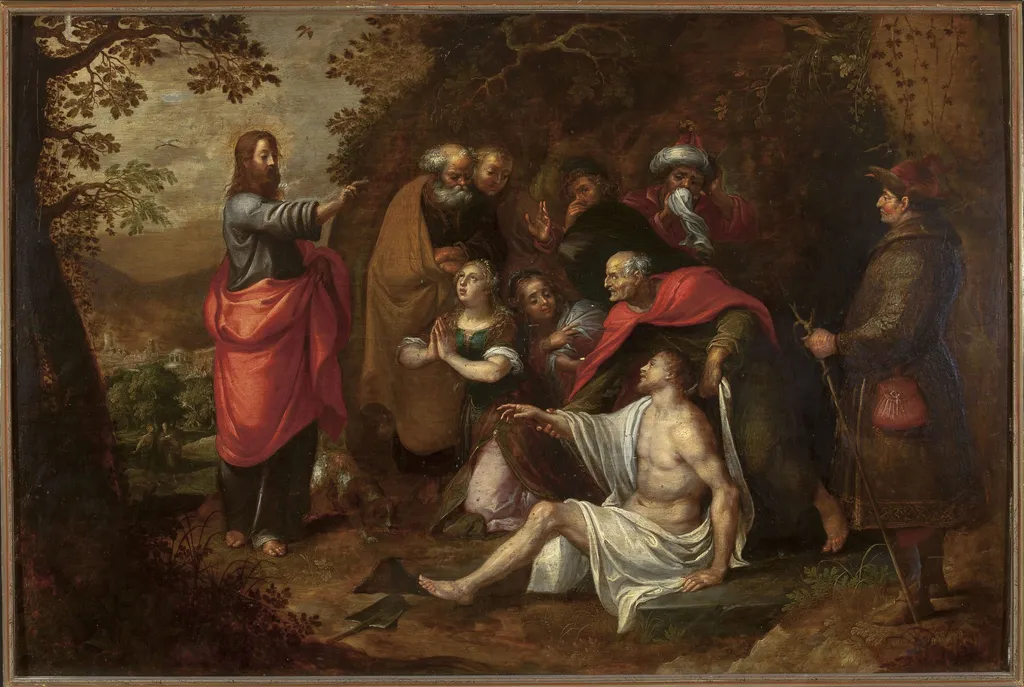
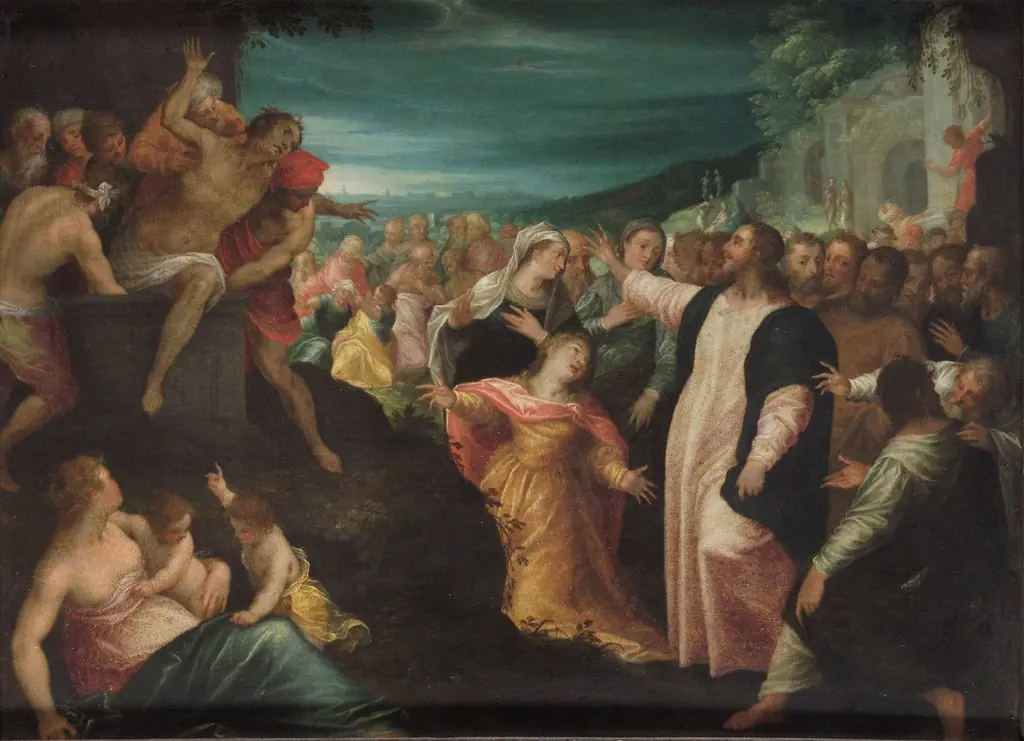
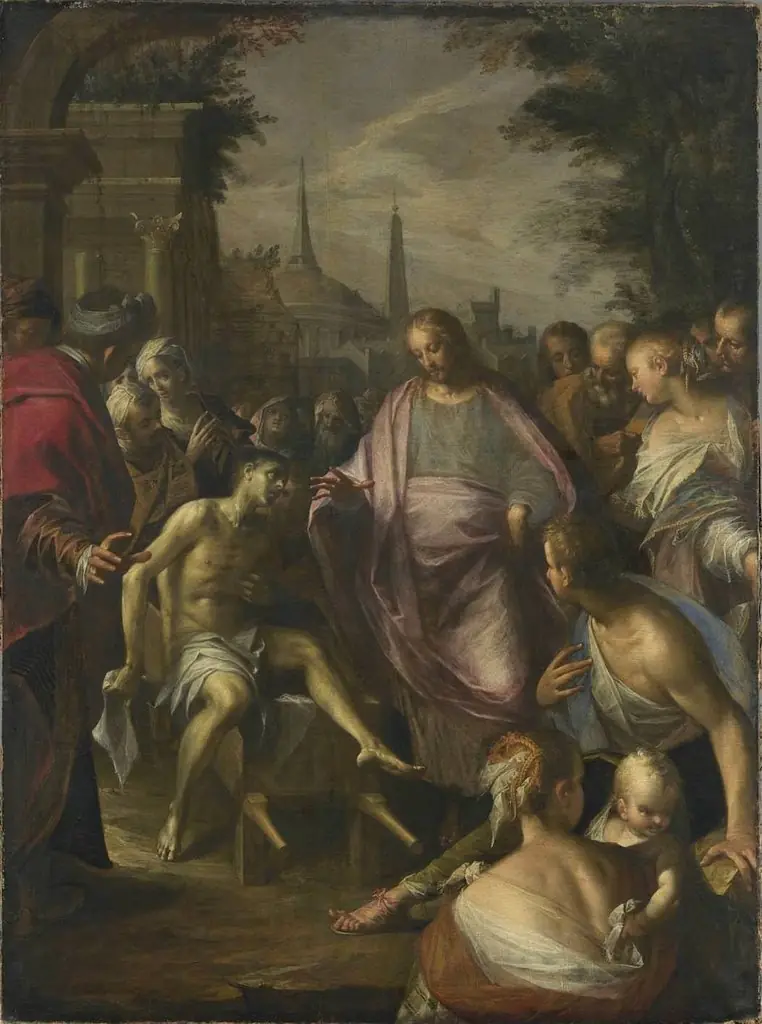
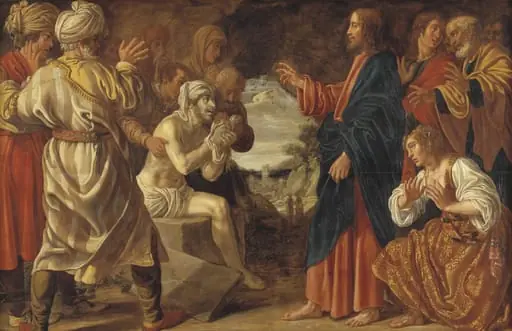
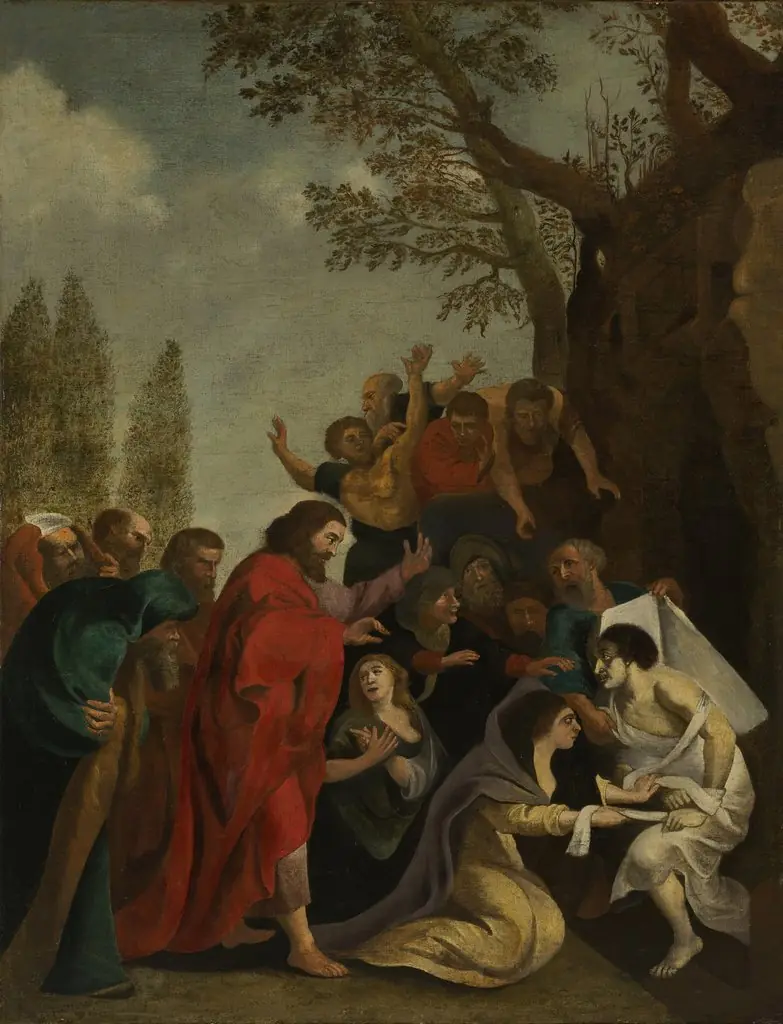
Raising o Lazarus is an oil painting by Maarten Pepyn. It dates from 1619 and is held in the collection of the National Museum in Warsaw.
About this work
Overview
Marten Pepijn, a Flemish artist active in the early 1600s, created this oil painting around 1619 as part of his engagement with biblical narratives.
Marten Pepijn, a Flemish artist active in the early 1600s, created this oil painting around 1619 as part of his engagement with biblical narratives. The work illustrates the miracle of Lazarus’s resurrection, a theme he revisited in multiple compositions. Measured in scale and intent, it aligns with the tradition of large religious canvases favored in Counter-Reformation art. The painting is now held in the National Museum in Warsaw, where it remains a key example of his narrative style.
Subject & Meaning
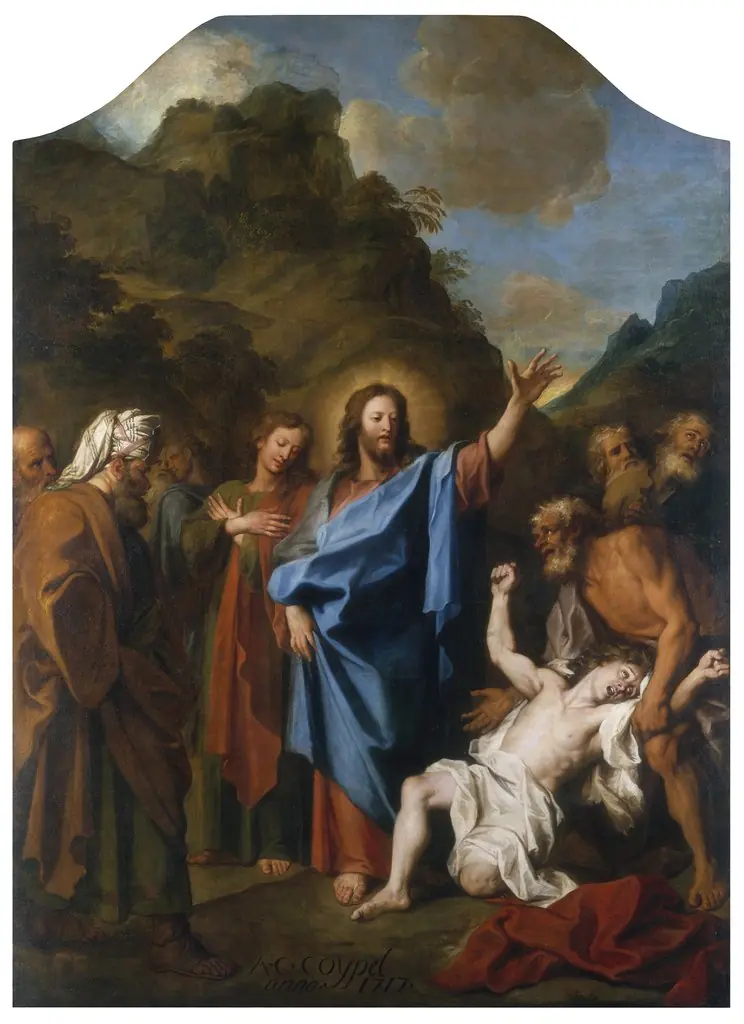
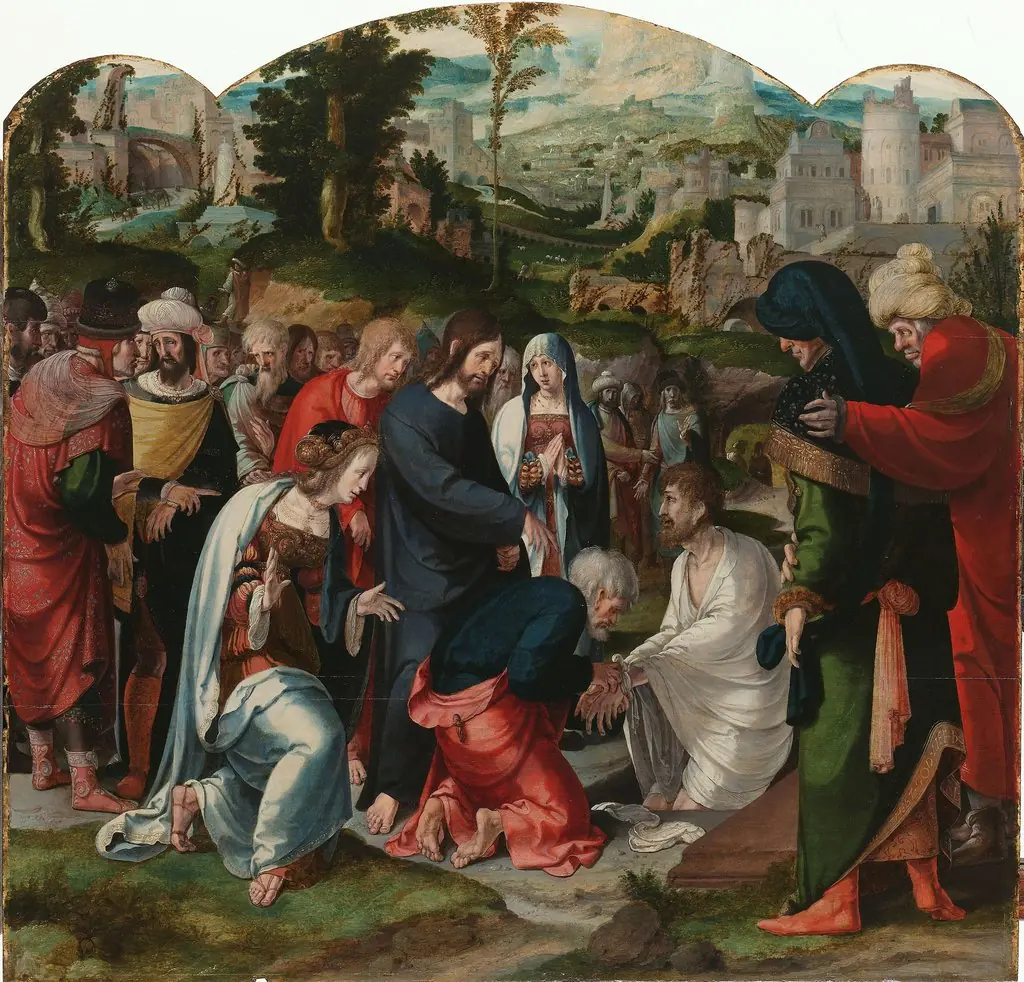
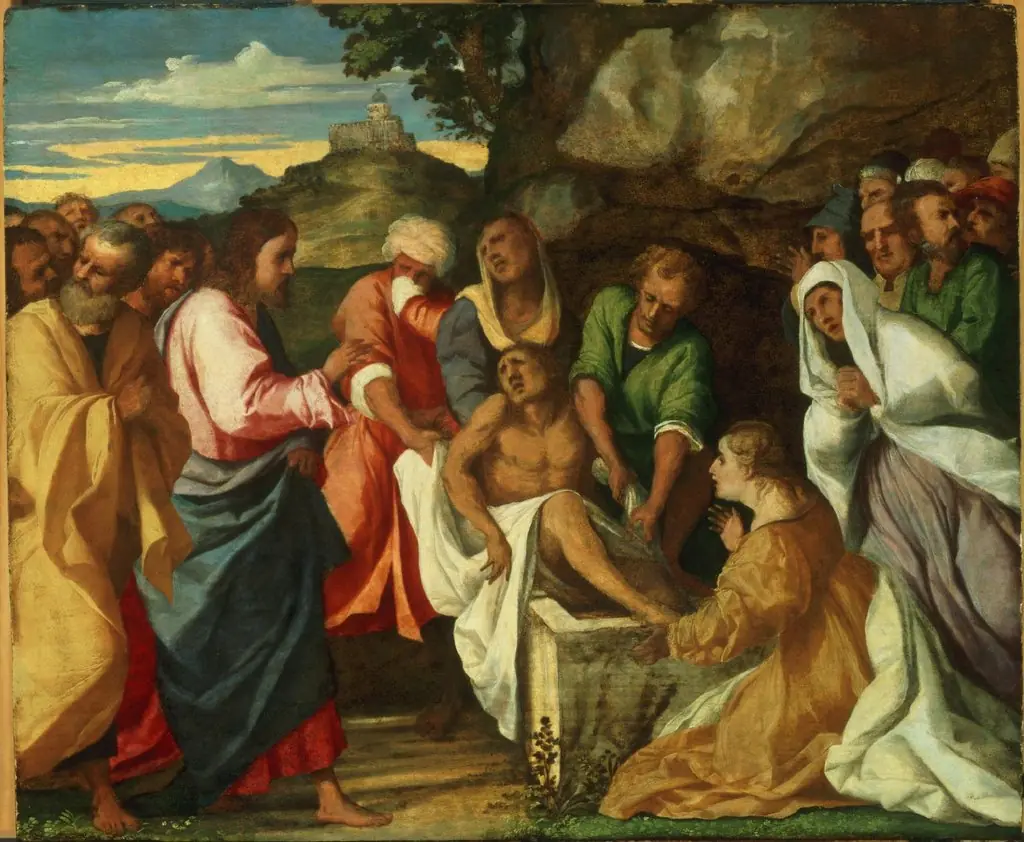
The scene captures the moment Jesus commands Lazarus, recently deceased, to rise from the tomb. Lazarus, wrapped in burial cloth, sits upright in the foreground, while Jesus, clad in red and grey, gestures with authority. Around them, witnesses react with awe and prayer—some in shock, others in devotion. The moment reflects divine power over death, a central tenet in Christian theology, rendered with emotional immediacy rather than idealized serenity.
Technique & Style
Pepijn employs chiaroscuro to model the figures, directing light toward Jesus and Lazarus to emphasize their spiritual centrality. The drapery of garments is rendered with careful folds, and the background landscape recedes subtly, framing the action without distraction. Color is restrained yet deliberate: the red of Christ’s robe anchors the composition, contrasting with the pallor of Lazarus’s shroud and the muted tones of the crowd.
History & Provenance
The painting was likely commissioned for a religious or private devotional setting in the Southern Netherlands. It entered the National Museum in Warsaw’s collection in the 20th century, though its earlier ownership history remains partially undocumented. Its survival through centuries of political change underscores its perceived significance, even as its attribution to Pepijn was confirmed through stylistic analysis and archival records.
Context
Created during the height of the Counter-Reformation, the painting responds to Catholic efforts to reaffirm miraculous narratives through visual art. Pepijn’s approach reflects the influence of both Italian Mannerism and Northern realism, blending dramatic gesture with observed human response. His choice of subject aligns with contemporary devotional practices that emphasized Christ’s power and the promise of resurrection.
Legacy
Though not widely exhibited outside Poland, the painting contributes to the understanding of Flemish religious painting beyond the most famous contemporaries. Pepijn’s treatment of the Lazarus theme, less ornate than some Italian counterparts, reveals a quieter, more psychologically grounded approach. It remains a representative work of provincial Flemish art that engaged deeply with theological themes of its time.
Artist & collection
Artist
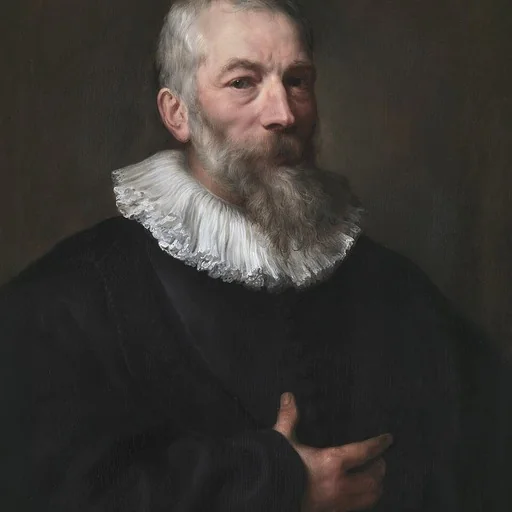
Marten Pepijn (21 February 1575 – 1643) was a Flemish painter who was mainly known for his large-scale history paintings and to a lesser extent for his smaller genre scenes.