Artwork
Virgin and Saints Adoring the Christ Child
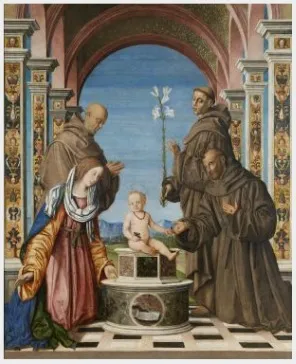
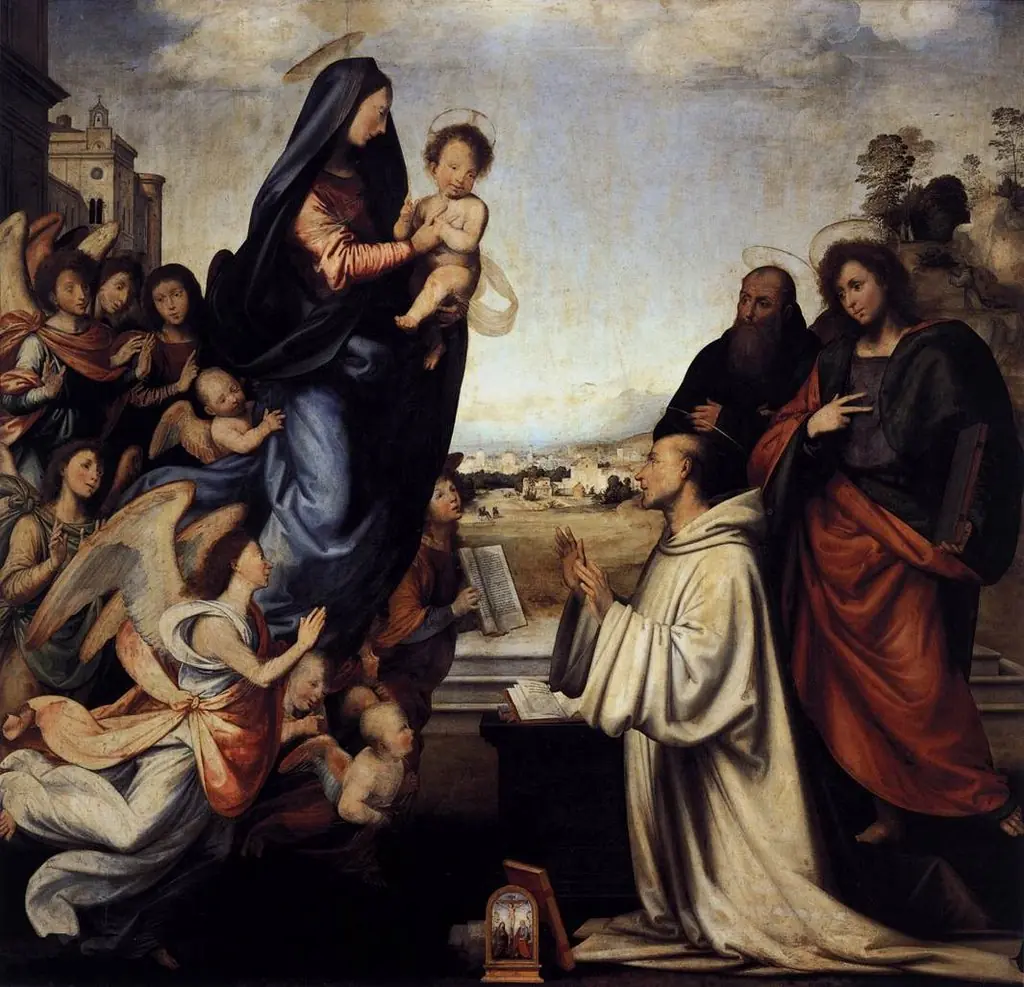
Virgin and Saints Adoring the Christ Child is an oil painting by the Early Renaissance artist Bernardino Zaganelli. It dates from 1509 and is held in the collection of the National Gallery of Ireland.
About this work
Overview
Painted in 1509 by Bernardino Zaganelli, this oil-on-panel work presents a devotional scene central to early Renaissance religious art.
Painted in 1509 by Bernardino Zaganelli, this oil-on-panel work presents a devotional scene central to early Renaissance religious art. It is one of the few securely attributed pieces by the artist, who worked primarily in central Italy. The painting is part of the National Gallery of Ireland’s collection, where it has been held since the 19th century. Its modest scale and intimate composition reflect its likely use in private worship rather than public liturgy.
Subject & Meaning
The composition centers on the Christ Child seated on a table, surrounded by the Virgin Mary and four male saints. Mary, dressed in a red undergarment and blue mantle, stands protectively beside him. The saints, clad in dark robes, kneel or bow in quiet reverence. Their gestures and lowered gazes emphasize adoration, reinforcing the theological theme of divine incarnation. The scene invites contemplation rather than narrative drama, aligning with devotional practices of the period.
Technique & Style
Zaganelli employed oil paint to achieve subtle transitions in light and color, particularly in the rendering of fabrics and skin tones. Warm hues in Mary’s garments contrast with the cooler shadows and dark robes of the saints, creating visual harmony. The background features a softly rendered arched window, suggesting depth without elaborate perspective. Figures are arranged in a shallow space, prioritizing spiritual focus over architectural realism, typical of regional early Renaissance conventions.
History & Provenance
The painting’s documented history begins in the 19th century, when it entered the National Gallery of Ireland’s collection. Prior to that, its origins are unclear, though stylistic analysis suggests it was produced in the Marche region of Italy, where Zaganelli was active. No early records of commission or ownership survive, indicating it may have been made for a private chapel or domestic altar, common for works of this type in the early 1500s.
Context
Created during the transition from Early to High Renaissance, the painting reflects regional Italian traditions that retained Gothic devotional intensity even as naturalism spread. Unlike Florentine or Venetian contemporaries, Zaganelli avoided dramatic foreshortening or complex spatial schemes. His focus on quiet reverence and tactile detail aligns with devotional imagery favored in smaller ecclesiastical settings, where emotional immediacy mattered more than grandeur.
Legacy
Though Zaganelli is not widely known today, this work remains a representative example of provincial Renaissance piety. It contributes to scholarly understanding of how religious themes were adapted outside major artistic centers. Its preservation in a public collection ensures continued study of regional painting practices and the diversity of devotional expression in early 16th-century Italy.
Artist & collection
Artist
Bernardino Zaganelli (Italian pronunciation: ), also Bernardino di Bosio Zaganelli and Bernardino da Cotignola, (1460-1470 – 1510) was an Italian painter, of the Renaissance period.

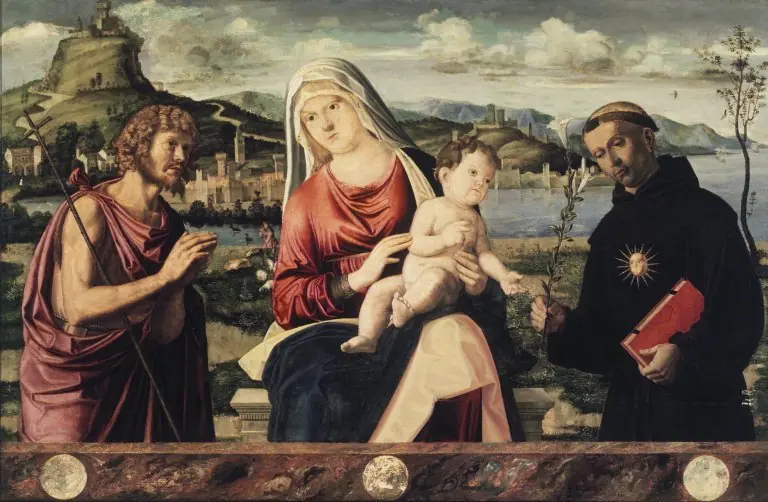 Madonna and Child with Saints John the Baptist and Nicholas of Tolentino
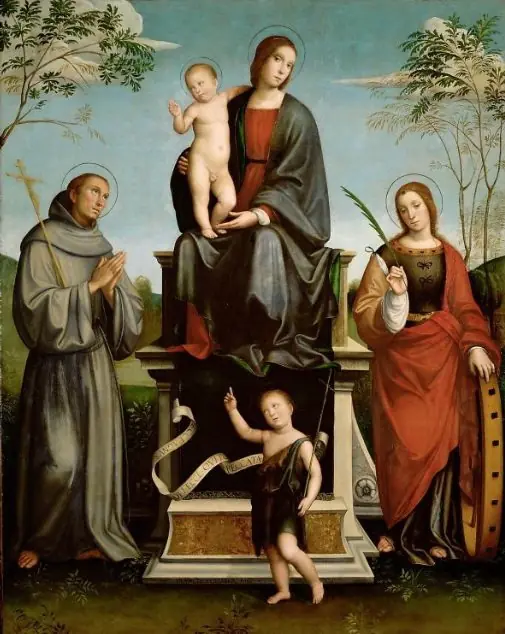 Mary with Child, St. Francis, St. Catherine and young St. John the Baptist
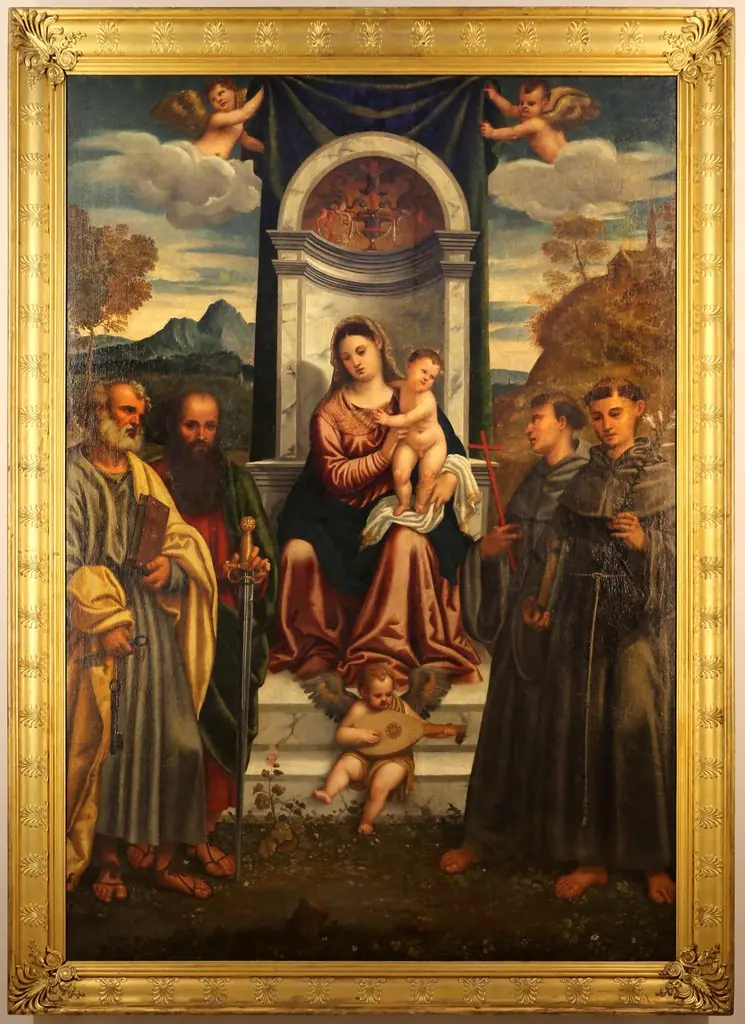 Virgin and Child enthroned with SS. Peter, Paul, Francis and Anthony of Padua
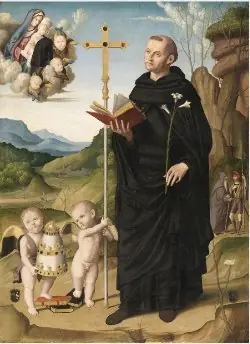 Saint Philip Benizzi (1233-1285)
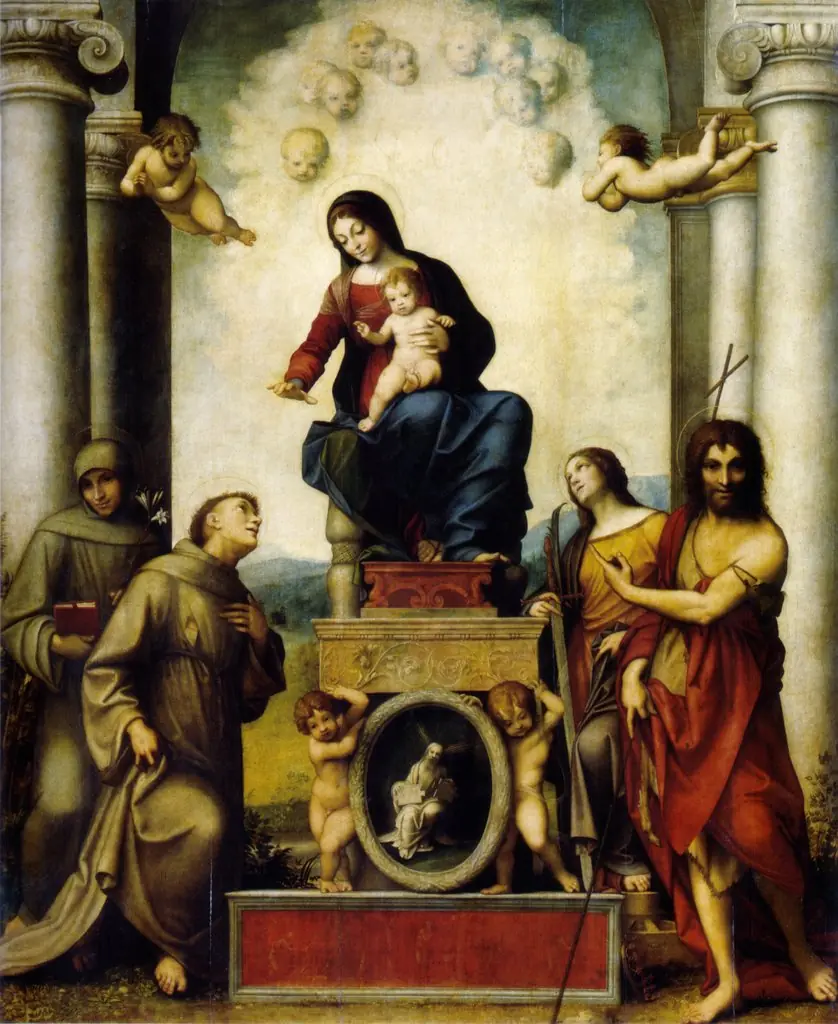 Madonna with St. Francis
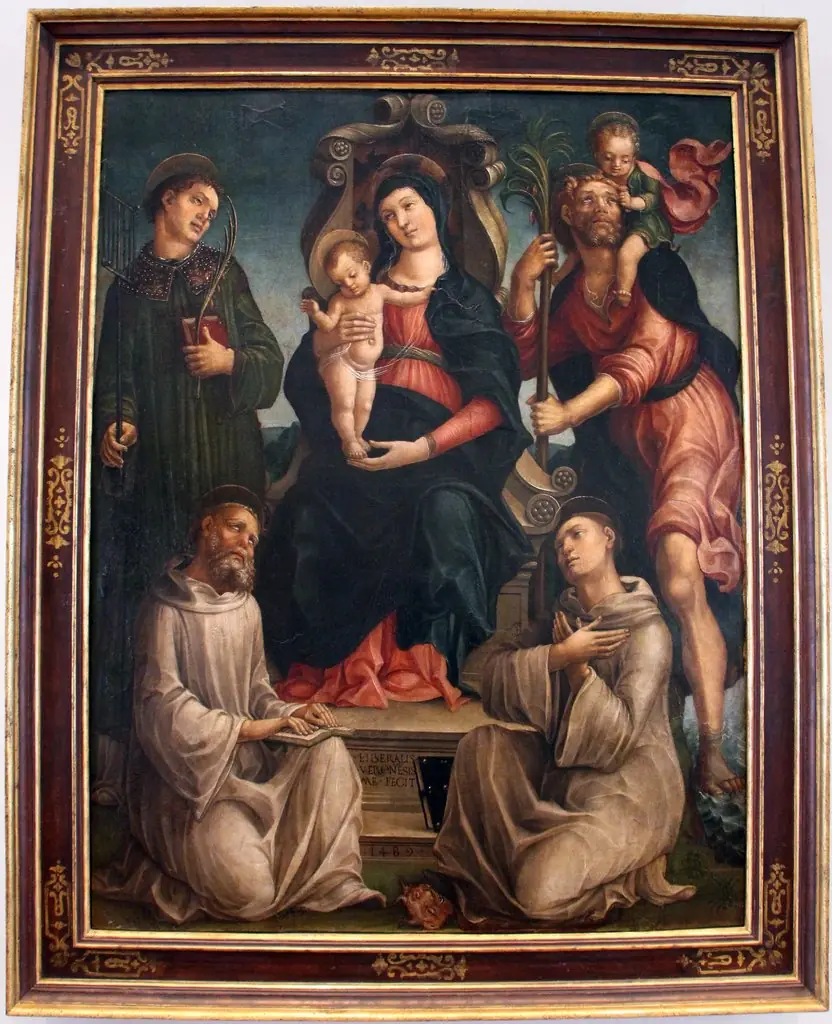 Thronende Maria mit dem segnenden Kind und den Heiligen Benedikt von Nursia, Laurentius und Bernhard von Clairvaux
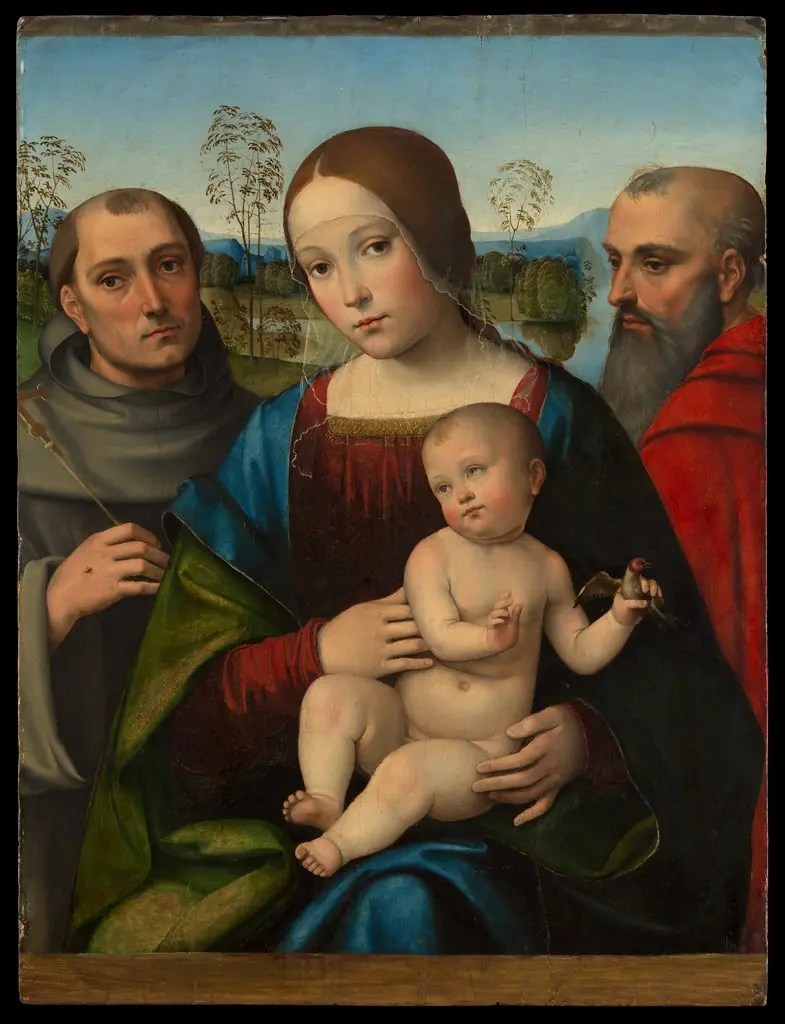 Madonna and Child with Saints Francis and Jerome
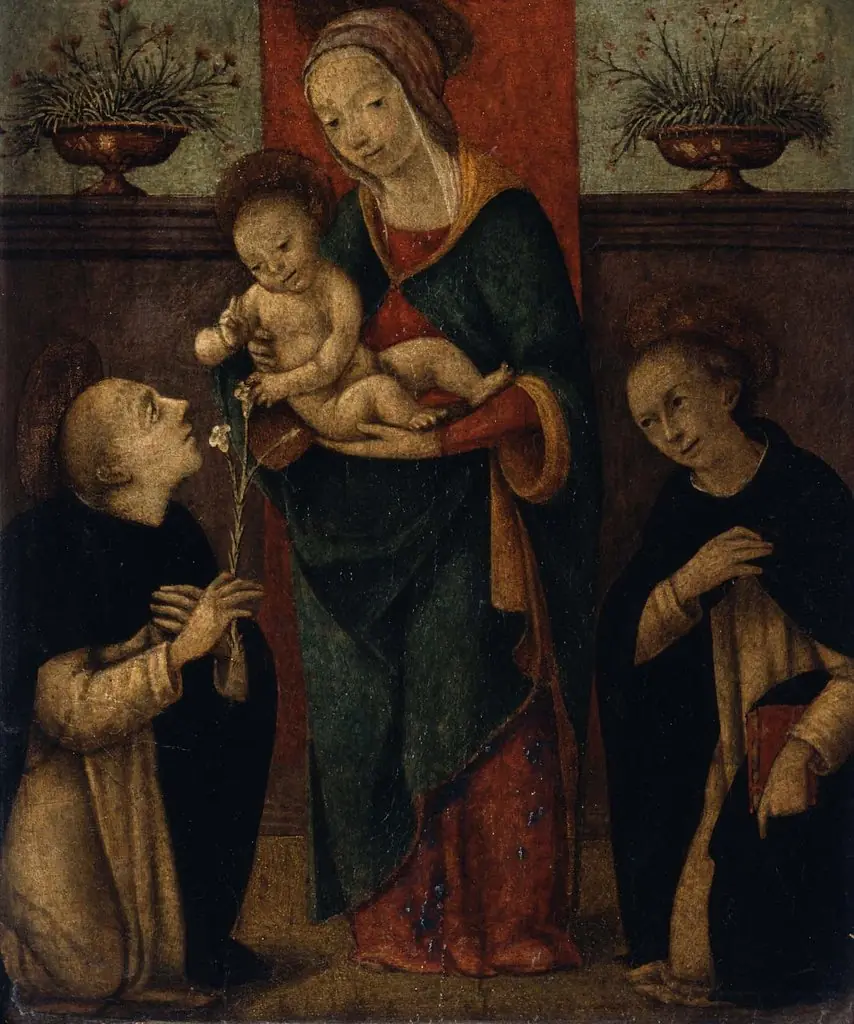 Virgin and Child with Saints Dominic and Thomas Aquinas (?)
 The Vision of Saint Bernard