Artwork
Saint Philip Benizzi (1233-1285)
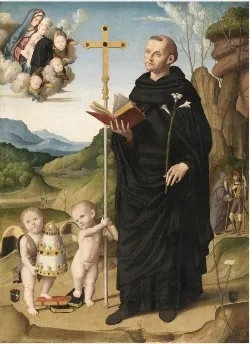
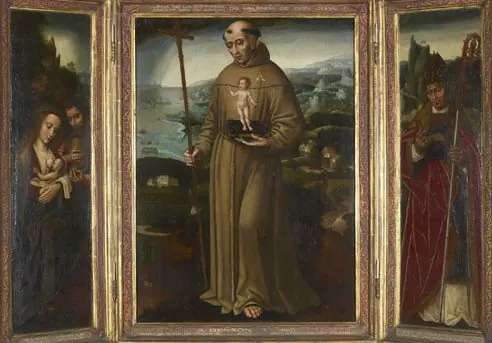
Saint Philip Benizzi (1233-1285) is an unspecified painting by the Mannerist artist Marco Palmezzano. It dates from 1509 and is held in the collection of the National Gallery of Ireland.
About this work
Overview
The painting resides in the National Gallery of Ireland, where it stands as one of the artist’s preserved religious compositions from his later career.
Painted around 1509 by Marco Palmezzano, this work portrays Saint Philip Benizzi, founder of the Servite Order. Executed in the early 16th century, it reflects Palmezzano’s mature style, blending Italian traditions with Northern Renaissance details. The painting resides in the National Gallery of Ireland, where it stands as one of the artist’s preserved religious compositions from his later career.
Subject & Meaning
Saint Philip Benizzi is depicted as a contemplative figure, embodying humility and devotion. His black robe, marked by a white lily, symbolizes purity and his connection to the Servite Order. The book and cross in his hands represent spiritual authority and faith, while the cherubs at his feet—holding a bell and a book—suggest divine presence and the call to prayer, reinforcing his sanctity without overt drama.
Technique & Style
Palmezzano employs soft modeling and delicate brushwork to render the saint’s robe and the atmospheric landscape. The background features a muted, receding terrain with scattered trees and hazy clouds, creating spatial depth. The cherubs are rendered with a lightness that contrasts the saint’s solemnity, revealing a subtle influence from Northern European detail, yet grounded in the Italian compositional tradition.
History & Provenance
The painting was likely commissioned for private devotion or a Servite chapel, typical of Palmezzano’s output in Forlì. It entered the National Gallery of Ireland’s collection in the 19th or early 20th century, though its earlier ownership remains undocumented. Its preservation suggests continued veneration, even as devotional practices evolved beyond its creation.
Context
Created during a period when Italian art was shifting from High Renaissance ideals toward more expressive forms, this work retains a quiet restraint. Palmezzano, working outside major centers like Florence or Rome, absorbed Northern techniques through prints and trade, adapting them to local devotional needs. The painting reflects regional piety rather than courtly grandeur.
Legacy
Though not widely known outside regional art histories, the painting exemplifies how smaller Italian workshops sustained religious iconography with personal nuance. Palmezzano’s synthesis of Northern detail and Italian form influenced later local artists, preserving a quiet, introspective strain of sacred imagery that contrasts with the more theatrical trends of his time.
Artist & collection
Artist
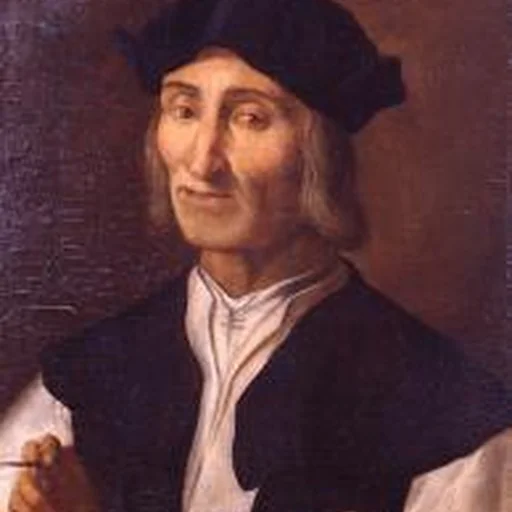
Marco Palmezzano (1460–1539) was an Italian painter and architect, belonging to the Forlì painting school, who painted in a style recalling earlier Northern Renaissance models. He was mostly active near Forlì.

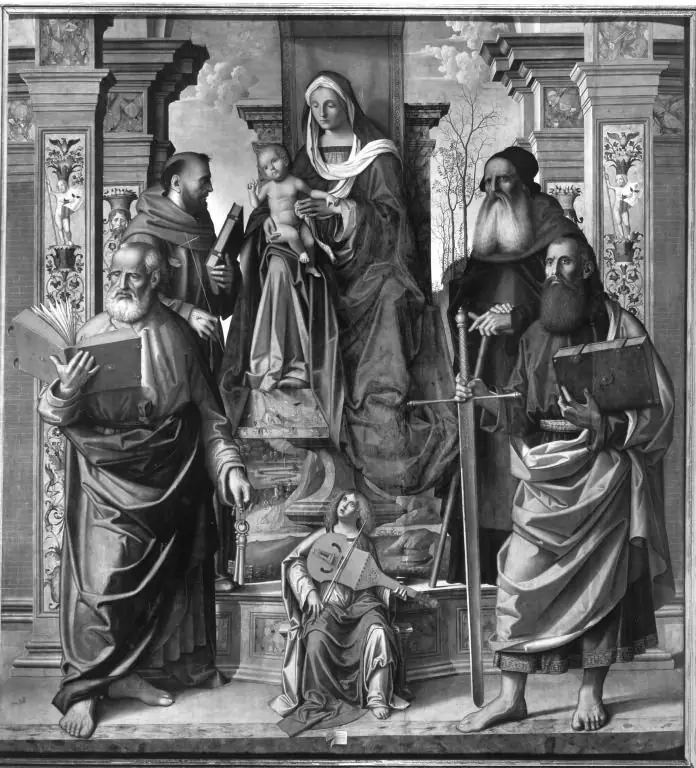
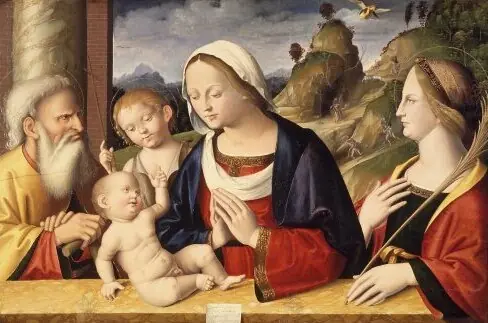
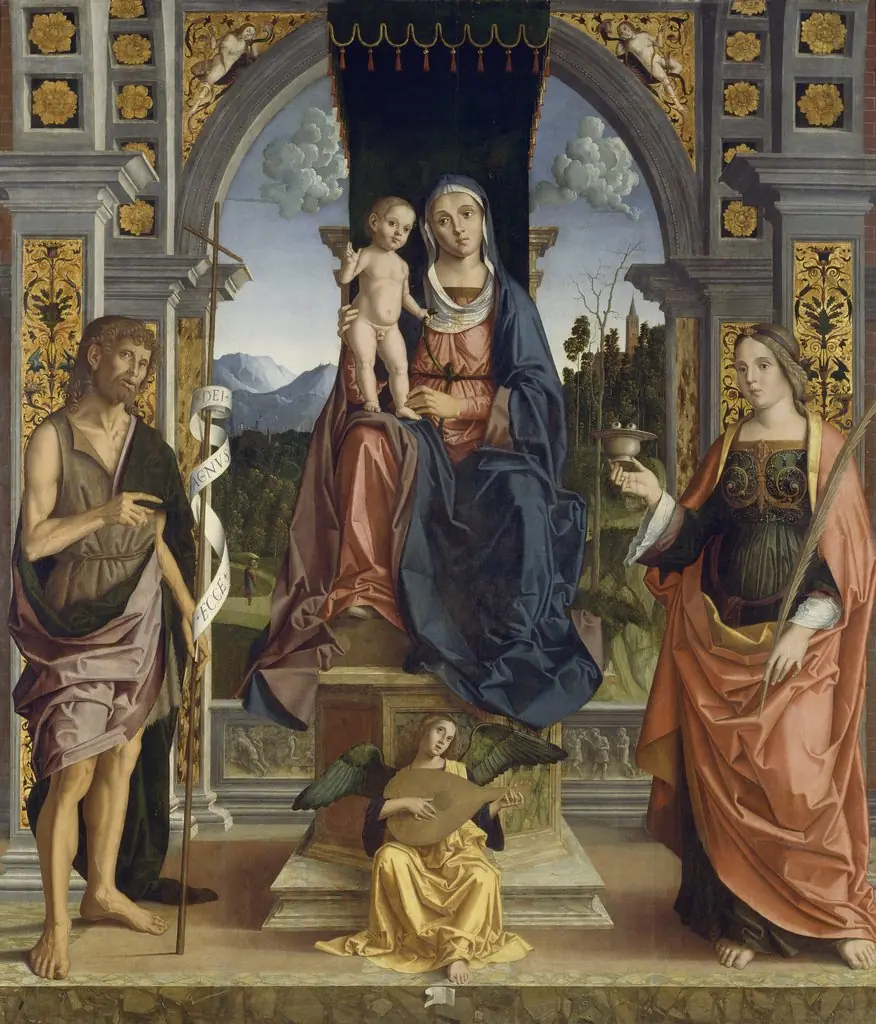
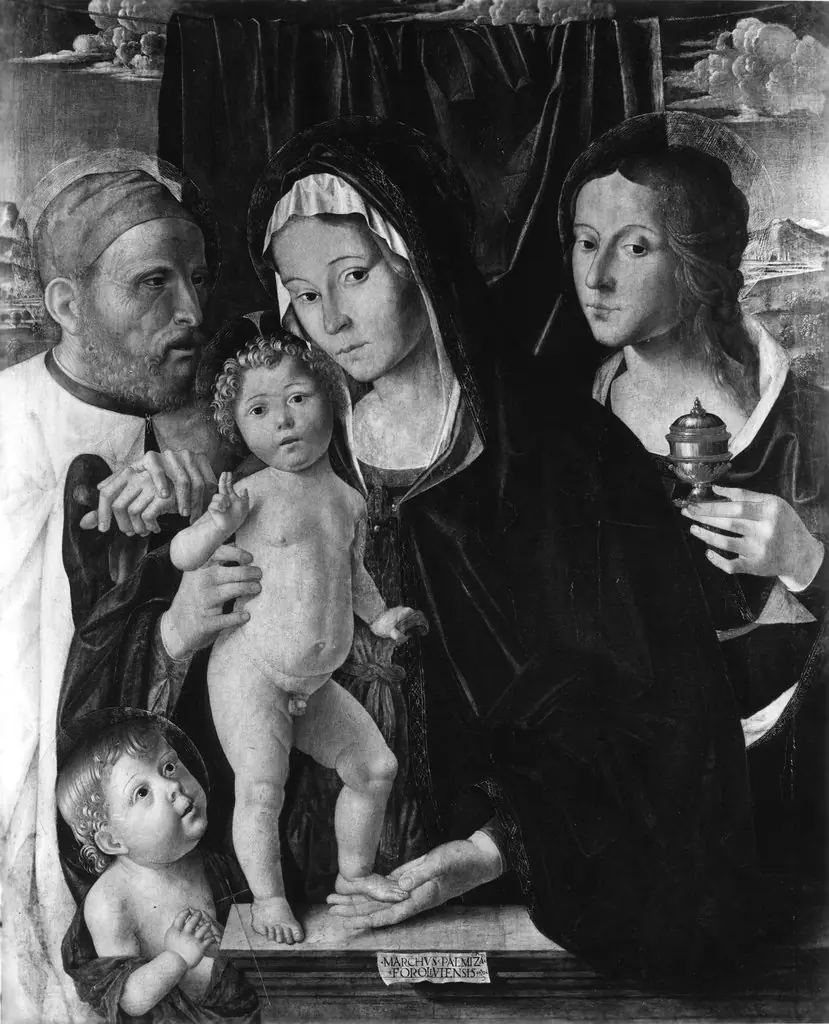
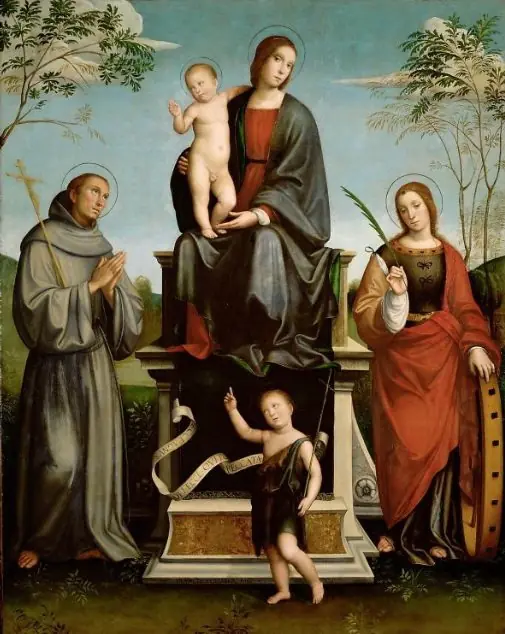 Mary with Child, St. Francis, St. Catherine and young St. John the Baptist
![The Saint Anne Altarpiece: Saint Anthony of Padua [right panel], by Gerard David](https://artifactworldgallery.com/img/gerard-david--the-saint-anne-altarpiece-saint-anthony-of-padua-right-panel--124c5dfd1de29e92-w320.webp) The Saint Anne Altarpiece: Saint Anthony of Padua [right panel]
The Saint Anne Altarpiece: Saint Anthony of Padua [right panel]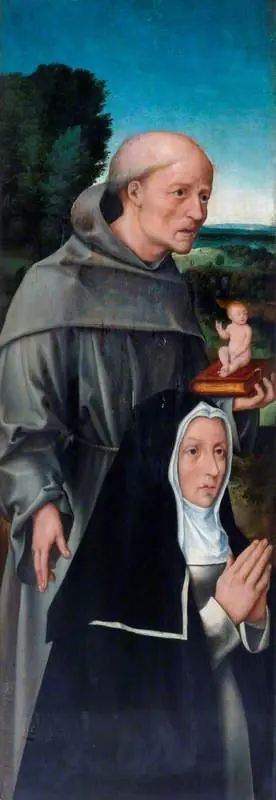 Saint Anthony of Padua with a Nun
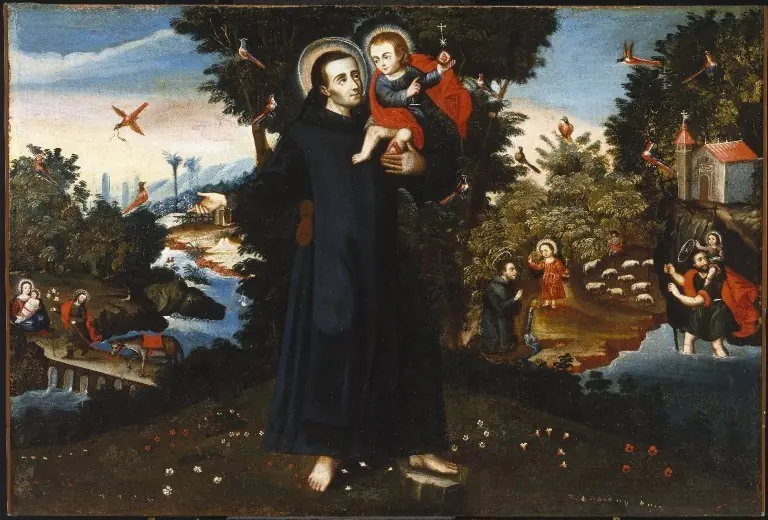 St. John of God
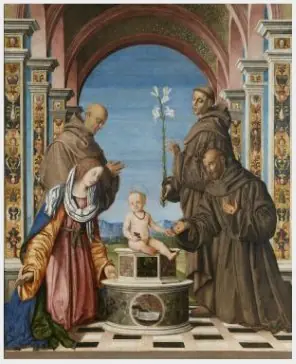 Virgin and Saints Adoring the Christ Child
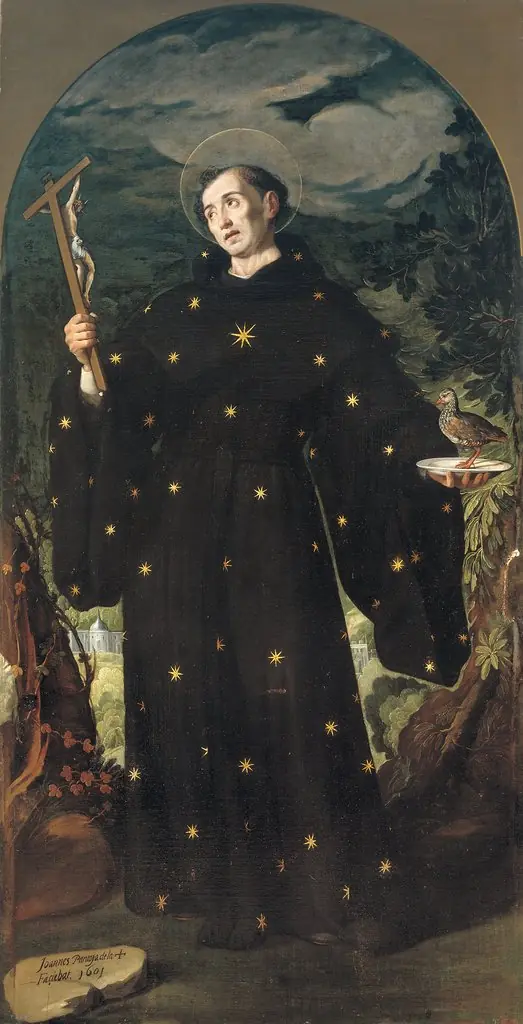 San Nicolás de Tolentino
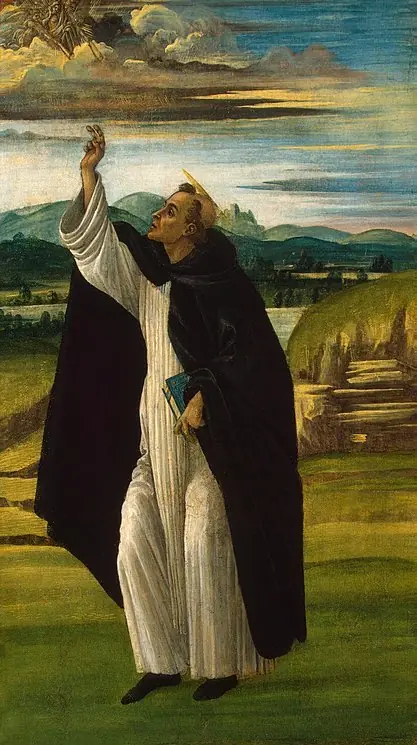 St Dominic
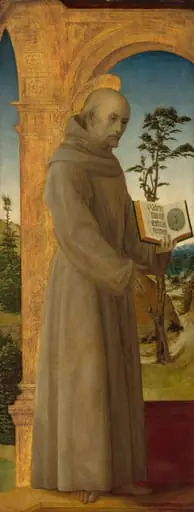 Saint Bernardino of Siena
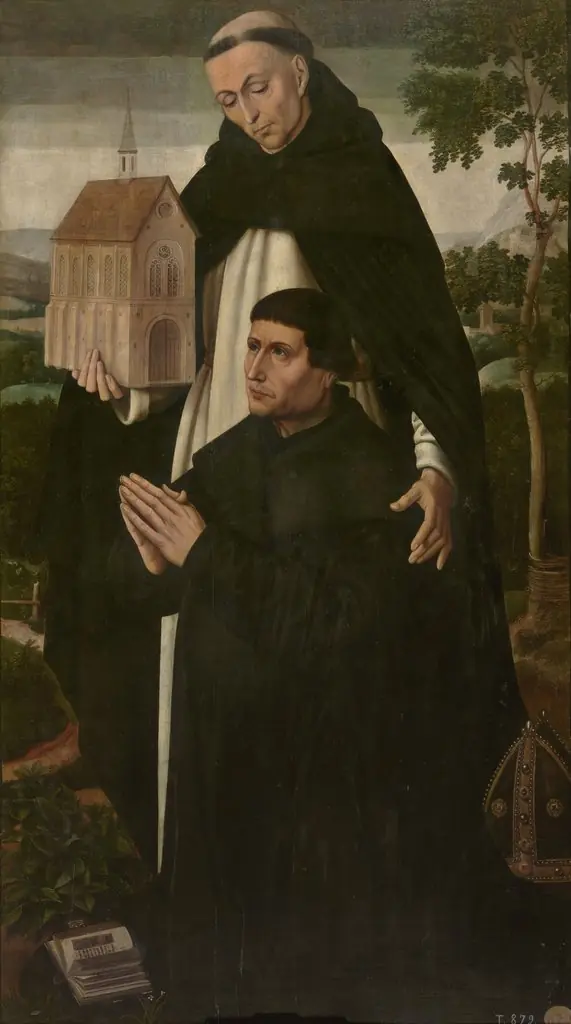 Santo Tomás y un donante
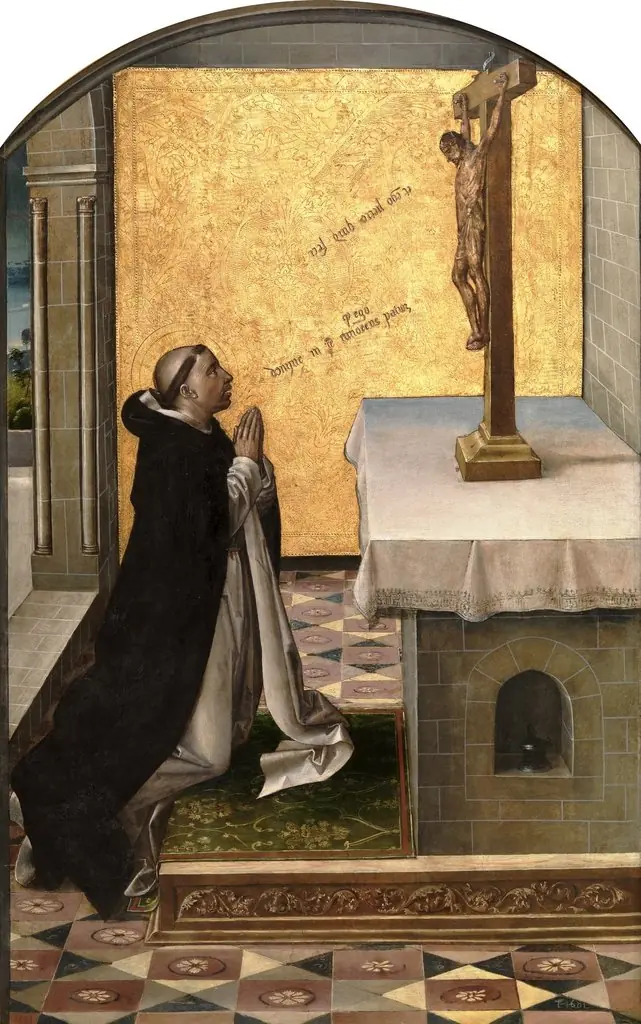 Saint Peter the Martyr praying
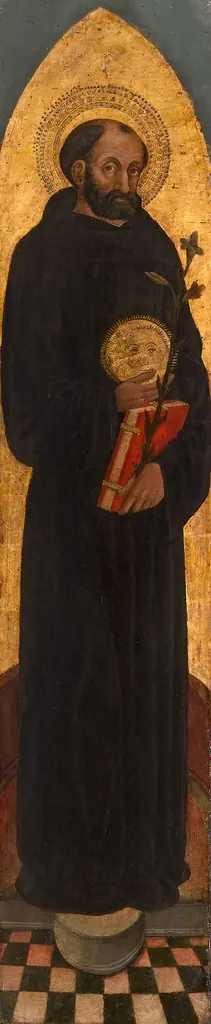 Saint Nicholas of Tolentino from an Augustinian altarpiece
 Triptiek van de heilige Antonius van Padua