Artwork
A View at the Entrance of the Grand Canal, Venice
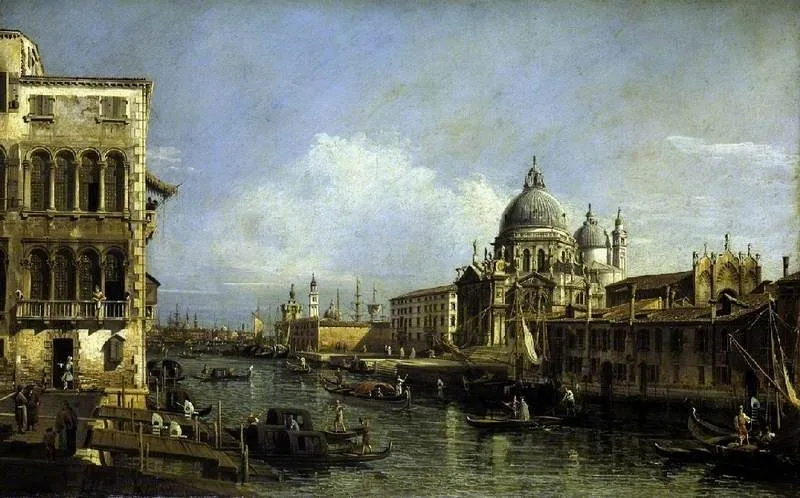
A View at the Entrance of the Grand Canal, Venice is an oil painting by the Rococo painting artist Bernardo Bellotto. It dates from 1741 and is held in the collection of the Fitzwilliam Museum. Painted in 1741, this oil on canvas depicts the western entrance to Venice’s Grand Canal.
About this work
Overview
Painted in 1741, this oil on canvas depicts the western entrance to Venice’s Grand Canal. The work is attributed to Bernardo Bellotto, known for his precise architectural renderings. It captures a quiet moment in the city’s daily life, with vessels drifting along the water and monumental facades lining the shore. The painting is part of the Fitzwilliam Museum’s collection in Cambridge, England.
Subject & Meaning
The absence of crowds or overt spectacle conveys a contemplative mood, reflecting the city’s enduring presence rather than its fleeting events.
The scene presents a tranquil, unpopulated stretch of the canal, emphasizing the grandeur of Venetian architecture over human activity. Buildings such as palazzos and churches rise in orderly succession, their symmetry suggesting civic pride and stability. The absence of crowds or overt spectacle conveys a contemplative mood, reflecting the city’s enduring presence rather than its fleeting events.
Technique & Style
Bellotto employed oil paint to achieve fine detail and subtle tonal gradations. He used chiaroscuro to model the facades and water’s surface, enhancing spatial depth. Reflections on the canal are rendered with delicate brushwork, capturing the way light shifts across moving water. His approach aligns with topographical precision, prioritizing accuracy over romantic embellishment.
History & Provenance
Created during Bellotto’s early career in Venice, the painting likely served as a record of the city’s architectural landscape for foreign patrons. It entered the Fitzwilliam Museum’s holdings in the 19th century, possibly through a private collection. Its documented history is modest, but its stylistic consistency with Bellotto’s other Venetian views supports its attribution and dating.
Context
In the mid-18th century, Venetian vedute—detailed cityscapes—were in demand among European travelers on the Grand Tour. Bellotto, nephew of Canaletto, contributed to this genre with a cooler, more analytical eye. His works were valued for their documentary clarity, offering patrons a reliable visual record of cities they had visited or aspired to see.
Legacy
Bellotto’s precise style influenced later topographical painters and urban documentarians. While less celebrated than his uncle, his works remain important for their fidelity to architectural form and atmospheric nuance. This painting exemplifies how 18th-century artists balanced artistic expression with the growing Enlightenment interest in observation and record.
Artist & collection
Artist
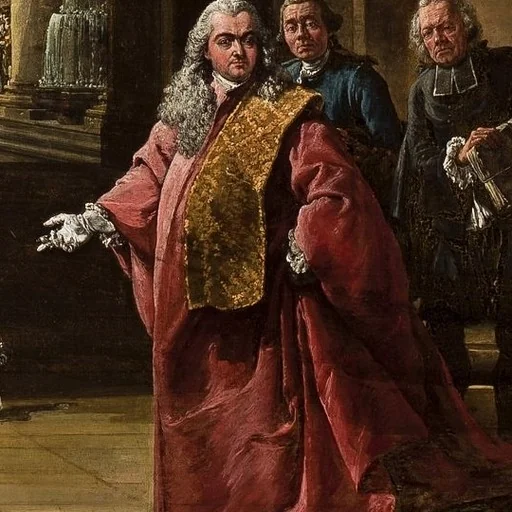
Bernardo Bellotto, was an Italian urban landscape painter or vedutista, and printmaker in etching famous for his vedute of European cities – Dresden, Vienna, Turin, and Warsaw.

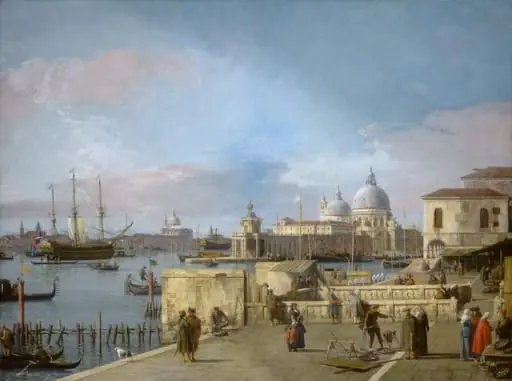 Entrance to the Grand Canal from the Molo, Venice
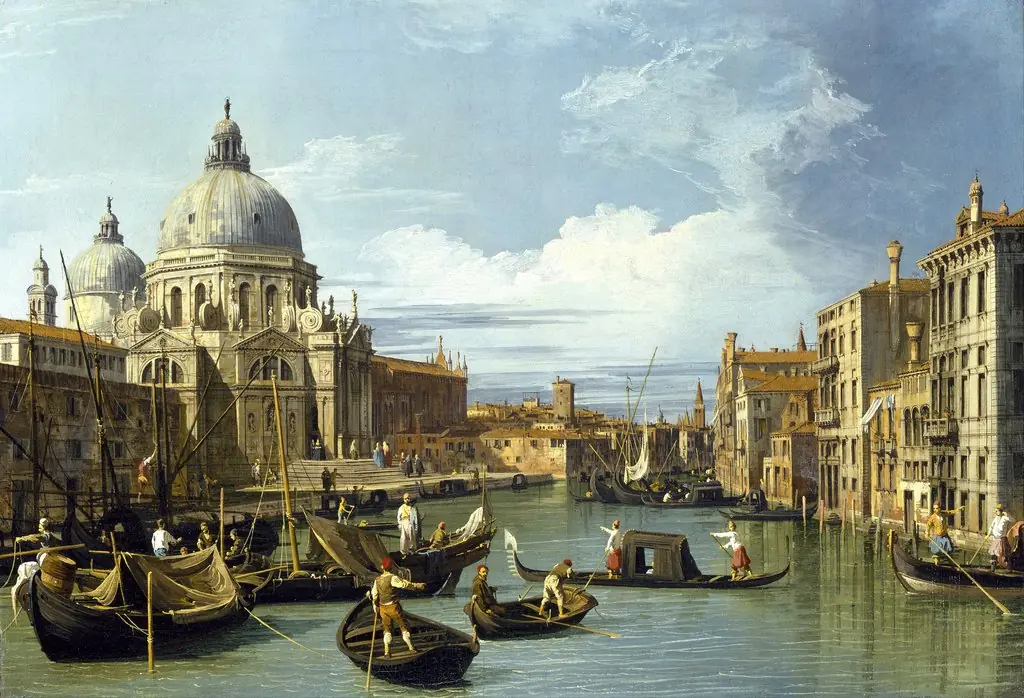 The Entrance to the Grand Canal, Venice
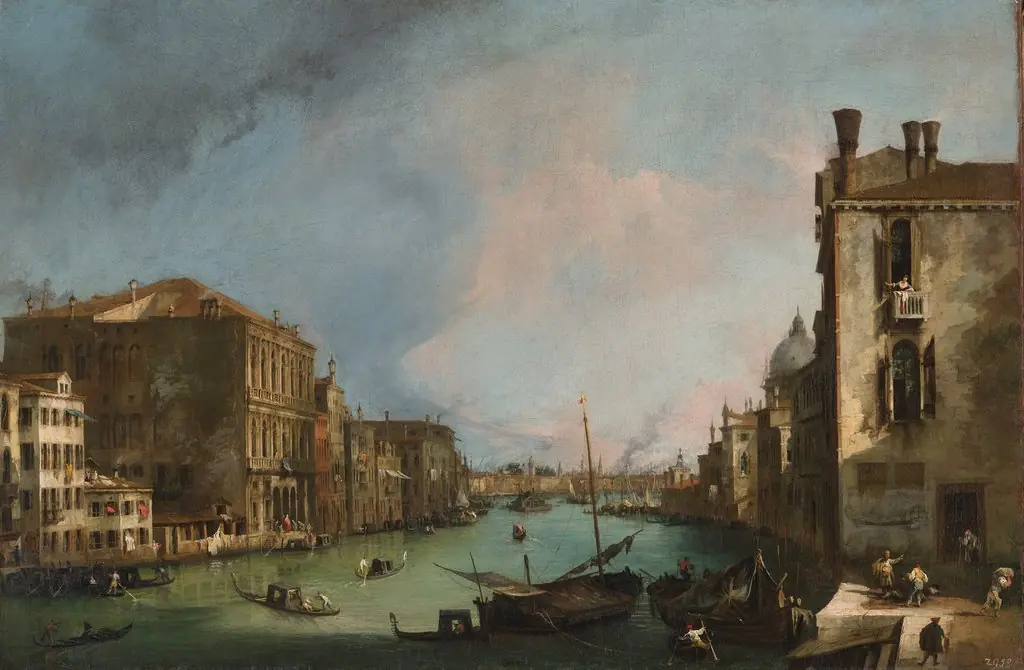 The Grand Canal in Venice with the Rialto Bridge
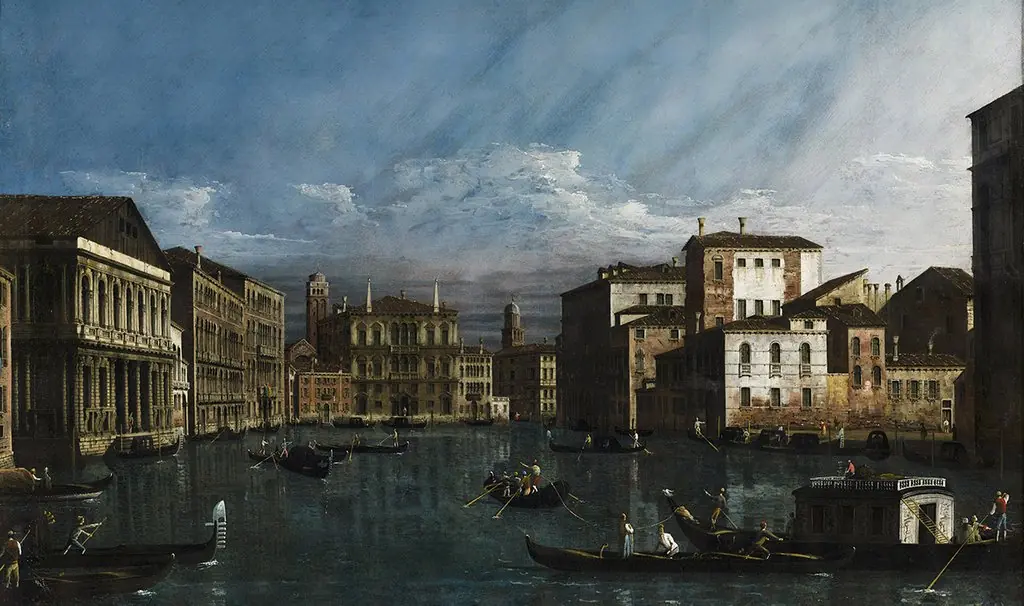 The Grand Canal in Venice
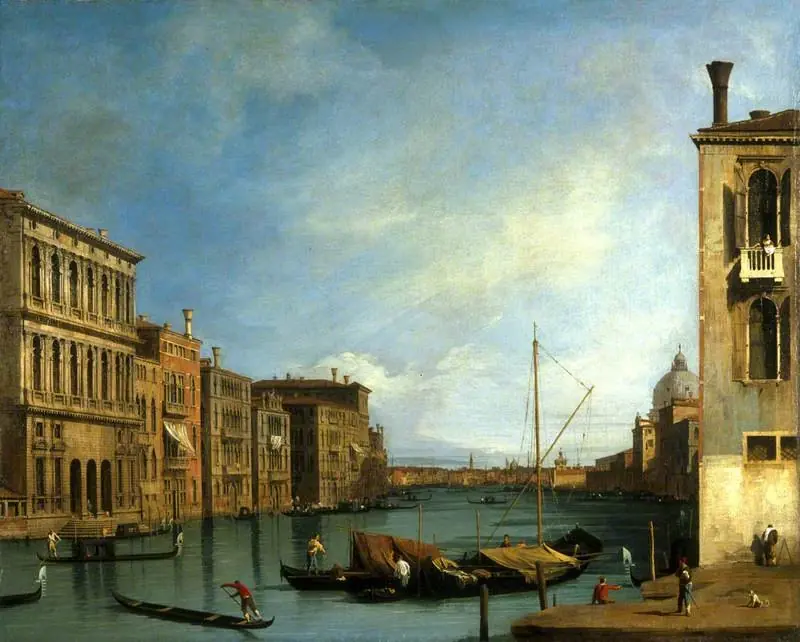 The Grand Canal from the Campo San Vio, Venice
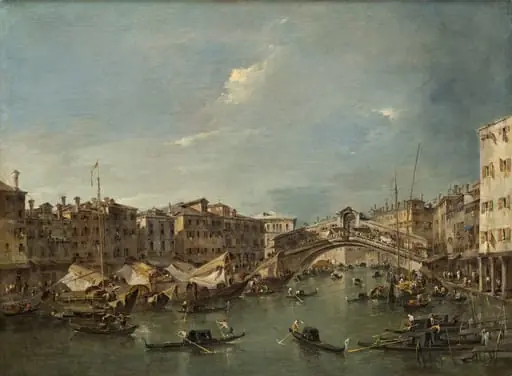 Grand Canal with the Rialto Bridge, Venice
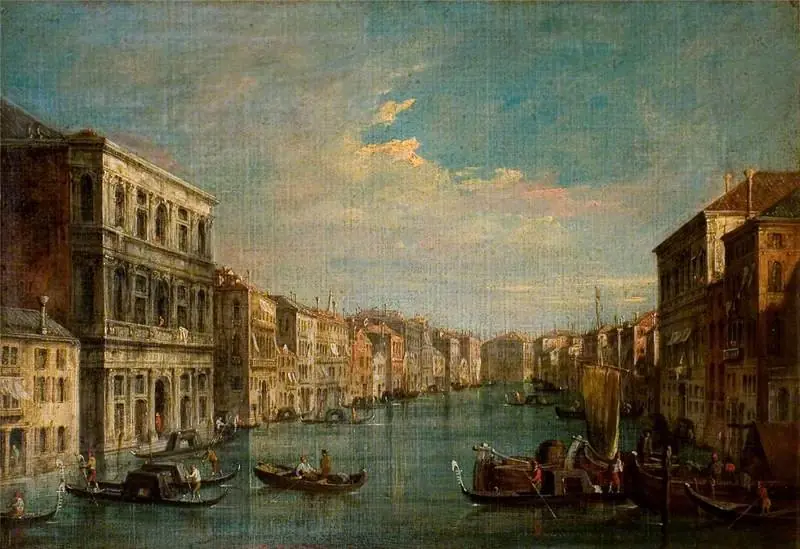 Venice: The Grand Canal Looking South-West from Palazzo Grimani
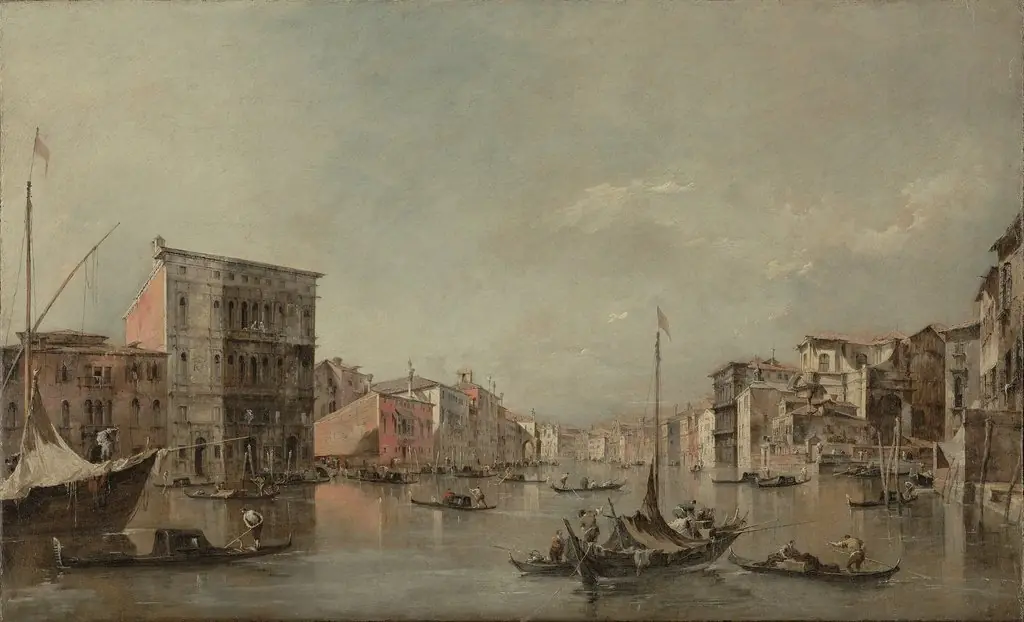 The Grand Canal in Venice with Palazzo Bembo
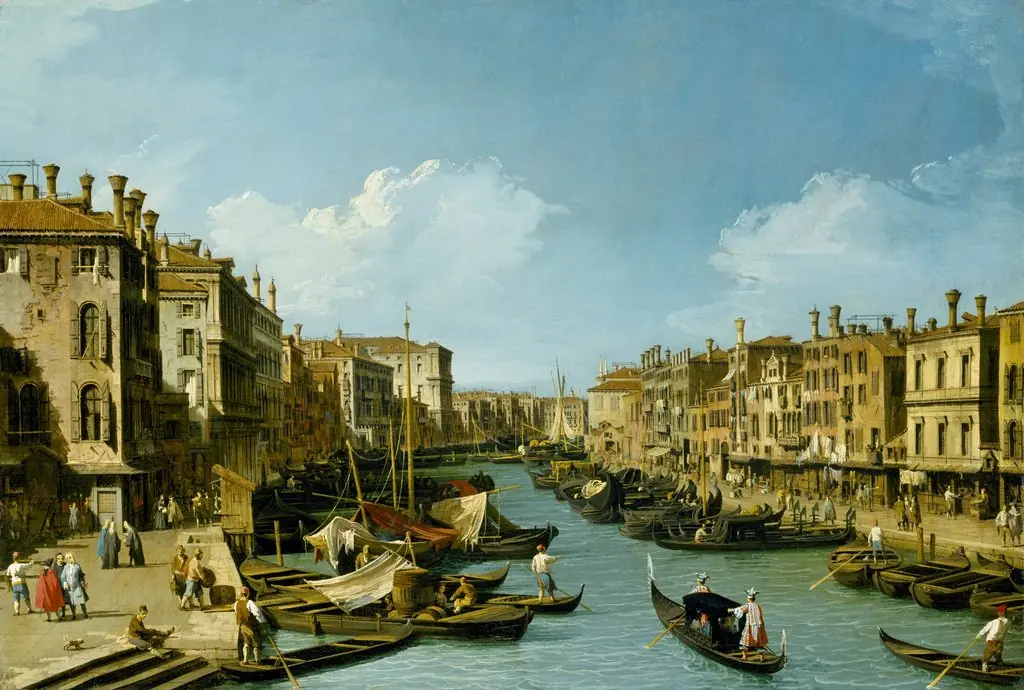 The Grand Canal near the Rialto Bridge, Venice