Artwork
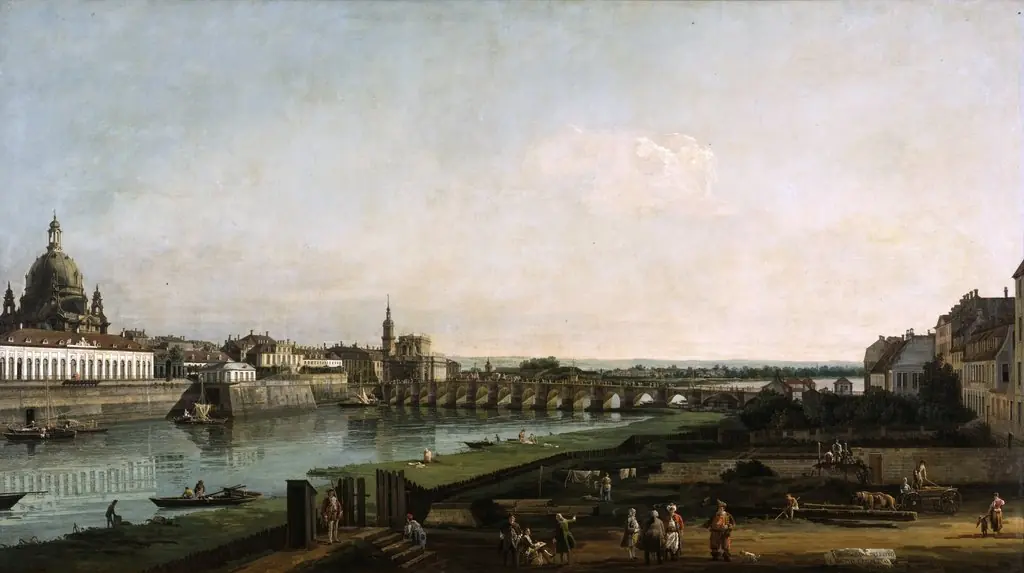
Dresden from the Left Bank of the Elbe, below the Fortifications
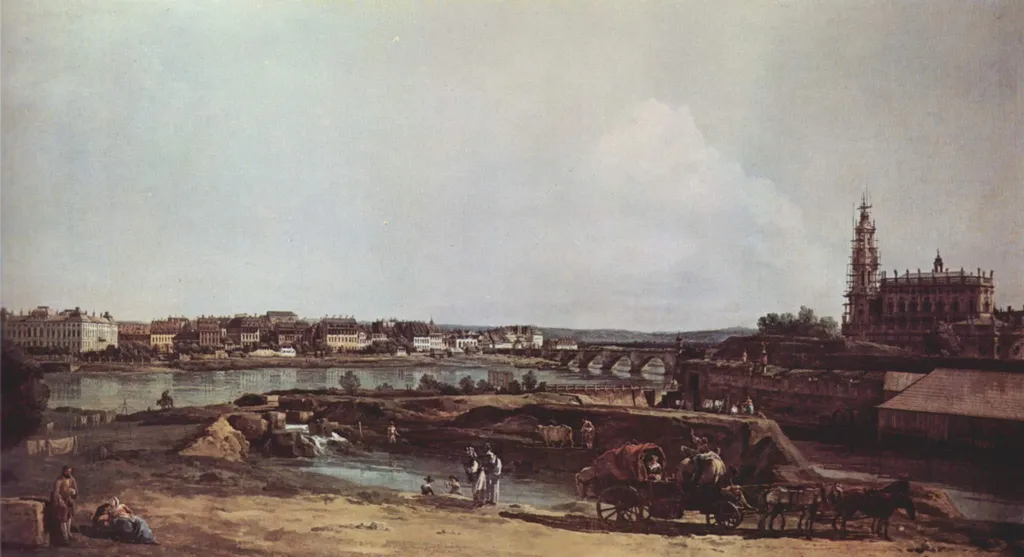
Dresden from the Left Bank of the Elbe, below the Fortifications is an oil painting by the Rococo painting artist Bernardo Bellotto. It dates from 1748 and is held in the collection of the Staatliche Kunstsammlungen Dresden. Painted in 1748, this oil on canvas depicts Dresden as seen from the left bank of the Elbe, just below its defensive walls.
About this work
Overview
The view is grounded at river level, offering a low-angle perspective that emphasizes the verticality of the city’s structures.
Painted in 1748, this oil on canvas depicts Dresden as seen from the left bank of the Elbe, just below its defensive walls. The view is grounded at river level, offering a low-angle perspective that emphasizes the verticality of the city’s structures. Bellotto rendered the urban landscape with precise architectural detail and a restrained palette, capturing the interplay of natural light across stone, water, and sky.
Subject & Meaning
The painting presents Dresden not as an idealized vision but as a lived environment. Figures and animals in the foreground—pedestrians, riders, carts—introduce quiet movement without dramatization. The fortifications and rooftops frame the scene as both a topographical record and a meditation on urban order, reflecting the city’s status as a center of administration and culture in Saxony during the mid-18th century.
Technique & Style
Bellotto employed fine brushwork to distinguish textures: the roughness of masonry, the sheen of wet cobblestones, the soft haze of distant spires. His use of atmospheric perspective softens the horizon, while precise linear perspective anchors the composition. Light falls naturally across surfaces, revealing subtle shifts in tone without theatrical contrast, characteristic of his Venetian-trained approach to topographical painting.
History & Provenance
Commissioned by Augustus III, Elector of Saxony and King of Poland, the work was part of a series documenting Saxony’s principal cities. It entered the Gemäldegalerie Alte Meister in Dresden in the 18th century and has remained there since, preserved as both a historical document and a key example of veduta painting in Central Europe.
Context
Bellotto worked within a tradition of topographical painting popular among European courts seeking accurate visual records of their capitals. Unlike romanticized landscapes, his views served administrative and dynastic purposes, aligning with Enlightenment ideals of observation and order. His precision made his works valuable for urban planning and historical reference, beyond their aesthetic qualities.
Legacy
The painting endures as a primary visual source for reconstructing Dresden’s pre-war appearance. Its methodical accuracy influenced later topographers and urban historians. Though overshadowed in popular memory by later destructions, Bellotto’s work remains a quiet testament to the city’s 18th-century form, valued for its documentary integrity rather than expressive flair.
Artist & collection

Artist
Bernardo Bellotto, was an Italian urban landscape painter or vedutista, and printmaker in etching famous for his vedute of European cities – Dresden, Vienna, Turin, and Warsaw.

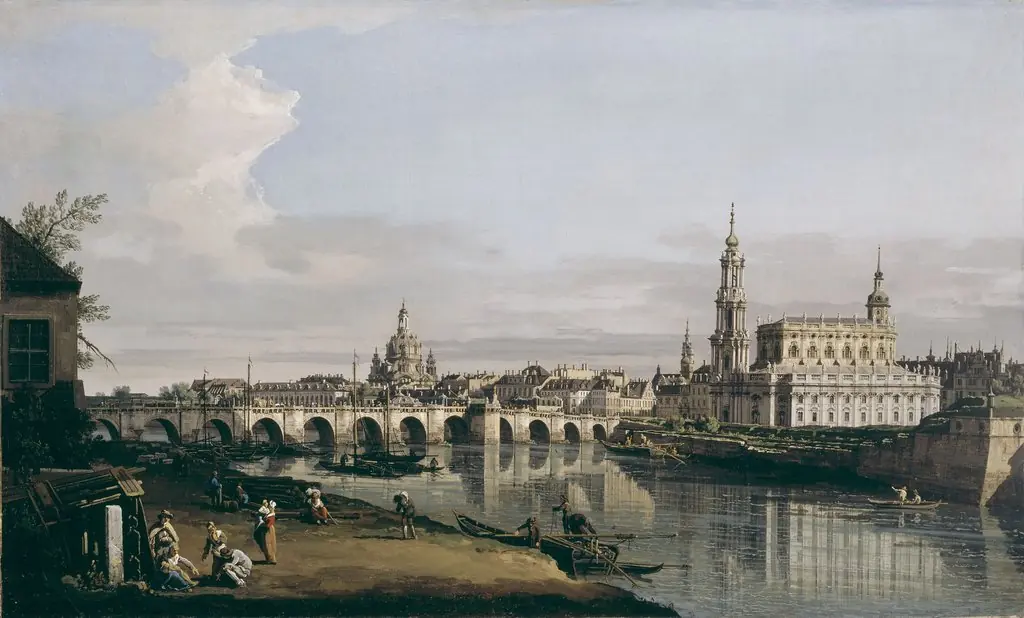
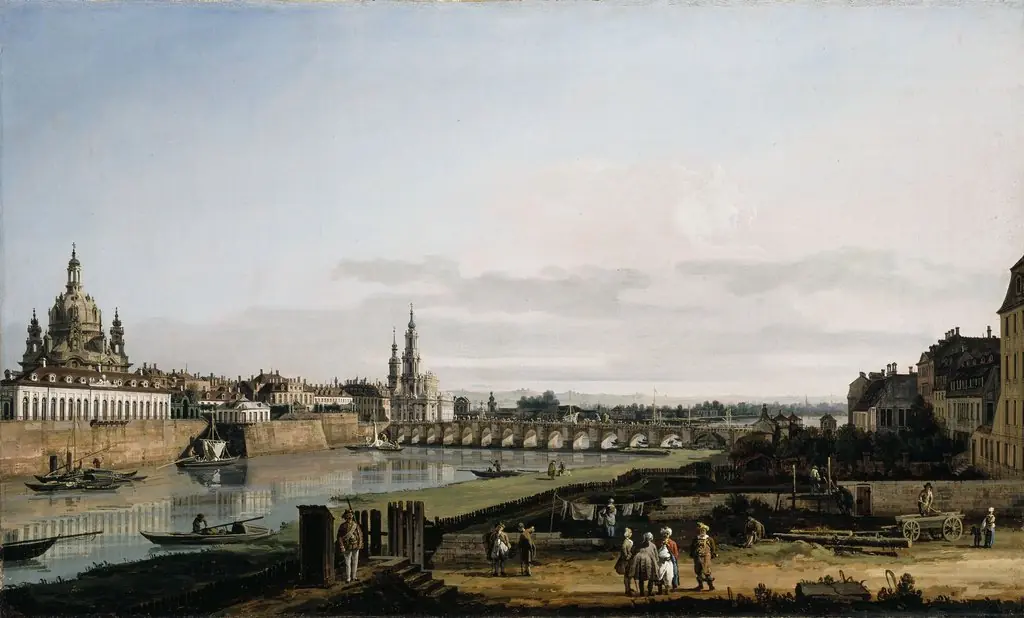
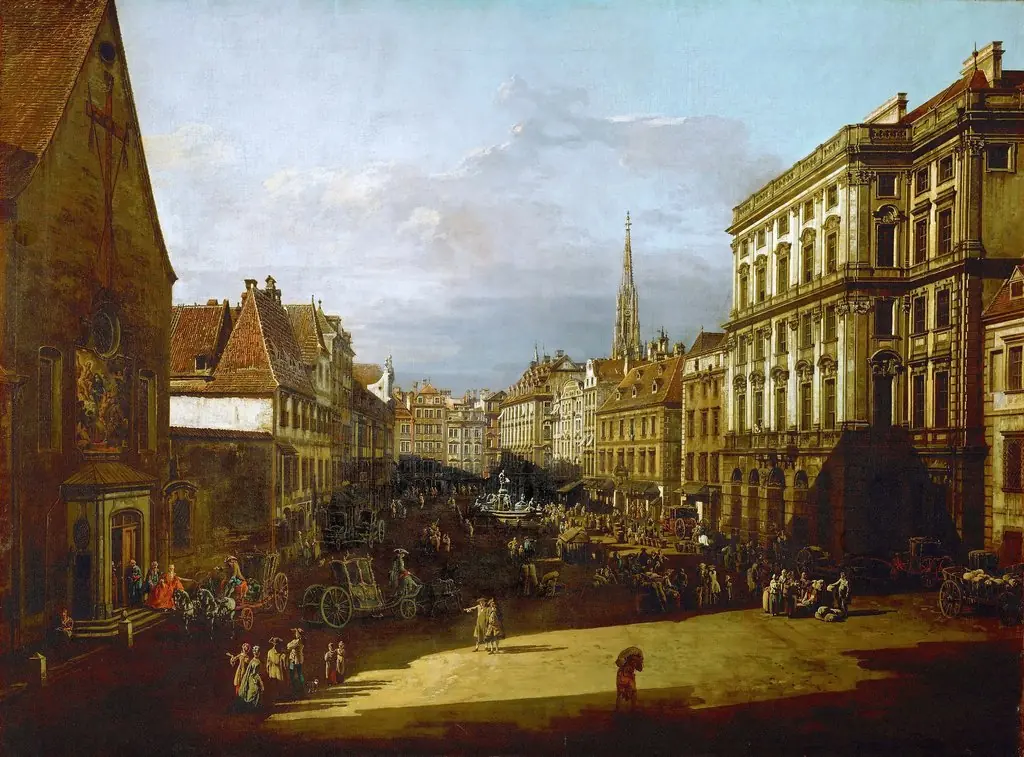
 Dresden from the Right Bank of the Elbe, above the Augustusbrücke
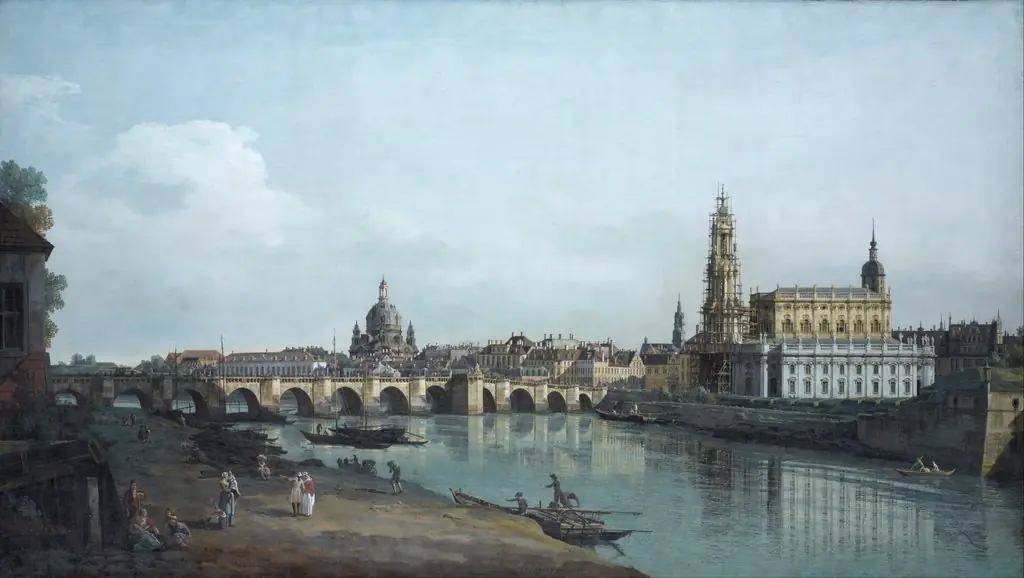 Dresden From the Right Bank of the Elbe Below the Augustus Bridge
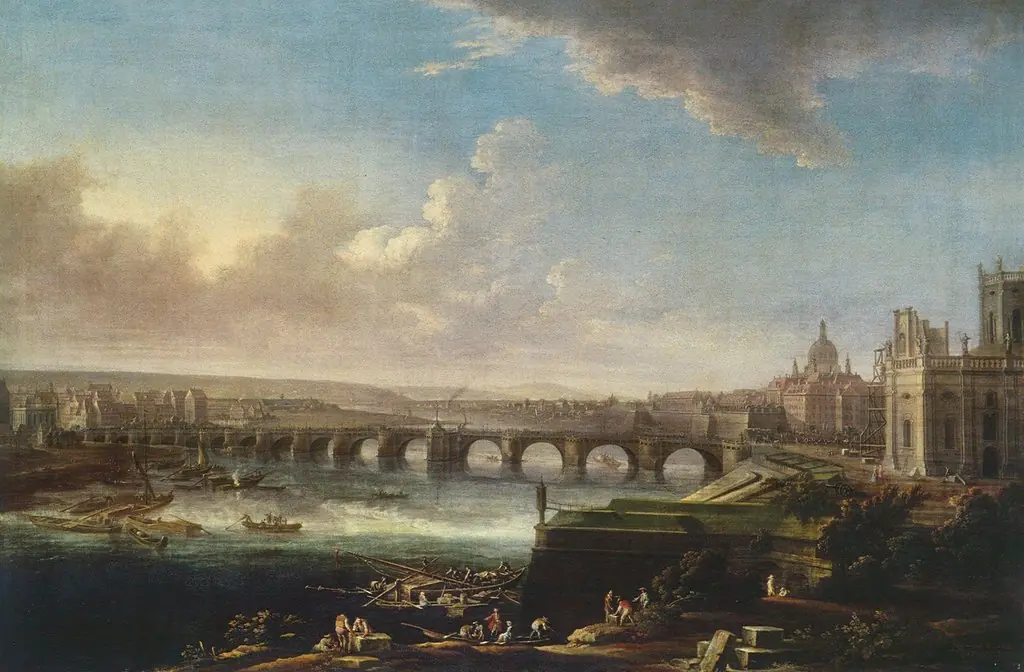 View of Dresden with the Augustus Bridge
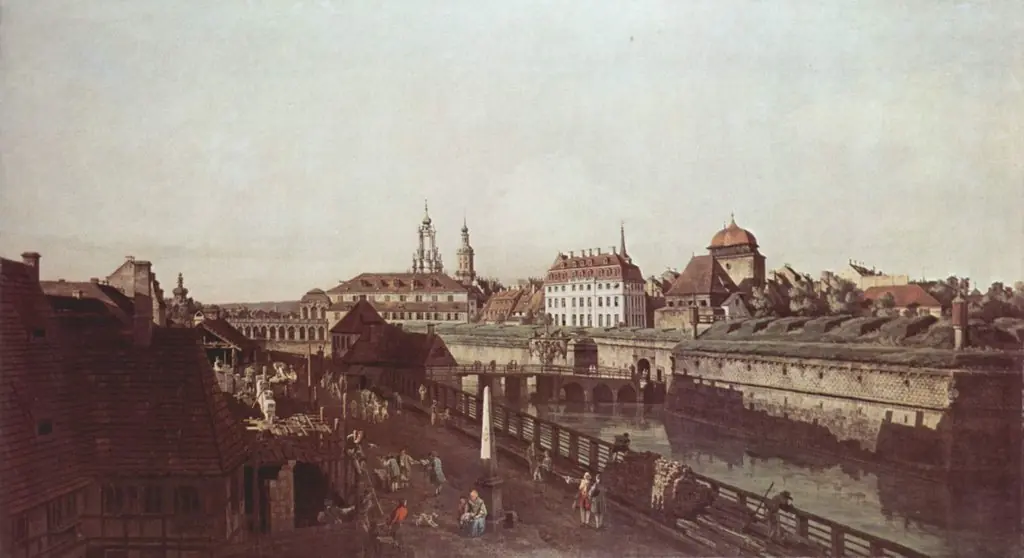 The Old Fortifications in Dresden
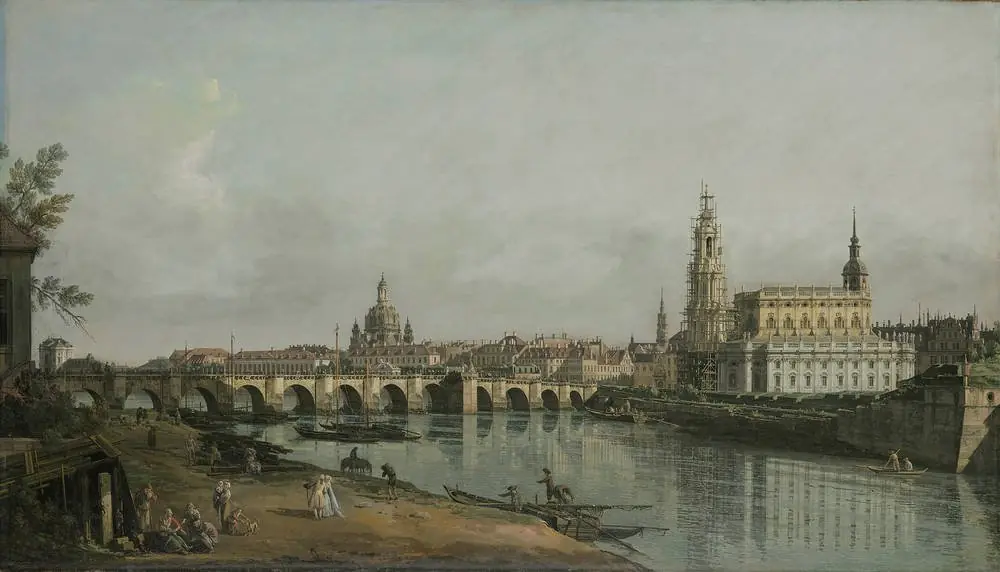 Dresden from the Right Bank of the Elbe below the Augustus Bridge
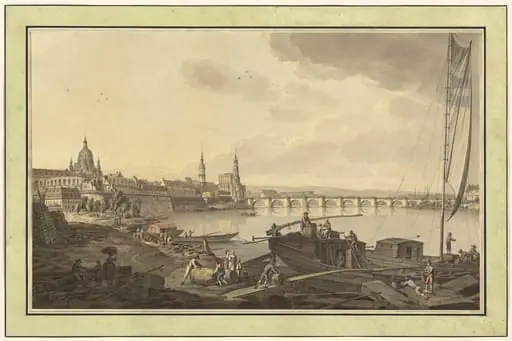 Dresden from the Banks of the Elbe River
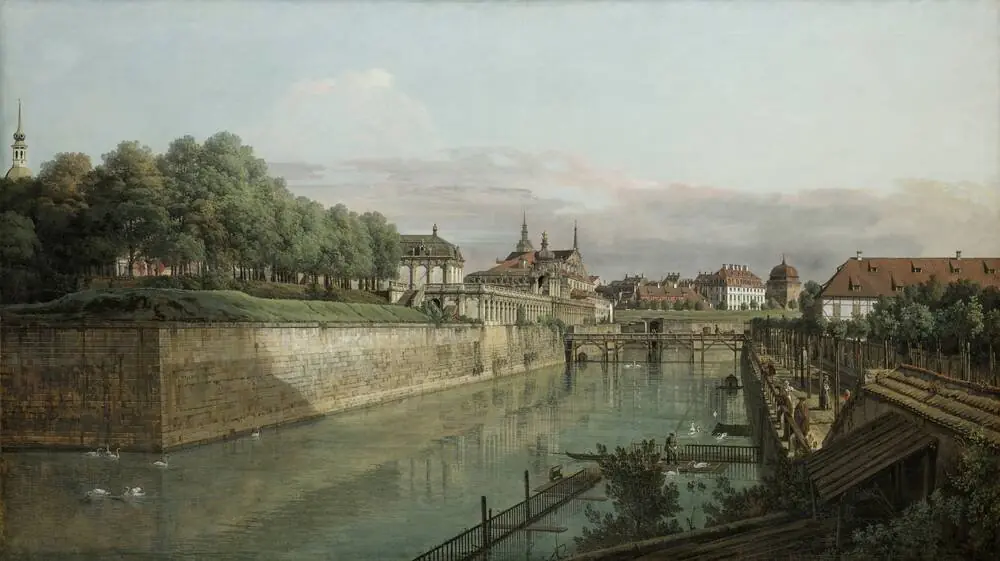 The Moat of the Zwinger in Dresden