Artwork
Vienna, Dominican Church
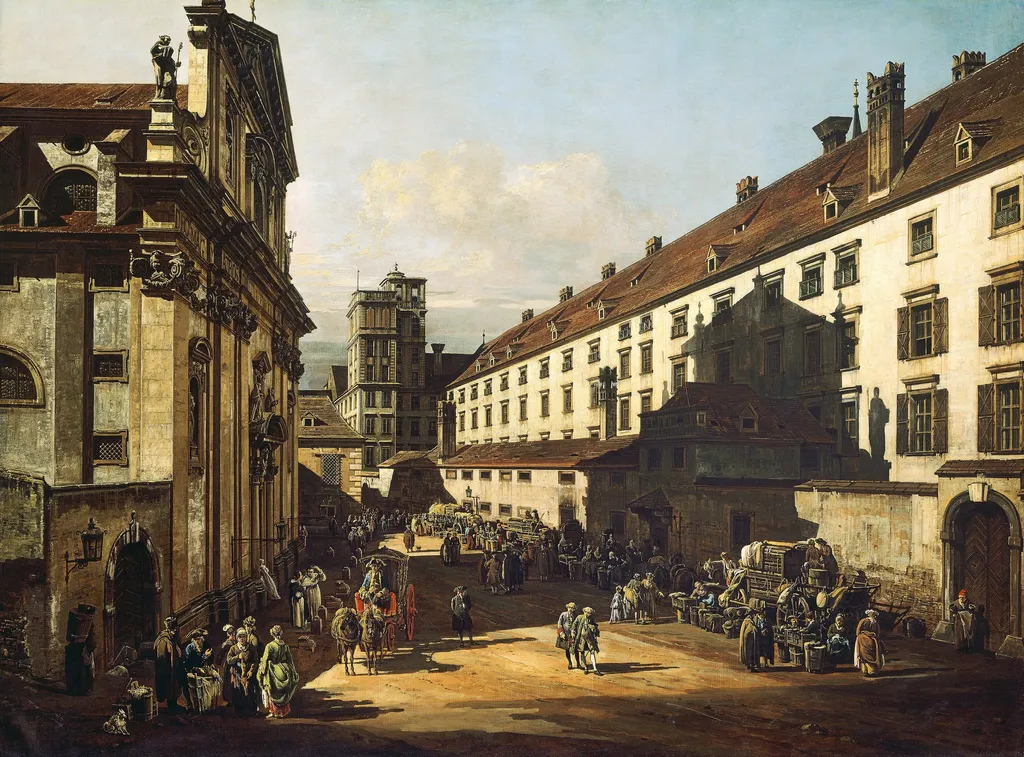
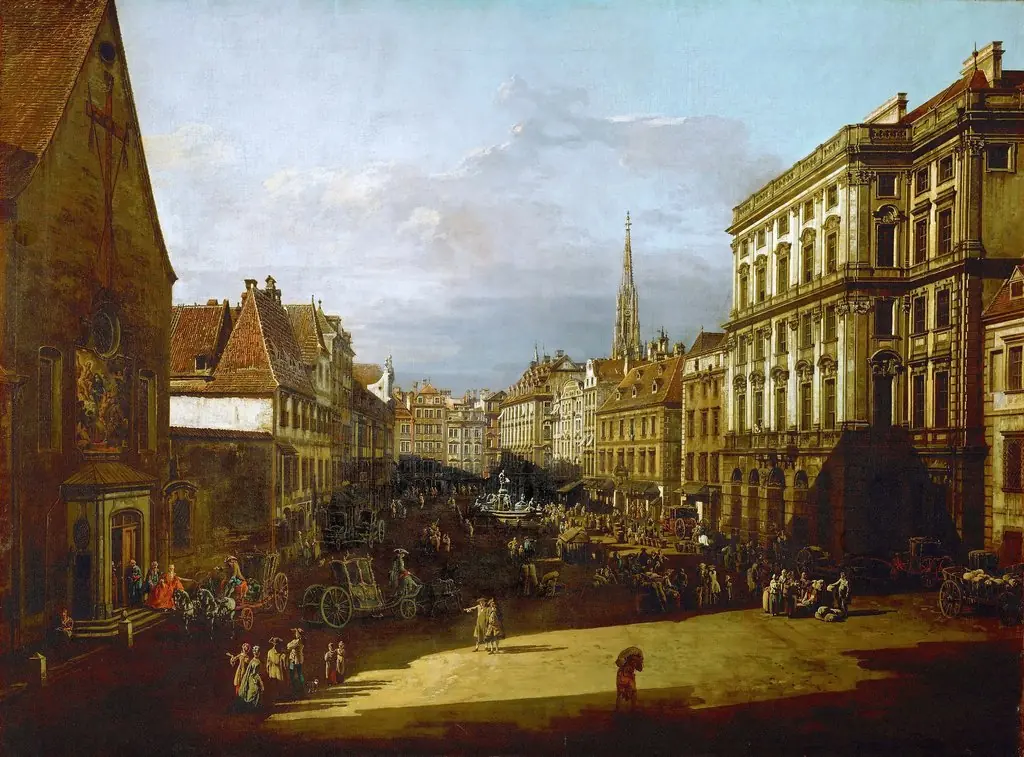
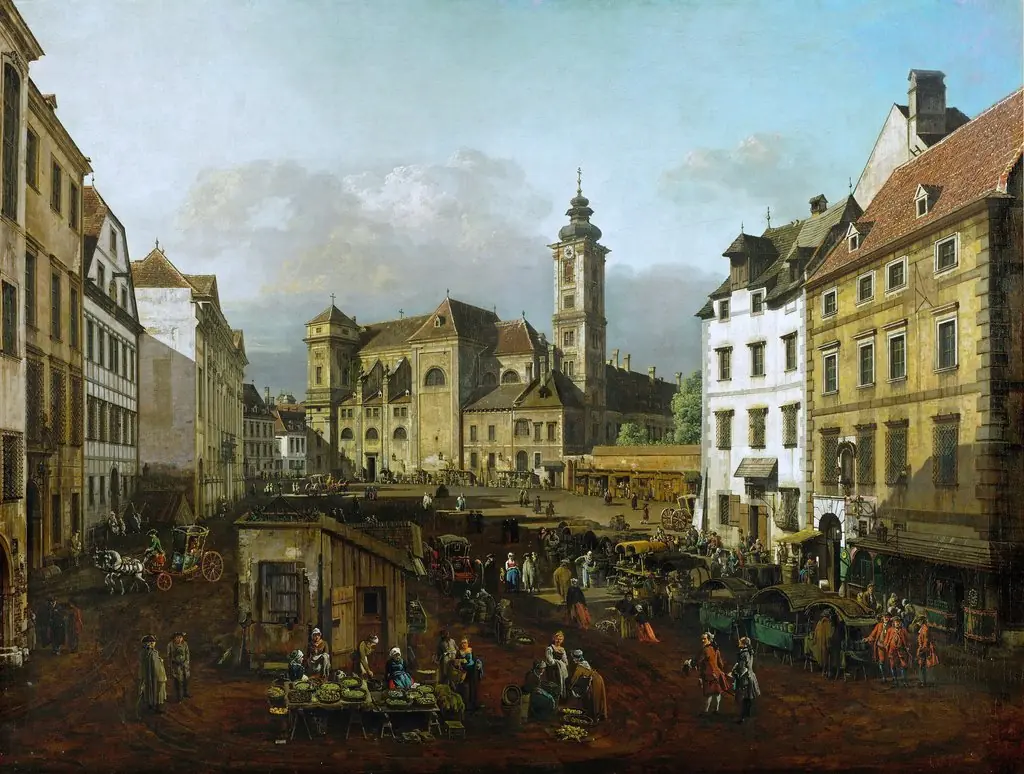
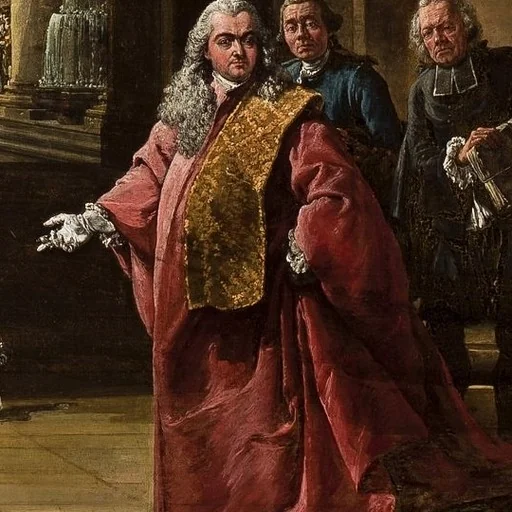
Vienna, Dominican Church is an oil painting by the Rococo painting artist Bernardo Bellotto. It dates from 1759 and is held in the collection of the Kunsthistorisches Museum.
About this work
Overview
Painted in 1759 by Bernardo Bellotto, this oil work captures the courtyard of the Dominican Church in Vienna.
Painted in 1759 by Bernardo Bellotto, this oil work captures the courtyard of the Dominican Church in Vienna. The scene is rendered with meticulous attention to architectural detail and atmospheric perspective. It resides today in the Kunsthistorisches Museum, where it stands as a representative example of Bellotto’s topographical precision and his ability to transform urban spaces into quiet, lived-in narratives.
Subject & Meaning
The painting portrays an ordinary weekday moment in a religious complex’s courtyard, where pedestrians, vendors, and animals move through the space with unremarkable routine. No grand event is depicted; instead, the focus lies in the rhythm of daily life. The presence of statues atop buildings and a distant clock tower subtly reinforces the church’s institutional presence without dominating the scene.
Technique & Style
Bellotto employs a controlled chiaroscuro to model the facades of the buildings, with light falling from a consistent angle to cast elongated shadows across the cobbled ground. The brushwork is restrained yet precise, emphasizing texture and spatial depth. Architectural elements are rendered with surveyor-like accuracy, while figures are minimized to suggest activity without diverting attention from the environment.
History & Provenance
Commissioned during Bellotto’s time in Vienna, the painting was likely intended as a record of the city’s urban fabric. It entered the Habsburg collections in the 18th century and remained within imperial holdings before being transferred to the Kunsthistorisches Museum upon its founding. Its continuity within the same collection underscores its value as a documentary record of Viennese architecture.
Context
Bellotto worked in the tradition of veduta painting, popular among European elites who sought accurate depictions of cities. His work in Vienna followed his time in Dresden and Warsaw, where he documented courtly and civic spaces. This painting reflects the Enlightenment-era interest in urban order, observation, and the documentation of everyday life as a subject worthy of artistic attention.
Legacy
The painting remains a key reference for historians studying 18th-century Viennese architecture and public space. Bellotto’s method of combining topographical fidelity with subtle human presence influenced later urban painters and topographers. Its quiet realism stands in contrast to more theatrical cityscapes of the period, offering a grounded vision of urban life.
Own this work as a print
Artist & collection
Artist
Bernardo Bellotto, was an Italian urban landscape painter or vedutista, and printmaker in etching famous for his vedute of European cities – Dresden, Vienna, Turin, and Warsaw.