Artwork
The Crucifixion
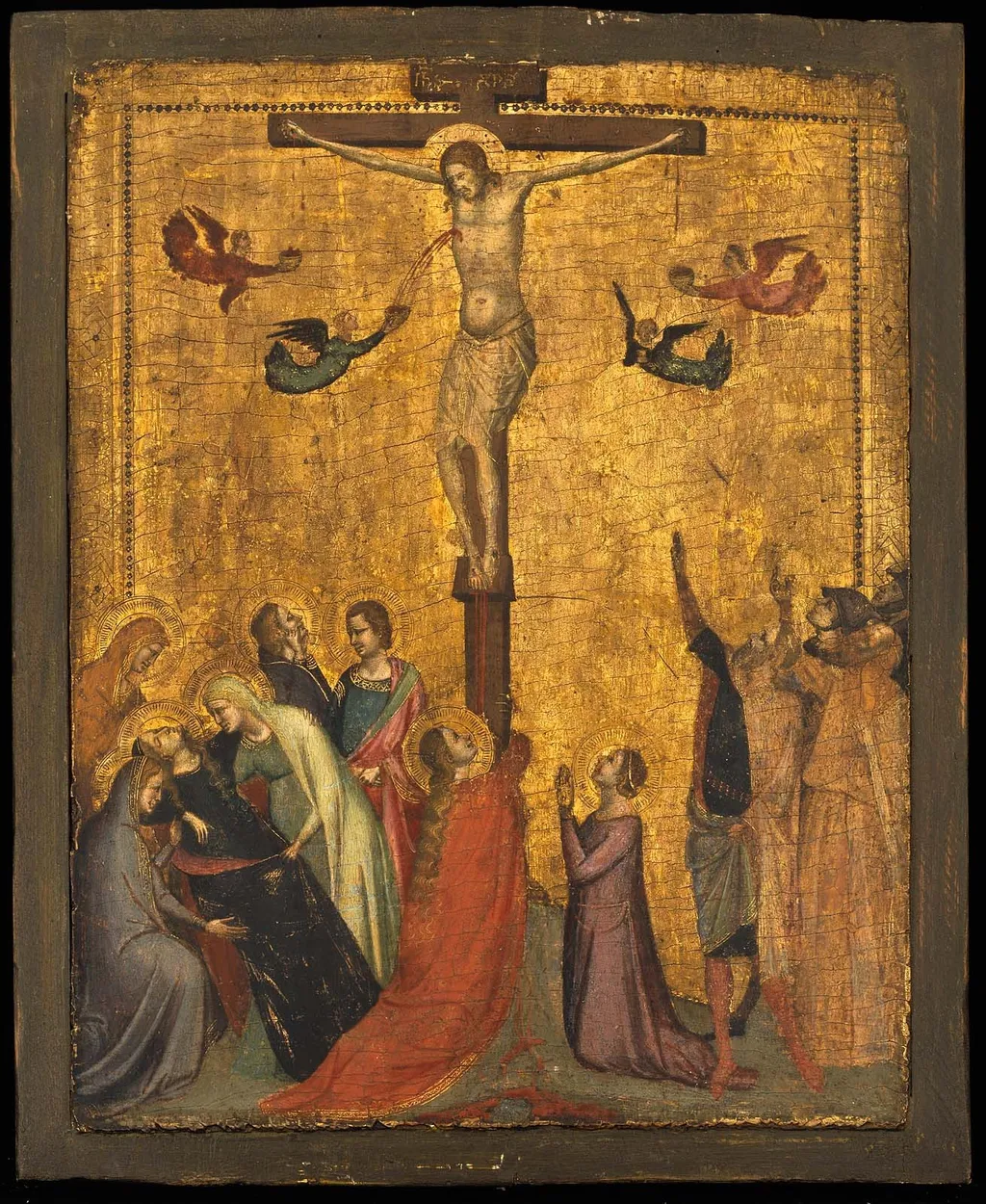
The Crucifixion is an unspecified painting by the Early Renaissance artist Bernardo Daddi. It is held in the collection of the Museum of Fine Arts Boston.
About this work
Overview
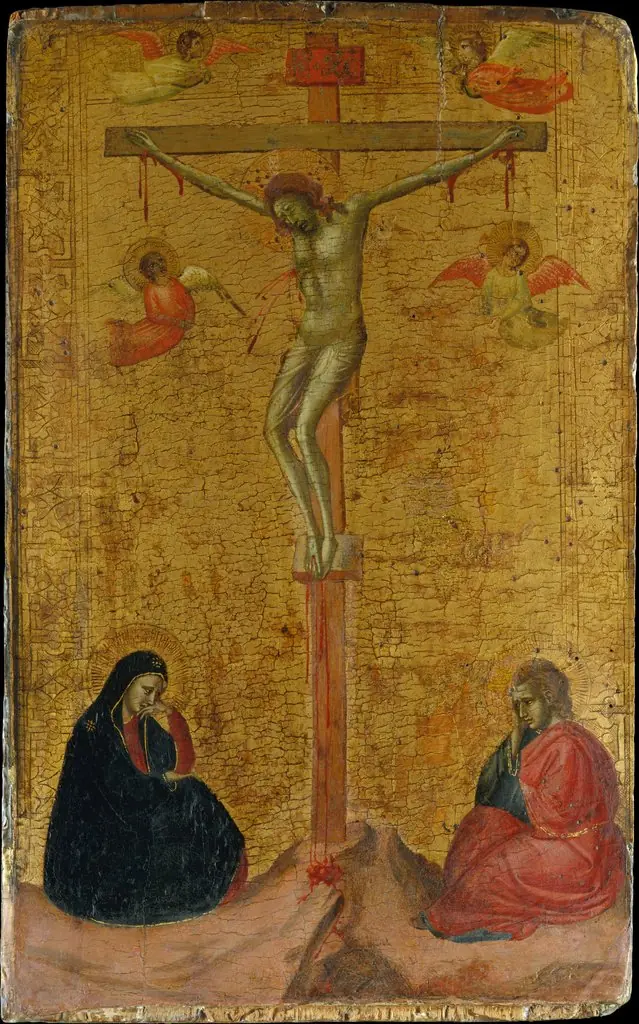
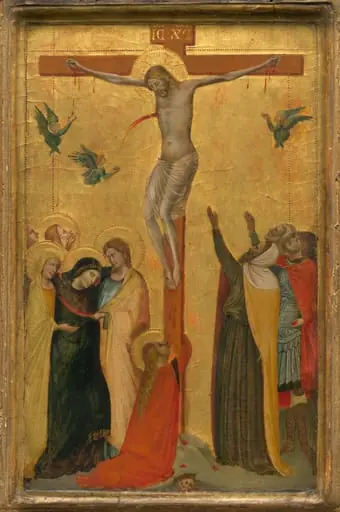
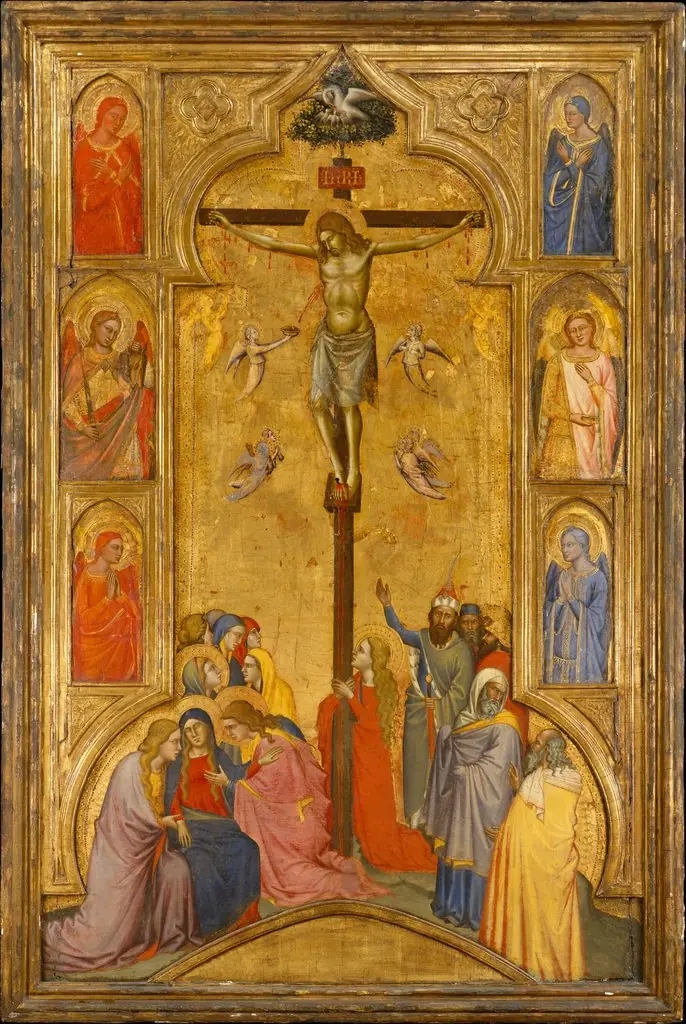
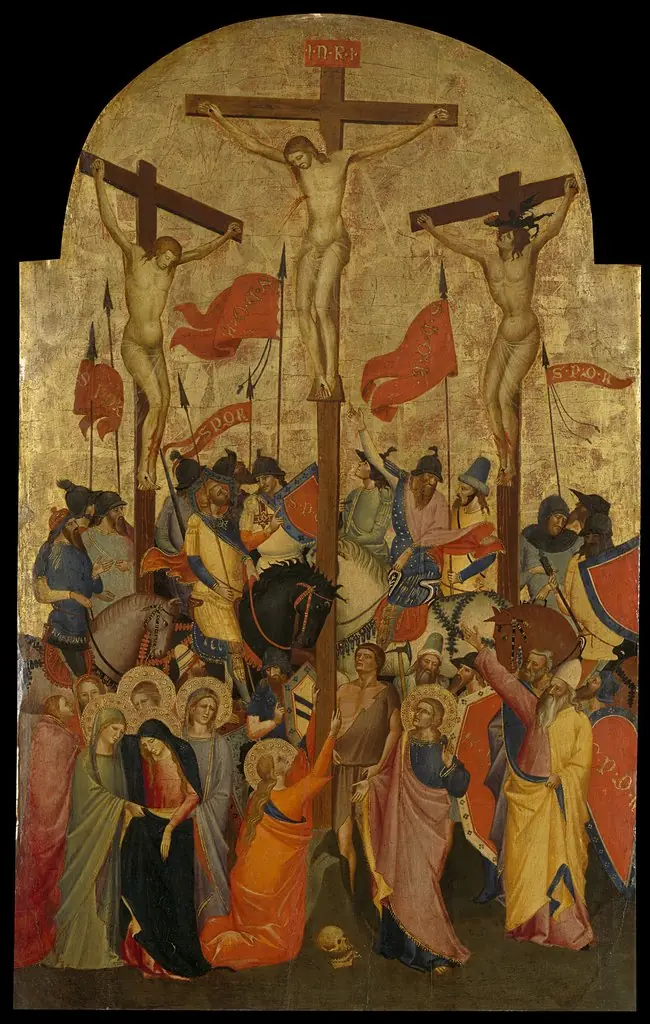
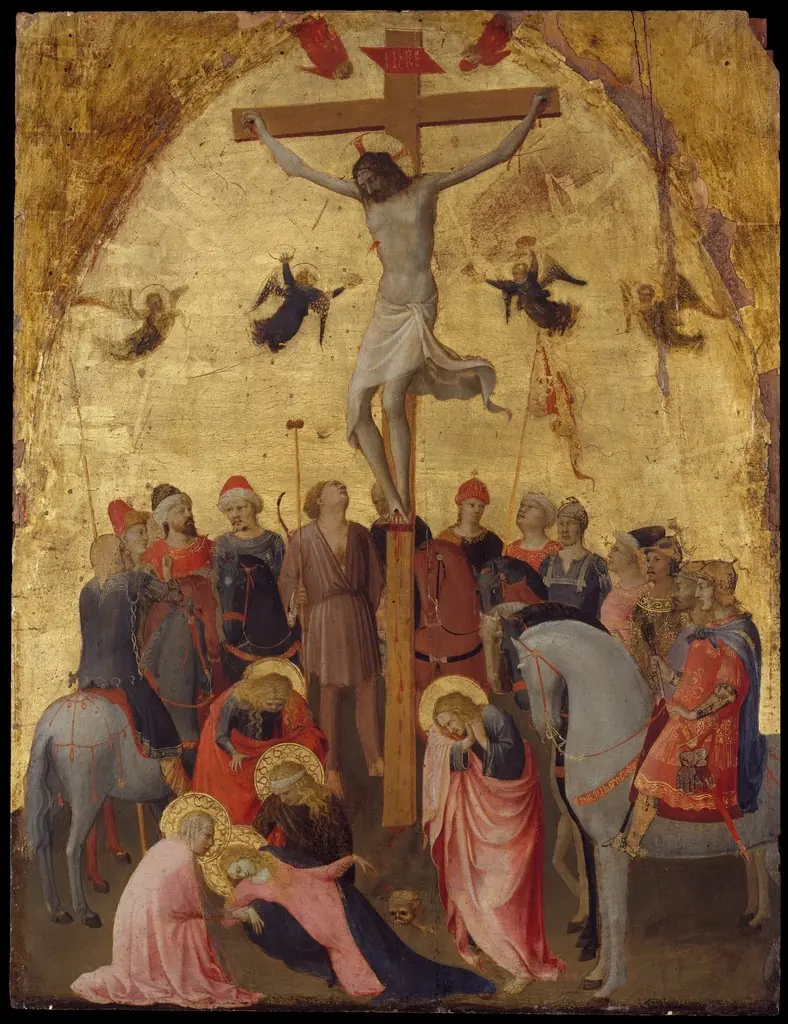
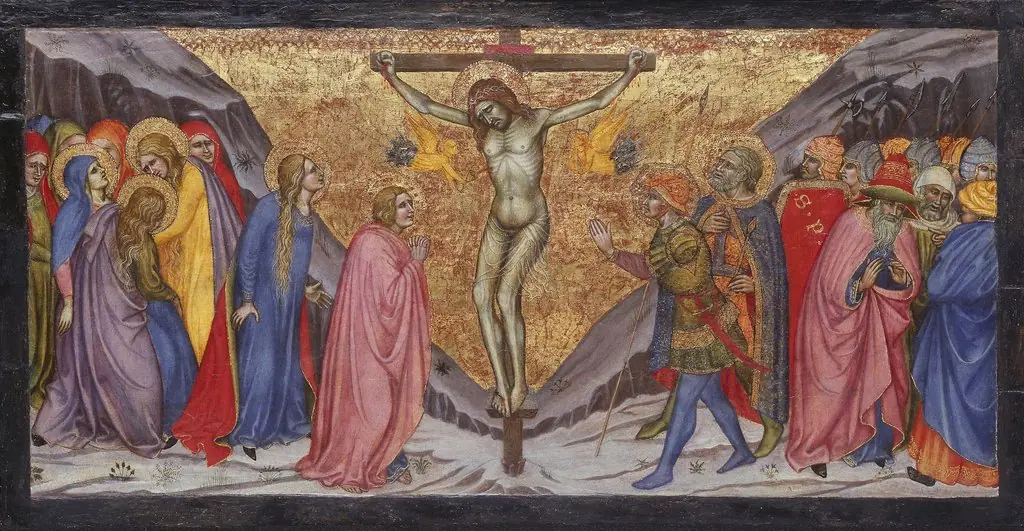
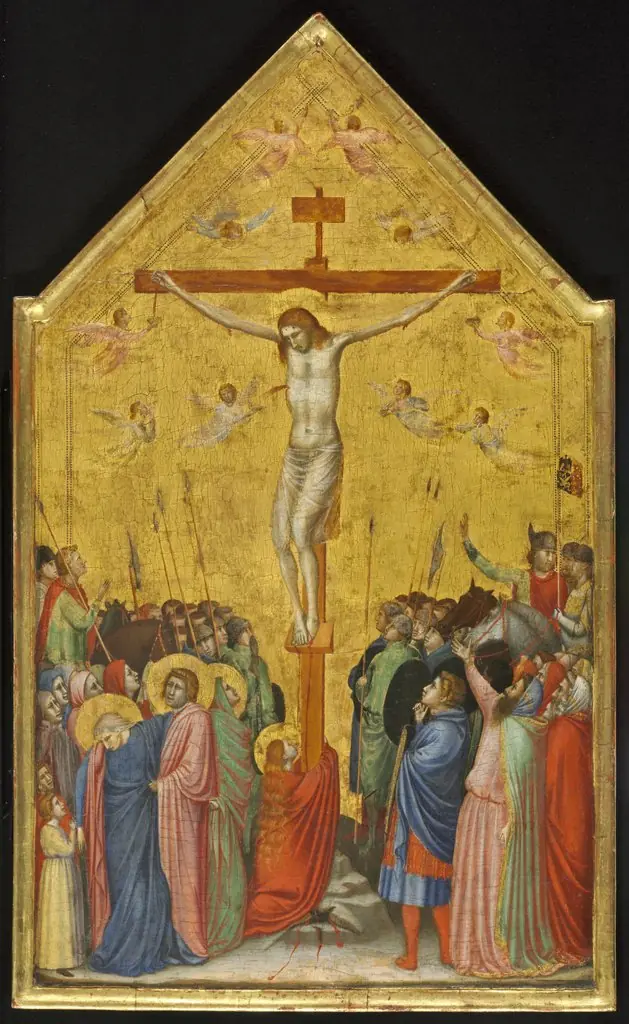
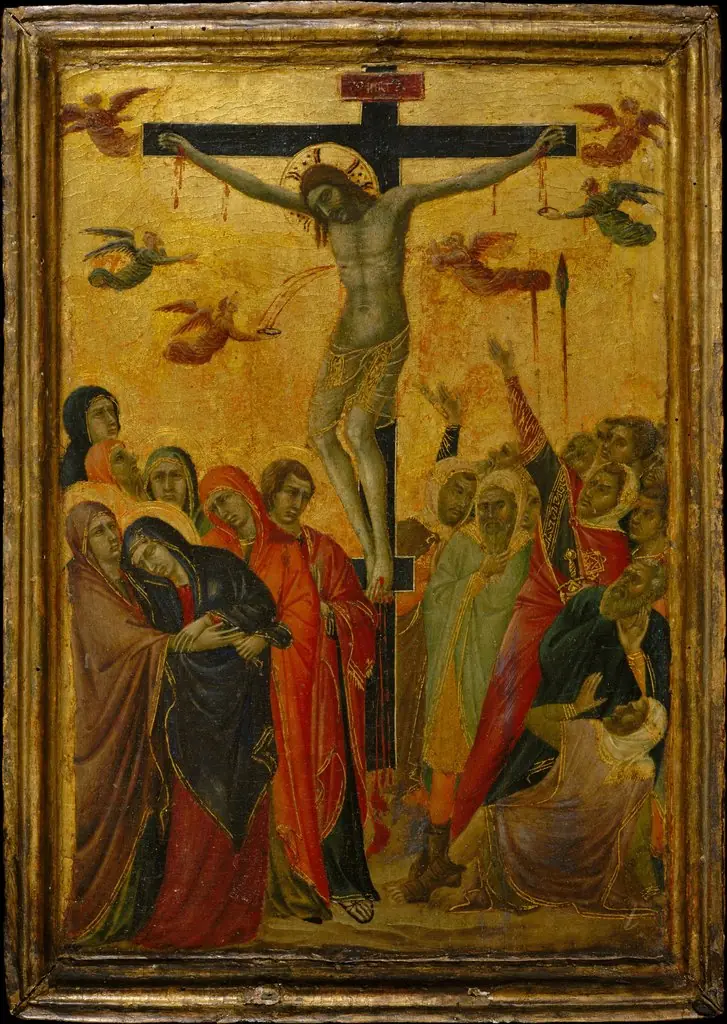
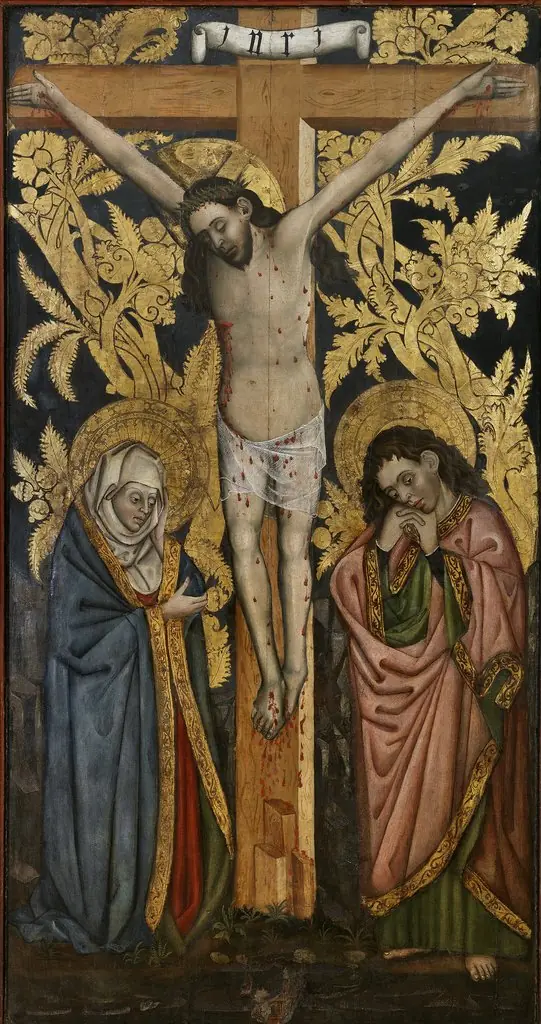
Created in the early 1300s by Florentine painter Bernardo Daddi, this small panel presents the crucifixion of Jesus Christ. The work is part of the Museum of Fine Arts, Boston’s collection and exemplifies the shift in Italian art from medieval Gothic stylisation toward a more naturalistic approach.
Subject & Meaning
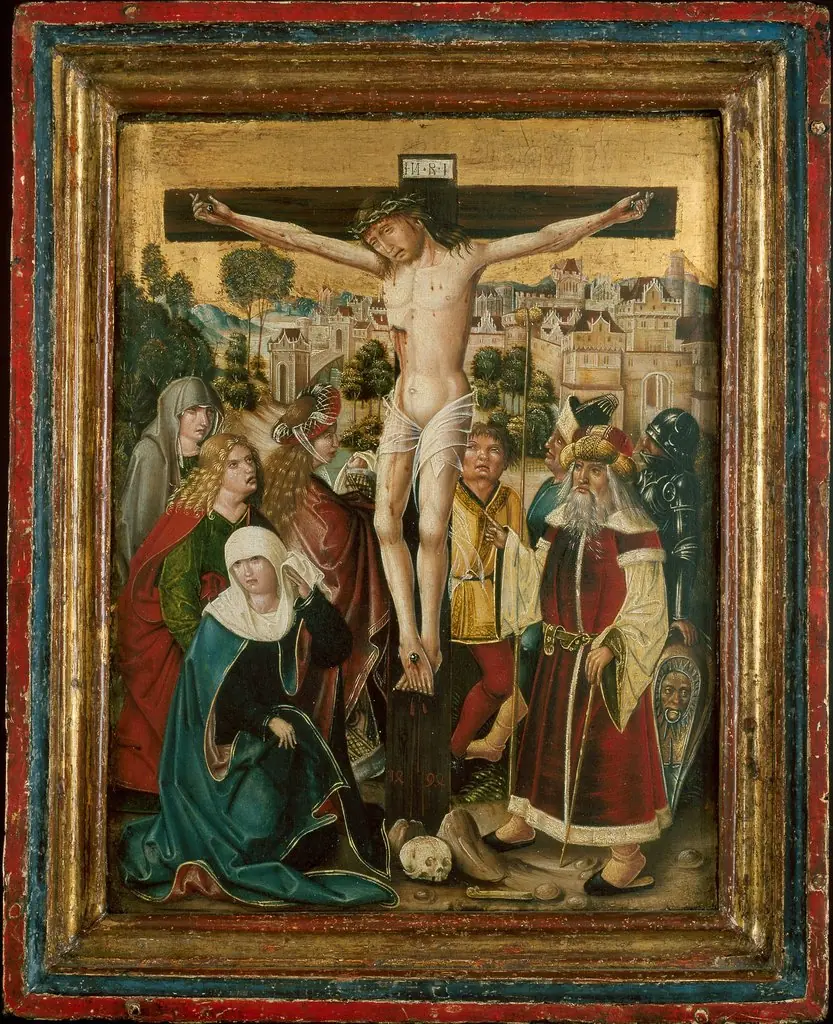
At the centre of the composition stands the crucified Christ, flanked by a gathering of mourners and two angels hovering above. The figures—soldiers, disciples and onlookers—are rendered with solemn expressions, underscoring the theological emphasis on sacrifice and redemption inherent in the scene.
Technique & Style
The painting employs a gold leaf background that eliminates spatial depth, a common device in devotional panels of the period. Figures are rendered with a flat, almost sculptural quality; their drapery is outlined in bright, now‑faded reds, blues and greens, and each saint is identified by a halo, reinforcing their sacred status.
History & Provenance
Bernardo Daddi was a leading early Renaissance artist in Florence, known for producing portable altarpieces that circulated widely among private patrons. This particular crucifixion panel entered the Museum of Fine Arts, Boston, as part of its early Italian holdings, where it remains a representative example of Daddi’s contribution to 14th‑century religious art.
Artist & collection

Artist
Bernardo Daddi was active in Florence from around 1312 until his death in 1348, generally regarded as one of Giotto di Bondone's most important pupils.