Artwork
Holy Tribe
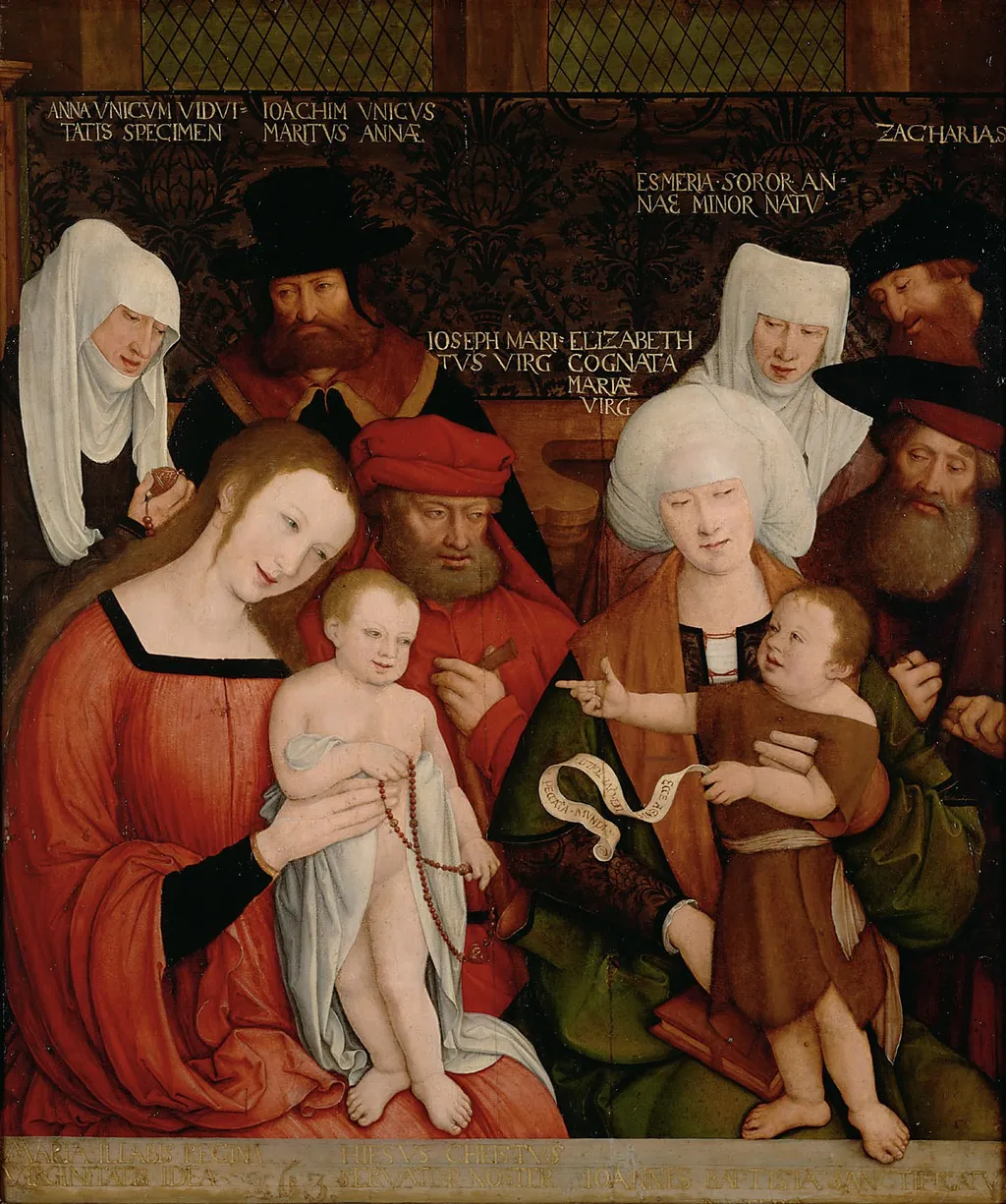
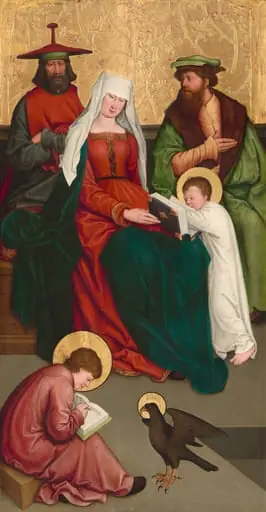
Holy Tribe is an unspecified painting by the Northern Renaissance artist Bernhard Strigel. It dates from 1520 and is held in the collection of the Kunsthistorisches Museum.
About this work
Overview
Bernhard Strigel, a German painter associated with the Swabian school, completed Holy Tribe in 1520. This religious panel painting exemplifies the Northern Renaissance style prevalent at the time. The work depicts key biblical figures, presented with the characteristic detail of the period. It is currently housed in the collection of the Kunsthistorisches Museum.
Subject & Meaning
Two women, dressed in red robes, hold infants; one baby grasps a string of beads, while the other holds a scroll, a common symbol for John the Baptist.
The composition features Elizabeth, Jesus Christ, Joachim, and John the Baptist, arranged as a close-knit group. Two women, dressed in red robes, hold infants; one baby grasps a string of beads, while the other holds a scroll, a common symbol for John the Baptist. Behind them, two older men with beards and hats are depicted in rich garments. This gathering of holy figures underscores the Northern Renaissance focus on intricate historical and biblical storytelling, presenting a moment of quiet reverence.
Technique & Style
Strigel’s approach aligns with Northern Renaissance conventions, emphasizing meticulous detail in both figures and attire. The background is rendered in a dark tone, adorned with intricate gold patterns that suggest a sacred space. The figures' faces convey a sense of calm solemnity, while their elaborate clothing reflects the period's taste for rich textures and patterns. Latin inscriptions are visible along the painting's borders, further integrating textual and visual elements.
History & Provenance
Bernhard Strigel, a prominent figure of the Swabian school, created this work in 1520. He was a favored painter of Emperor Maximilian I, often receiving commissions for both imperial portraits and religious subjects. Strigel, who originated from Memmingen and likely apprenticed with Bartholomäus Zeitblom, was recognized for his ability to render historical scenes with precision. The painting is now part of the collection at the Kunsthistorisches Museum.
Artist & collection
Artist
Bernhard Strigel (c. 1461 – 4 May 1528) was a German portrait and historical painter of the Swabian school, the most important of a family of artists established at Memmingen. He was born at Memmingen and was probably a…

![Margarethe Vöhlin [reverse], by Bernhard Strigel](https://artifactworldgallery.com/img/bernhard-strigel--margarethe-vohlin-reverse--01f4c80425fbb8fe-w320.webp)
![Margarethe Vöhlin [obverse], by Bernhard Strigel](https://artifactworldgallery.com/img/bernhard-strigel--margarethe-vohlin-obverse--435992056faaebf8-w320.webp)
![Hans Roth [obverse], by Bernhard Strigel](https://artifactworldgallery.com/img/bernhard-strigel--hans-roth-obverse--9904e8cf2692db0d-w320.webp)
![Hans Roth [reverse], by Bernhard Strigel](https://artifactworldgallery.com/img/bernhard-strigel--hans-roth-reverse--9e98efc46bbdf23c-w320.webp)