Artwork
H Beard Print Collection
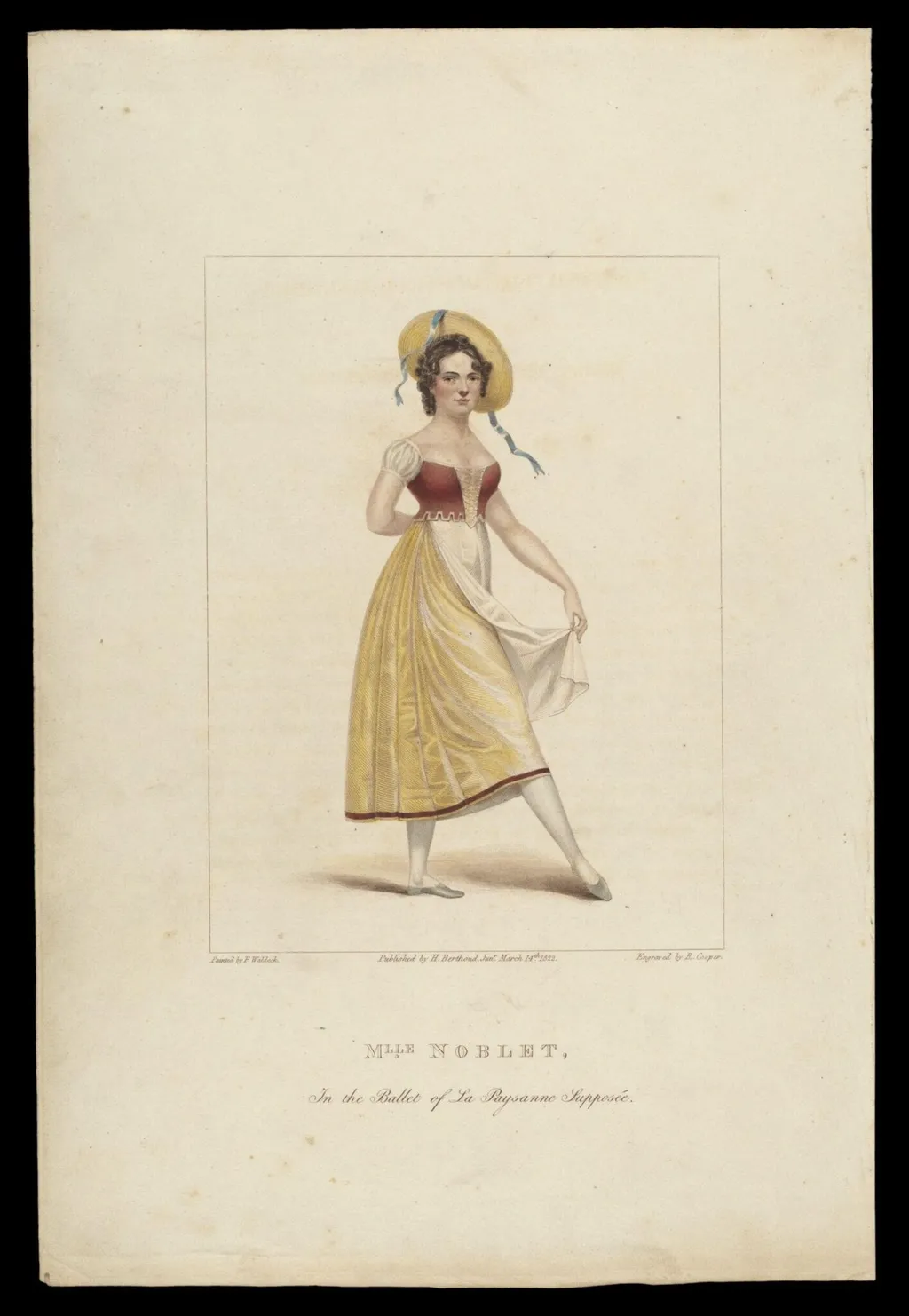
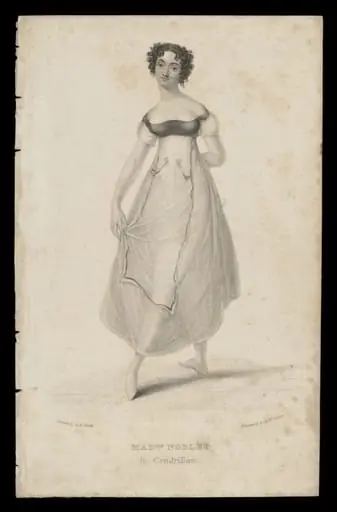
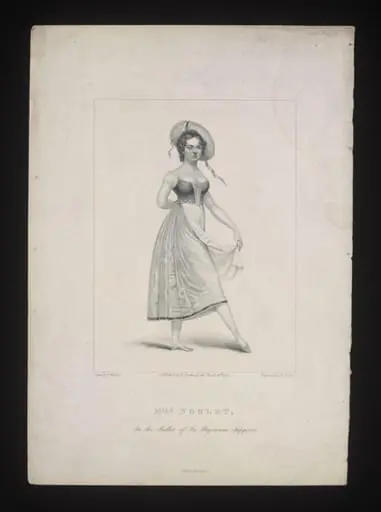
H Beard Print Collection is a print by the Romanticist artist H. Berthoud. It dates from 14 and is held in the collection of the Victoria and Albert Museum. This 1822 stipple etching depicts Mlle.
About this work
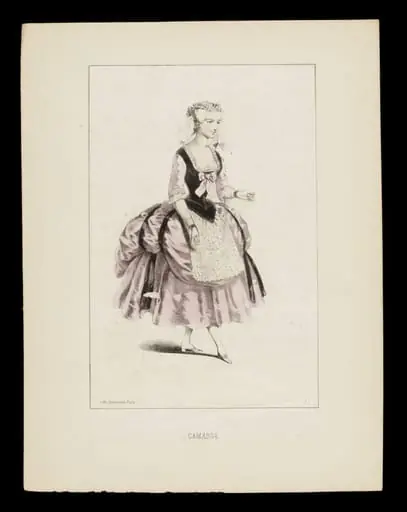
This print holds a full-length image of Mlle. Noblet. She wears a pale gown with a crimson bodice and holds a white apron. The artist used fine dots to create soft shadows and light.
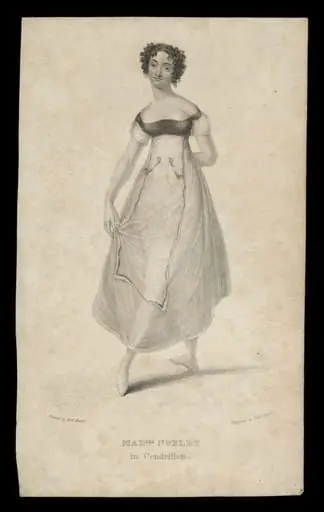
The print was made in 1822. A colored version exists with a white gown. Both prints come from the same original image.
Check out the Romanticism movement next.
Overview
Rendered in fine dots to suggest subtle gradations of light and shadow, the print captures her full figure in theatrical costume.
This 1822 stipple etching depicts Mlle. Noblet in character from the comic opera La Paysanne Supposée. Rendered in fine dots to suggest subtle gradations of light and shadow, the print captures her full figure in theatrical costume. A hand-colored variant exists in the New York Public Library’s collection, differing only in gown color. Both versions derive from the same engraved plate, part of the Harry Beard Print Collection.
Subject & Meaning
Mlle. Noblet portrays a rural woman feigning gentility, a common trope in early 19th-century French theater. Her attire—pale gown, crimson bodice, and straw hat—mixes rustic and refined elements to underscore the character’s performative social pretense. The held apron suggests modesty, yet its delicacy hints at artifice, reinforcing the opera’s theme of class mimicry.
Technique & Style
The image is executed in stipple etching, a method using tiny dots to model form and tone rather than lines. This technique produces a soft, atmospheric effect, aligning with Romantic-era preferences for nuanced texture over sharp definition. The delicate rendering of fabric and hat trim enhances the illusion of lightness and movement, characteristic of theatrical portraiture of the period.
History & Provenance
Created in 1822, the print was likely produced to commemorate Noblet’s performance in a popular Parisian production. The Harry Beard Collection holds the original black-and-white impression; a hand-colored variant, with a white gown instead of pale yellow, resides at the New York Public Library. Both prints stem from the same plate, indicating multiple print runs for different audiences.
Context
The work reflects the popularity of comic opera in post-Revolutionary France, where theatrical figures became cultural icons. Stipple etching was widely used for theatrical portraits due to its ability to mimic the softness of painted finishes. Noblet’s portrayal aligns with Romanticism’s fascination with emotion, character, and the blurring of social boundaries through performance.
Legacy
As part of the Harry Beard Collection, this print contributes to the historical record of French theatrical culture in the early 1800s. Its survival in multiple colored versions underscores the demand for such images among middle-class audiences. Though not widely known today, it remains a tangible artifact of how theater shaped public visual culture in the Romantic era.
Artist & collection
Artist
H. Berthoud made 19th-century prints, likely news sheets or popular illustrations of the day. Their two surviving prints in this set show scenes from London life in the 1820s—one dated 14 March 1822 and another from…