Artwork
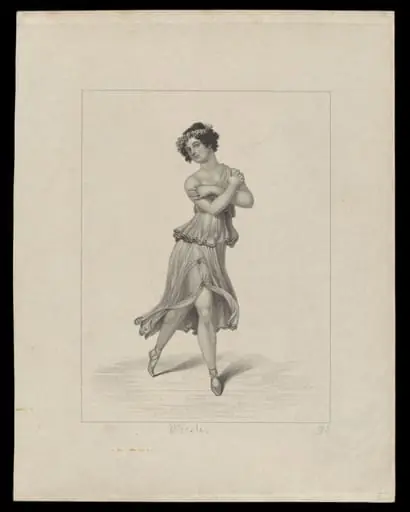
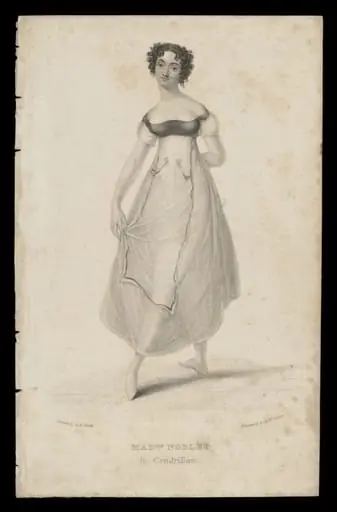
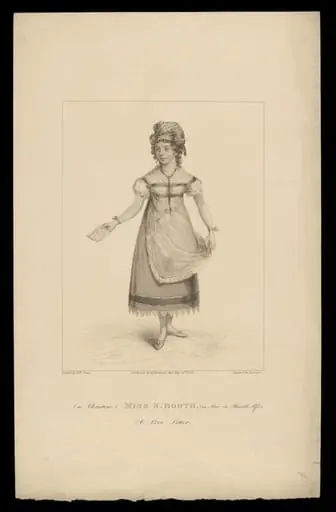
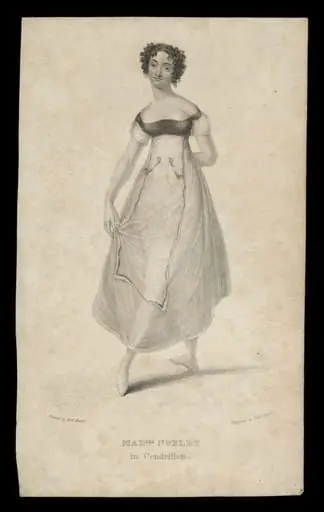
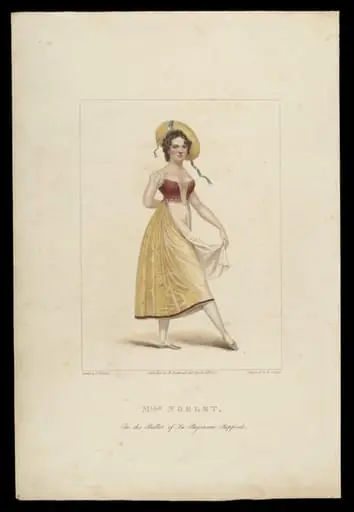
Mlle Noblet, In the Ballet of La Paysanne Supposée
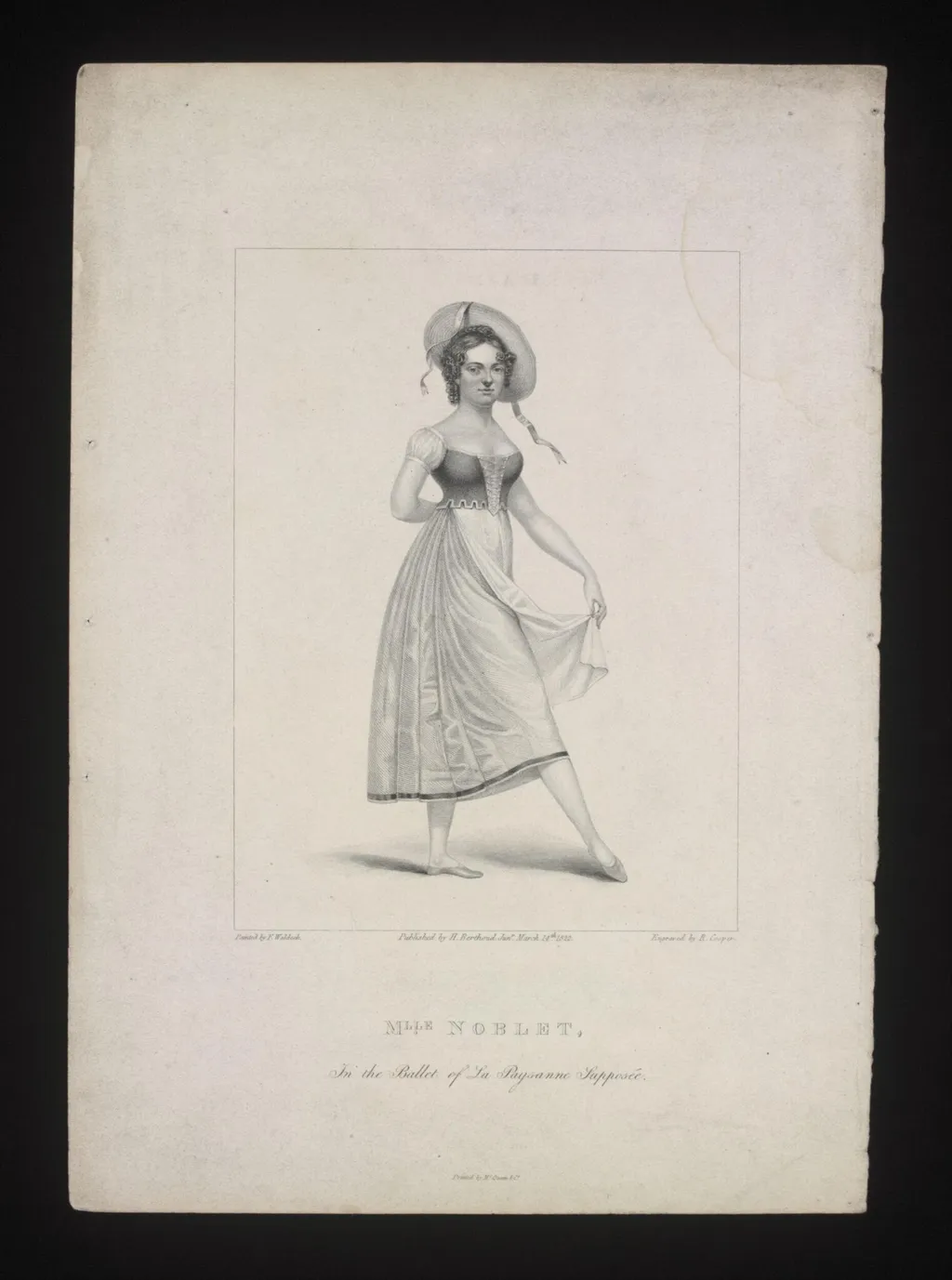
Mlle Noblet, In the Ballet of La Paysanne Supposée is a print by the Romanticist artist F. Waldeck. It dates from 14 and is held in the collection of the Victoria and Albert Museum. The print, created in 1822, portrays a full‑length female dancer in a dynamic ballet pose.
About this work
The print was made in 1822, and the style fits the Romantic era’s interest in movement and drama.
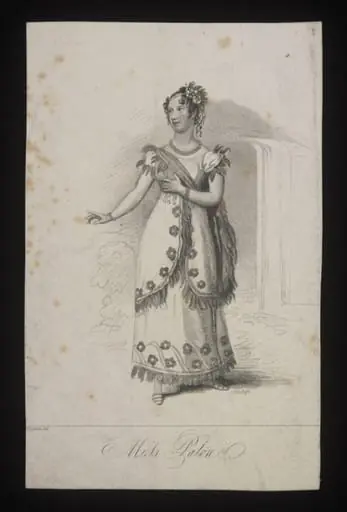
This print shows a woman in a ballet pose. She’s wearing a loose, flowing dress with a high waist and a wide-brimmed hat. One arm rests on her hip while the other holds her skirt, and she’s standing on one leg.
The text below names her as Mlle Noblet in a ballet called *La Paysanne Supposée*. The print was made in 1822, and the style fits the Romantic era’s interest in movement and drama.
Next, check out the Victoria and Albert Museum to see more prints like this.
Overview
The print, created in 1822, portrays a full‑length female dancer in a dynamic ballet pose. She stands on her right foot, her head turned forward, while her torso faces to the right. The composition includes a caption identifying the sitter as Mlle Noblet performing in the ballet *La Paysanne Supposée*.
Subject & Meaning
The figure is dressed in a stylised costume reminiscent of a rustic peasant, with a wide‑brimmed hat, a low‑cut, high‑waisted bodice, puffed sleeves and a calf‑length skirt that flows behind her. The pose, with one arm extended and the other bent behind her back, emphasizes grace and movement, reflecting early‑19th‑century theatrical representations of folk characters.
Technique & Style
Engraved by R. Cooper after a design by F. Waldock, the image employs fine line work to render the delicate folds of the dress and the intricate details of the hat’s ribbons. The Romantic sensibility of the period is evident in the emphasis on dramatic gesture and the fluidity of the dancer’s form.
History & Provenance
The print was issued by H. Berthoud Junior on 14 March 1822. It documents a specific performance by the dancer Mlle Noblet, offering a visual record of contemporary ballet repertoire and costume design during the early Restoration era in France.
Context
During the early 1820s, French ballet often incorporated pastoral themes, and *La Paysanne Supposée* exemplified this trend. Prints such as this served both as promotional material for performances and as collectible souvenirs for audiences interested in the fashionable world of the stage.
Artist & collection
Artist
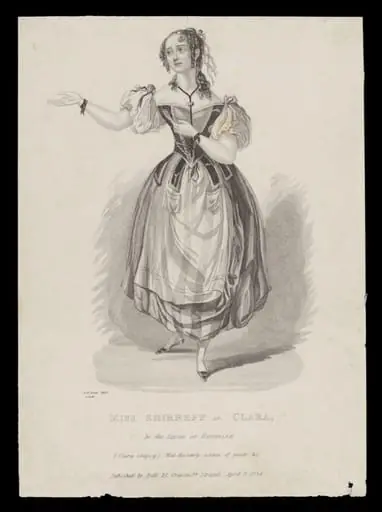
French lithographer who made theatrical prints in the 1820s. Two prints in this set show dancers on stage: Mlle Noblet, In the Ballet of La Paysanne Supposée (14 March 1822) and another from the same season, both crisp…