Artwork
After the Visit (Après sa visite)
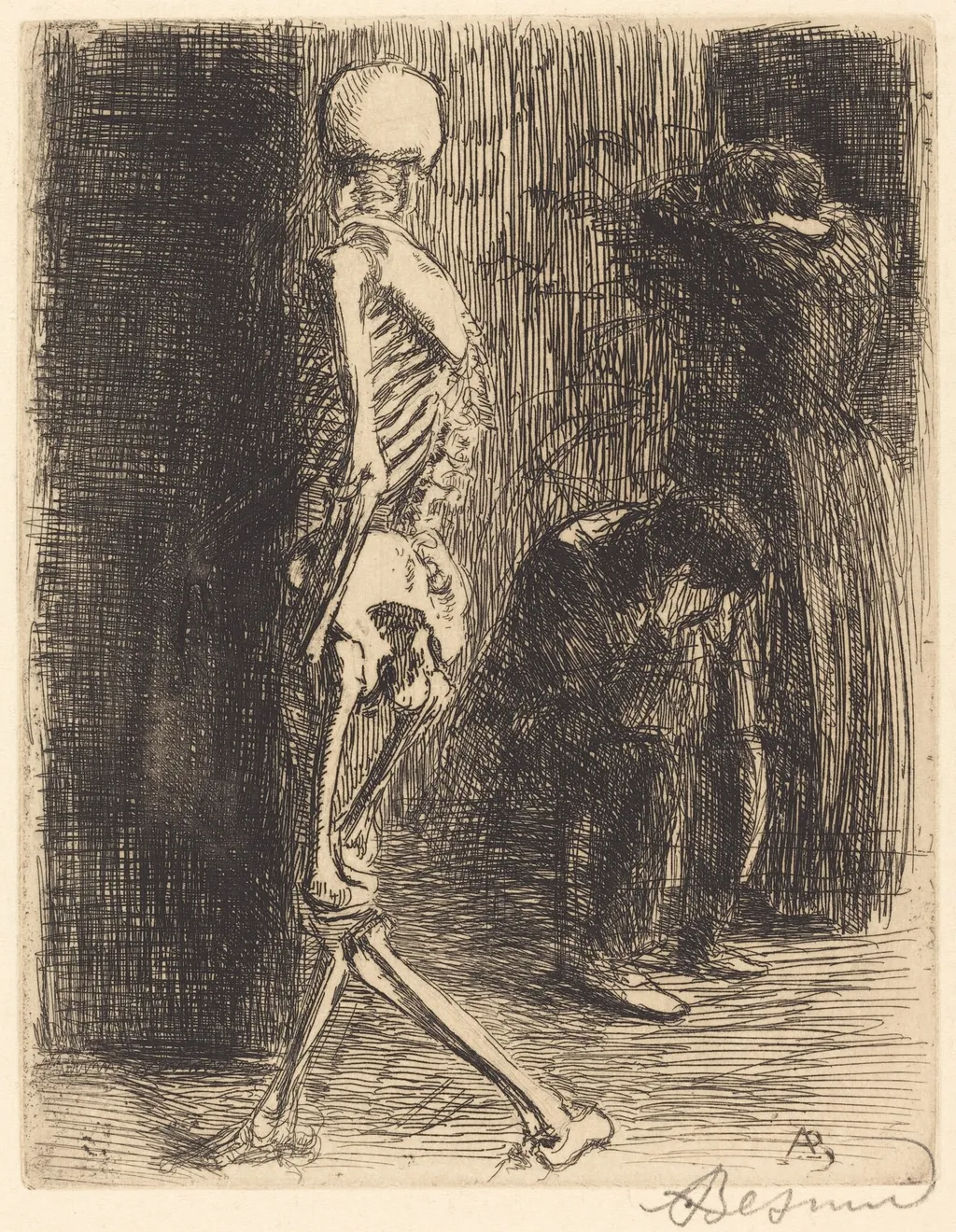
After the Visit (Après sa visite) is an ink print by Paul-Albert Besnard. It dates from 1900 and is held in the collection of the National Gallery of Art. Created in 1900, After the Visit is an etching by Albert Besnard on Van Gelder Zonen wove paper.
About this work
Overview
The work presents two skeletal figures in quiet motion, rendered through incised lines that evoke both fragility and permanence.
Created in 1900, After the Visit is an etching by Albert Besnard on Van Gelder Zonen wove paper. The work presents two skeletal figures in quiet motion, rendered through incised lines that evoke both fragility and permanence. The composition’s starkness is heightened by the paper’s subtle wear and the dense, irregular background, suggesting an atmosphere neither fully natural nor entirely abstract.
Subject & Meaning
The two skeletons, one adorned with a hat and cane, the other leaning forward, suggest a somber companionship—perhaps a metaphor for mortality’s inevitability or the lingering presence of the past. Their lack of facial features and clothing emphasizes universality, stripping identity to focus on shared fate. The ambiguous setting resists literal interpretation, inviting contemplation rather than narrative.
Technique & Style
Besnard employed etching to achieve a rough, tactile surface, using sharp, erratic lines to build texture that mimics bone and decay. The acid-bitten plate creates uneven tonal depths, with thick, tangled lines in the background evoking smoke or overgrown vegetation. The paper’s natural grain and frayed edges contribute to the work’s sense of age and impermanence.
History & Provenance
The print was produced in 1900 during Besnard’s engagement with Symbolist and introspective themes. While its early ownership is undocumented, it reflects the artist’s broader interest in death and memory, recurring motifs in his graphic work of the period. The piece remains within the tradition of late 19th-century European printmaking, valued for its emotional restraint.
Context
In the early 20th century, European artists increasingly turned to skeletal imagery as a means to explore existential themes beyond religious iconography. Besnard’s work aligns with this trend, yet avoids melodrama. His use of etching—less common for such subjects than lithography—adds a sense of intimacy and manual labor, contrasting with the impersonal nature of the figures depicted.
Legacy
After the Visit endures as a quiet example of Besnard’s graphic output, illustrating his ability to convey profound themes with minimal means. Though not widely exhibited, it contributes to understanding how fin-de-siècle artists used printmaking to interrogate mortality without spectacle. Its restrained aesthetic continues to inform discussions on the symbolic potential of line and texture in modern prints.
Artist & collection
Artist
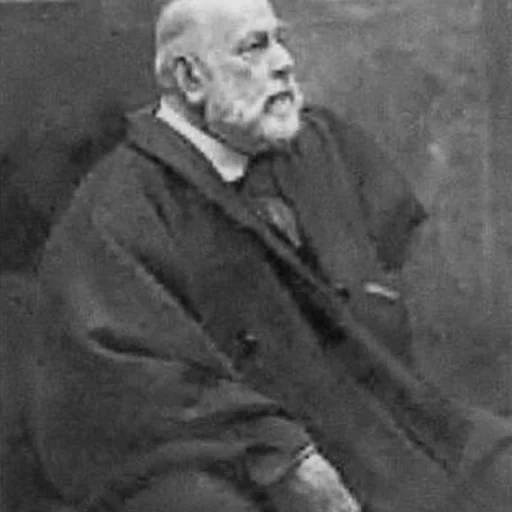
Paul-Albert Besnard (1849–1934) was a French artist, born in 7th arrondissement of Paris.

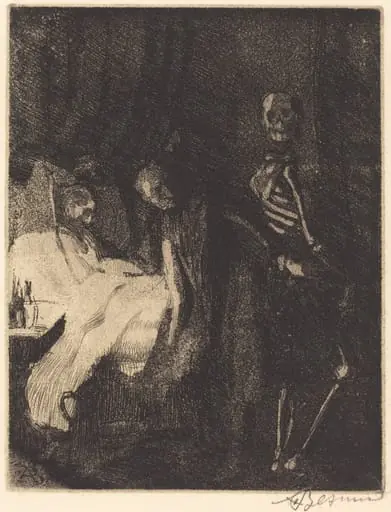 Importunate (Importune)
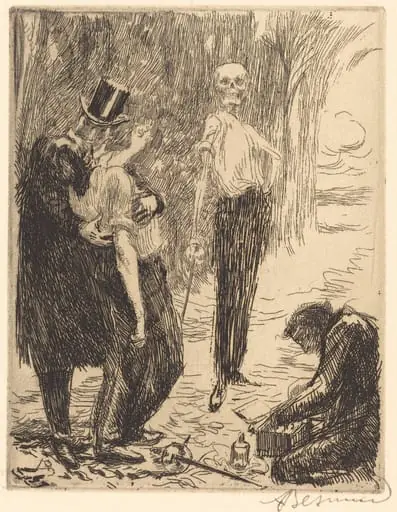 The Duel (Le duel)
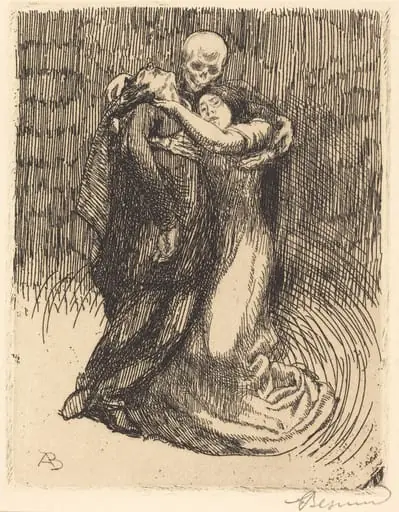 Love Consecrated (Elle consacre l'amour)
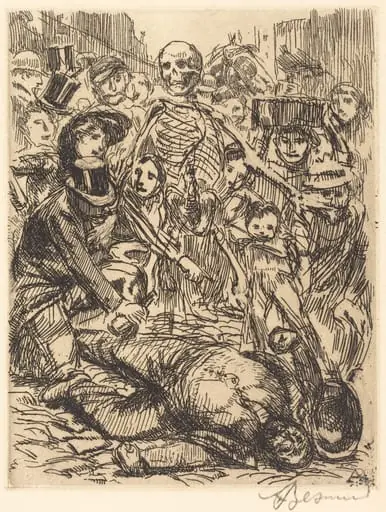 The Accident (L'accident)
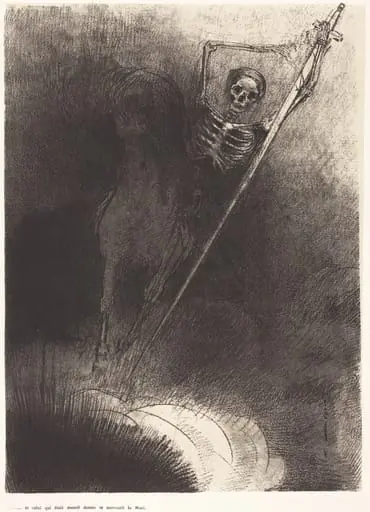 Et celui qui était monté dessus se nommait la Mort (And his name that sat on him was Death)
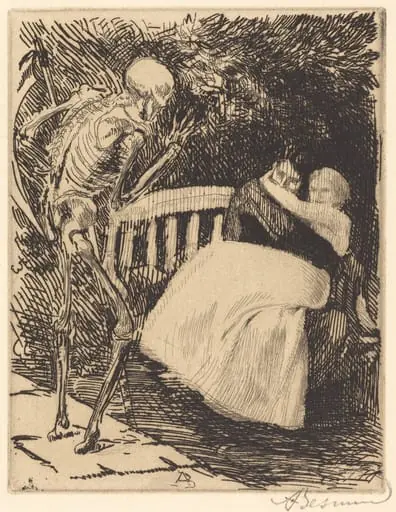 The Warning (L'avertissement)
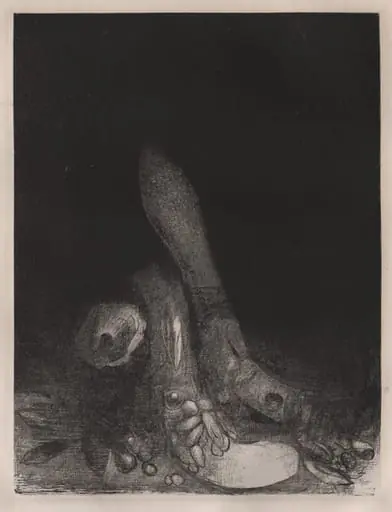 Flowers Fall and the Head of a Python Appears
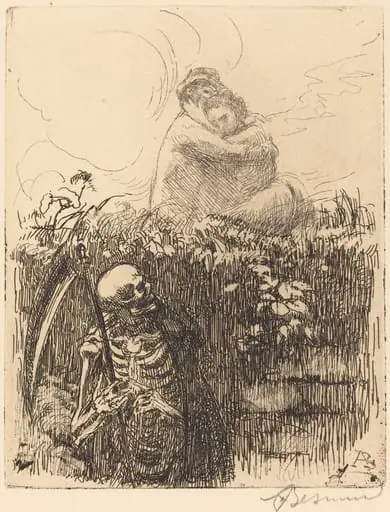 On the Lookout (Aux aguets)
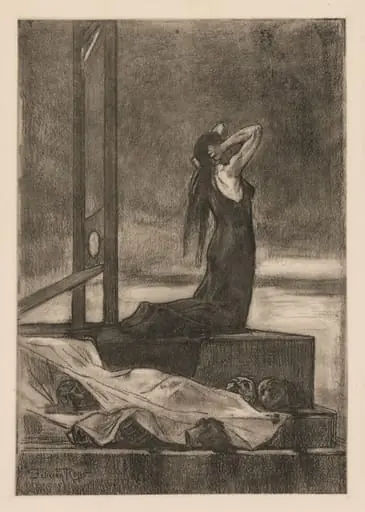 Capital Punishment: The Pain of Death (Todesstrafe: La peine de mort)
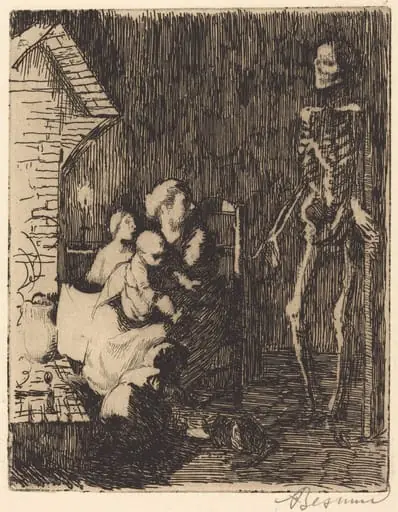 Which One? (Lequel?)
 Possession (La possession)
 The Orgy (L'orgie)