Artwork
Leda Sleeping (Léda s'endort)
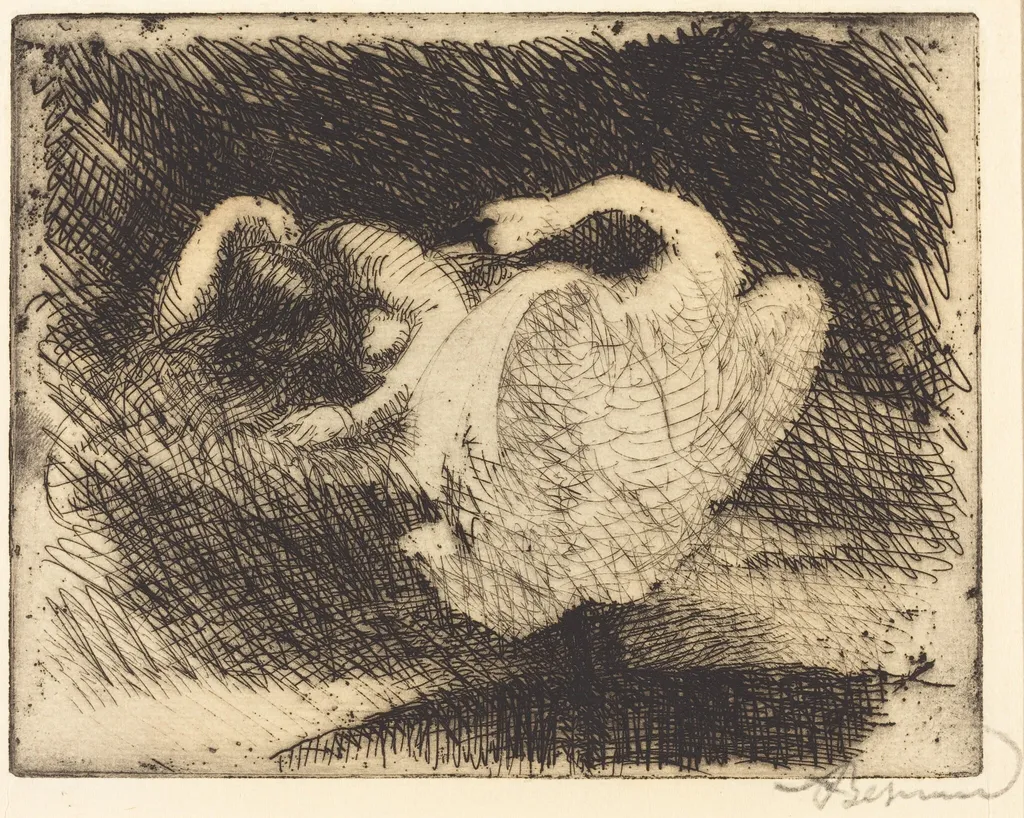
Leda Sleeping (Léda s'endort) is an ink print by Paul-Albert Besnard. It dates from 1913 and is held in the collection of the National Gallery of Art. Albert Besnard’s 1913 print titled Leda Sleeping (Léda s’endort) is an etching executed in black on laid paper.
About this work
Overview
Albert Besnard’s 1913 print titled Leda Sleeping (Léda s’endort) is an etching executed in black on laid paper. The work presents a solitary female figure reclining, her form rendered with a fluid, curving line that suggests relaxation. The composition is anchored by a textured ground that resembles a field of grass or reeds, rendered in a series of tangled, linear marks.
Subject & Meaning
The central figure is a woman whose posture conveys repose; her loose hair and the gentle curve of her body evoke a sense of intimate stillness. While the title references the mythic Leda, the image does not depict narrative action, instead focusing on the quiet moment of sleep, inviting contemplation of vulnerability and the private sphere.
Technique & Style
Besnard employed traditional intaglio etching, incising ink into a metal plate and transferring it onto paper under pressure. The marks vary from thick, assertive strokes to delicate, fading lines, creating a contrast between solidity and softness. The overall surface appears sketch‑like, with uneven, scratchy textures that lend the image a spontaneous, almost unfinished quality.
History & Provenance
Created in the early twentieth century, Leda Sleeping belongs to Besnard’s printmaking output during a period when he explored mythological themes through graphic media. The work is catalogued as a black‑ink etching on laid paper and has been recorded in several museum collections, though specific acquisition details remain limited.
Artist & collection
Artist
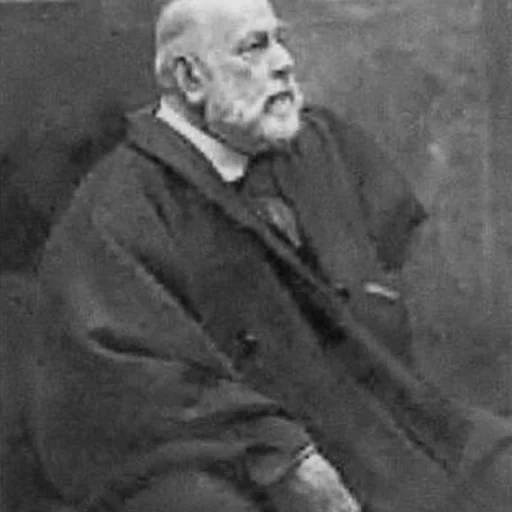
Paul-Albert Besnard (1849–1934) was a French artist, born in 7th arrondissement of Paris.

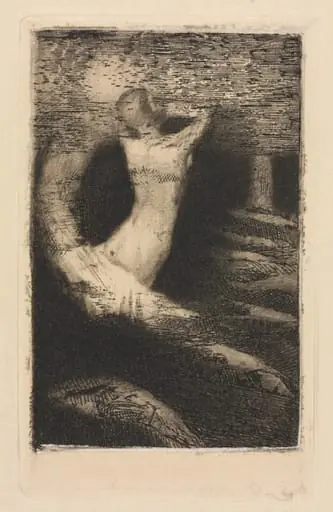 Passage of a Soul
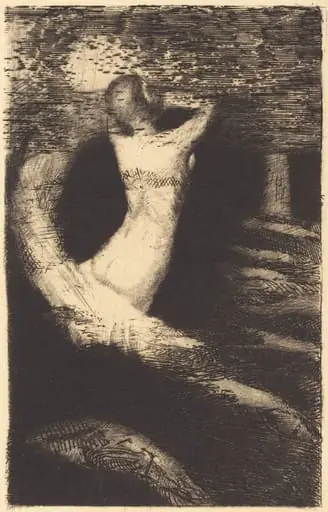 Passage d'une Ame (Passage of a Spirit)
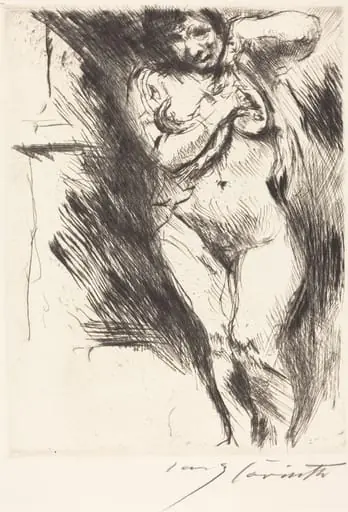 Akt mit hochgehobenem Hemd (Woman Undressing)
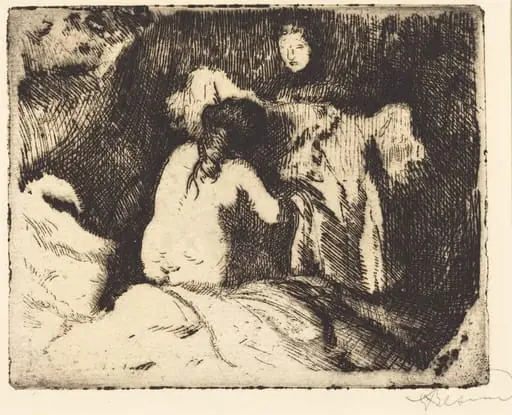 Getting Up (Le lever)
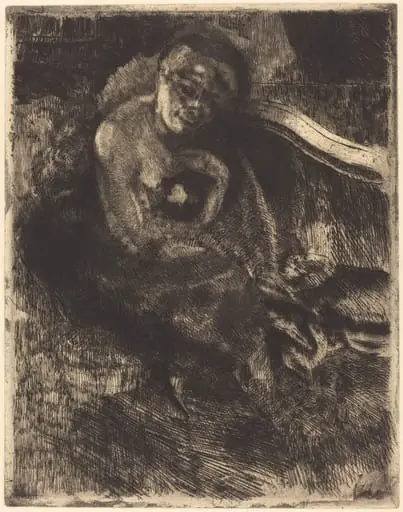 A Nude Woman in a Fur Wrap
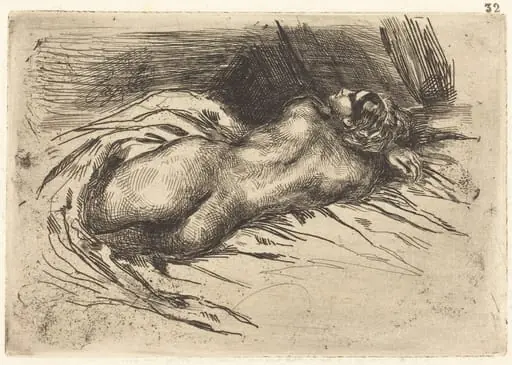 Study of a Woman, Viewed from the Back (Étude de femme vue de dos)
 Dancer at Rest
 Femme nue passant sa chemise (Nude Woman Taking Off Her Chemise)
 Weiblicher Akt (Female Nude)