Artwork
Small Fishing Boats of Berck (Petites Pêcheuses de Berck)
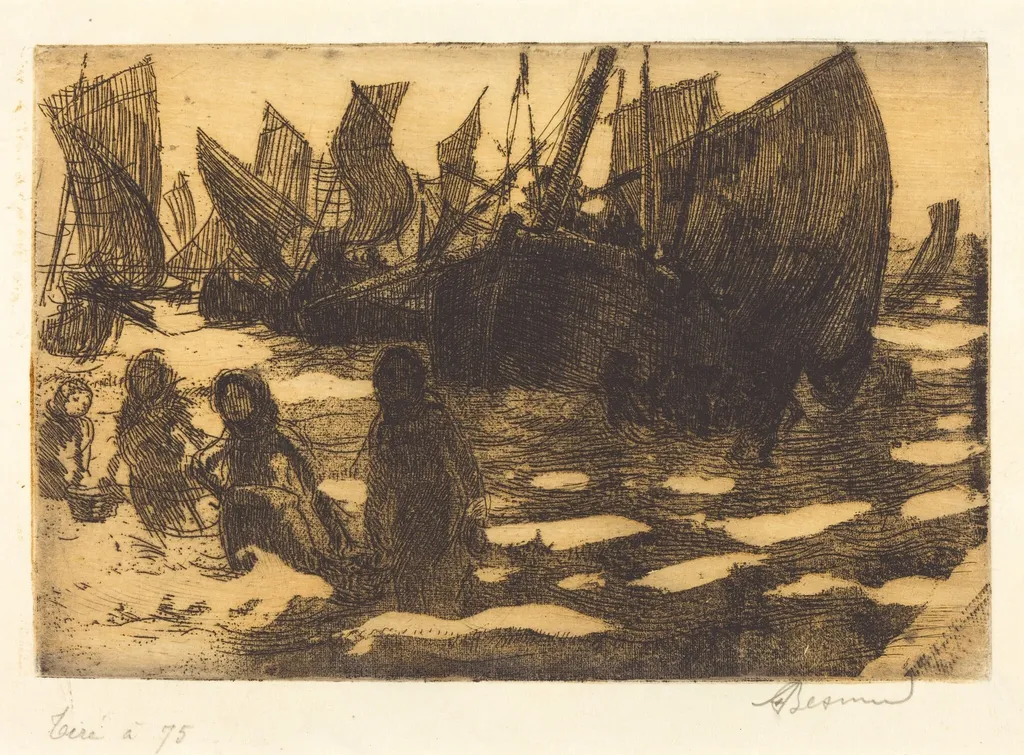
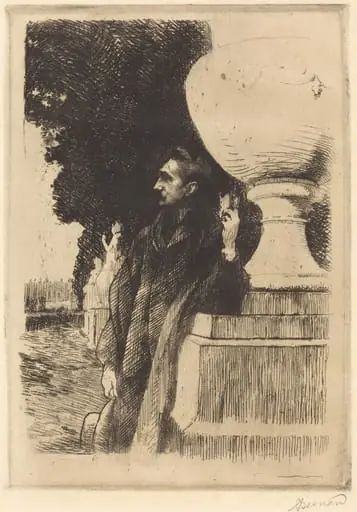
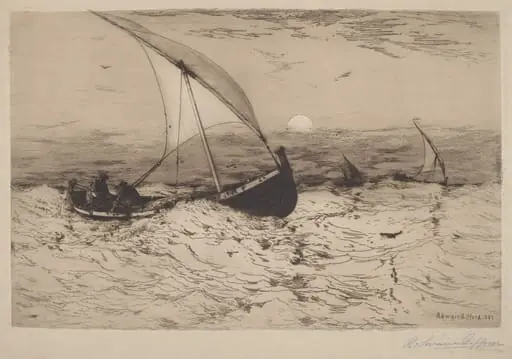
Small Fishing Boats of Berck (Petites Pêcheuses de Berck) is an ink print by the Impressionist artist Paul-Albert Besnard. It dates from 1897 and is held in the collection of the National Gallery of Art. Small Fishing Boats of Berck is an 1897 print by Albert Besnard, executed in etching and aquatint on wove paper.
About this work
Overview
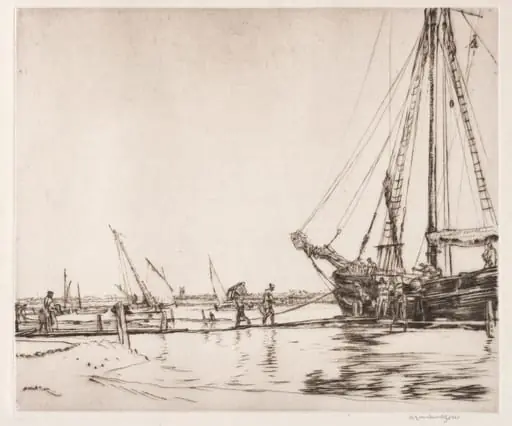
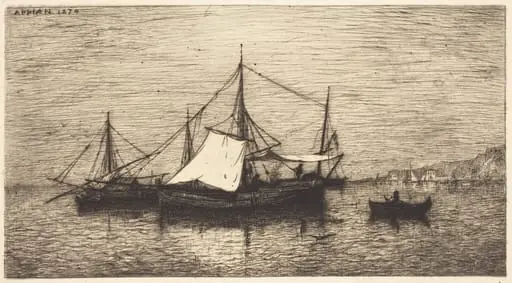
It portrays a quiet coastal scene near the northern French town of Berck, where modest fishing vessels rest on calm waters.
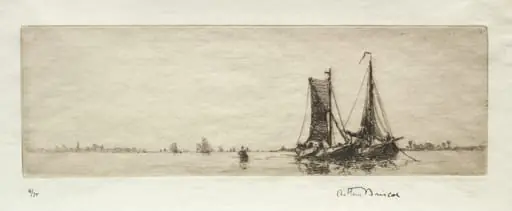
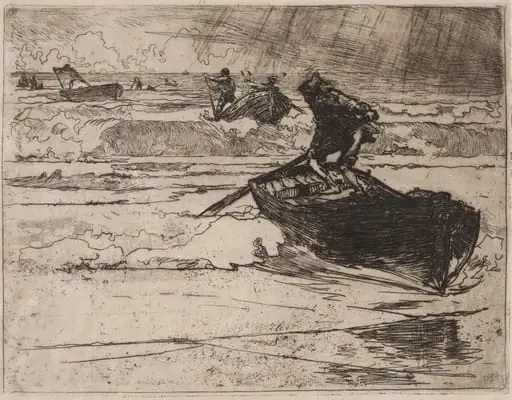
Small Fishing Boats of Berck is an 1897 print by Albert Besnard, executed in etching and aquatint on wove paper. It portrays a quiet coastal scene near the northern French town of Berck, where modest fishing vessels rest on calm waters. The composition emphasizes stillness and subtle movement, with figures on the shore observing the boats. Unlike oil paintings, this work relies on tonal gradations and fine line work to evoke atmosphere rather than color.
Subject & Meaning
The scene captures a routine moment in a working coastal community, devoid of drama or idealization. The small boats, their sails barely filled, suggest a pause between labor and return. Figures on the shore are indistinct, their presence reinforcing the quiet rhythm of seaside life. The image reflects an interest in ordinary moments, aligning with late 19th-century naturalism rather than romanticized nostalgia.
Technique & Style
Besnard employed etching and aquatint to achieve soft transitions between light and shadow, avoiding bold outlines. The aquatint creates atmospheric depth through layered washes of brown ink, while fine etched lines define the boats and shore. The technique favors subtlety over expressiveness; textures are suggested rather than rendered with brushwork, distinguishing it from Impressionist painting while retaining its sensitivity to light.
History & Provenance
Created in 1897, the print emerged during Besnard’s period of active engagement with graphic arts, following his success in painting. It was likely produced in a limited edition for collectors interested in contemporary printmaking. The work entered public collections in the 20th century, notably through acquisitions by institutions focused on French graphic art of the fin de siècle.
Context
In the 1890s, French artists increasingly turned to coastal subjects as industrialization reshaped rural life. Berck, a modest fishing port, attracted printmakers for its unspoiled horizons and working-class rhythms. Besnard’s choice of etching over painting aligned with a broader revival of printmaking as a serious medium, valued for its intimacy and technical precision among avant-garde circles.
Legacy
The print remains a representative example of Besnard’s graphic work, illustrating his ability to convey mood through restrained technique. While less known than his paintings, it contributed to the recognition of etching as a vehicle for poetic realism. Its quiet observation of everyday life influenced later generations of printmakers seeking emotional resonance without theatricality.
Artist & collection
Artist
Paul-Albert Besnard (1849–1934) was a French artist, born in 7th arrondissement of Paris.