Artwork
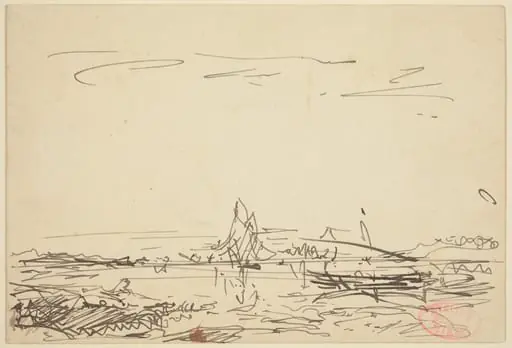
River bank with jetty and buildings
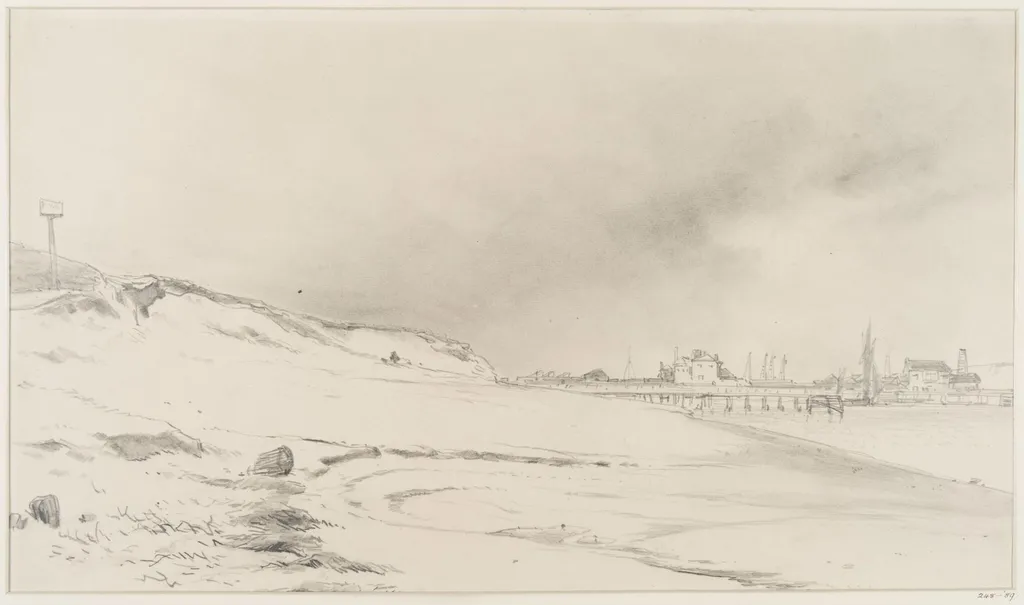
River bank with jetty and buildings is a drawing by the Romanticist artist Beverly. It dates from 1830 and is held in the collection of the Victoria and Albert Museum.
About this work
Overview
Created in 1830, this pencil drawing by Beverly captures a tranquil riverside setting with minimal detail. The composition centers on a modest jetty extending into calm water, flanked by a rocky shoreline and distant industrial structures. Soft, restrained strokes convey atmosphere over precision, emphasizing quietude rather than architectural specificity.
Subject & Meaning
The scene presents an unremarkable working riverside: a jetty, a moored vessel, and sparse buildings suggest local commerce or transport. A lone signpost near the upper left hints at direction or ownership, but no figures or activity are depicted. The absence of human presence underscores a contemplative, almost solitary engagement with the landscape.
Technique & Style
Beverly employs light, fluid pencil lines with subtle cross-hatching to suggest texture in the water, rocks, and building surfaces. The rendering avoids sharp definition, favoring tonal gradations that dissolve edges and unify the scene. This restrained approach prioritizes mood over detail, aligning with early 19th-century sketching traditions that valued immediacy and atmosphere.
History & Provenance
The drawing is dated 1830 and attributed to Beverly, though little is known about the artist’s broader career. It likely originated as a personal study or travel sketch, possibly made on-site. Its survival suggests it was preserved within a private collection, though its path to institutional ownership remains undocumented.
Context
In the early 1830s, industrial expansion along rivers was transforming British and European landscapes. This drawing captures a moment before full-scale development, where modest infrastructure coexisted with natural topography. Such sketches were common among artists documenting changing environments, often for private rather than public consumption.
Legacy
The drawing stands as a quiet record of a transitional riverside, reflecting a period when industrialization was still integrated into the landscape rather than dominating it. Its understated quality offers insight into how artists of the time observed and recorded everyday places, valuing observation over grandeur.
Artist & collection
Artist
These delicate 1830s–80s drawings and watercolors show quiet English lanes, river banks, and harvest fields.

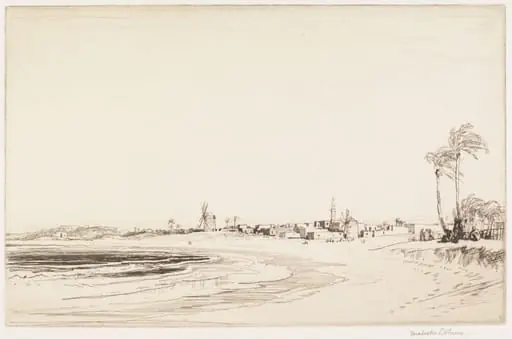 Montaza Bay
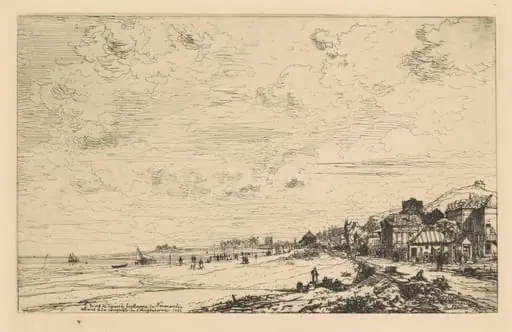 Beuzeval, Embouchure de la Dive (Calvados)
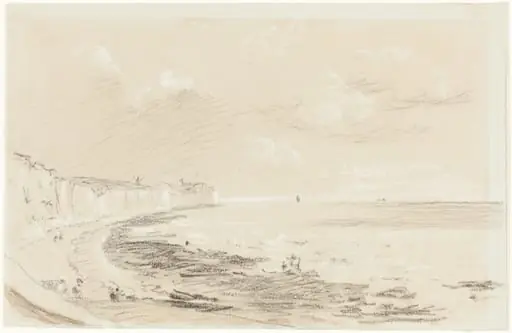 Scene on the South Coast of England
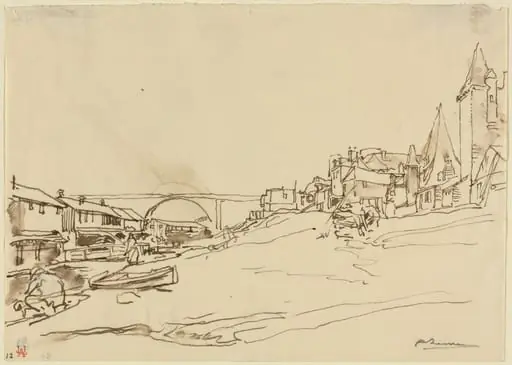 The House of the King of Poland (Angers)
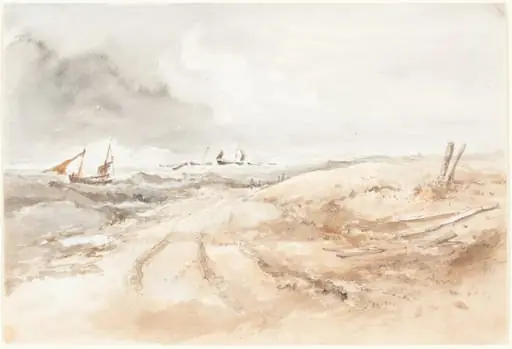 Shore Scene with Boats in Choppy Water
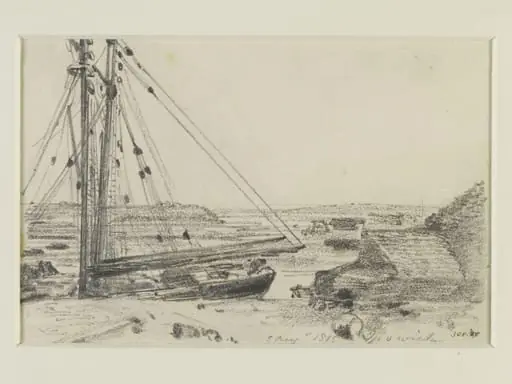 Shipping, near Ipswich
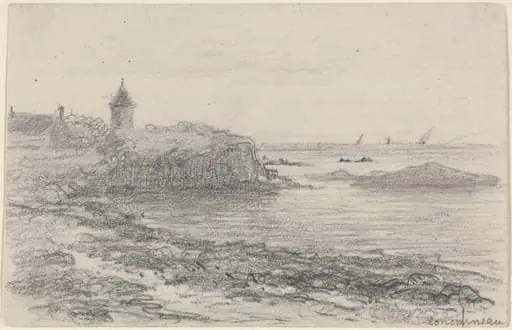 The Coast at Concarneau
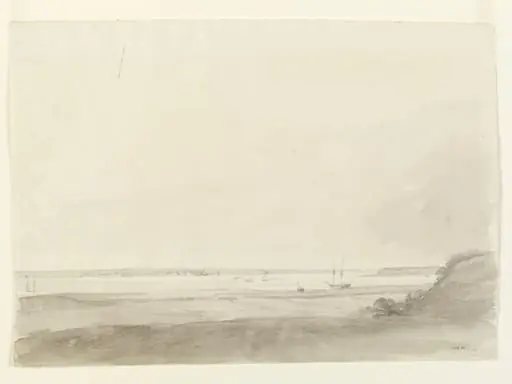 View from the shore over the Thames or the Medway
 A Cove with a Sailboat
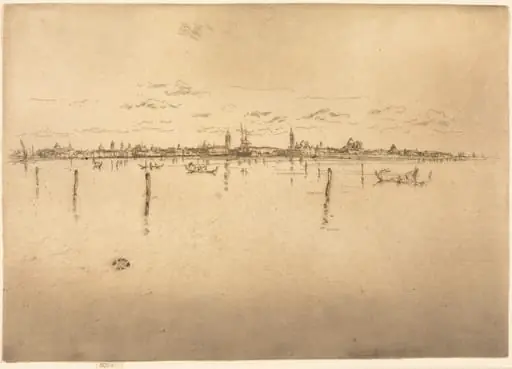 Little Venice
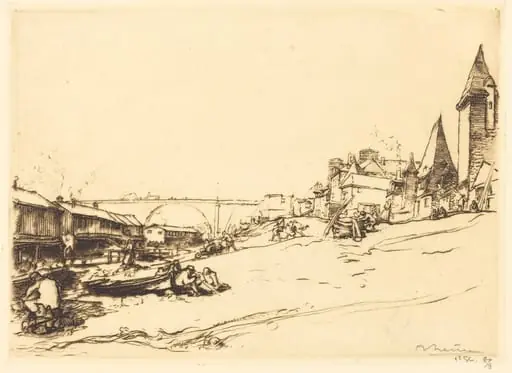 Angers - The House of the King of Poland (Angers - La maison du roi de Pologne)
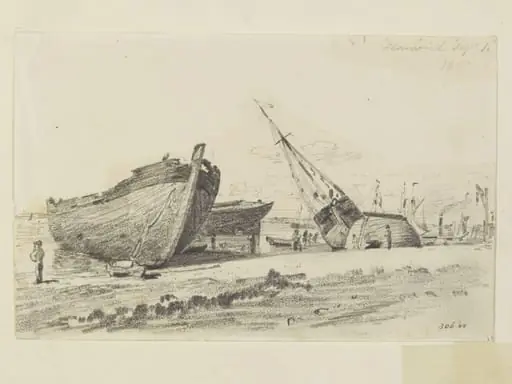 The breakwater at Harwich, with ships on the beach