Artwork
The Coast at Concarneau
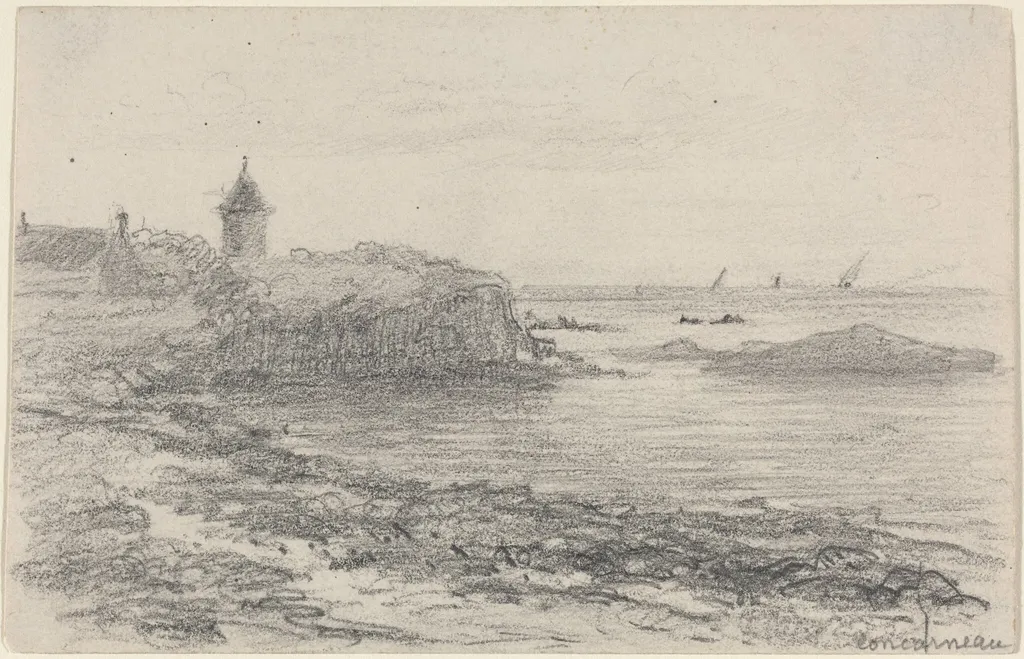
The Coast at Concarneau is a graphite drawing by the Romanticist artist Eugène Boudin. It dates from 1861 and is held in the collection of the National Gallery of Art.
About this work
Overview
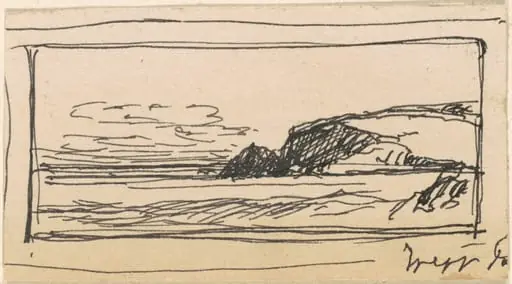
The Coast at Concarneau is a graphite drawing on wove paper created by French artist Eugène Boudin in 1861. It depicts a serene coastal scene with a rocky shore, distant buildings, and a tower, characterized by soft grays and suggestive lines.
Subject & Meaning
The drawing captures a quiet moment in a coastal landscape, emphasizing the play of light, atmosphere, and subtle movement of waves. It reflects Boudin's focus on observing and conveying the ephemeral qualities of natural environments.
Technique & Style
Boudin employed quick, light graphite lines to imply texture and motion, maintaining a soft gray palette. This approach conveys a sense of immediacy, as if the sketch were a direct transcription from nature.
History & Provenance
Created in 1861, the work is part of Boudin's oeuvre as a pioneering landscape painter. While specific provenance details are not provided, its creation date situates it within Boudin's established practice of outdoor marine scenes.
Context
The Coast at Concarneau aligns with late Romanticism's emphasis on light, atmosphere, and emotional resonance in natural settings. Boudin's work was admired by contemporaries like Charles Baudelaire and Jean-François Corot.
Legacy
As a recognized leader in capturing coastal life and seascapes, Boudin's works, including this drawing, influenced the development of outdoor landscape painting. His ability to render skies and maritime scenes earned him notable acclaim.
Own this work as a print
Artist & collection
Artist
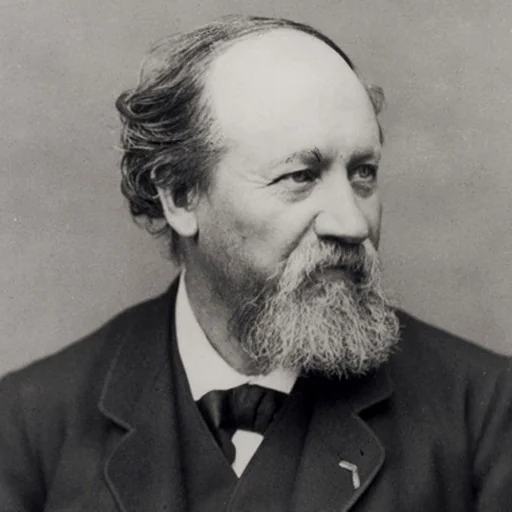
Eugène Louis Boudin (French: ; 12 July 1824 – 8 August 1898) was one of the first French landscape painters to paint outdoors.

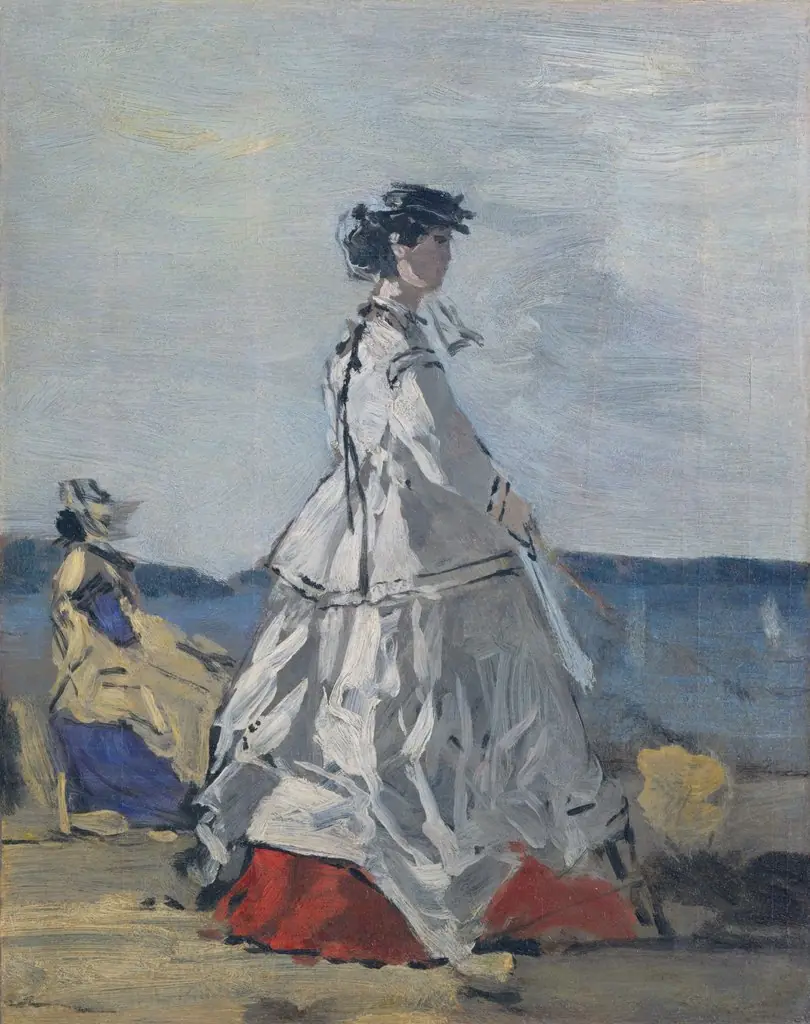
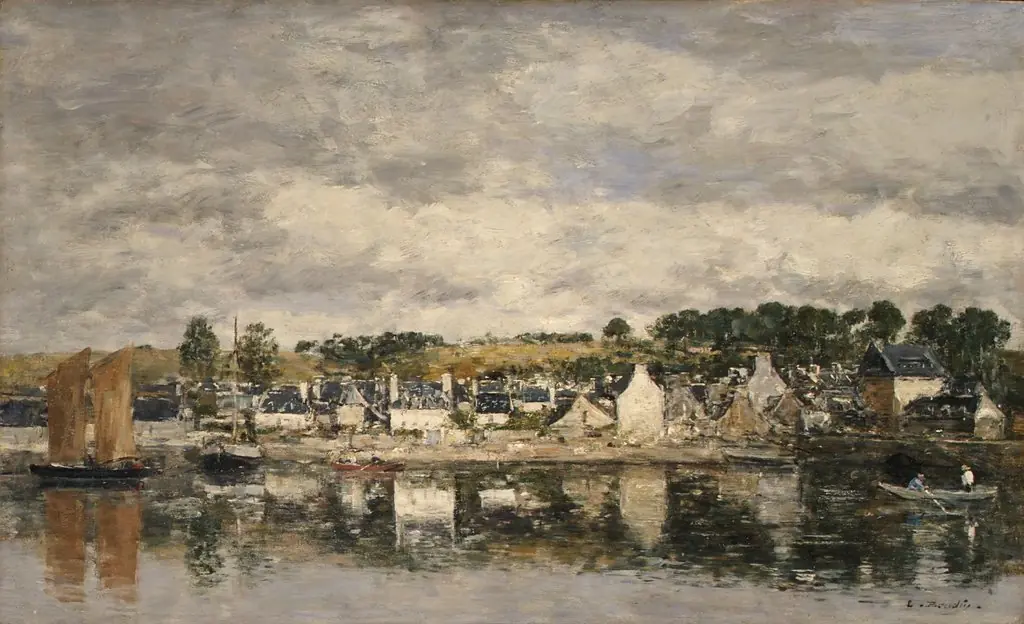
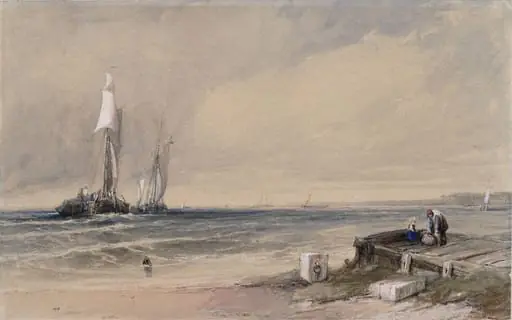 Coast Scene
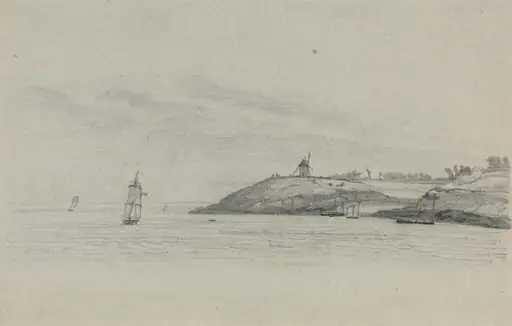 Coastal Landscape with Shipping; Windmill in Distance
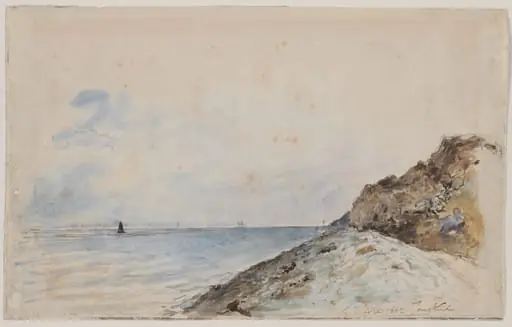 Le Havre
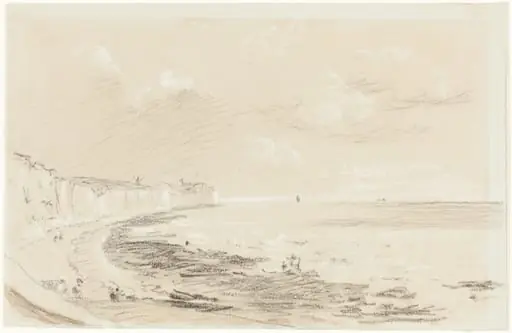 Scene on the South Coast of England
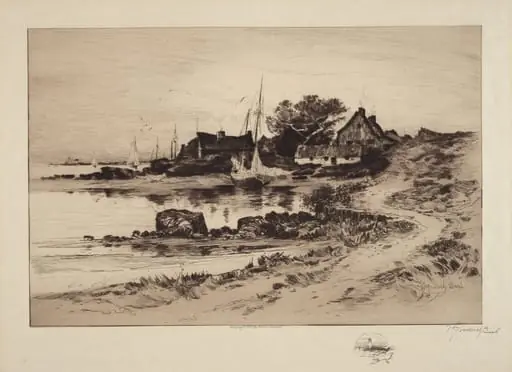 Old Gloucester Shore
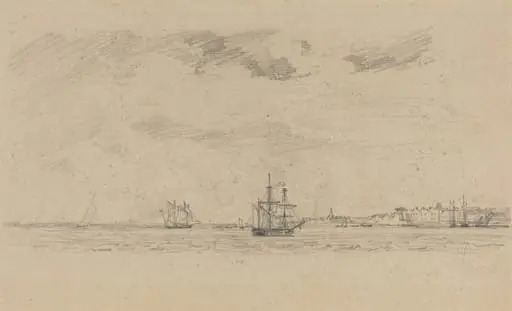 Coastal Landscape with Shipping
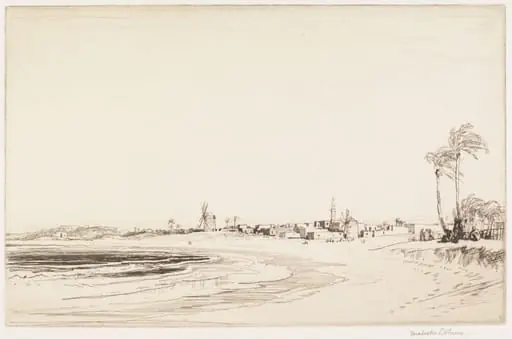 Montaza Bay
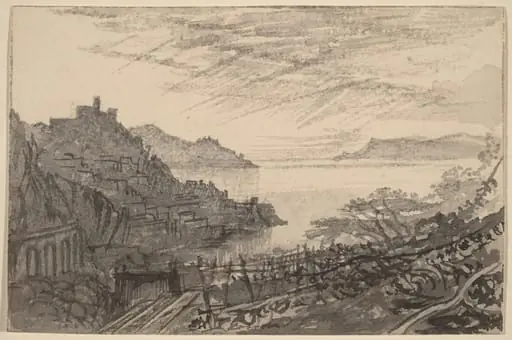 View of a Bay from a Hillside (Amalfi)
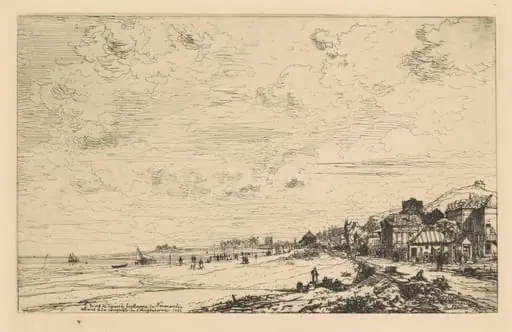 Beuzeval, Embouchure de la Dive (Calvados)
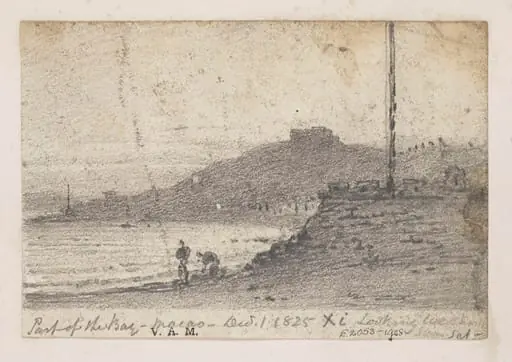 The Praya Grande, Macau, at sunset
 Thames Police
 The Coast