Artwork
Angers - The House of the King of Poland (Angers - La maison du roi de Pologne)
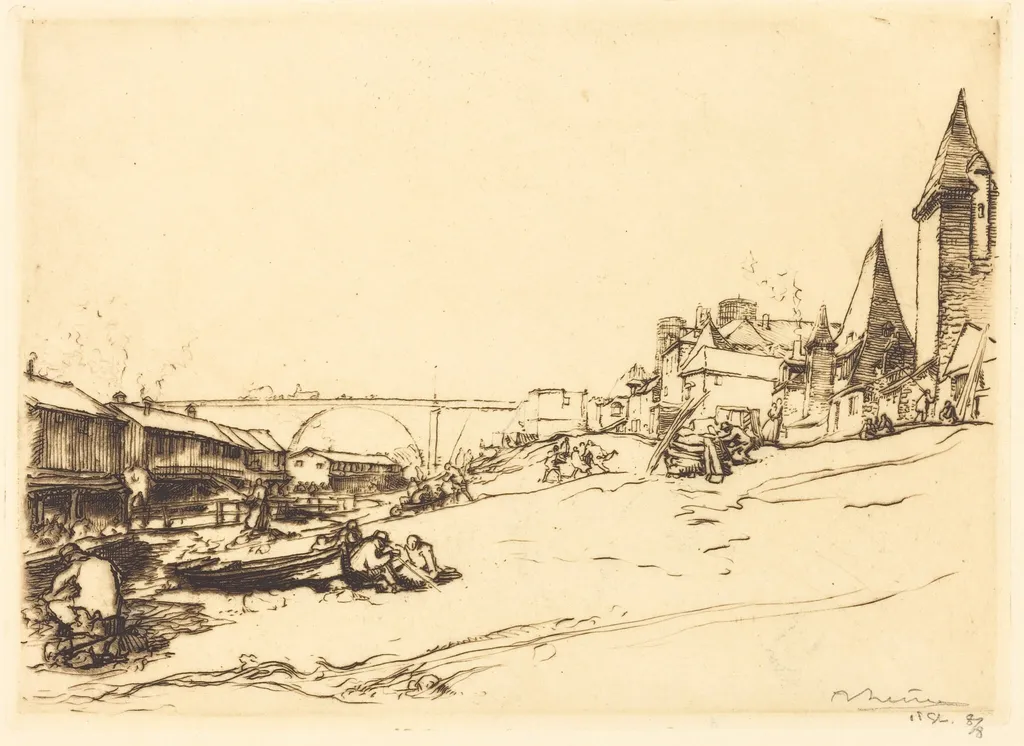
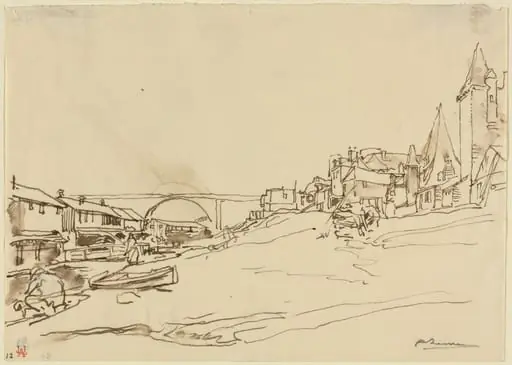
Angers - The House of the King of Poland (Angers - La maison du roi de Pologne) is an ink print by Auguste Lepère. It dates from 1912 and is held in the collection of the National Gallery of Art.
About this work
Overview
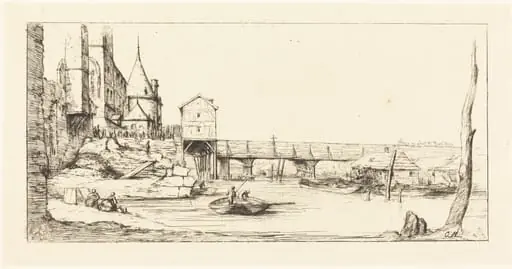
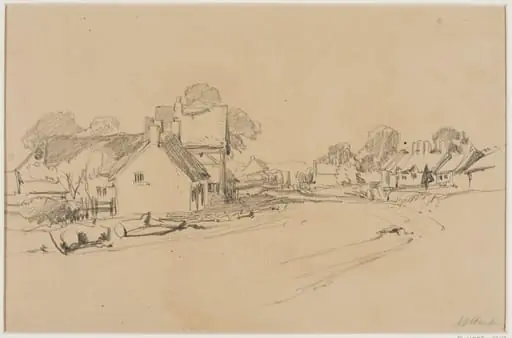
Angers - The House of the King of Poland is an etching created by French artist Auguste Lepère in 1912, exemplifying his role in the European wood engraving revival. This print captures a serene riverside scene in Angers, featuring wooden buildings, a prominent church tower, and everyday life along the water.
Subject & Meaning
The etching depicts a tranquil moment in a small riverside town, with people engaged in quiet activities amidst simple, traditional architecture. The scene conveys a sense of peaceful daily life, focusing on the interplay of people, buildings, and water.
Technique & Style
Lepère employed quick, sketchy lines to evoke movement and capture light, achieving a balance between busyness and calm. The etching technique, involving acid and metal plates, allowed for detailed printmaking, characteristic of Lepère's print revival efforts.
History & Provenance
Created in 1912, the work reflects Lepère's engagement with printmaking during a period of renewed interest in the medium. Specific provenance details are not provided.
Context
Part of a broader movement to revive wood engraving in Europe, this etching situates Lepère among artists exploring the expressive potential of printmaking in the early 20th century.
Legacy
As a representative of Lepère's etching work, *Angers - The House of the King of Poland* contributes to the understanding of early 20th-century printmaking revival in Europe, though its individual impact is not elaborated upon in available information.
Artist & collection
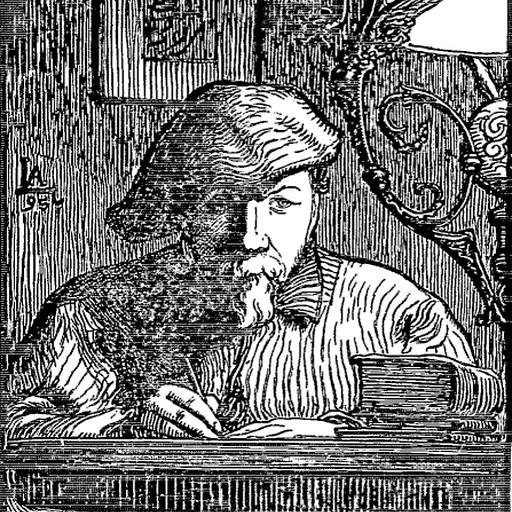
Artist
Louis-Auguste Lepère (30 November 1849 – 20 November 1918) was a French painter and etcher. Lepère is also considered a leader in the creative revival of wood engraving in Europe.