Artwork
The Last of the Buffalo
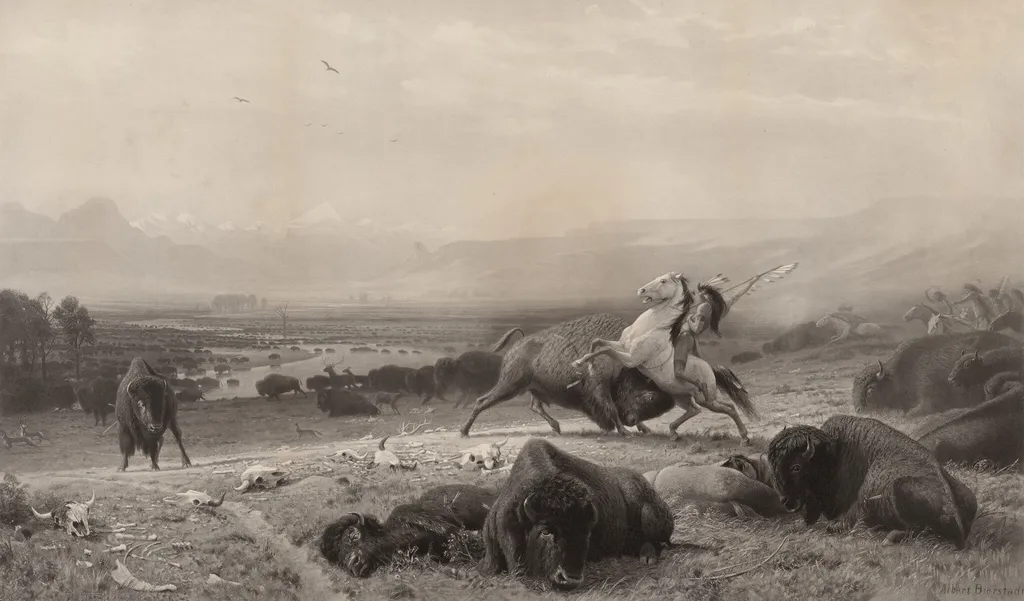
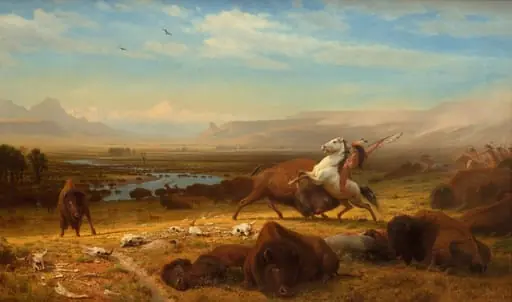
The Last of the Buffalo is a print by the Impressionist artist Albert Bierstadt. It dates from 1891 and is held in the collection of the National Gallery of Art.
About this work
Overview
The Last of the Buffalo is a photogravure print created by Albert Bierstadt in 1891, combining black ink with chine collé on wove paper. The work depicts a poignant scene of a lone rider pursuing a scattered buffalo herd across an expansive landscape.
Subject & Meaning
The print shows a rider on horseback chasing buffalo, with some animals fleeing and others fallen. The buffalo appear more intent on escape than resistance, as the rider's raised spear suggests a hunt. The scene conveys a sense of a fading era.
Technique & Style
Bierstadt employed soft shading in the photogravure to evoke a vast, serene landscape. The contrast between light and shadow, akin to chiaroscuro, adds depth to the composition, drawing the viewer's eye through the landscape to the distant, hazy mountains and reflective water body.
History & Provenance
Created in 1891, the exact provenance and exhibition history of The Last of the Buffalo are not detailed here, highlighting a need for further research into its circulation and reception.
Context
The work reflects late 19th-century concerns about the decline of the American buffalo and the impact of human activity on the natural world. It may also touch on themes of the disappearing Wild West.
Artist & collection