Artwork
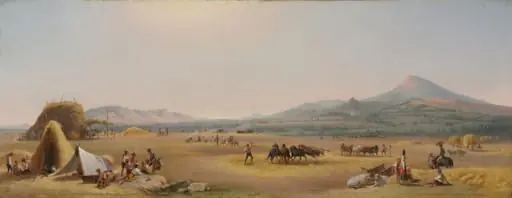
Harvesting on the Roman Campagna
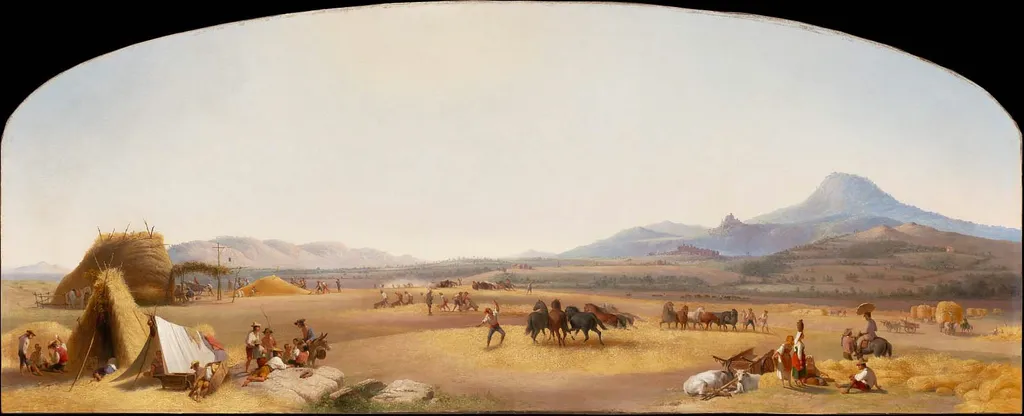
Harvesting on the Roman Campagna is an oil painting by the Realist artist John Gadsby Chapman. It dates from 1867 and is held in the collection of the Museum of Fine Arts Boston.
About this work
Overview
John Gadsby Chapman’s 1867 oil painting *Harvesting on the Roman Campagna* captures a bustling agricultural activity set within an expansive Italian countryside. The canvas presents a wide, sunlit vista where workers gather around a towering haystack, while others labor farther back amid rolling hills and distant mountains under a clear blue sky.
Subject & Meaning
The composition focuses on ordinary laborers engaged in the seasonal harvest, emphasizing the rhythm of rural life in 19th‑century Italy. By foregrounding the collective effort of the harvesters, Chapman highlights the dignity of everyday work and the connection between people and the land they cultivate.
Technique & Style
Executed in a realist manner, the painting relies on careful observation of light and color. Warm ochres and earth tones define the hay and soil, contrasting with cool blues that render the sky and distant terrain. Subtle chiaroscuro models the figures, lending depth and a sense of movement to the scene.
History & Provenance
Created during Chapman’s European period, the work entered the collection of the Museum of Fine Arts, Boston, where it remains on view. The painting reflects the artist’s interest in historical and genre subjects, aligning with his broader oeuvre of narrative-driven, observational works.
Artist & collection

Artist
John Gadsby Chapman (December 3, 1808 – November 28, 1889) was an American artist famous for Baptism of Pocahontas, which was commissioned by the United States Congress and hangs in the United States Capitol rotunda.

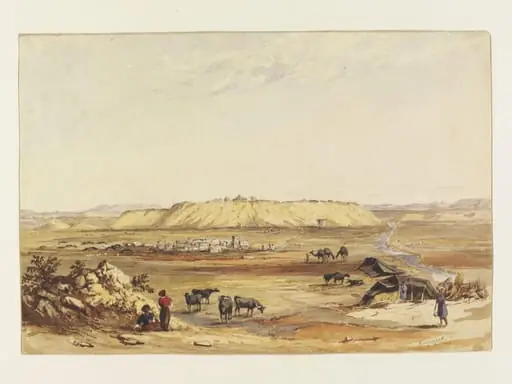 Kouyunjick
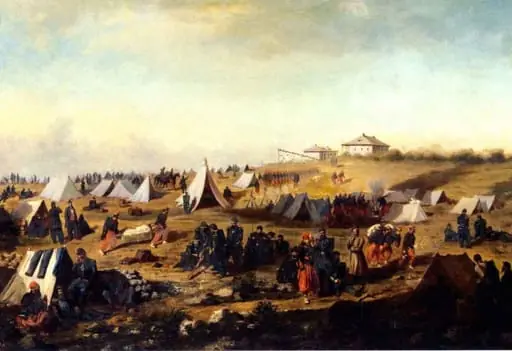 Vânători și zuavi în fața Sevastopolului
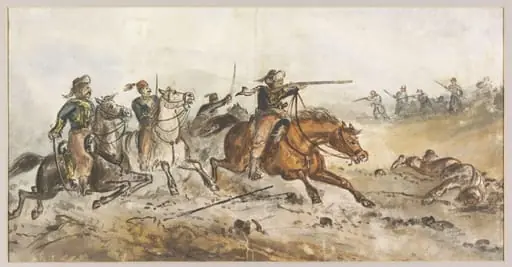 Turkish irregular cavalry charging Russian infantry
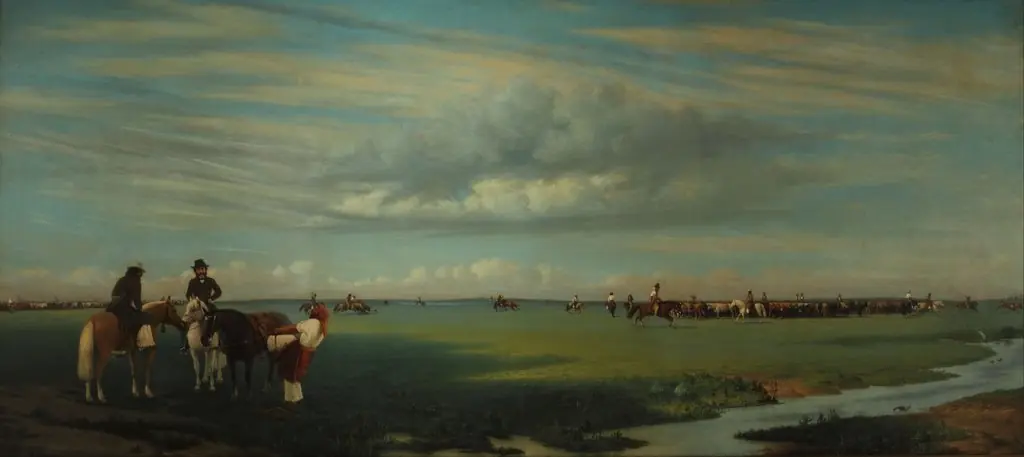 El rodeo
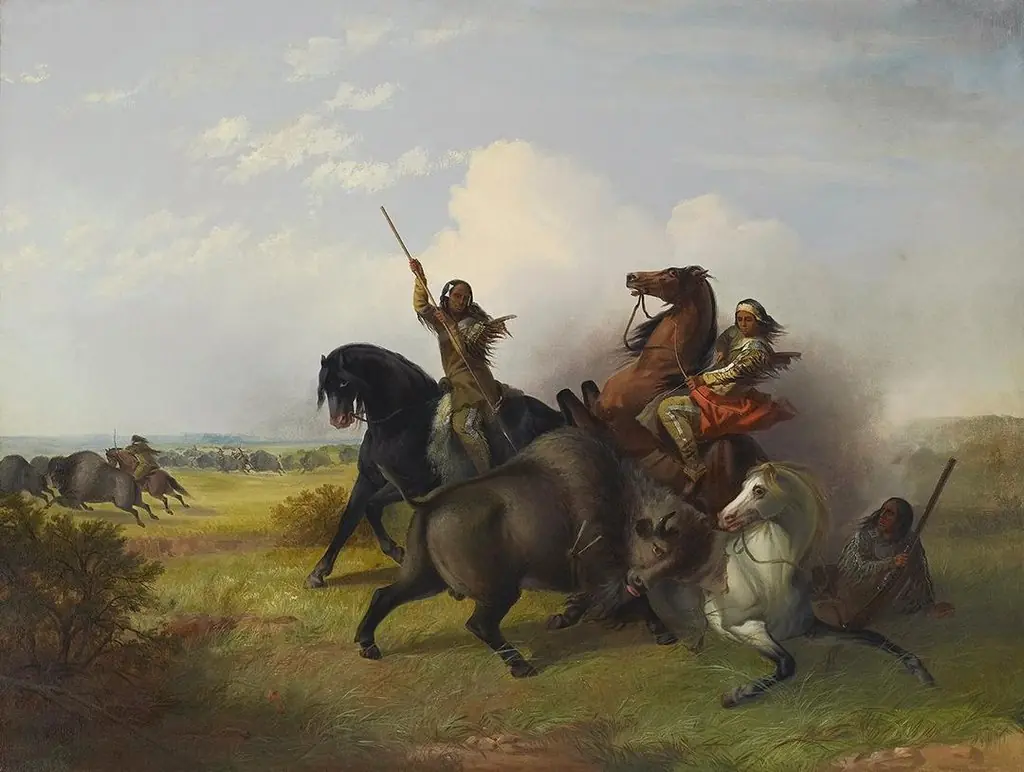 The Buffalo Hunt
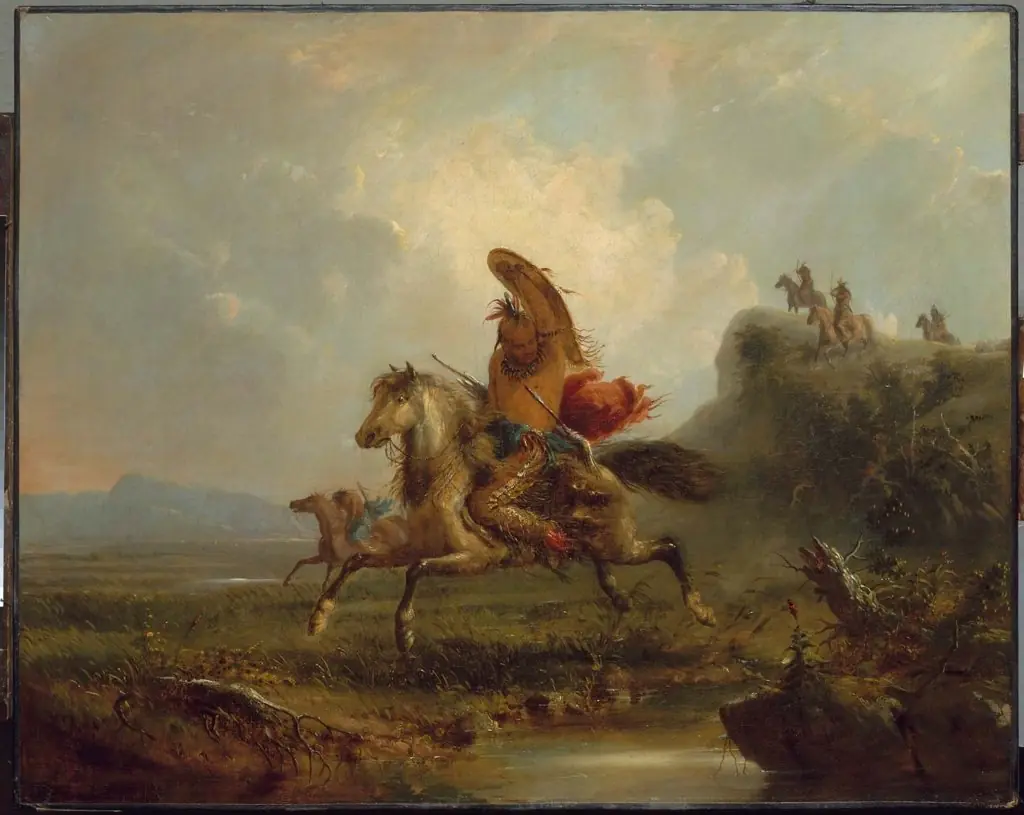 War Ground
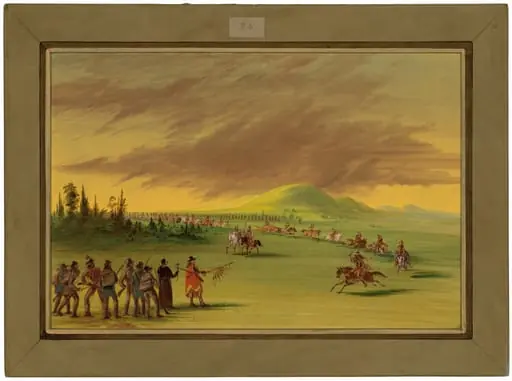 La Salle Meets a War Party of Cenis Indians on a Texas Prairie. April 25, 1686
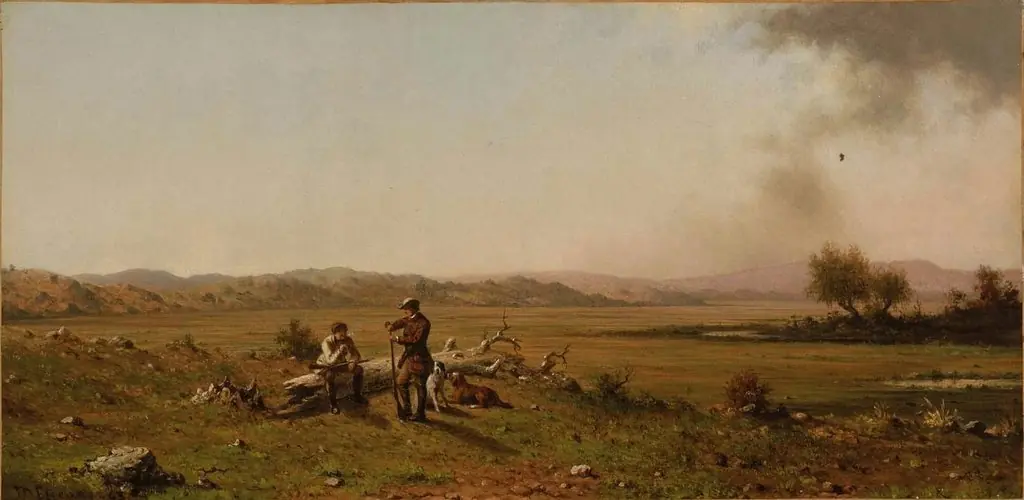 Hunters Resting
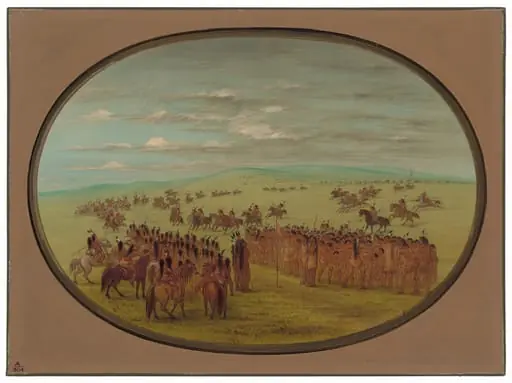 Horse Racing - Minatarrees
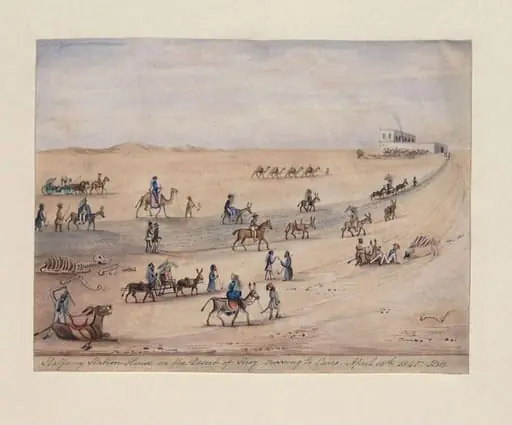 A halfway station house in the desert of Suez crossing to Cairo