Artwork
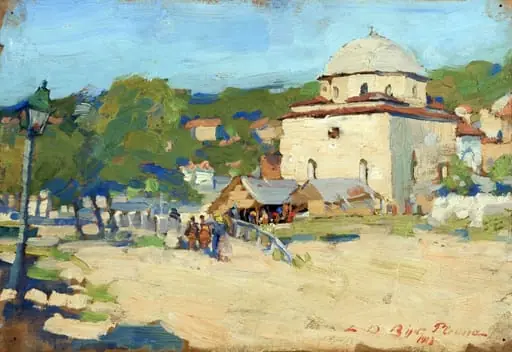
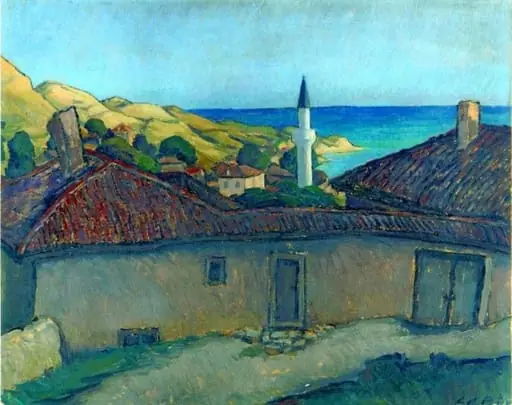
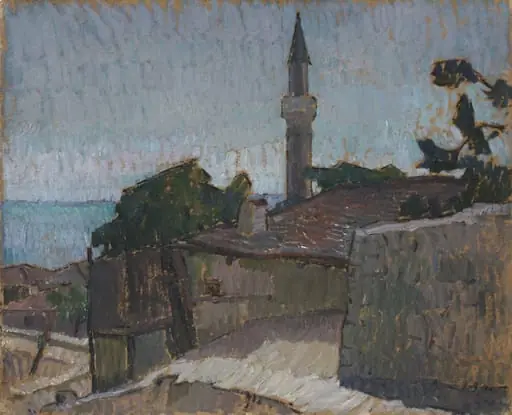
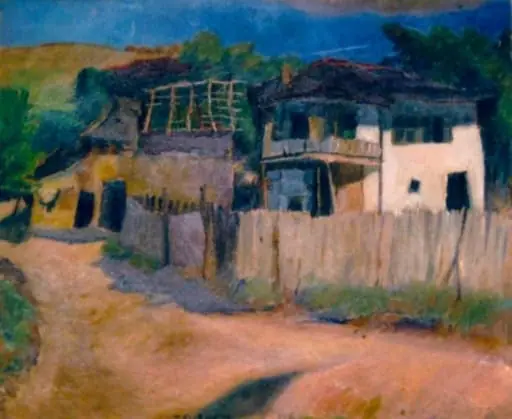
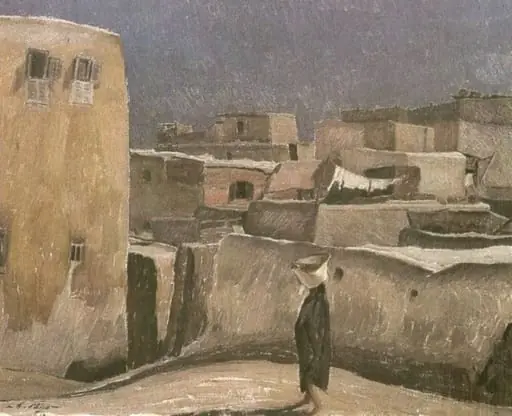
Peisaj la Balcic
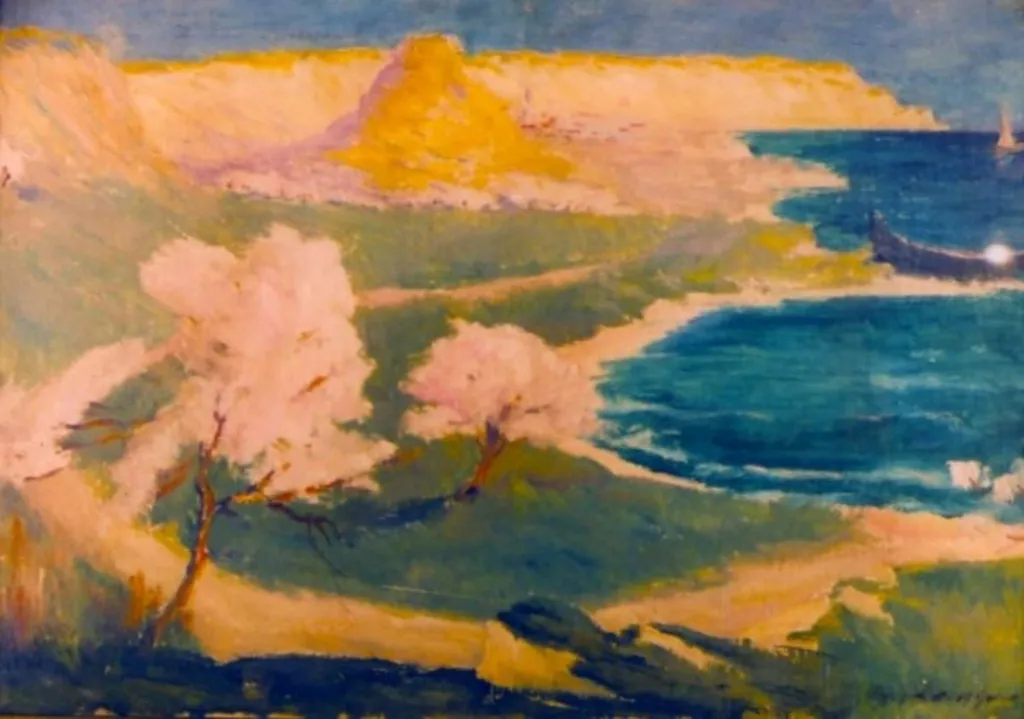
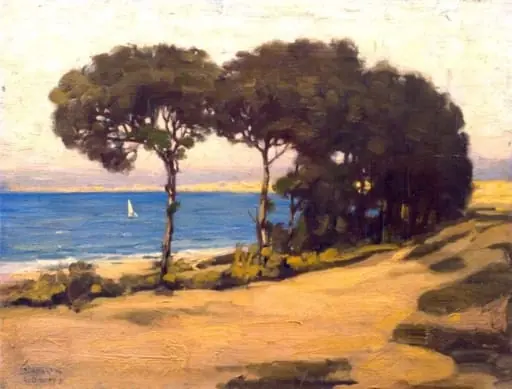
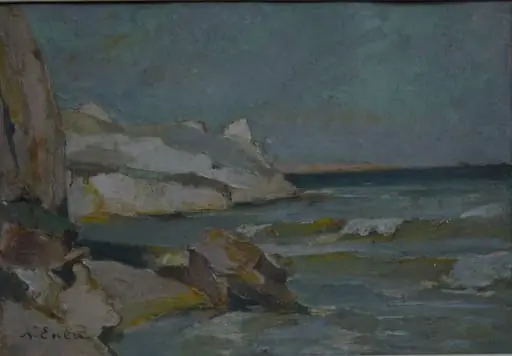
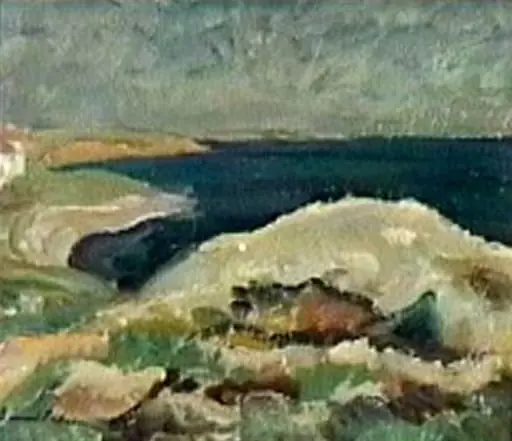
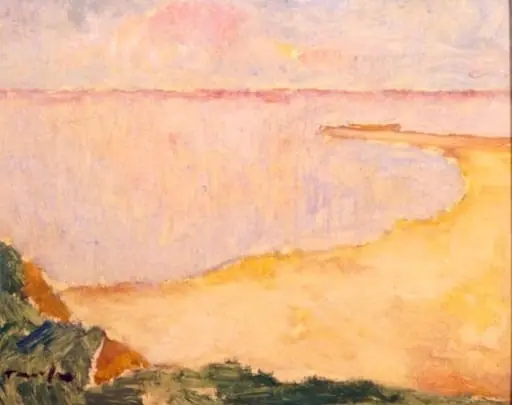
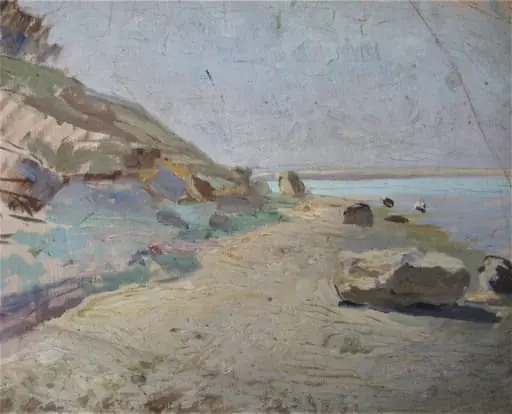
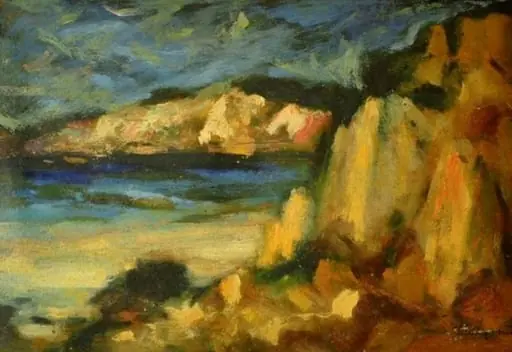
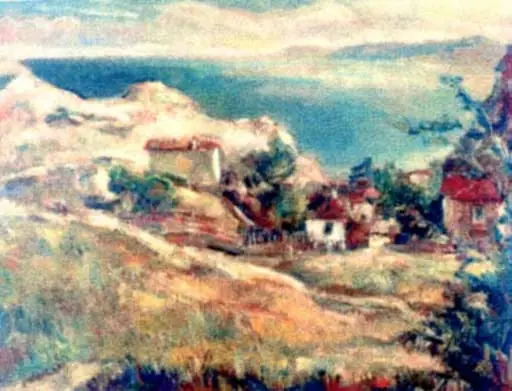
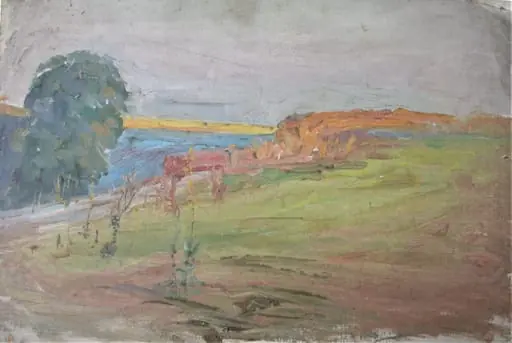
Peisaj la Balcic is an unspecified painting by Leon Alexandru Biju. It dates from 1949 and is held in the collection of the Cotroceni National Museum.
About this work
Overview
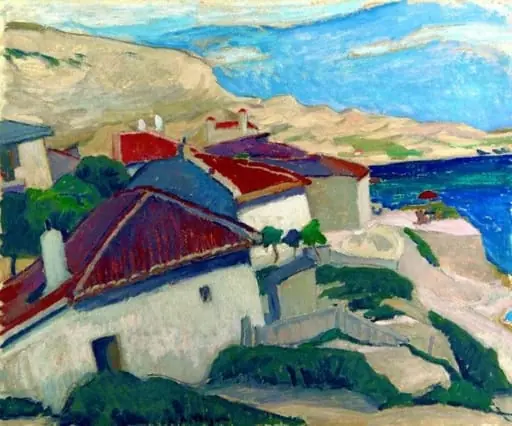
Peisaj la Balcic, painted by Leon Alexandru Biju around 1949, is part of the collection of the Museum of Ethnography. The work presents a loosely rendered landscape that balances a warm palette with a sense of atmospheric distance, inviting viewers to trace the scene’s gentle contours and muted horizon.
Subject & Meaning
The composition depicts a winding road that snakes through verdant hills toward a distant, sun‑kissed mountain. Above, pink‑tinged clouds drift, while the right side of the canvas hints at a blue‑green sea. The arrangement suggests a journey through a tranquil, perhaps idealized, coastal terrain, emphasizing the harmony between land and water.
Technique & Style
Biju employs a thick, impasto application in selective areas, particularly on the hills and sky, where visible strokes create a textured surface. The brushwork remains loose and fluid, allowing colors to blend softly without precise definition, giving the painting a sketch‑like quality that captures fleeting light and atmosphere.
History & Provenance
Created in the immediate post‑war period, the painting entered the Museum of Ethnography’s holdings sometime after its completion, though exact acquisition details remain undocumented. Its presence in the museum underscores the institution’s interest in preserving works that reflect regional visual culture from the mid‑20th century.
Context
The work reflects a broader trend in Eastern European art of the late 1940s, where artists often merged representational landscape with expressive, painterly techniques. Biju’s choice of a coastal scene aligns with contemporary interest in national geography, while his textured approach hints at modernist influences emerging in the region.
Artist & collection
Artist
Leon Alexandru Biju made small prints and paintings of quiet places: Balchik’s shoreline, still lifes with old religious objects, and bare trees in winter.