Artwork
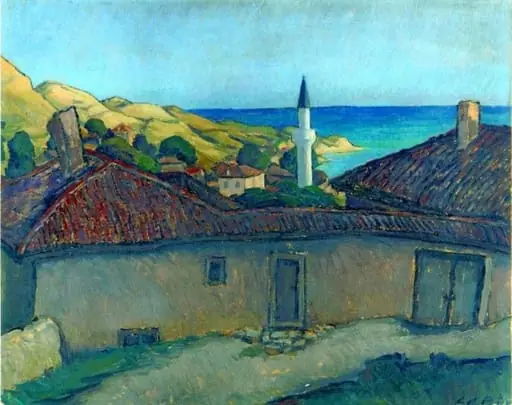
Geamie în peisaj
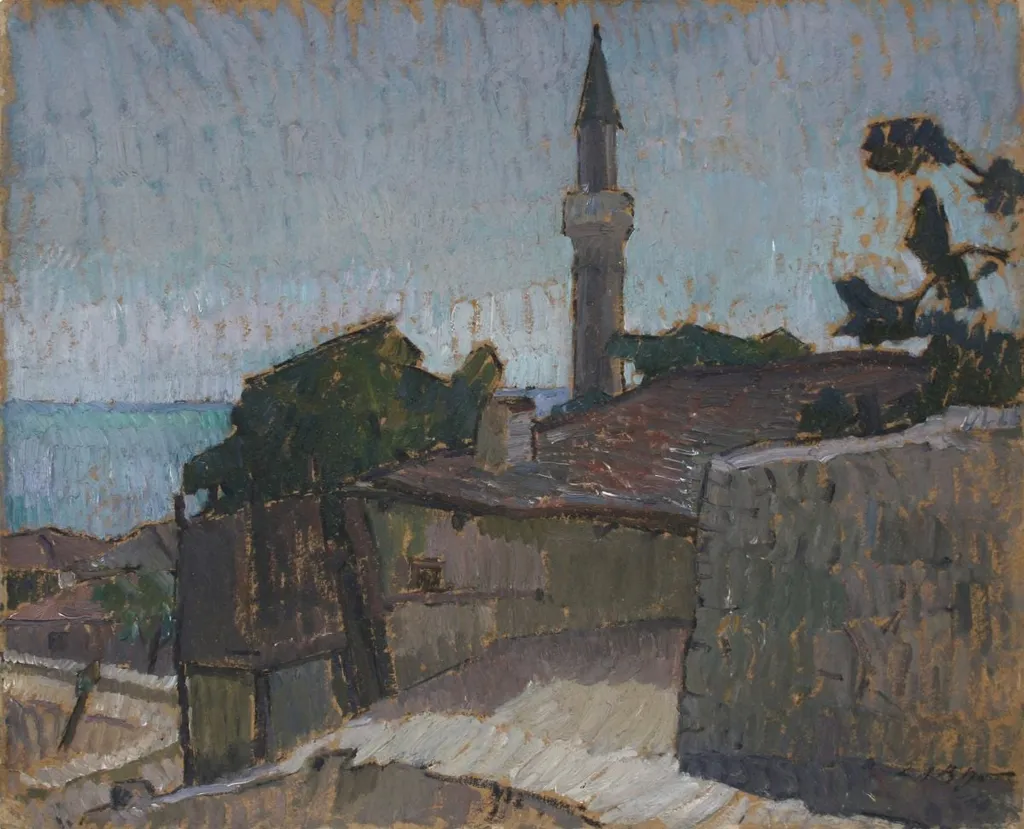
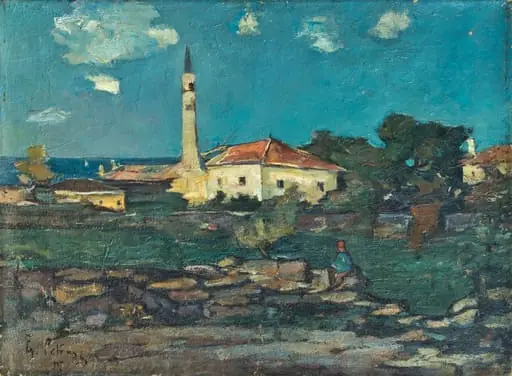
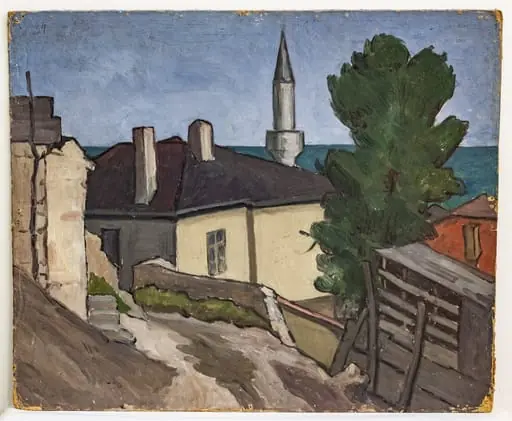
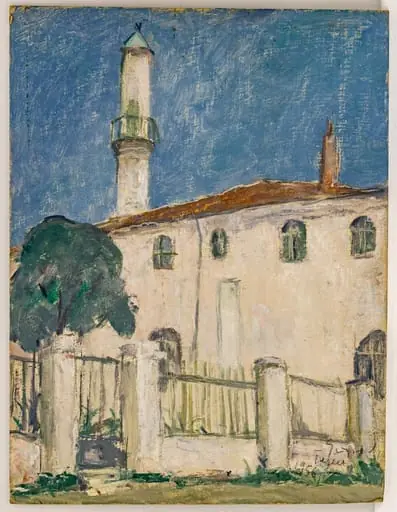
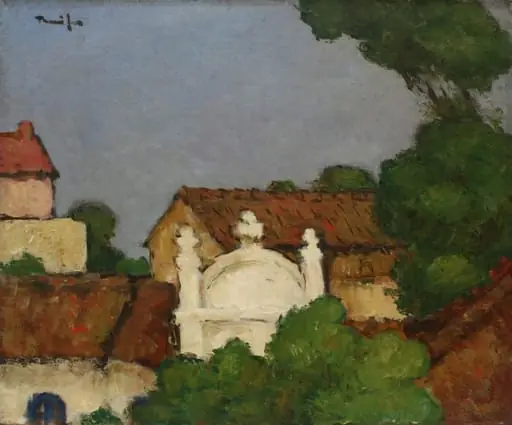
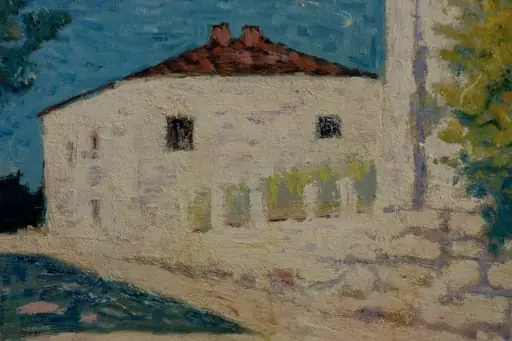
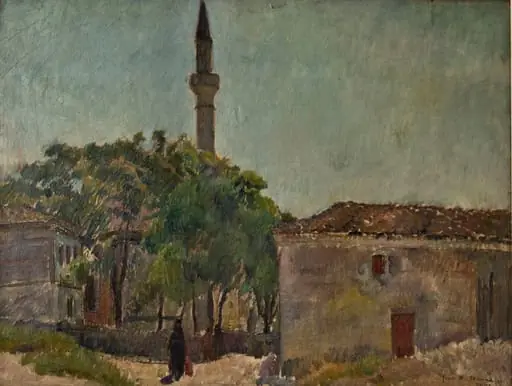
Geamie în peisaj is an unspecified painting by Leon Alexandru Biju. It dates from 1949 and is held in the collection of the Gavrilă Simion Eco-Museum Research Institute Tulcea - Art Museum.
About this work
Overview
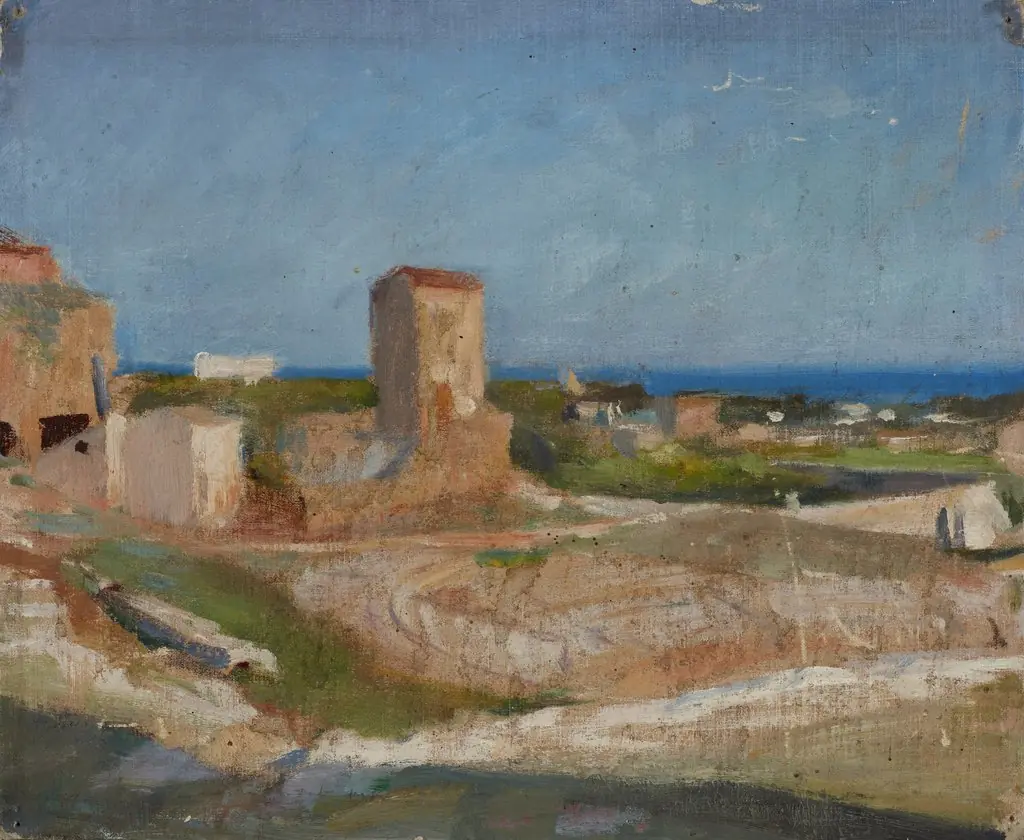
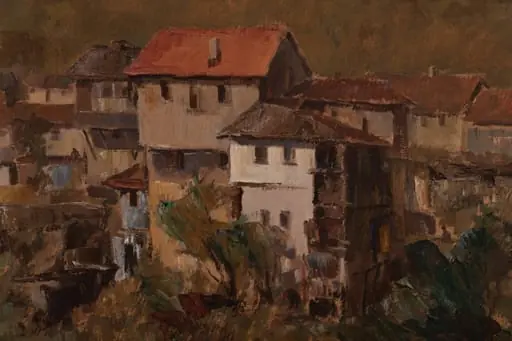
Its textured surface and unrefined brushwork reflect a personal, almost spontaneous approach to capturing place, distinct from academic conventions of the time.
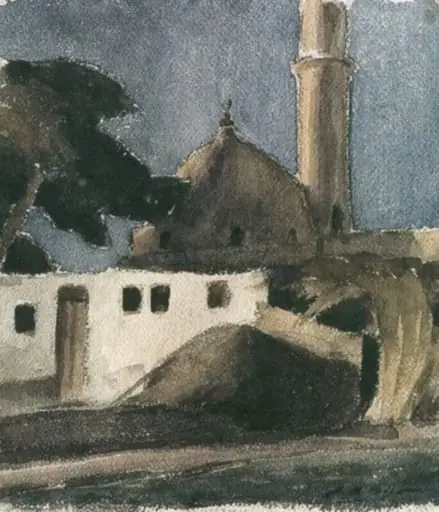
Created around 1949 by Romanian artist Leon Alexandru Biju, this landscape painting depicts a quiet urban scene dominated by a tall, narrow tower rising behind a sloped rooftop. Executed in oil or tempera, the work is held in the collection of the Museum of Ethnography. Its textured surface and unrefined brushwork reflect a personal, almost spontaneous approach to capturing place, distinct from academic conventions of the time.
Subject & Meaning
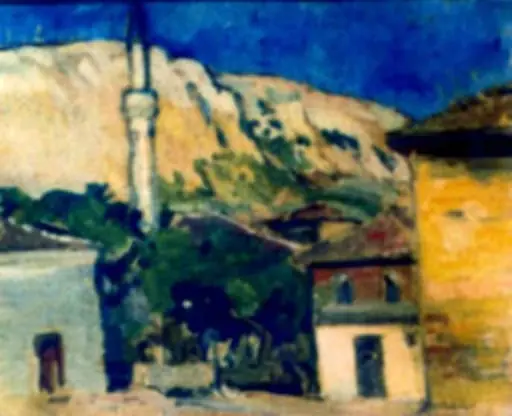
The scene centers on a weathered building with a slanted roof, flanked by a slender vertical structure that resembles a minaret, though its religious function is not confirmed. A bare tree on the right adds a sense of seasonal stillness. The composition avoids narrative or symbolism, instead emphasizing the quiet endurance of ordinary architecture. The painting conveys a sense of solitude and time-worn presence rather than grandeur or event.
Technique & Style
Biju applied paint with thick, uneven brushstrokes, creating a tactile surface where color gathers in ridges and thin patches. The sky’s pale blue is rendered with visible, irregular strokes, and the walls show dark, mottled textures. This impasto-like method prioritizes material presence over smooth representation, giving the scene a raw, immediate quality that underscores the artist’s focus on sensory experience over idealized form.
History & Provenance
The painting entered the Museum of Ethnography’s collection after its creation in the late 1940s, likely through direct acquisition or donation. No public records detail its early ownership or exhibition history. Its placement in an ethnographic institution, rather than a fine arts museum, suggests its value was recognized for its cultural documentation of local architecture and everyday visual life in postwar Romania.
Context
Painted during the early years of communist rule in Romania, the work avoids political themes, focusing instead on the quiet persistence of vernacular structures. While official art promoted socialist realism, Biju’s approach remained introspective and informal. This piece reflects a quieter strain of Romanian modernism—unconcerned with ideology, attentive to texture, light, and the quiet rhythms of the built environment.
Legacy
Though not widely exhibited outside institutional collections, the painting contributes to a broader understanding of Romanian artists who worked outside state-sanctioned styles. Its emphasis on materiality and unidealized observation aligns it with regional modernist tendencies that valued personal expression over propaganda. It remains a quiet testament to the artist’s engagement with the ordinary landscapes of his time.
Artist & collection
Artist
Leon Alexandru Biju made small prints and paintings of quiet places: Balchik’s shoreline, still lifes with old religious objects, and bare trees in winter.
Museum
Gavrilă Simion Eco-Museum Research Institute Tulcea - Art Museum
Continue through works from the same source collection.