Artwork
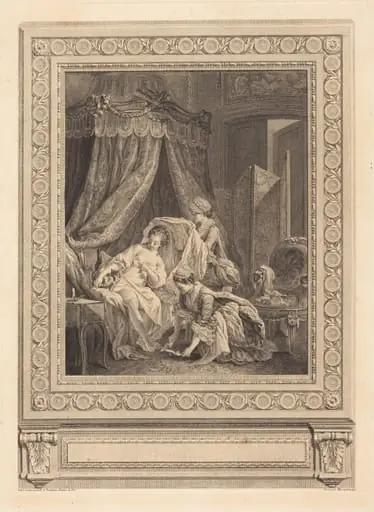
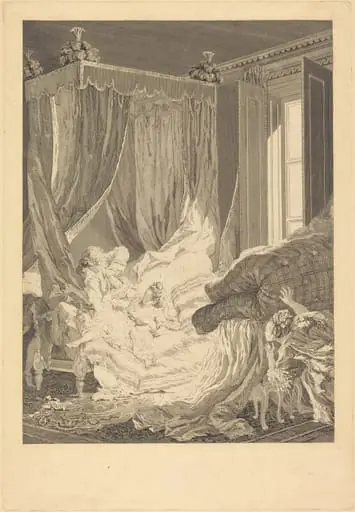
La Famine par l'ordre de Cérès vient répandre son venin sur Eresicthon, tandis qu'il dormoit
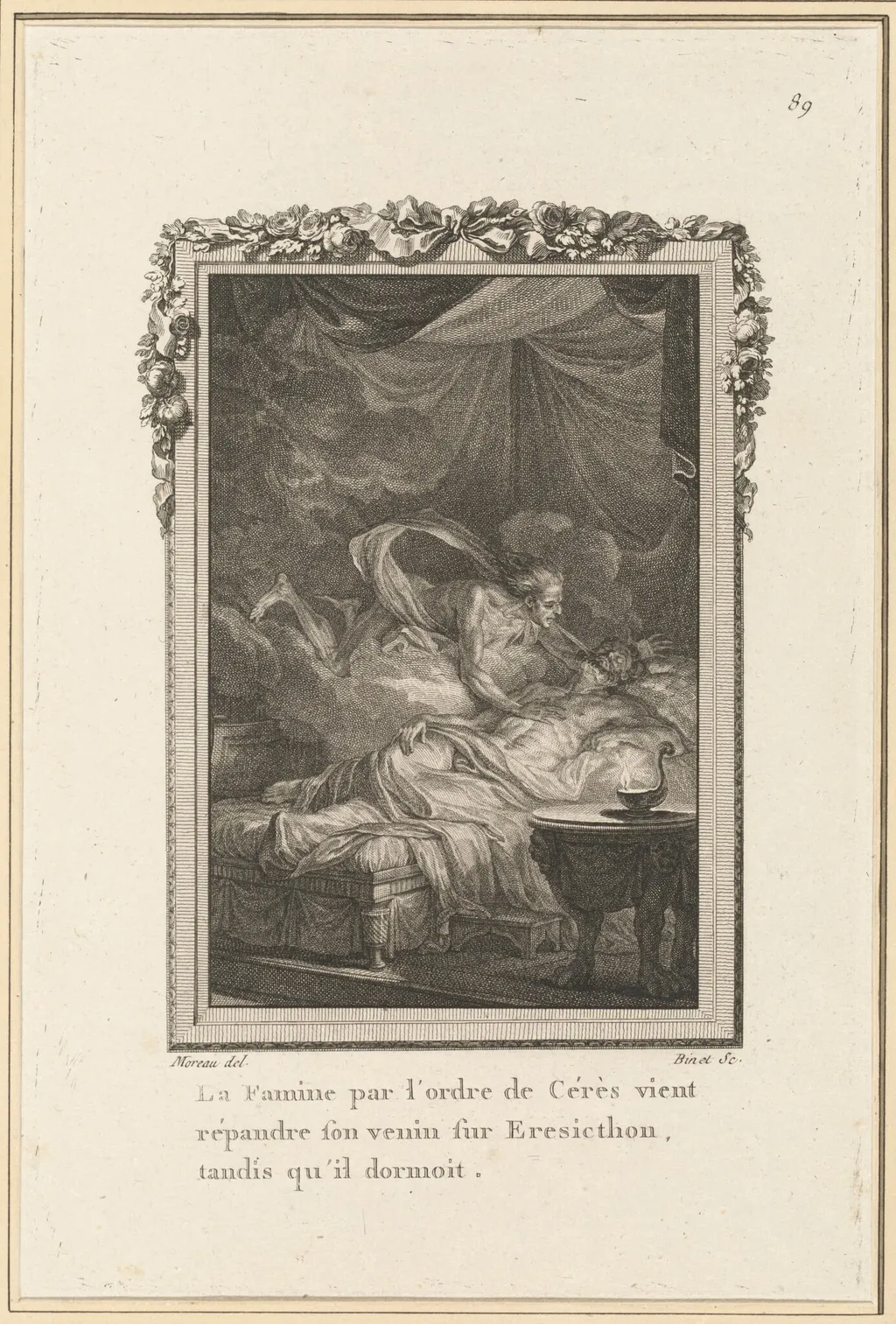
La Famine par l'ordre de Cérès vient répandre son venin sur Eresicthon, tandis qu'il dormoit is an ink print by the Romanticist artist Louis Binet. It dates from 1769 and is held in the collection of the National Gallery of Art.
About this work
Overview
La Famine par l'ordre de Cérès vient répandre son venin sur Eresicthon, tandis qu'il dormoit is an 18th-century black-and-white print by Louis Binet, dated to 1769. The work depicts a somber, intimate scene of a sleeping figure threatened by a female figure wielding a snake, set within a curtained bedchamber.
Subject & Meaning
The print illustrates a mythological narrative, likely portraying the punishment of Eresicthon at the hands of Famine, acting under the command of Ceres (the Roman goddess of agriculture). The scene conveys themes of divine retribution and the inevitability of fate.
Technique & Style
Executed in etching and engraving with stipple, the print showcases Binet's mastery of fine lines and nuanced shading. These techniques collectively create a dramatic, high-contrast visual language, enhancing the scene's tension and emotional depth.
History & Provenance
Created in 1769 by Louis Binet, specific details regarding the print's commission, initial reception, and subsequent ownership history are not provided in the available information.
Context
Emerging from the 18th century, this work reflects the period's continued interest in classical mythology as a subject for art. The use of etching and engraving with stipple also aligns with prevalent printmaking techniques of the time.
Legacy
The enduring impact or notable influence of 'La Famine par l'ordre de Cérès...' on subsequent art or within Binet's oeuvre is not specified in the provided context, suggesting a need for further research to fully assess its legacy.
Artist & collection