Artwork
Le lever
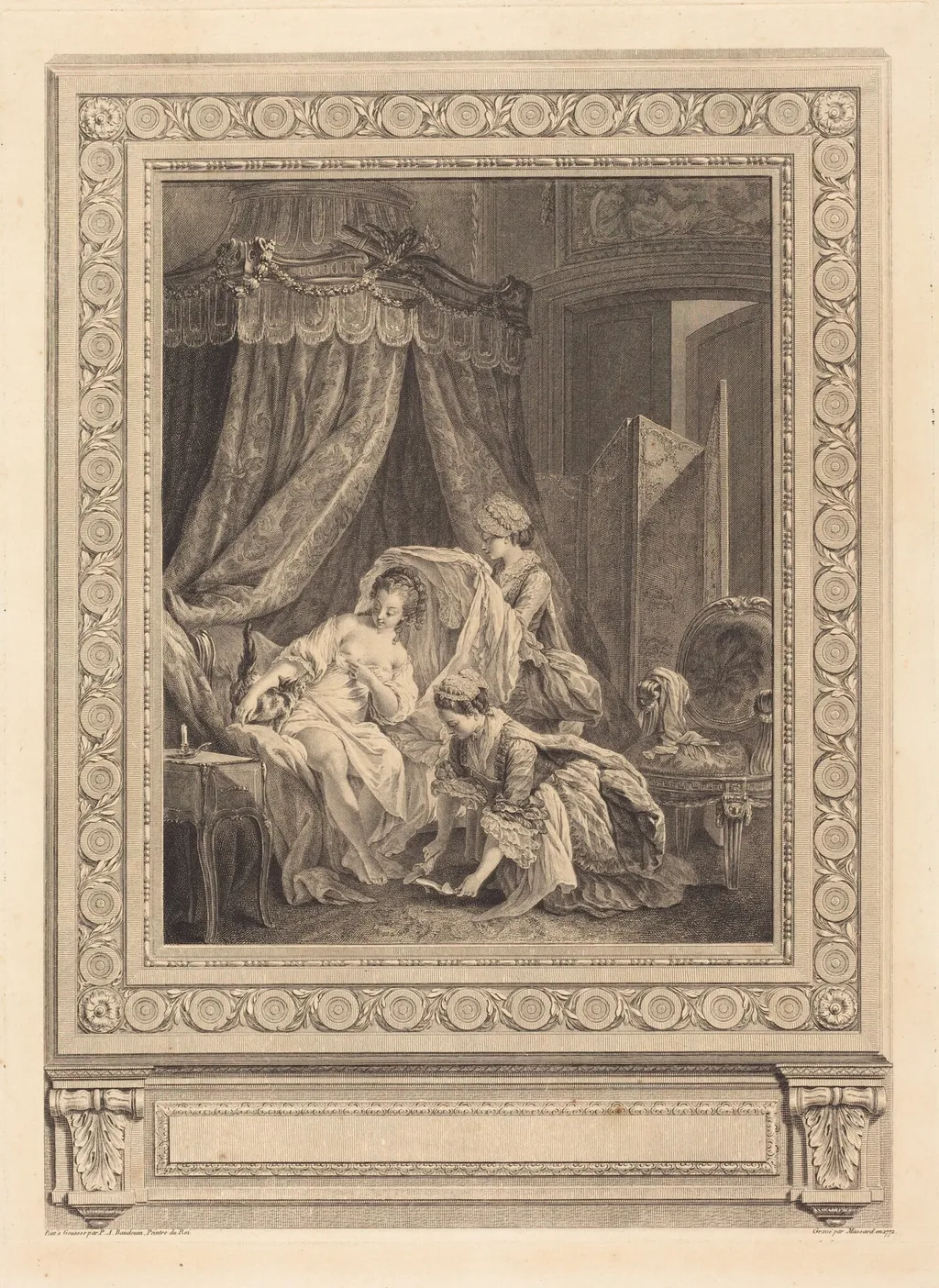
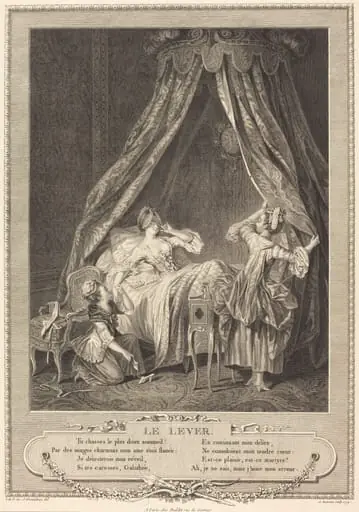
Le lever is an ink print by the Romanticist artist Jean Massard. It dates from 1771 and is held in the collection of the National Gallery of Art.
About this work
Overview
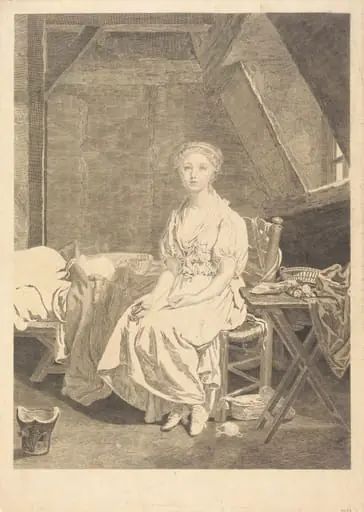
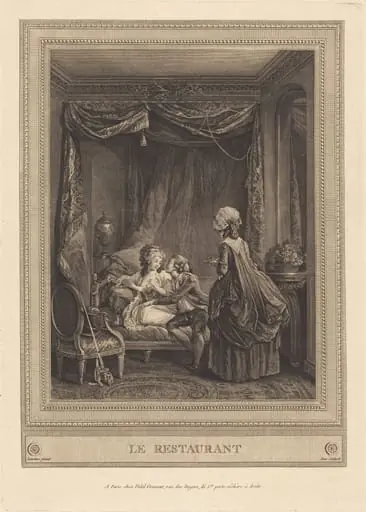
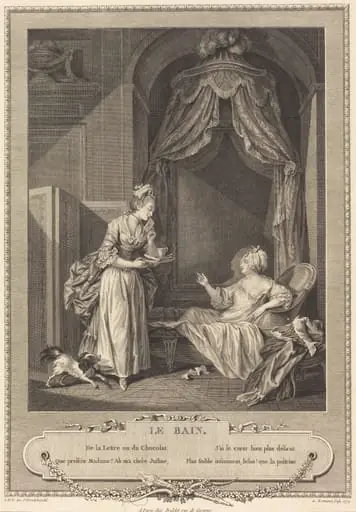
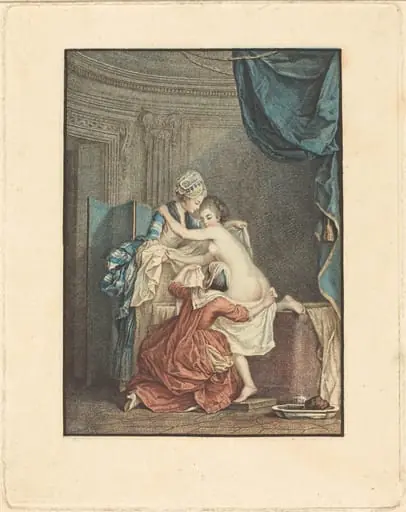
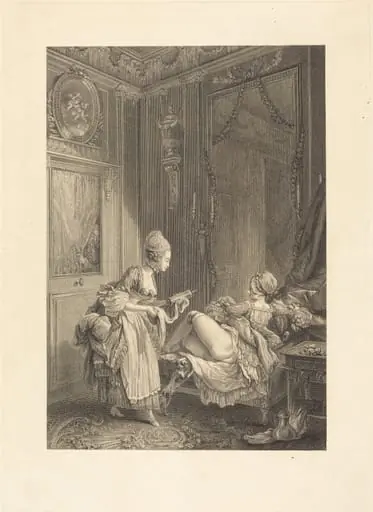
Jean Massard’s 1771 print titled Le lever presents an intimate interior scene rendered through engraving techniques. The composition captures a softly illuminated bedroom where three women and a dog are arranged around a bed, creating a moment of quiet domestic activity.
Subject & Meaning
The central figure lies in a richly draped bed, cradling an infant, while a second woman kneels to adjust the linens. A third woman, holding a basket of fruit, stands nearby, suggesting a routine of care and nourishment. The inclusion of a dog adds a domestic touch, emphasizing everyday life in an aristocratic setting.
Technique & Style
Massard employed a combination of etching, drypoint, and aquatint to achieve delicate line work and subtle tonal variations. The fine rendering of fabric folds and the nuanced shading of faces and hands demonstrate the artist’s skill in manipulating light within the print medium.
History & Provenance
Created in 1771, Le lever reflects the late‑Baroque interest in genre scenes that depict private moments. While specific ownership records are limited, the work is representative of Massard’s output during a period when French printmakers were exploring domestic narratives.
Context
The print aligns with 18th‑century French artistic trends that favored detailed interior scenes, often highlighting the elegance of clothing and the intimacy of family life. Such works catered to a market interested in both decorative art and moralizing depictions of daily routines.
Legacy
Le lever exemplifies the technical possibilities of engraving in the late 1700s, influencing subsequent printmakers who sought to combine narrative content with refined craftsmanship. Its study offers insight into the visual culture and domestic ideals of its era.
Artist & collection