Artwork
The Basin, and Upper Severn Bridge, Stourport
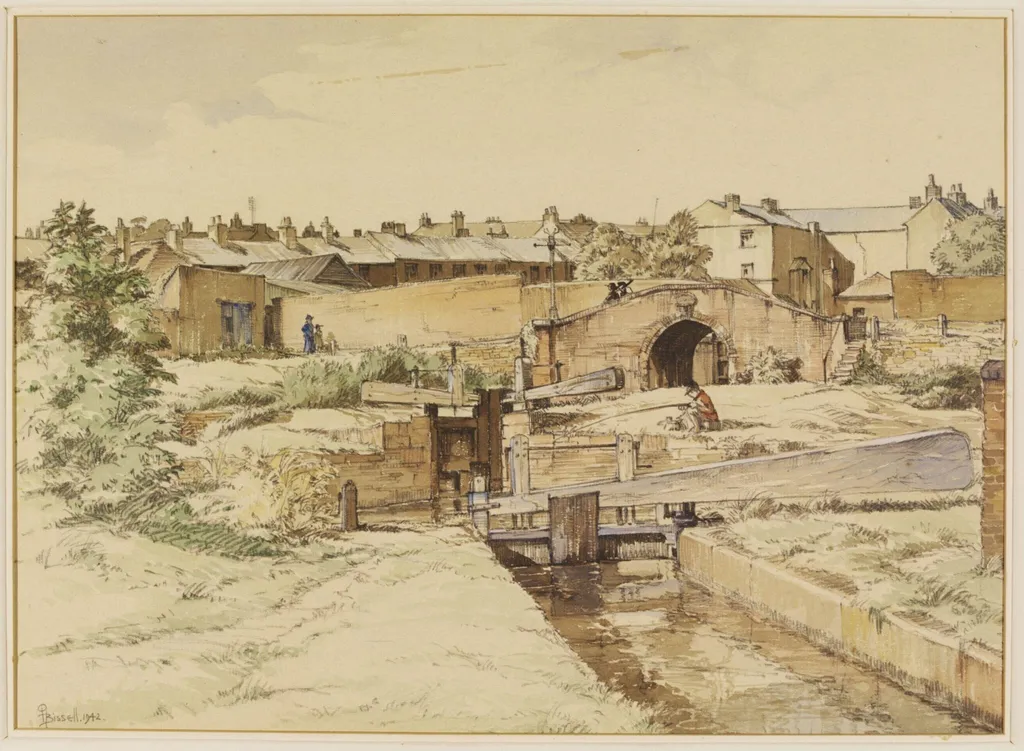
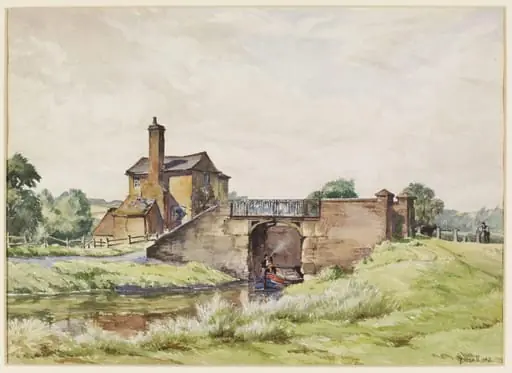
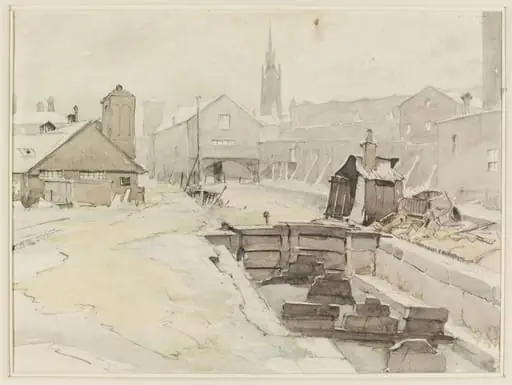
The Basin, and Upper Severn Bridge, Stourport is a watercolor work on paper by the Social Realist artist Osmond Hick Bissell. It dates from 1942 and is held in the collection of the Victoria and Albert Museum.
About this work
Overview
It is one of more than 1,500 pieces compiled between 1940 and 1943, intended to safeguard visual records of places deemed vulnerable to change or destruction.
Created in 1942, this watercolour by Osmond Hick Bissell was produced as part of the Recording Britain project, a government-backed initiative to visually archive the nation’s landscapes during wartime. The work captures a quiet stretch of the River Severn at Stourport, focusing on the canal basin and the adjacent stone bridge. It is one of more than 1,500 pieces compiled between 1940 and 1943, intended to safeguard visual records of places deemed vulnerable to change or destruction.
Subject & Meaning
The scene portrays a modest, working canal environment: a narrowboat moored at a weathered lock, a figure on the bank, and rows of modest homes climbing the slope behind. These elements reflect everyday rural industry and domestic life in early 1940s England. The painting’s quietude suggests a deliberate focus on ordinary, enduring spaces—offering a counterpoint to the upheaval of war and the threat of industrial transformation.
Technique & Style
Bissell employed loose, fluid brushwork and muted tones—soft browns, greens, and pale blues—to convey atmosphere over precision. The watercolour’s transparency allows underlying pencil lines to remain visible, enhancing the sketch-like immediacy. Details such as the taut rope and spilling water are suggested rather than rendered meticulously, emphasizing mood and light over architectural accuracy.
History & Provenance
Commissioned by the Committee for the Employment of Artists in Wartime, the painting was created under the Recording Britain scheme, which supported artists while documenting at-risk sites. After completion, it entered the Victoria and Albert Museum’s collection, where it remains part of a larger archive of wartime topographical works. Its preservation reflects the project’s success in securing cultural memory through art.
Context
During the Second World War, fears of aerial bombardment and postwar development prompted efforts to record Britain’s vernacular landscapes. The Recording Britain project responded to this urgency, engaging artists to capture scenes of rural life, architecture, and waterways before they vanished. Bissell’s work aligns with this mission, documenting a functional, unglamorous stretch of canal that embodied regional continuity.
Legacy
The painting endures as part of a significant historical archive that reshaped how Britain’s everyday landscapes were valued. While not widely exhibited, it contributes to ongoing scholarly interest in wartime art and regional identity. Its quiet realism offers a tangible link to a time when art served as both documentation and quiet resistance to cultural erasure.
Artist & collection
Artist
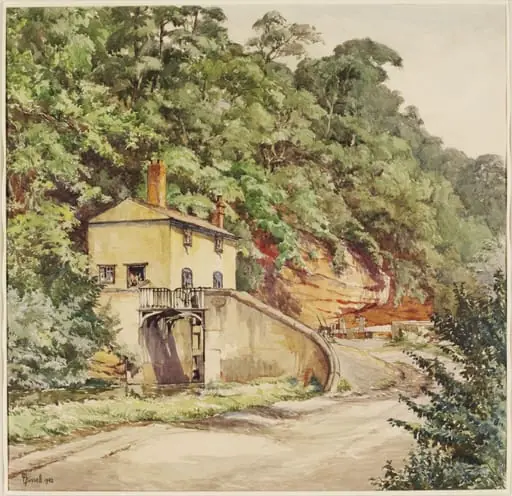
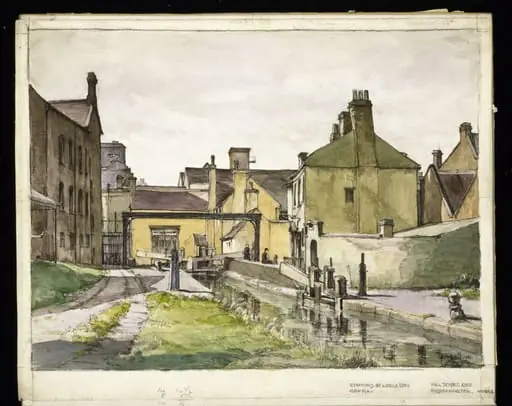
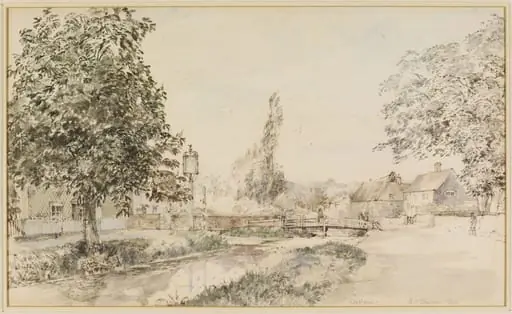
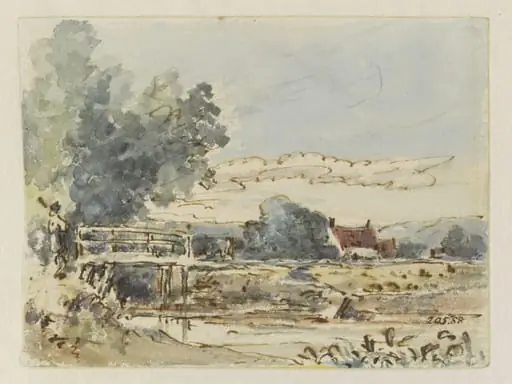
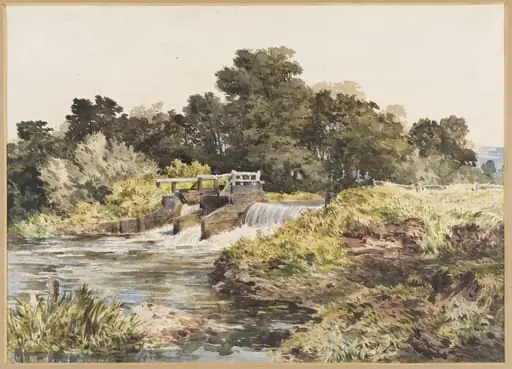
Osmond Hick Bissell painted quiet English canals in watercolour in 1942. He shows Wolverley Court Bridge, Caldwall Bridge near Kidderminster, Mill Street Lock, and the basin at Stourport—all calm, detailed views of…