Artwork
Study from nature: The Weir
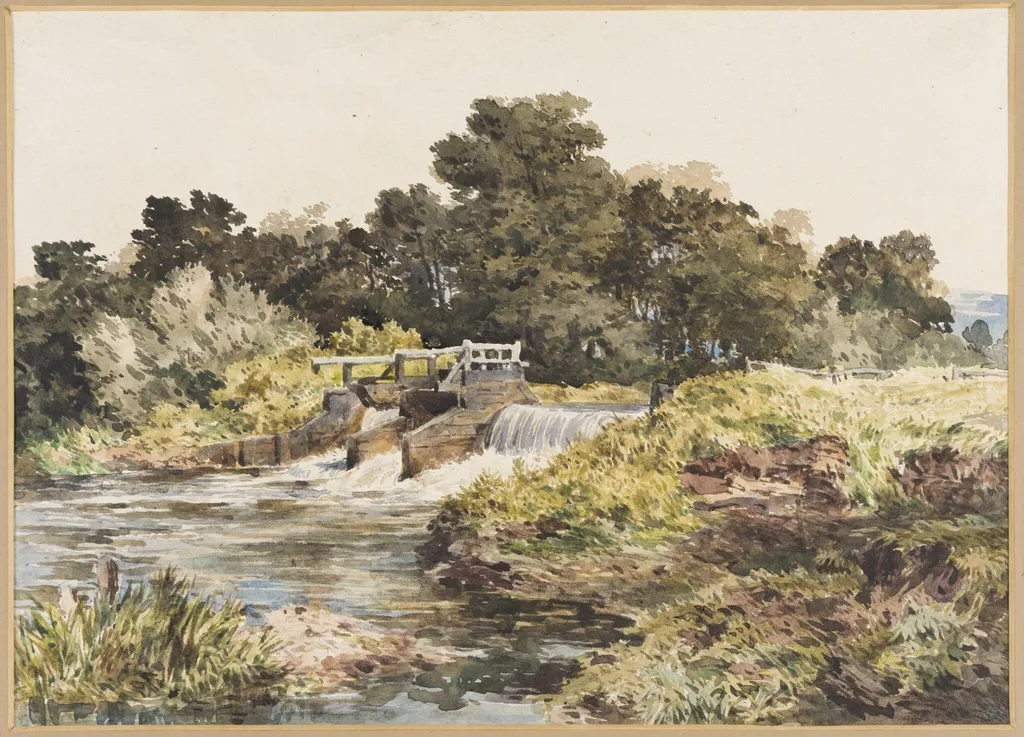
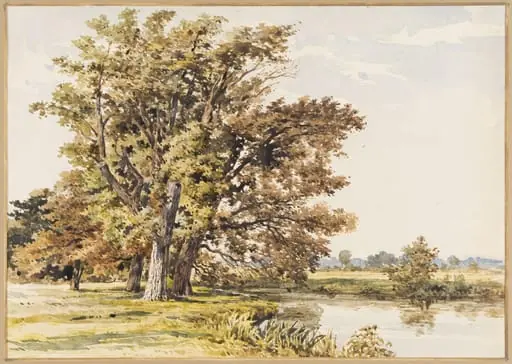
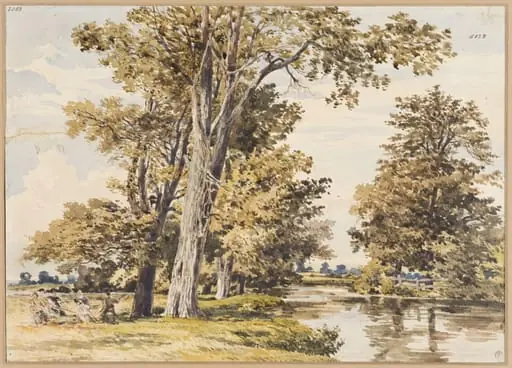
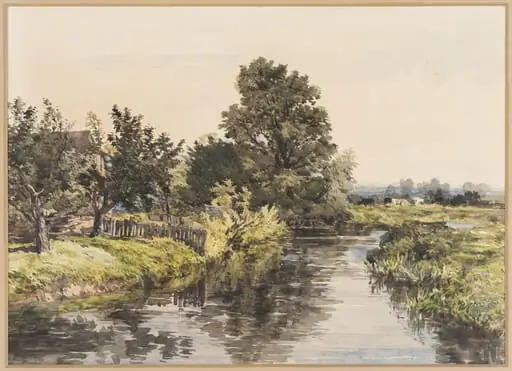
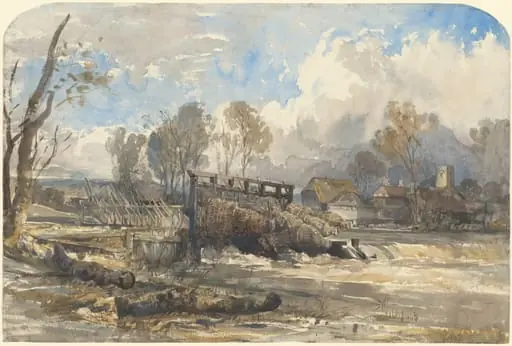
Study from nature: The Weir is a watercolor work on paper by Charles Claude Pyne. It dates from 1850 and is held in the collection of the Victoria and Albert Museum. The work is a watercolor rendering of a river scene where a low weir creates a modest cascade.
About this work
Overview
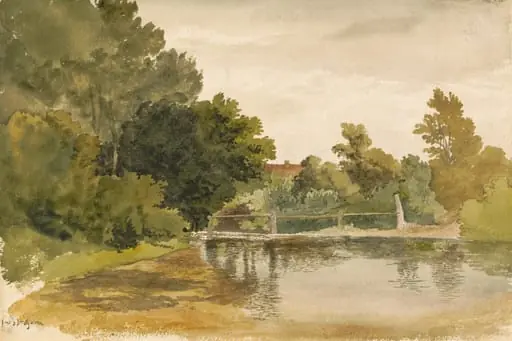
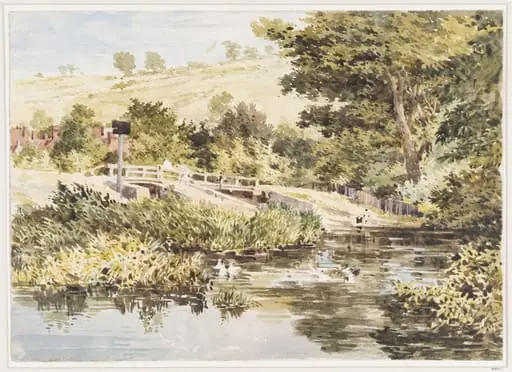
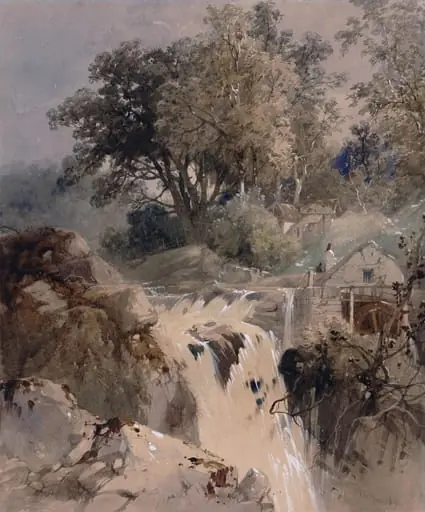
The work is a watercolor rendering of a river scene where a low weir creates a modest cascade. Trees and shrubbery frame the water’s edge, while a grassy foreground leads the eye toward the gentle fall. The sky is rendered as a clear, light expanse without cloud detail, emphasizing the tranquil atmosphere.
Subject & Meaning
The composition centers on the interaction of water and land, illustrating how a simple engineered structure— the weir— integrates with its natural surroundings. The surrounding foliage and the soft flow of water suggest a quiet, contemplative moment in an otherwise ordinary landscape.
Technique & Style
Executed in watercolor, the piece relies on a restrained palette of muted greens, browns, and grays. Loose, expressive brushwork conveys the movement of water and the texture of foliage, while the medium’s translucency yields a delicate, atmospheric quality that softens edges and unifies the scene.
History & Provenance
The painting is attributed to Charles Claude Pyne, an artist known for his studies of natural settings. No further details on its acquisition or exhibition history are provided in the source material.
Context
Watercolor studies of rural or riverine environments were common in the 19th‑century tradition of plein‑air observation, allowing artists to capture fleeting light and weather conditions. Pyne’s focus on a modest weir aligns with this practice, emphasizing everyday landscape features rather than grand vistas.
Own this work as a print
Artist & collection