Artwork
The Cross
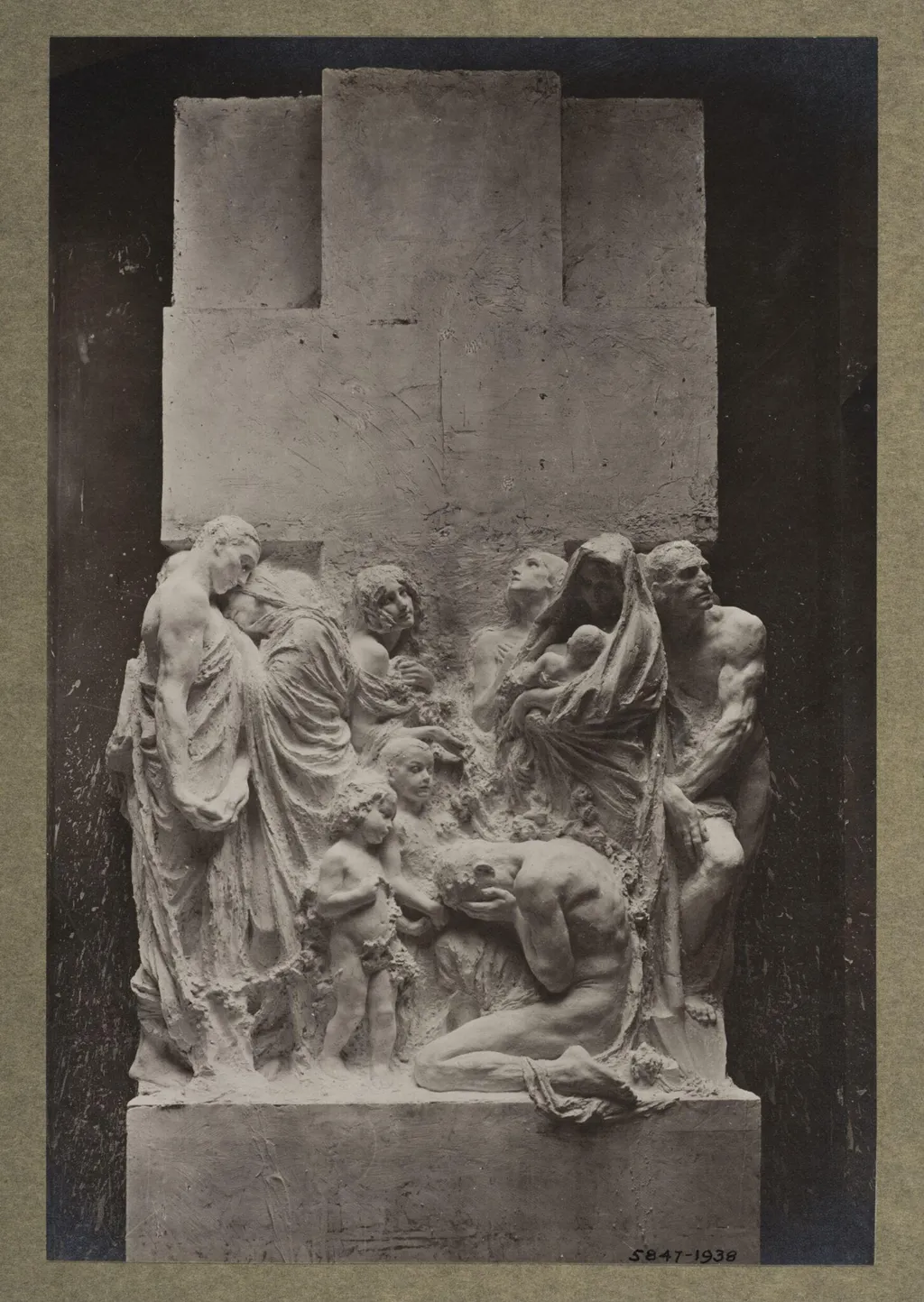
The Cross is a photographic photography by Leonardo Bistolfi. It is held in the collection of the Victoria and Albert Museum.
About this work
Overview
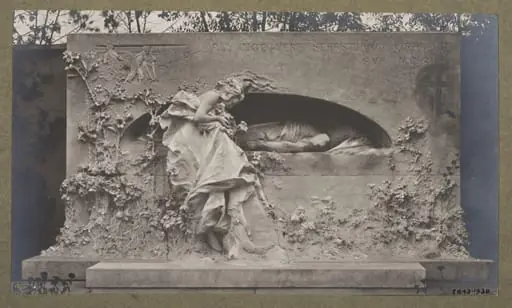
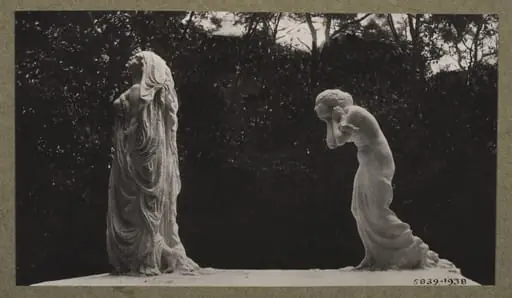
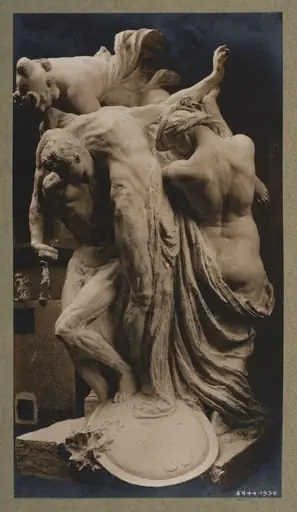
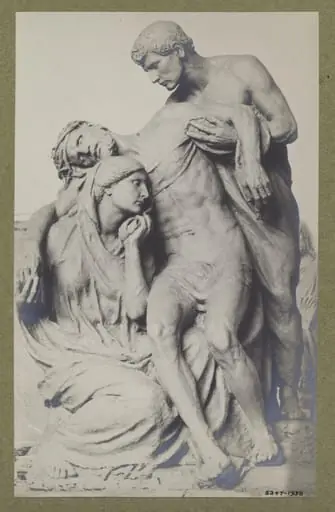
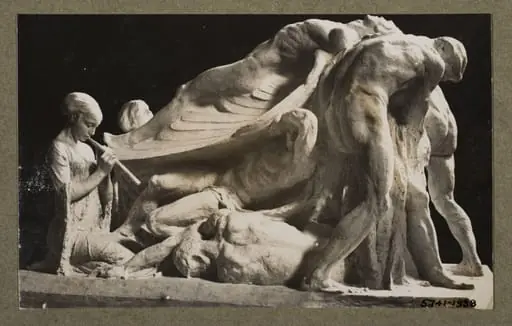
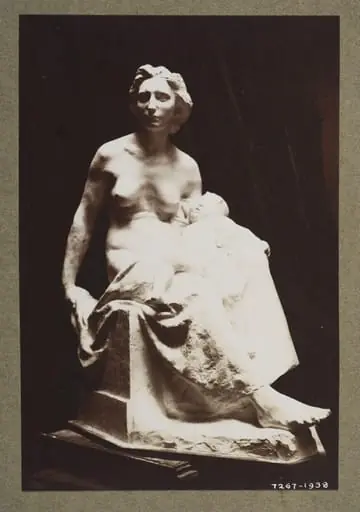
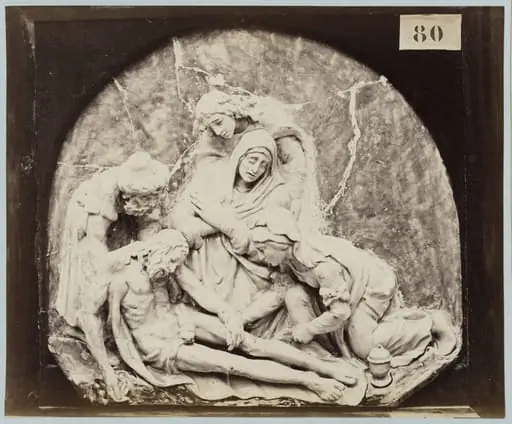
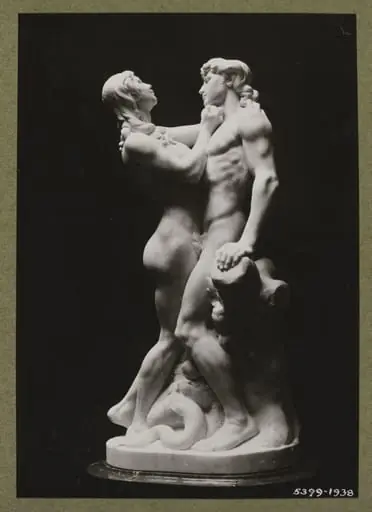
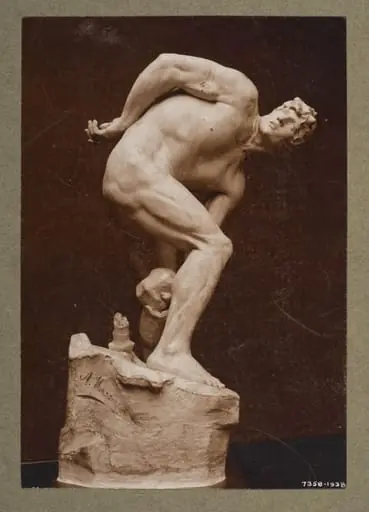
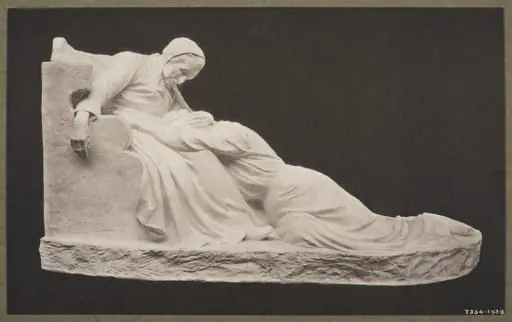
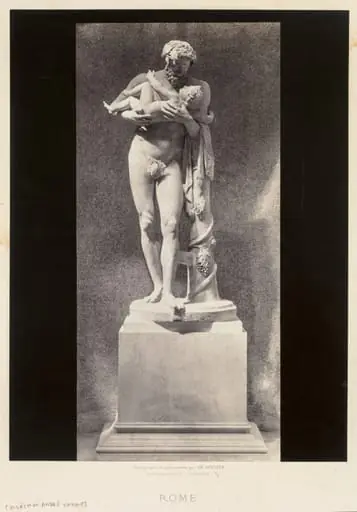
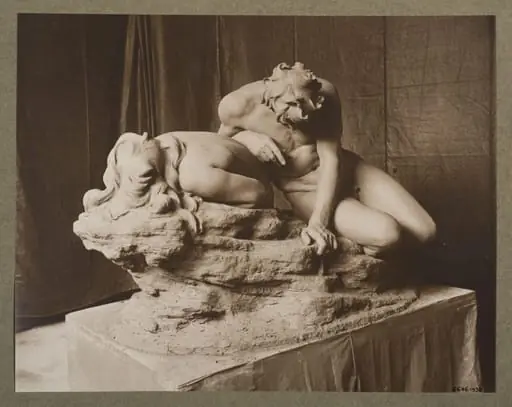
This photograph captures a carved stone relief, mounted on green card, and was included in a personal archive assembled by William Kineton Parkes.
This photograph captures a carved stone relief, mounted on green card, and was included in a personal archive assembled by William Kineton Parkes. Acquired in the 1920s as part of a survey sent to sculptors, it formed one of many responses to his inquiries about contemporary practices. The image was later bequeathed to a public collection in 1938, preserving it as a record of artistic exchange rather than a standalone artwork.
Subject & Meaning
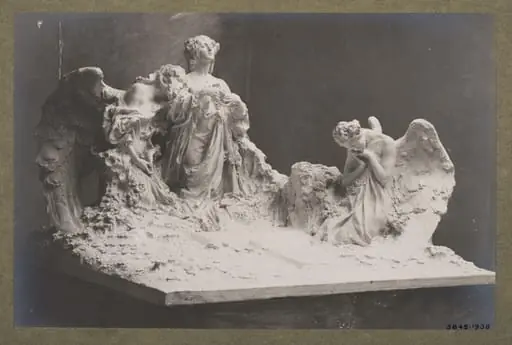
The relief depicts a group of figures in a rugged landscape, their postures suggesting a moment of distress or mourning. One figure lies prone, clutching a small object, while others lean in—some kneeling, others reaching out. A child extends a hand toward the fallen form, and draped robes contrast with bare torsos, hinting at varied social or spiritual roles. The composition conveys collective grief, though its specific narrative remains unconfirmed.
Technique & Style
The carving exhibits a deliberately rough texture, with shallow depth and overlapping forms that avoid polished refinement. Facial features are simplified but emotionally direct, emphasizing expression over detail. The figures are arranged in a tight, inward-facing cluster, enhancing the sense of intimacy and urgency. The lack of finish and the raw handling of stone suggest either an experimental approach or an unfinished state, intentional or otherwise.
History & Provenance
The photograph originated as part of a correspondence project initiated by William Kineton Parkes, who sought documentation from sculptors during the 1920s. It was submitted to him by an unknown artist in response to his questionnaire. Parkes, a scholar of sculpture, preserved these materials as research artifacts. After his death in 1938, the collection, including this image, was donated to a public institution, ensuring its survival as historical evidence.
Context
During the 1920s, artists and scholars across Europe were reevaluating traditional forms, often turning to archaic or folk styles for inspiration. Parkes’s survey reflected this interest in documenting contemporary sculptural practices beyond academic norms. This relief, though unattributed, aligns with broader trends favoring expressive, non-classical forms and the use of naturalistic, unrefined materials in response to industrial modernity.
Legacy
Though the sculptor remains unidentified, the photograph endures as a fragment of a larger effort to map the landscape of early 20th-century sculpture. It illustrates how scholarly inquiry intersected with artistic production, preserving works that might otherwise have been lost. Its inclusion in a public archive underscores its value not as a celebrated object, but as a witness to the quiet, unrecorded practices of its time.
Artist & collection
Artist
Leonardo Bistolfi captured quiet, symbolic moments in black-and-white photographs.