Artwork
Enamelled earthenware bas-relief of the deposition from the cross
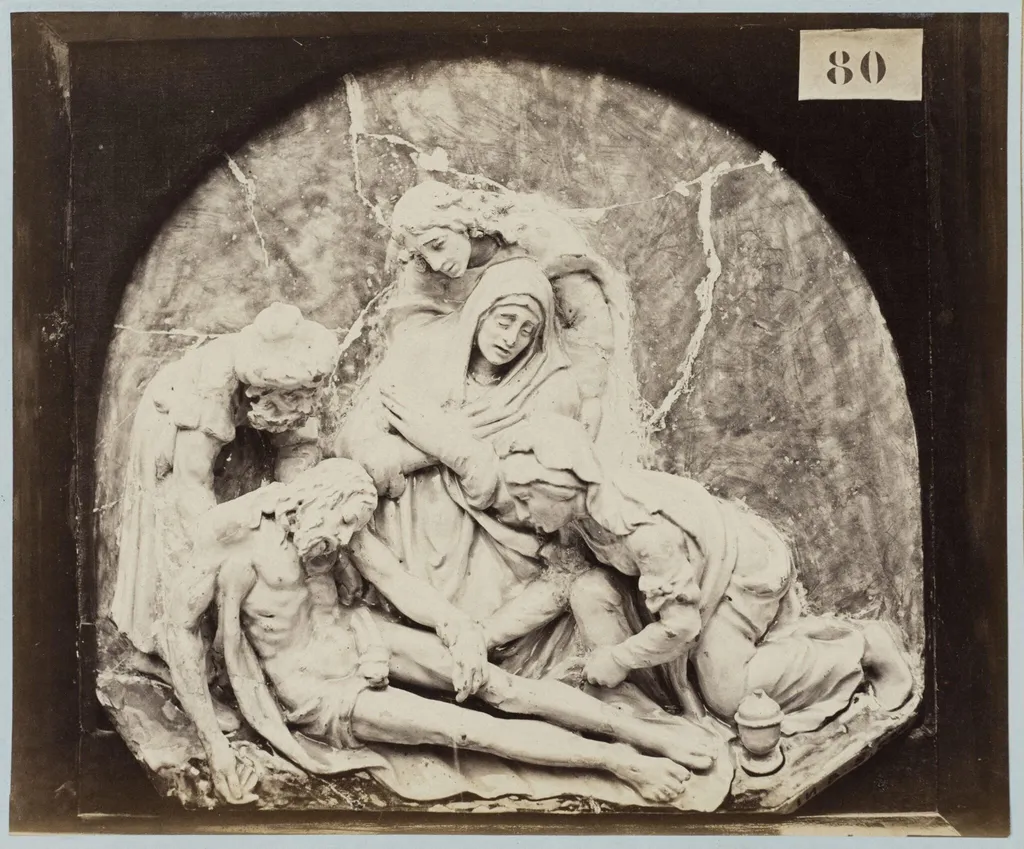
Enamelled earthenware bas-relief of the deposition from the cross is a photographic photography by the Impressionist artist Louise Laffon. It dates from 1864 and is held in the collection of the Victoria and Albert Museum.
About this work
The image fits between Realism and Impressionism, two movements pushing art to look closer to life or light.
This 1863–64 photograph shows a bas-relief scene of Christ’s body being lowered from the cross. It’s made of enamelled earthenware, not paint—an unusual choice in 1860s France.
The image fits between Realism and Impressionism, two movements pushing art to look closer to life or light. Women artists like Louise Laffon rarely got the spotlight back then.
The Victoria and Albert Museum has held photography since the 1850s. Check out the museum.
Overview
The image is a mid‑nineteenth‑century photograph documenting an enamelled earthenware bas‑relief that depicts the deposition of Christ’s body from the cross. Produced around 1863‑64, the photograph records a small sculptural work whose material—glazed pottery—differs from the more common painted panels of the period. It is part of the Victoria and Albert Museum’s historic photographic collection.
Subject & Meaning
The relief captures the moment when Christ’s lifeless form is being lowered from the crucifix, a theme recurrent in Christian art that emphasizes sorrow and redemption. By rendering this scene in enamelled earthenware, the original artist highlights the tactile quality of the narrative, inviting contemplation of both the physicality of the body and its spiritual significance.
Technique & Style
The bas‑relief combines low‑relief modelling with a glossy enamel glaze, giving the figures a smooth, luminous surface. Its visual language balances the detailed realism of the figures with a softened, almost atmospheric handling of light, situating it between the emerging Realist focus on accurate observation and the nascent Impressionist interest in fleeting effects.
History & Provenance
The photograph was taken by Louise Laffon, a French photographer active in the 1860s and one of the earliest women members of the Société Française de la Photographie. In 1864 the Victoria and Albert Museum acquired a set of 500 of Laffon’s photographs, including this image, through the agent Monsieur E. Cappe, adding it to the museum’s National Art Library holdings.
Context
At the time of its creation, photography was being incorporated by institutions such as the South Kensington Museum (later the V&A) as a tool for education and documentation. Henry Cole, the museum’s founding director, promoted photography to broaden the visual resources available to artists and students, a policy that facilitated the inclusion of works by women photographers like Laffon.
Artist & collection
Artist
Louise Laffon (1828–1885), was a French photographer and painter. She was one of the first female professional photographers in France. She had a studio in Paris between 1859 and 1876.

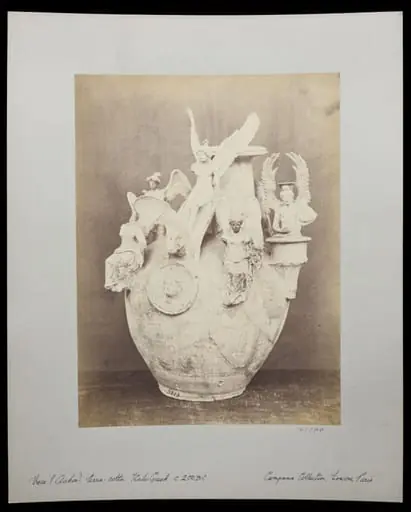 Perfume Burner in terra cotta
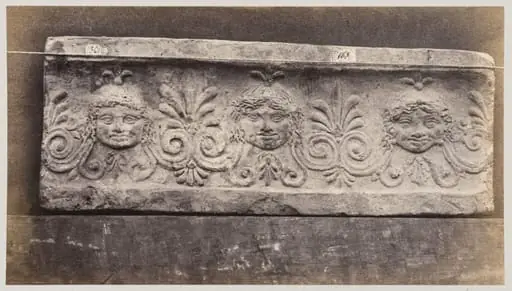 Three masques of gorgons in terra cotta
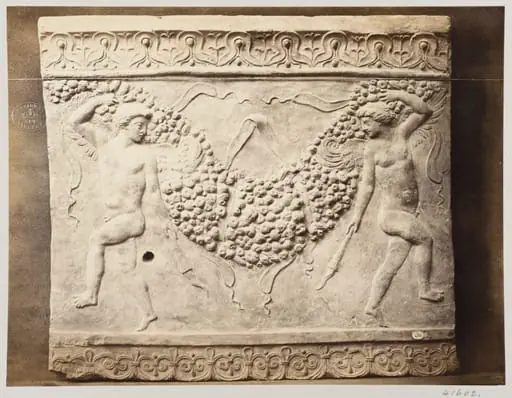 Bas-relief of portion of frieze of dancing figures with torches bearing festoon of fruit in terra cotta
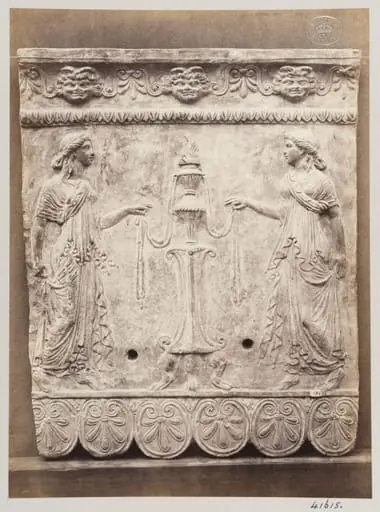 Bas-relief portion of a frieze of two draped females and an altar in terra cotta
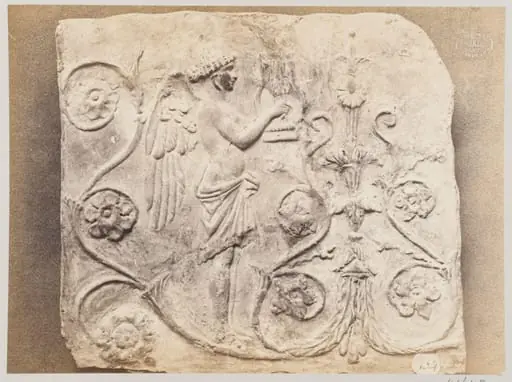 Bas-relief of a geni and a lyre in terra cotta
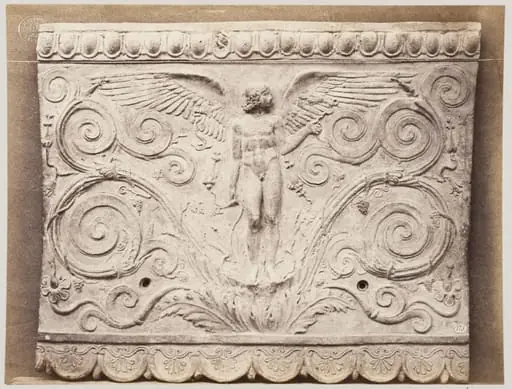 Bas-relief of a portion of frieze of Eros with scrollwork in terra cotta
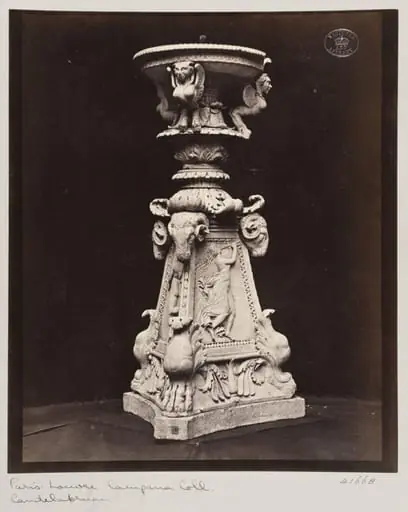 Marble sculptured fountain
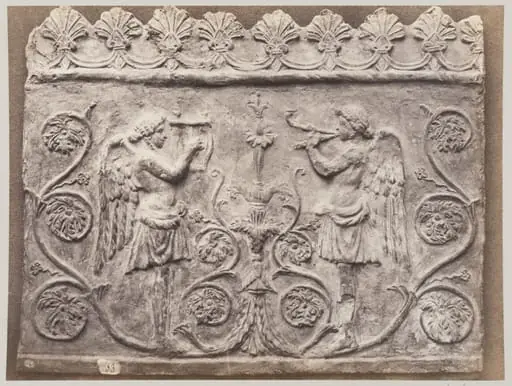 Bas-relief portion of frieze of Genii with double flutes and lyre
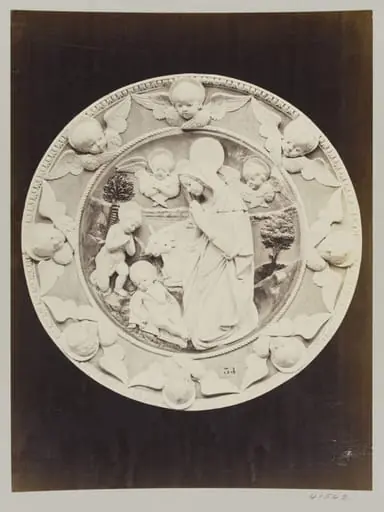 Circular bas-relief depicting the Nativity in enamelled earthenware
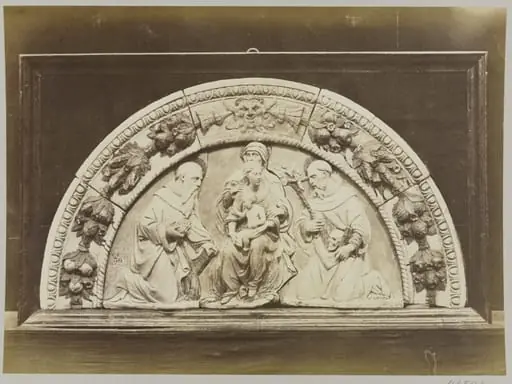 Top of an altar piece depicting the Holy Family in enamelled terra cotta
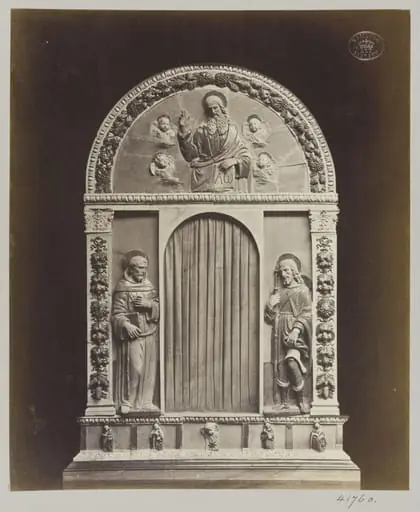 Enamelled earthenware altar piece of Christ and Saint Francis and St. Rock
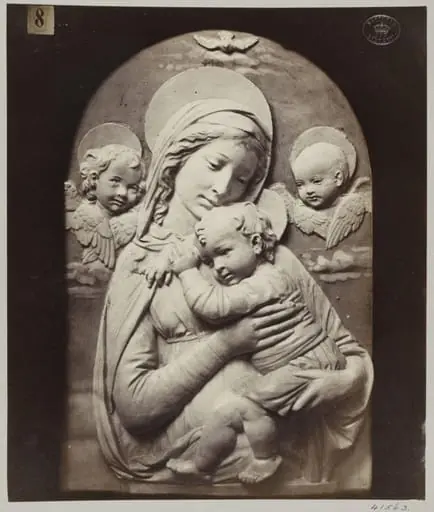 Bas-relief depicting the Virgin and Child in enamelled earthenware
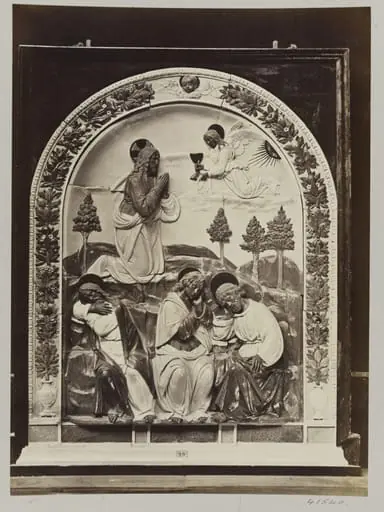 Altar piece depicting Christ in the Garden of Olives in enamelled earthenware
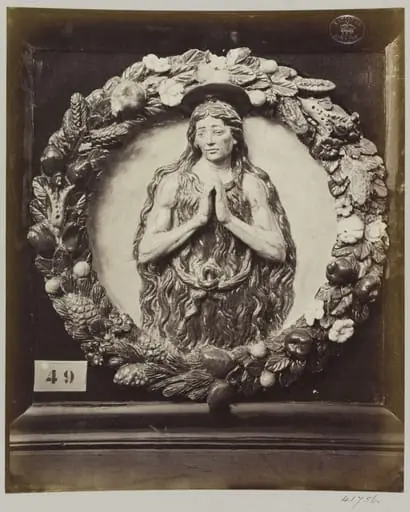 Enamelled earthenware bas-relief medallion of Saint Onofrio
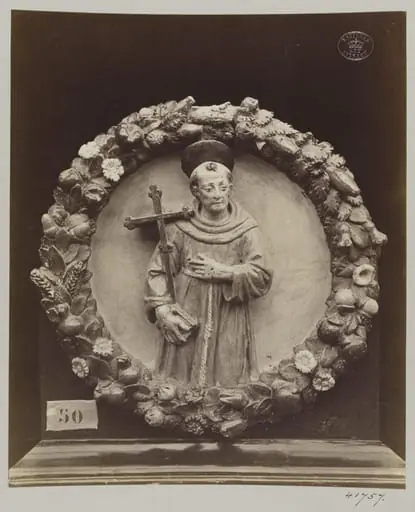 Enamelled bas-relief earthenware medallion of Saint Francis
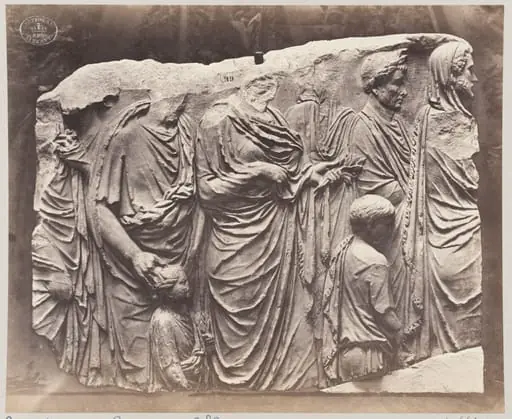 Portion of a marble sarcophagus of procession of draped figures
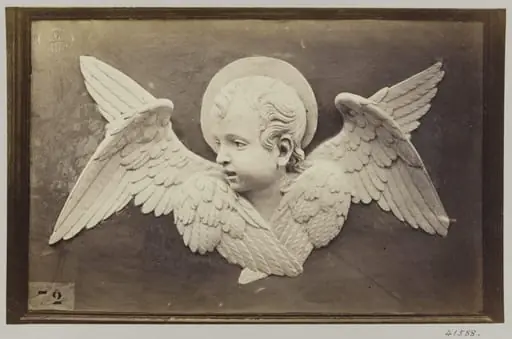 Head of Seraph in glazed earthenware
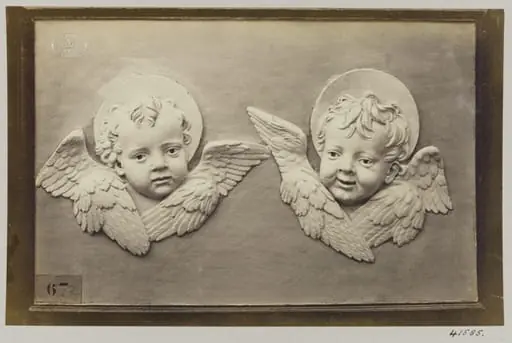 Two enamelled heads of seraphines