Artwork
Job's Comforters
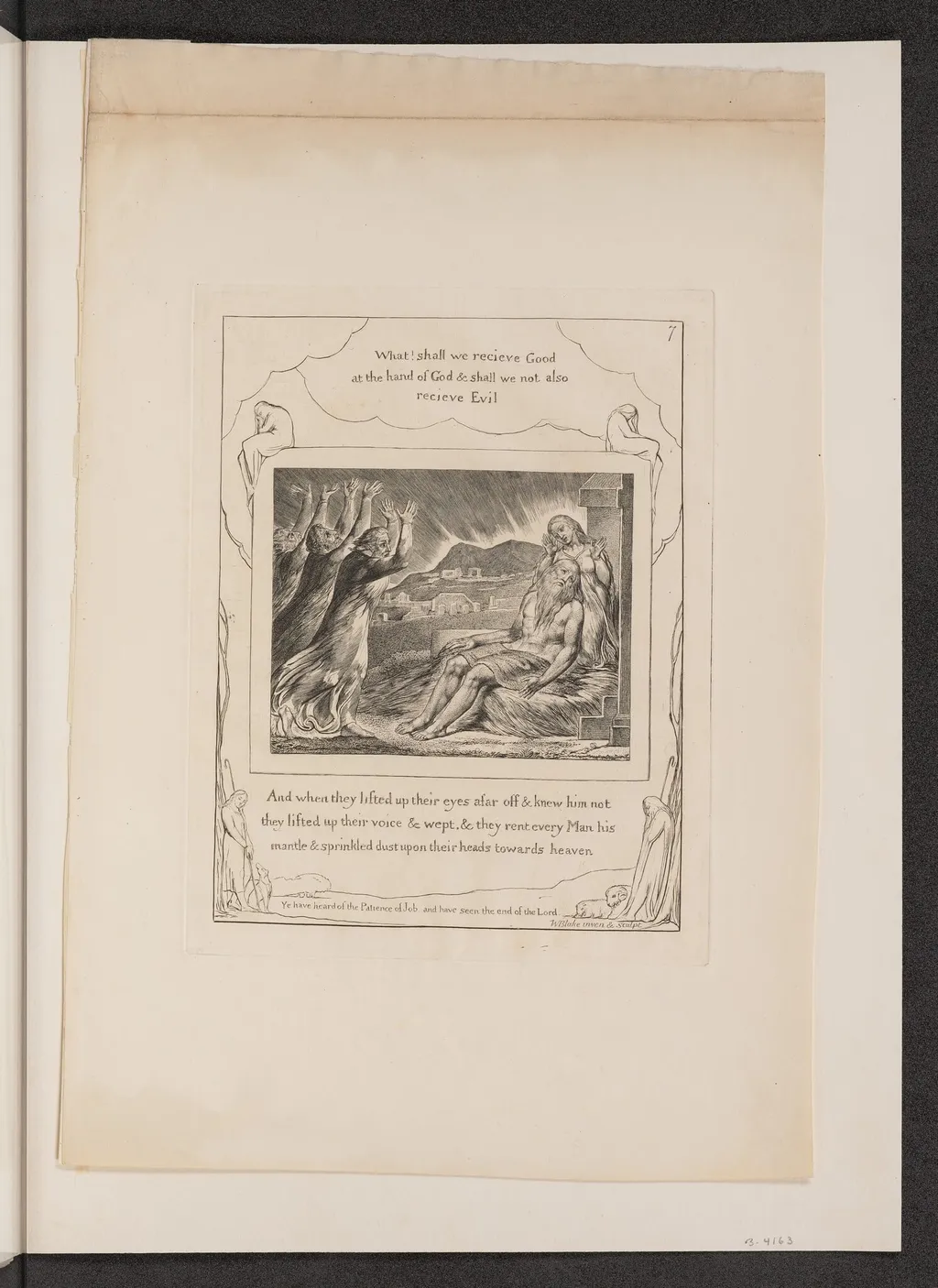
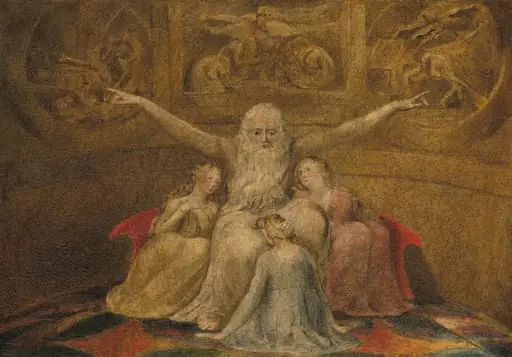
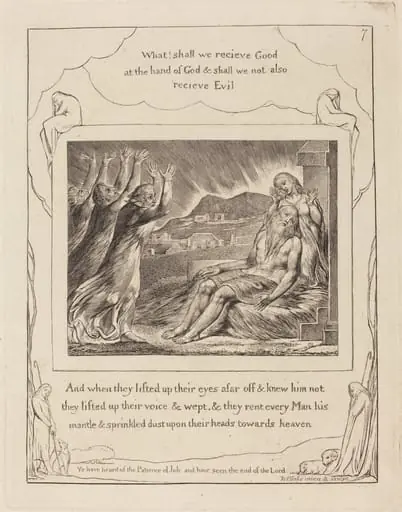
Job's Comforters is an ink print by the Romanticist artist William Blake. It dates from 1825 and is held in the collection of the National Gallery of Art.
About this work
Overview
Job's Comforters is an 1825 engraving by William Blake, exemplifying his characteristic blend of symbolism and imaginative depth. Executed on thick paper, it forms part of his prolific output of spiritually charged and prophetic artworks.
Subject & Meaning
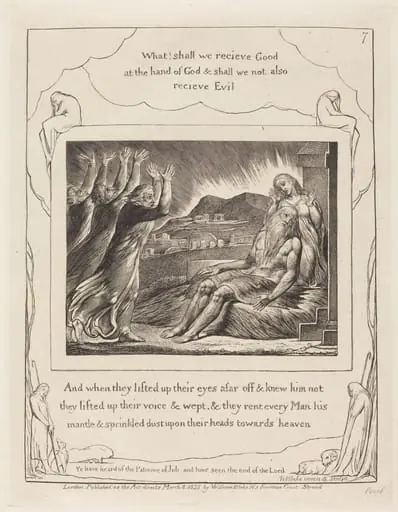
The engraving depicts Job, a figure from the Bible, seated amidst apparent despair (suggested by dirt or ashes covering him), surrounded by three standing figures with raised hands, evoking shock or supplication. The scene contrasts Job's plight with a burning village below and a turbulent, possibly apocalyptic sky, underscored by biblical quotes on suffering and faith.
Technique & Style
Blake utilized sharp, expressive lines and pronounced shadows to imbue the scene with dramatic tension and emotional depth, characteristic of his innovative approach to engraving.
History & Provenance
Created in 1825, the work reflects Blake's late-period style. Despite his lack of recognition during his lifetime, it contributes to his posthumous reputation as a central figure in Romantic visual art.
Context
Understanding the engraving technique, where images are carved into metal plates, provides insight into the technical skill and artistic choices behind 'Job's Comforters'.
Legacy
As part of Blake's oeuvre, 'Job's Comforters' contributes to his enduring influence on Romantic and symbolic art, continuing to inspire interpretation and reflection on themes of suffering, faith, and the human condition.
Artist & collection
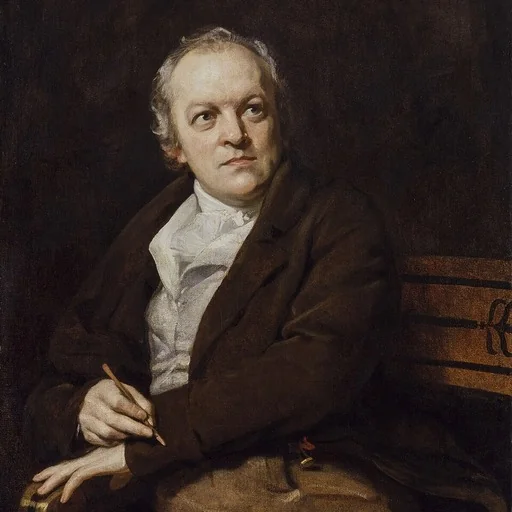
Artist
William Blake (28 November 1757 – 12 August 1827) was an English poet, painter and printmaker.