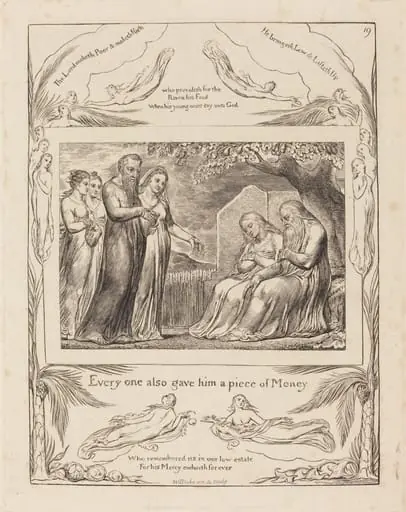
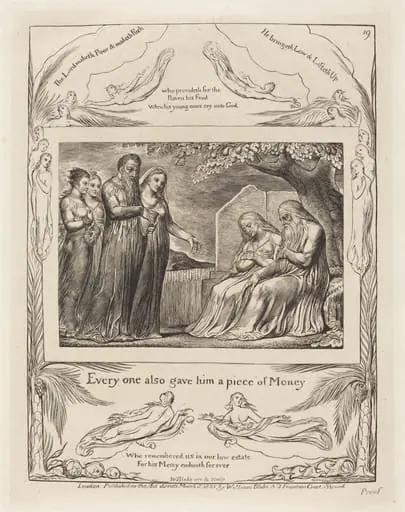
Artwork
Job's Comforters
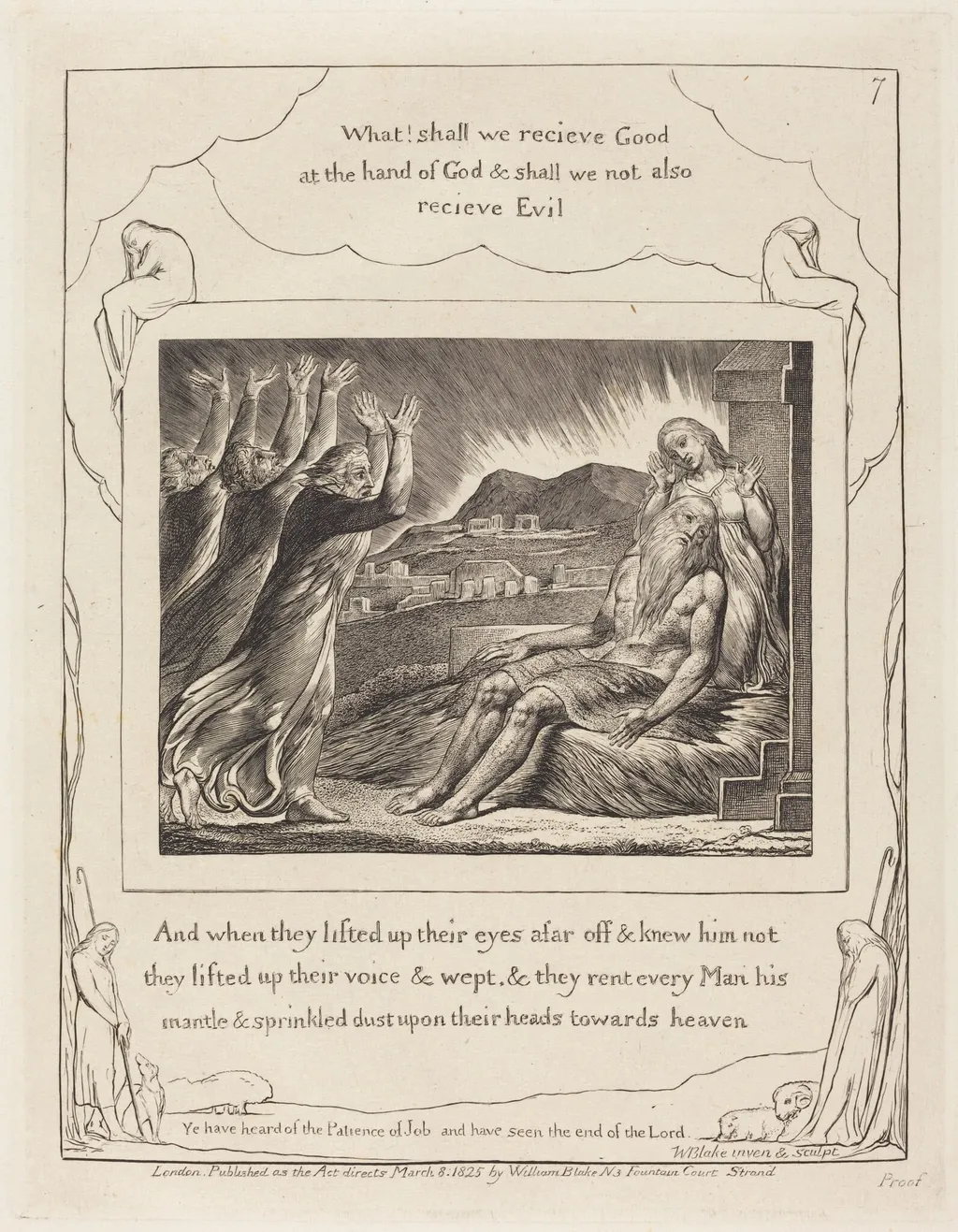
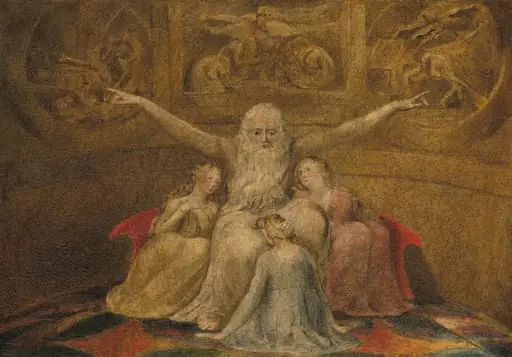
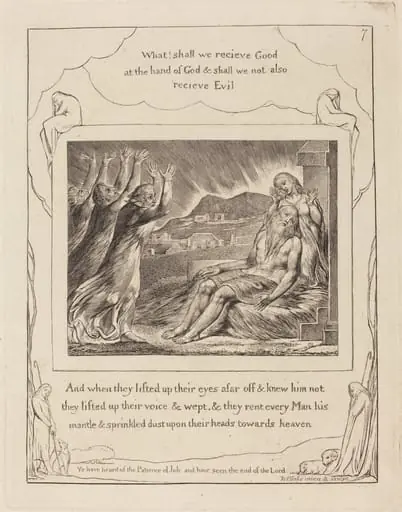
Job's Comforters is an ink print by the Romanticist artist William Blake. It dates from 1825 and is held in the collection of the National Gallery of Art.
About this work
Overview
Job's Comforters is an 1825 engraving on India paper by William Blake, created late in his career. It exemplifies his unique symbolic approach and technical proficiency in printmaking.
Subject & Meaning
The engraving depicts a scene from the Book of Job, showing the titular figure seated in despair, surrounded by three gesturing comforters, set against a dramatic cityscape and mountains under a dark sky.
Technique & Style
Blake employed intricate linework, including cross-hatching, to achieve texture and depth. The work embodies Romantic-era aesthetics, emphasizing intense emotion and drama through its expressive rendering.
History & Provenance
Created in 1825, the engraving was part of Blake's later output. Despite being unrecognized in his lifetime, Blake's work, including this piece, later solidified his position in Romantic art and literature.
Context
This work reflects Blake's recurring engagement with biblical themes, merging his poetic and artistic visions. It stands as part of his visionary body of work, characterized by imaginative subject matter.
Legacy
Job's Comforters contributes to Blake's posthumous recognition as a central figure in Romantic visual art and literature, highlighting his innovative printmaking techniques and symbolic depth.
Artist & collection
Artist
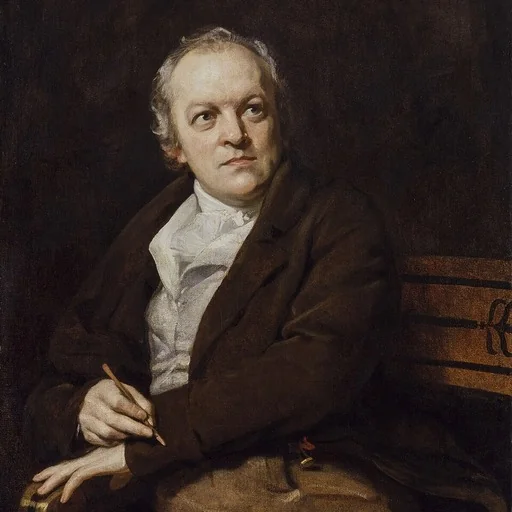
William Blake (28 November 1757 – 12 August 1827) was an English poet, painter and printmaker.