Artwork
Satan arousing the rebel angels
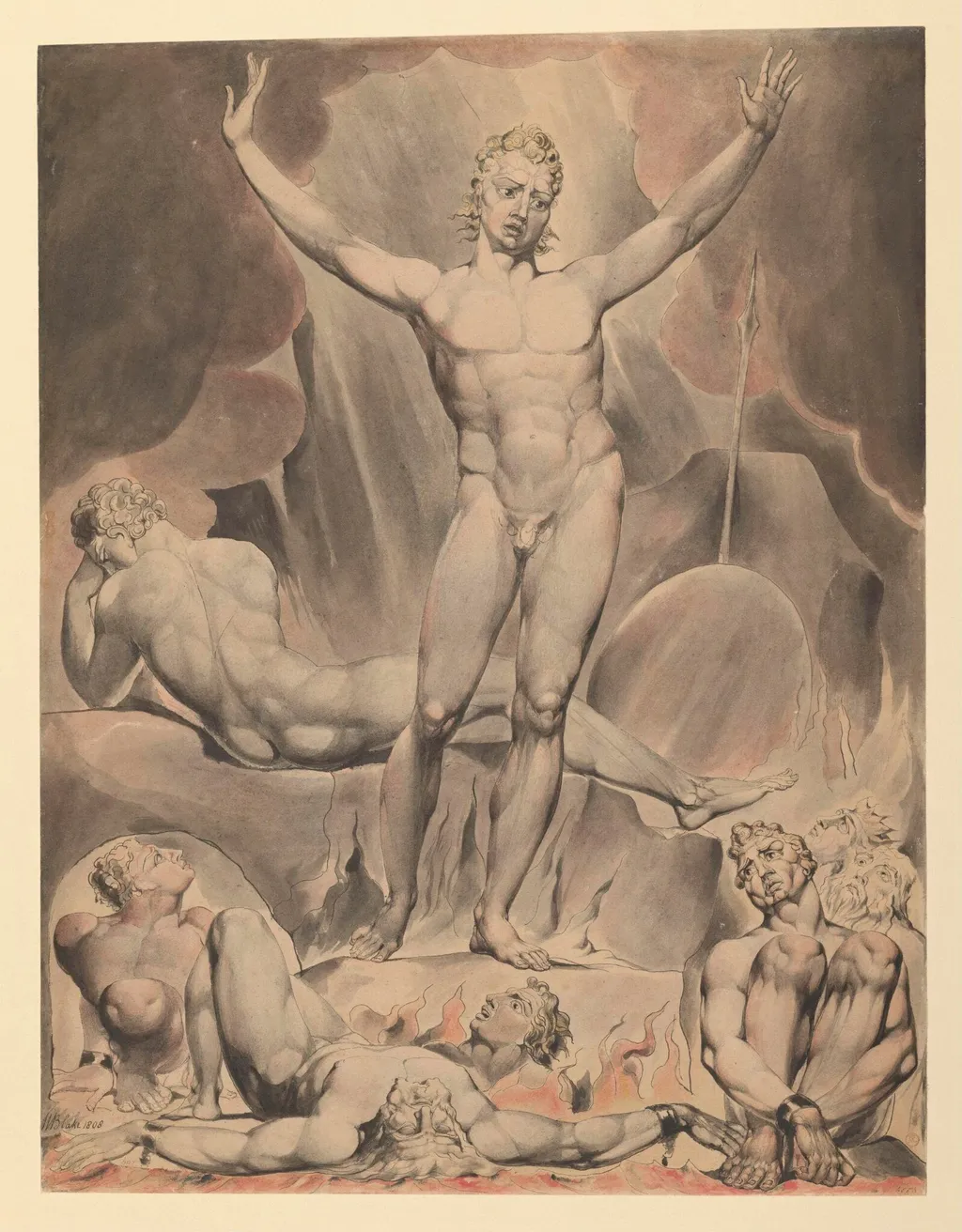
Satan arousing the rebel angels is a watercolor work on paper by the Romanticist artist William Blake. It dates from 1808 and is held in the collection of the Victoria and Albert Museum.
About this work
Overview
Blake produced over a dozen such watercolours for Butts between 1799 and 1807, blending literary themes with his own visionary aesthetic.
William Blake created this watercolour as part of a series commissioned by Thomas Butts, a civil servant and devoted patron. The work illustrates a scene from John Milton’s 'Paradise Lost', composed in the 17th century. Blake produced over a dozen such watercolours for Butts between 1799 and 1807, blending literary themes with his own visionary aesthetic. This piece stands as one of the most ambitious visual interpretations of Milton’s cosmic rebellion.
Subject & Meaning
The image depicts Satan awakening his fallen angels after their defeat in heaven, a moment of defiant renewal in Milton’s narrative. Rather than portraying them as monstrous, Blake renders the rebels as noble, muscular nudes, emphasizing their former glory. This choice reflects a complex interpretation: evil is not merely grotesque but tragically beautiful, suggesting the allure and seduction of rebellion against divine order.
Technique & Style
Executed in watercolour, the composition employs delicate washes and fine linework to suggest volume and movement. Blake’s figures are modeled after classical statuary and Michelangelo’s muscular forms, adapted into a distinctly personal idiom. The lack of heavy shading and the ethereal transparency of the medium lend the scene a dreamlike quality, aligning the visual with the poetic ambiguity of Milton’s text.
History & Provenance
Commissioned by Thomas Butts between 1799 and 1807, this watercolour remained in his possession until his death in 1845. It passed through private collections before entering institutional hands. Unlike Blake’s printed works, these watercolours were not widely circulated in his lifetime, making them rare and intimate expressions of his engagement with Milton’s epic, preserved largely through Butts’s patronage.
Context
Blake’s illustrations emerged during a period of renewed interest in Milton among Romantic artists and thinkers. While many viewed Satan as a symbol of tyranny, Blake’s interpretation aligned with radical readings that saw him as a figure of resistance. The classical references reflect broader neoclassical trends, yet Blake’s spiritual vision diverged sharply from academic norms, embedding theological debate within aesthetic form.
Legacy
Blake’s 'Satan arousing the rebel angels' contributed to a lasting reimagining of Milton’s characters in visual culture. His fusion of literary narrative, classical form, and personal mysticism influenced later Symbolist and Pre-Raphaelite artists. Though not widely known in his lifetime, these watercolours are now recognized as pivotal in demonstrating how poetry and painting could intertwine to express complex moral and metaphysical ideas.
Own this work as a print
Artist & collection
Artist
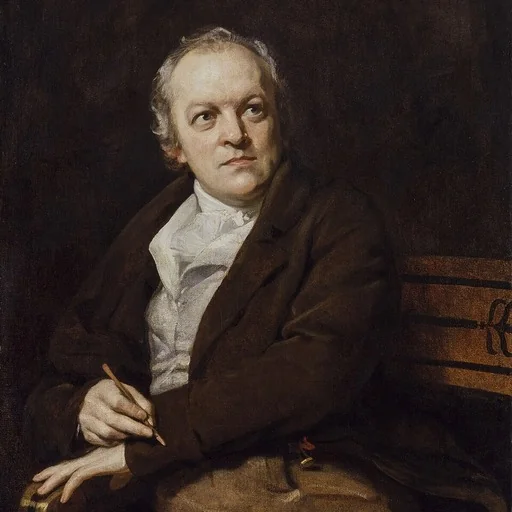
William Blake (28 November 1757 – 12 August 1827) was an English poet, painter and printmaker.

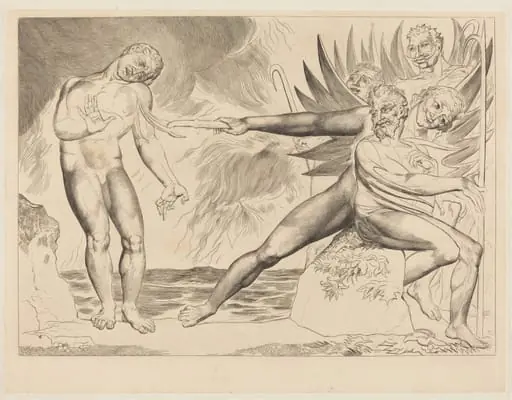 The Circle of the Corrupt Officials; the Devils Tormenting Ciampolo
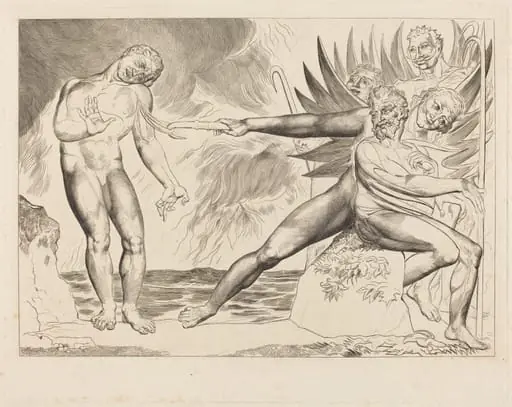 The Circle of the Corrupt Officials; the Devils Tormenting Ciampolo
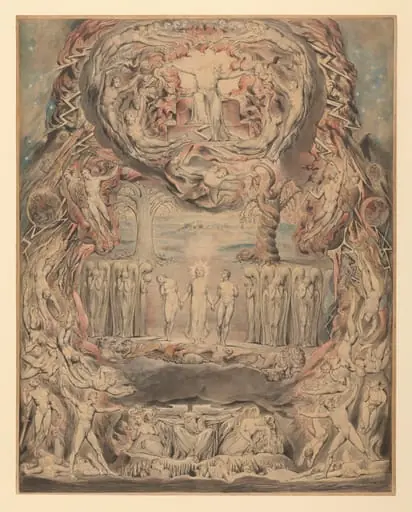 The Fall of Man
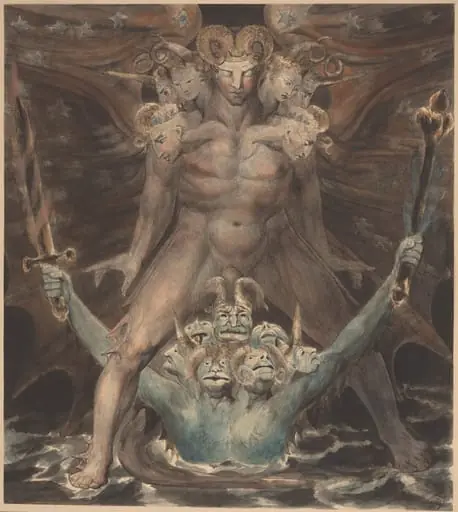 The Great Red Dragon and the Beast from the Sea
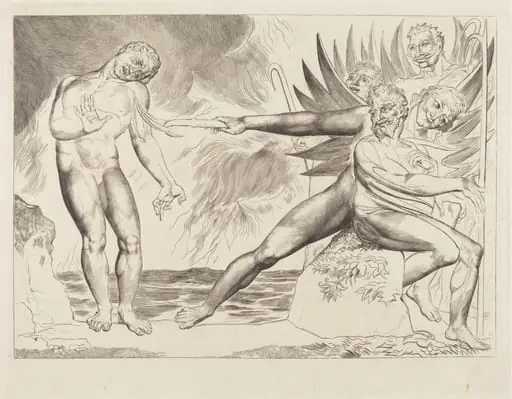 The Circle of the Corrupt Officials; the Devils Tormenting Ciampolo
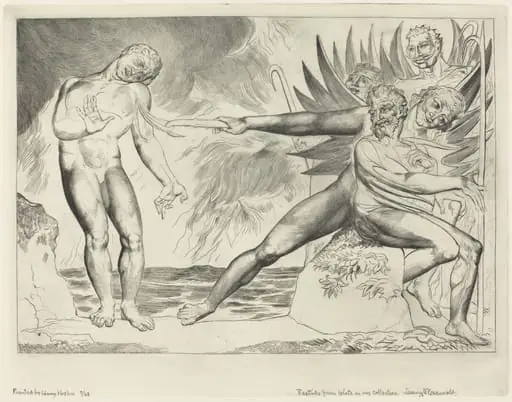 The Circle of the Corrupt Officials; The Devils Tormenting Ciampolo
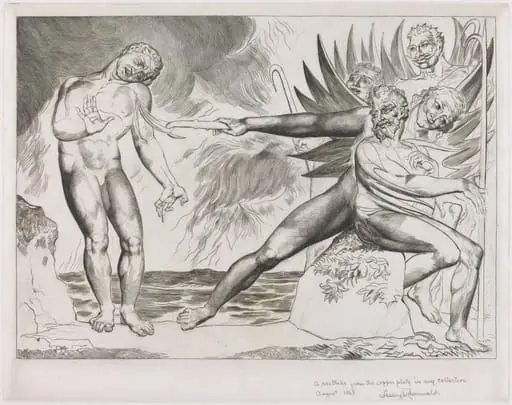 The Circle of the Corrupt Officials; the Devils Tormenting Ciampolo
 Sketch for "Oath on the Rütli," Female Figure (verso)