Artwork
The Circle of the Lustful: Paolo and Francesca
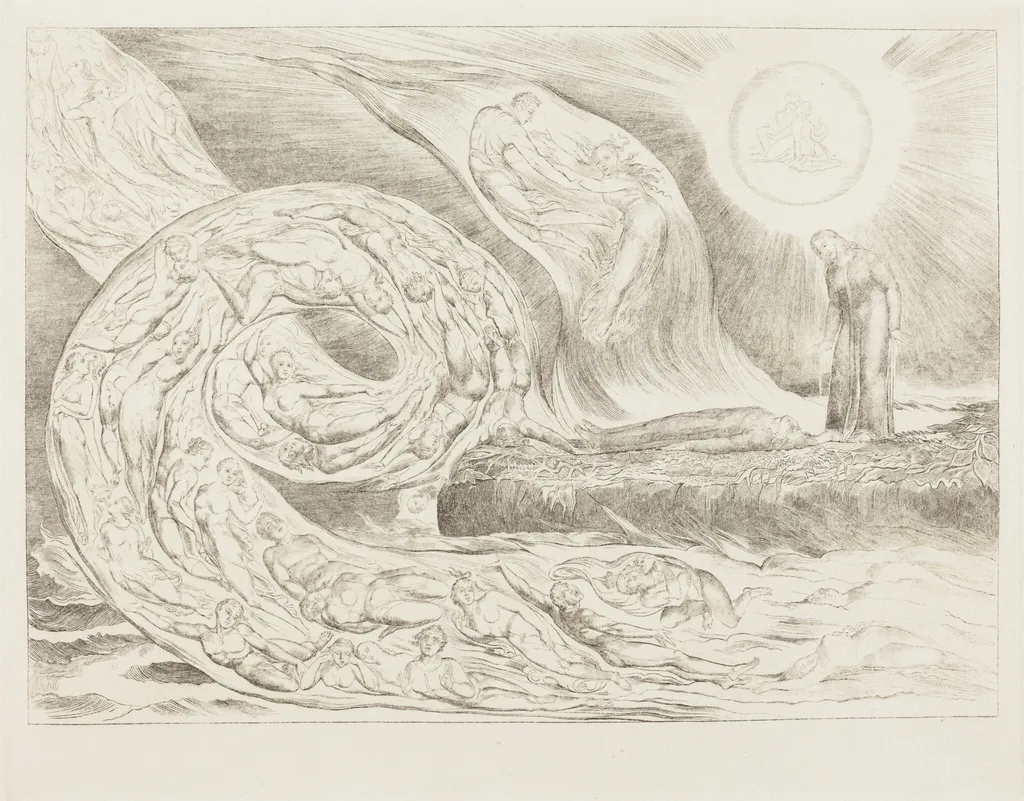
The Circle of the Lustful: Paolo and Francesca is an ink print by the Romanticist artist William Blake. It dates from 1827 and is held in the collection of the National Gallery of Art.
About this work
Overview
Created in 1827, the same year William Blake died, this engraving presents his interpretation of Dante’s second circle of Hell. The work focuses on the tragic lovers Paolo and Francesca, whose illicit affair condemns them to an eternal, swirling punishment among other adulterous souls.
Subject & Meaning
The central figures, Paolo and Francesca, are shown amid a vortex of tormented bodies, illuminated by a stark light from above. Their anguished expressions convey the turmoil of their sin, while the surrounding crowd suggests the endless cycle of desire and retribution that defines this circle of Hell.
Technique & Style
Executed as a print, Blake employed bold, intersecting lines and strong chiaroscuro to model depth and texture. The engraving’s dynamic composition, with its swirling forms and stark contrasts, reflects the dramatic intensity characteristic of Romantic visual art.
History & Provenance
The image is a restrike made before the copper plate was cleaned, indicating that Blake or his workshop produced multiple impressions prior to final plate maintenance. This practice was common in early 19th‑century printmaking to meet demand for popular subjects.
Context
Blake’s engagement with Dante aligns with the Romantic fascination with medieval literature and the exploration of human emotion. By visualizing the infernal punishment of adulterers, the work connects literary narrative with Blake’s own poetic concerns about moral transgression and spiritual consequence.
Artist & collection
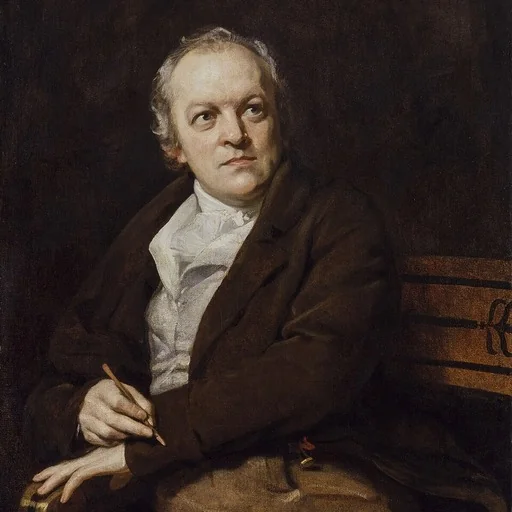
Artist
William Blake (28 November 1757 – 12 August 1827) was an English poet, painter and printmaker.

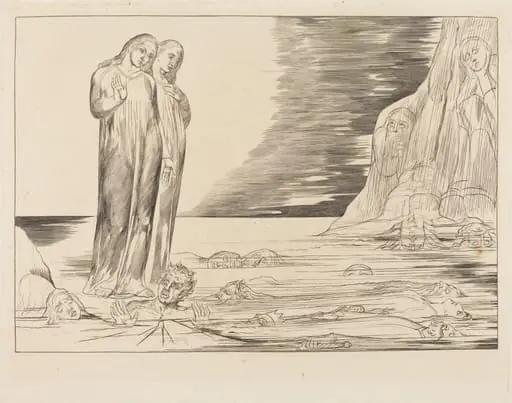 The Circle of the Traitors; Dante's Foot Striking Bocca degli Abbate
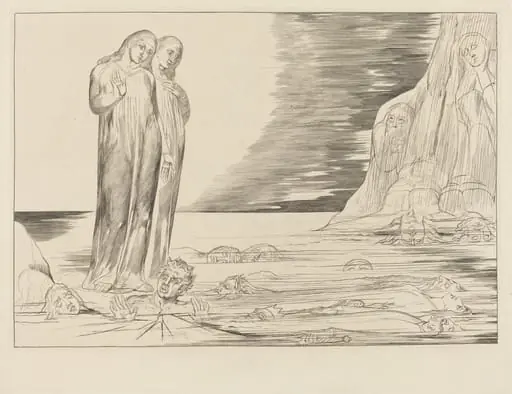 The Circle of the Traitors; Dante's Foot Striking Bocca degli Abbate
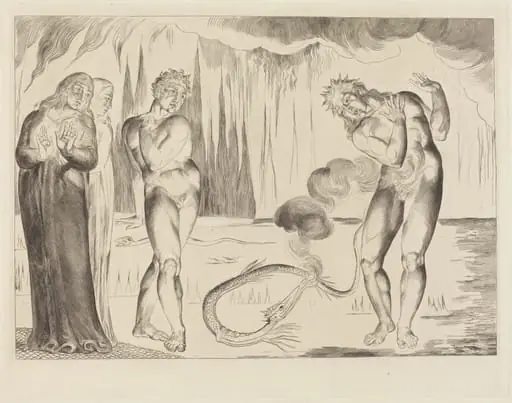 The Circle of the Thieves; Buoso Donati Attacked by the Serpent
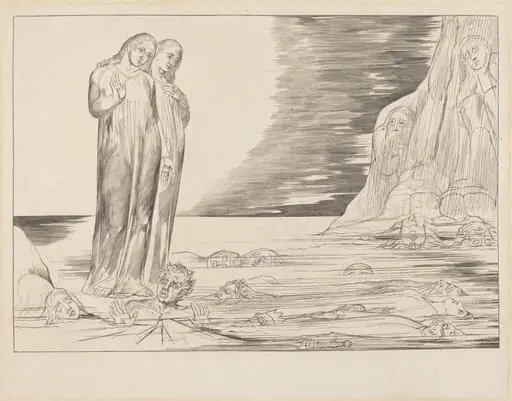 The Circle of the Traitors; Dante's Foot Striking Bocca degli Abbate
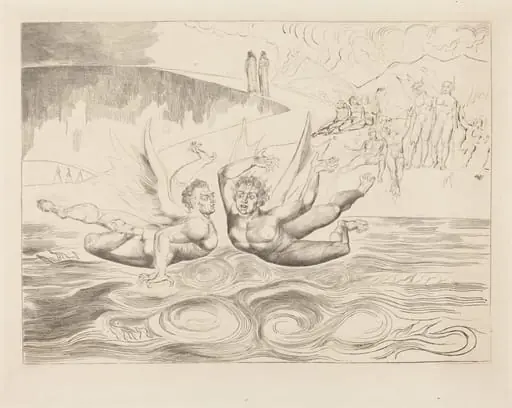 The Circle of the Corrupt Officials; the Devils Mauling Each Other
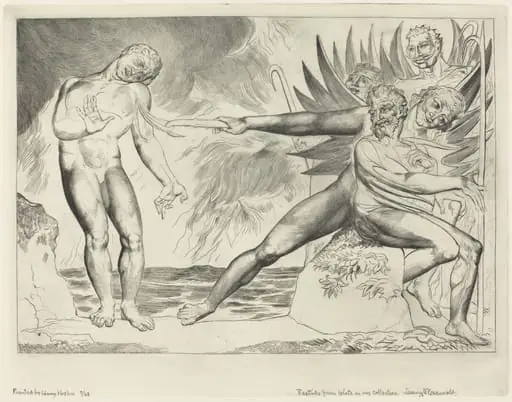 The Circle of the Corrupt Officials; The Devils Tormenting Ciampolo
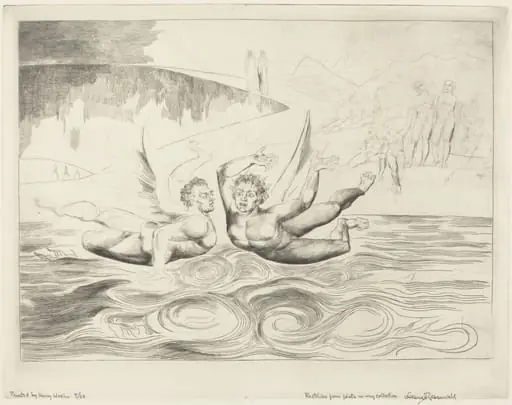 The Circle of the Corrupt Officials; The Devils Mauling Each Other